Culture

Culture

The good, the bad and the ugly in books, exhibitions, cinema, TV, dance, music, podcasts and theatre.

This Lucian Freud belongs on the compost

Exhibitions

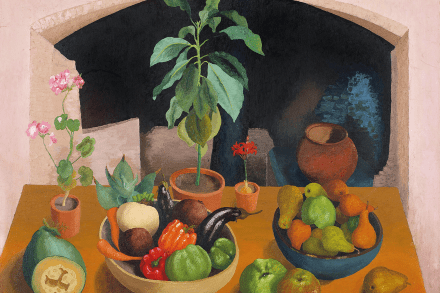
From 1940, at Benton End, near Hadleigh in Suffolk, the artist Cedric Morris brought his eye to breeding irises. Eliminating hated shades of ‘salmon or knicker’, he was, according to his biographer Hugh St Clair, ‘unstinting in his efforts to produce a pure, delicate pink’. Forty years of dedication brought a wild abundance to the garden, which was packed with cultivars, including ‘Benton Baggage’ (pale rose with a blue blaze), ‘Benton Persephone’ (very large white flowers) and ‘Benton Mocha’ (coffee-coloured, with a bright orange beard). A living flower painting.

How did so many fail to appreciate Whistler?

Exhibitions

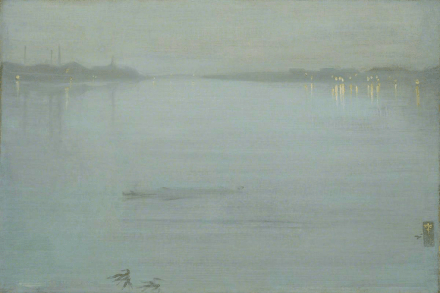
I approached this exhibition like a conscientious critic, poring over the catalogue, the signage, making notes… And then, about halfway through, I drifted. I dawdled. I stopped thinking and gave in to the aesthetic rapture, the rhyming half-tones, the ‘breath-like softness’ of Whistler’s paint. I was a disciple, briefly, of art for art’s sake, even though I wasn’t wearing white, nor carrying a peony. It was the room full of Nocturnes that sent me. Their opiate-like gloomth put me right beside the Thames at dusk. No, that’s too pedestrian. Not beside the Thames; with the Thames. Whistler lived on Cheyne Walk, but watching the river was not enough; he would take a boat out at night to prepare for his paintings.

The Venice Biennale was just that bit worse than usual

Exhibitions

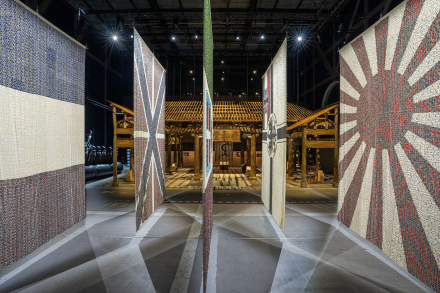
The 61st Venice Biennale arrived freighted with portent. To cut a long story short: Russia and Israel were invited to exhibit, and the prize jurors resigned in protest. Then, on preview day, the city was hit by a storm of biblical force. I sat in the Stansted Wetherspoons for hours, oblivious to the fact that the Ryanair ahead of mine was taking a pummelling that ultimately landed it on the wrong side of the Adriatic. ‘It was terrifying,’ a journalist colleague recounted. ‘And apparently, Bjork was on board, too.’ You’ll leave feeling that you’ve spent five hours trapped in the basement of Italy’s most patronising headshop The bad juju had set in last May when Koyo Kouoh, the programme’s curator, dropped dead aged 57.

How to dress a queen

Exhibitions

The problem with exhibiting costumes is well known. Should the mannequins be lifelike with human features, or faceless? What about trying a more surreal approach with Perspex or metals? This show of her late Majesty’s wardrobe opts for something more ghostly: hundreds of shoulderless, neckless, wristless, legless figures, floating magically in space, presented in cases at eye level, with others, higher, in serried ranks, like some gorgeously arrayed terracotta army. The unifying factor is that instantly recognisable royal silhouette – from the youthful wasp waist to the later fuller frame.

The weakness of the V&A East Museum

Exhibitions

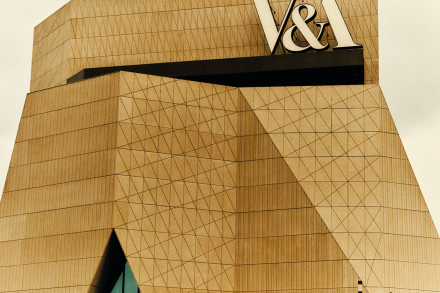
I’d just emerged from Stratford station when I realised it had been almost a decade to the day since I’d last been here. I thought back to a dismal morning press call in early 2016 to the mangy park landscaped as a visible legacy of the London Olympics. The collected hacks shivered as Mayor Johnson unveiled the latest of the development’s showpiece public sculptures, devoting much of his speech to boosterish predictions of the area’s imminent renaissance. ‘Really?’ I thought as I surveyed the spectral, vaguely Soviet townscape emerging from the mist. ‘In this shithole?’ Years hence, it appears that Boris, for once, wasn’t bluffing. The new-look Stratford resembles an idiot’s doodle of the Chicago skyline, novelty towers sprouting far into the distance.

Brooklyn’s answer to Nathan Barley has struck gold

Exhibitions

I was on the way to Cecily Brown’s exhibition at the Serpentine last week when I heard that Kensington Gardens had been locked down. Word was that terrorist drones armed with ‘radioactive material’ were on course to blitz the Israeli embassy, presumably taking out a large part of west London with it. Scary though this was, it was also –  as far as I’m aware – a wholesale fiction: an elaborate psy-op some would-be jihadist had staged to convince us that, yes, it could happen here. That it didn’t, and probably couldn’t, was irrelevant; what struck me was the fact that the security services didn’t consider it wholly improbable.

Tracey Emin at her most operatic

Exhibitions

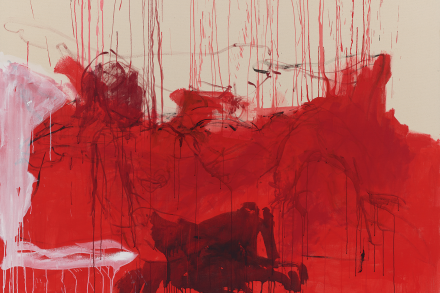
I feared this summing-up of Tracey Emin’s career might be self-congratulatory – biennale here, damehood there. But it’s Emin at her most operatic, facing mortality after surviving extensive surgery for bladder cancer in 2021. Blood and suffering are its subjects: the broken body, and the ascension of the spirit. The Young British Artists are getting on for 60, and Emin embraces it. Arranged in the centre of the exhibition is a ‘corridor to the afterlife’, inspired by an Egyptian tomb, dark and narrow. Along one side are sexy Polaroids she took of herself 26 years ago, along the other, gruesome hospital selfies. You might not want to look too closely at the latter, but the dialogue between the two is strong. ‘You thought you had problems?

A Tate show with dreamy, elusive power

Exhibitions

One of the miracles of art history is how painting, so often written off, keeps on coming back. Right now we are in the middle of just such a resurgence, and one sign of the current vitality of the medium is the emergence of painters such as Hurvin Anderson. Admittedly, Anderson – who was born in 1965 – has been emerging for a long time now. But, with the opening of a big retrospective at Tate Britain, his status as a major figure in modern British art is clear. Anderson is completely individual yet visibly connected to the tradition – indeed, to several traditions – and capable of creating huge, wall-filling canvases into which you can sink and float away, but which also make you think and feel.

How sure are we that all the Michaelina Wautiers at the RA are by her?

Exhibitions

Roll up, there’s a new old master in town. Or a new old mistress, if you prefer. Michaelina Wautier (1614-89) is revealed here as a painter who excelled within the genres of her time: flower painting, portraiture, emblematic tronies, and, if the scholars are right, classical epic, too. The new Royal Academy show cracks open the received idea of what a Flemish woman operating in the decades immediately after Rubens and Van Dyck could achieve. Her c.1650 self-portrait at the easel is a confident statement. She is enthroned under a mantel of lusciously painted black velvet, which looks restrictive, but emerging from it comes her agile, three-dimensional painting hand. Her beauty is incidental, an aspect of her concentration and skill.

This Hockney show is disorientatingly enjoyable

Exhibitions

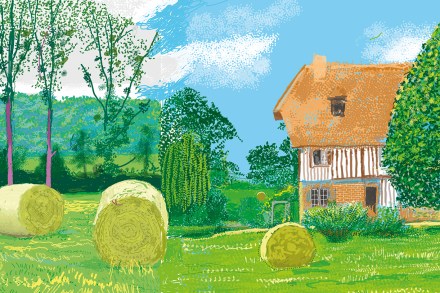
When so much contemporary art is riven with obscurity and angst, it is disorientating, at first, to encounter something as straightforwardly enjoyable as Hockney’s latest exhibition. Aged 88, the artist went out into his garden in Normandy with his iPad to make a visual diary of the year 2020. A hundred or so of the iPad sketches he made have been put together here, blended into a frieze, a walk-through panorama of the seasons rendered with Vivaldi-like virtuosity. As we move along the curve of this frieze, we see nature through Hockney’s bright yellow spectacles As we move along the curve of this 90-metre frieze, we see nature through Hockney’s bright yellow spectacles. He distils the garden to its dramatic essences.

A Ramses show that has little to do with Ramses

Exhibitions

Ramses and the Pharaohs’ Gold is, let’s not shy away from it, a profit-seeking exhibition mounted by an entertainment business. Neon opened its high-tech space at Battersea Power Station last year with dinosaurs, and has partnerships with the likes of Harry Potter and Marvel. The gold mask fronting Ramses’s publicity has nothing to with Ramses. Neither does the other gold and jewellery on display: his tomb was looted long ago, and all that remains is his recycled cedar box, sarcophagus and the king himself. A notable offer in the expansive retail zone is the chance to have your name drawn on papyrus by a robot. But go forewarned, and you will enjoy the experience.

I miss post-internet art

Exhibitions

I got my first paid writing gig back in the early 2010s, for an online magazine fixated on the then-current phenomenon we were already calling ‘post-internet art’. The journal was all but unreadable, its house style both po-mo and po-faced to the extent that contributors were obliged to adopt pseudonymous bylines. I went with ‘Screamin’ Jay Jopling’, which counted for a rare laugh. Yet the tone was very much in tune with the art we covered. Whether it was video, sculpture, photography or pretty much any other medium, it was chiefly concerned with the intrusion of digital technology into – the style guide’s punctuation, not mine – ‘real’ life.

A parade of monstrous and toxic generals: Beatriz Gonzalez reviewed

Exhibitions

You might be forgiven for thinking that a charity sale of particularly kitschy furniture has been set up just past the entrance of the Barbican Art Gallery. There’s a chunky brown dressing table, an ornate table several decades out of fashion and a trio of bedside tables. They are piled haphazardly and on each is a garishly painted picture, invariably a pastiche of a historical painting or a Biblical scene. Raphael’s 1512 ‘Madonna and Child with St John’ rendered slightly sloppily where the mirror of the bureau once was; ‘The Last Supper’ on the table top; three popes in profile staring impassively from the tops of the nightstands.

Marvellous but repetitious: Gwen John – Strange Beauties reviewed

Exhibitions

A pilgrimage to Cardiff Central, sorry, Caerdydd Canolog (according to the signage in the station, which also had my return train’s destination ‘Lundain Padd’ton’) to see the new Gwen John show. She is being lauded as Wales’s greatest artist, but she left Tenby at 18 in 1895, and never went back. After studying at the Slade she moved to Paris, fell in love with Rodin, and adopted the Catholic faith.

How Greece carried the arts to rustic Rome

Exhibitions

‘Cultural cringe’, that lovely Aussie coinage, perfectly describes the Roman attitude towards Greece. The curators don’t say so, but it is the theme of this inspired exhibition. By the time the Romans finally took control of mainland Greece in 146 BC with the Battle of Corinth, they had long admired everything Greek. That date marks roughly the middle of the Hellenistic period, during which Greek culture and language dominated the Mediterranean and the Middle East. In comparison with Greeks, Romans were oafs – and knew it. In comparison with Greeks, Romans were oafs – and knew it After the battle, Corinth was flattened – quite an oafish thing to do – and emptied of all its works of art, which were sent to Rome.

Warhol meets Rauschenberg: John Giorno retrospective reviewed

Exhibitions

At the end of last week, I caught a budget flight to Milan to see a woman. As soon as I arrived I was bundled into a Fiat Panda and sped southwards for Bologna’s annual art weekend, its events ranging from the reverential to the ridiculous. In the latter camp was MAMbo’s John Giorno retrospective, which – for Giorno is a bona fide hero – promised to be superb. It wasn’t, but a bad homage to Giorno is a homage to Giorno all the same. Born in Brooklyn in 1936, he joined the merchant navy as a young man and, on returning to New York, became both a highwire avant-garde poet and an acolyte of Andy Warhol, who filmed him sleeping for five hours straight and presented the result as mode-shifting cinema.

How fantastic to see Hogarth’s largest paintings in their original glory

Exhibitions

The long overlooked staircase by Hogarth at St Bartholomew’s Hospital has been cleaned and restored in a £9.5 million scheme. It is now open to the public, the management says, for the first time since the 1730s, although when I lived nearby in the 2000s, I used to slip in to look at it sometimes. No one seemed to mind. Murals are of course the original site-specific artworks, and you have to enter a working hospital to see this one. Literally: turn right for the clap clinic, turn left for the Hogarth mural. Turn right for the clap clinic, turn left for the Hogarth mural You might pass a small group of patients smoking outside in the James Gibbs quadrangle; I remember seeing people who were visibly sick, in wheelchairs or on ventilators, puffing away.

Dazzling: Hawaii, at the British Museum, reviewed

Exhibitions

Climb the Reading Room steps to reach the British Museum’s dazzling Hawaii exhibition, and you perform an obeisance. At the top is a representation of Ku, a larger-than-human god of war and chiefly power, carved in stylish fury from the trunk of a breadfruit tree. He once commanded a flight of stairs at the Museum of Mankind in Burlington Gardens. In Hawaii he would have looked down with royal authority from a stone temple mound. We pass below him into the show, it feels, only with his consent. This is a landmark event that tells of moving encounters with stunning exhibits For that we should offer thanks. At an important time for the museum (on which more below), this is a landmark event that tells of moving encounters with stunning exhibits.

Does Tate’s director care about art?

Exhibitions

I met the Tate’s outgoing director Maria Balshaw only once, back when she was in Manchester running both the Whitworth gallery and the city’s municipal art museum. She was given to management-speak and annoying soundbites – she more than once described herself as ‘feisty ’ – but she’d done a superlative job. She was charismatic and supremely competent – in theory, the perfect candidate for the soon-to-be-vacant Tate leadership. She got the job two years later, but the confrontational demeanour that had worked so well up north didn’t wash in London, where the phrase ‘can do’ routinely elicits the same retort: no, you can’t.

Cadavers will always captivate. Museums need to chill out

Exhibitions

Is it right to put human remains on show? It’s a question that museum curators and the public have been asking themselves ever since European institutions began displaying bodies of the dead – notably Egyptian mummies – in the early 19th century. It’s the same question that continues to be posed today in Canterbury. Here, an exhibition at the Beaney House of Art & Knowledge chronicles and collates the significant archaeological discoveries in and around the city over recent decades. Finds that have unearthed skeletons of the city’s previous occupants – mostly Anglo-Saxon nobility and Roman soldiers and civilians from the 2nd and 3rd century AD. The question remains the same: what to do with these remains?

Constable changed the course of painting, not Turner

Exhibitions

Flanders and Swann; Tom and Jerry. Some things come in pairs. Like Turner and Constable, even though our two most famous painters were more like chalk and cheese than cheese and pickle. They were close contemporaries: Turner was born in 1775, Constable a year later. Both painted landscapes. But that’s almost all they had in common. In every other way that matters, personal and artistic, they could hardly have been more different. Turner was a prodigy, a student at the Royal Academy Schools from the age of 14 and an associate (ARA) at 24. That same year, Constable had only just enrolled in the Schools, and was not elected ARA until he was 33. Constable did not become a full RA until the age of 52, while Turner had been one since he was 27.

The thrill of Stanley Spencer

Exhibitions

‘Places in Cookham seem to me possessed by a sacred presence of which the inhabitants are unaware,’ wrote Stanley Spencer. Mystically devoted to the Berkshire village near the Thames where he grew up, Spencer was synonymous with Cookham as early as 1912, when he was at the Slade; ‘Cookham’ was his nickname. His greatest work is probably ‘The Resurrection, Cookham’ (1924-7), and he lived out his life there. He became known for pushing an old pram full of paints around town. The former Wesleyan Chapel, where he worshipped as a boy, is now the Stanley Spencer Gallery. So it was intriguing to come across this new show connecting him with Suffolk.

Why is divorce so seldom addressed in art?

Exhibitions

Two years ago I was flown to Reykjavik to interview the Icelandic performance artist Ragnar Kjartansson. It was a weird old trip, booked in at 48 hours’ notice, but Ragnar was consistently charming and generous. Indeed, the only slightly touchy moment came when I asked him about his 2012 video installation The Visitors, a berserk undertaking split across nine screens, in which the artist and an entourage of musician friends spend 52 minutes chanting the baleful refrain from a song written by his then recent ex-wife. The artist tensed up as he considered the question. ‘Shit, I gotta go,’ he said. He probably did, but his reticence might also have had something to do with the fact that the work was possibly conceived as a cathartic means of putting his first marriage behind him.

The genius of William Nicholson

Exhibitions

Even if you think you don’t know William Nicholson, it’s a fair bet that you’ve come across his work. If you’ve read those excellent children’s books, The Velveteen Rabbit or Clever Bill, you’ll have taken in his drawings – never wholly sentimental, even the rabbit – into your mental world. And if you’ve seen his woodcuts (they’re everywhere) – say, of Queen Victoria looking stout and dour – you’ll have noticed their economy, their clever use of space and their humour. This exhibition has the familiar elements of his work, but also the grander stuff: the still lifes, the landscapes, the portraits. Then there are the unexpected aspects – who knew he designed costumes for the stage production of J.M. Barrie’s Peter Pan?

London’s stupidest gallery

Exhibitions

Everyone loves a private view, and I am no exception. I don’t know how many hours I must have spent trudging around central London’s art galleries in search of warm white wine – my social life doesn’t extend much beyond the confines of that circuit to be honest. Lately, however, I’ve been to some dreadful things; shows that seem to exist purely in order to enable their ritzy opening galas. I suppose I have only myself to blame for turning up to an evening at London’s stupidest gallery last week, but it was truly horrible: a party thrown for a scenester artist who turned DJ for the night, spinning butchered mash-ups of 1980s club hits to a scrum of pouting influencers. As for the art: suffice to say I’m not giving anyone the dignity of a namecheck.

This exhibition made my companion gasp

Exhibitions

Numerous research academics have contributed to this highly cogent show celebrating the craftspeople of Ancient Egypt. My pre-teen companion, though a big fan of Egypt, was still slightly hesitant about whether this would be the most interesting angle. It began with a 4,000-year-old stele, or tombstone, on loan from the Louvre, praising the sculptural and painterly skills of an artisan called Irtysen, about whom, of course, nothing more is known. The perennial problem. General information, however, came thick and fast. We learned that a cooperative of skilled workers was a hemut, and a singular skilled worker a hemu.

The Two Roberts drank, danced, fought – but how good was their art?

Exhibitions

The Two Roberts, Robert MacBryde (1913-66) and Robert Colquhoun (1914-62), are figures of a lost British bohemia. Both born in Ayrshire, they met on their first day at the Glasgow School of Art, becoming lifelong partners and painters. Well-connected in louche literary London, their conversational barbs were recorded by Julian Maclaren-Ross, their jig-dancing antics noted by Joan Wyndham, their drunken fights observed by Anthony Cronin – so that one sometimes forgets what sort of art they made. This show, staged in a former municipal building in Lewes, is a reminder. The work is haunted, unbeautiful British neo-romanticism, second cousin to Piper and Sutherland. They established this angsty, angular modernist style in the 1940s.

Lice combs, vaginal syringes and cesspits: at home in 17th century Holland

Exhibitions

The room is dark, the lighting deliberately low. At its centre stands a solitary object: a yellow and green earthenware vessel decorated with biblical symbolism. It’s a fireguard – or ‘curfew’ – used to keep households safe as peat fire embers smouldered through the night. Around it is a mocked-up fireplace, conjuring up that liminal moment when everyone is still asleep and the day has yet to stir. Ths scene is set, the world outside silenced. This is how Amsterdam’s Rijksmuseum has chosen to answer one of its most frequently asked questions: what was daily life really like?

Unesco are idiots

Exhibitions

Of all the moronic decisions made by cultural organisations over the past 50 years, probably the most insulting and retrograde is the decision, in 2021, by Unesco to strip Liverpool of its world heritage status. Unesco said the development of the docks amounted to an ‘irreversible loss’. The regeneration of the waterfront, including the building of Everton’s new £500 million stadium, was blamed for destroying Liverpool’s ‘outstanding universal value’.  I walked up Liverpool’s Regent Road for half an hour to see for myself. Doing so took me through one of the most derelict wards in the country, the old docklands. I didn’t pass another human being for a good 20 minutes, only cars screaming. There was some majesty in the buildings. The Tobacco Warehouse is beautiful.