Culture

Culture

The good, the bad and the ugly in books, exhibitions, cinema, TV, dance, music, podcasts and theatre.

The best artist alive? Probably

Exhibitions

Taking place every October in Regent’s Park, the Frieze fair is probably the biggest event in London’s art calendar. It is also, as a spectacle, by far the least enjoyable. With works crammed into cubicle-sized booths, and punters battling a crossfire of air kisses and the palpable stress ricocheting around the flimsy partitions, I struggle to think of a worse context in which to look at art of any stripe. Still, it always used to be an occasion to take the pulse of the contemporary art world, to pick out the visual signatures of the reigning avant-garde tendency and clock what Jeremy Deller was doing with his facial hair at any given moment. This year’s iteration proposed no such insights.

The staggering beauty of Fra Angelico

Exhibitions

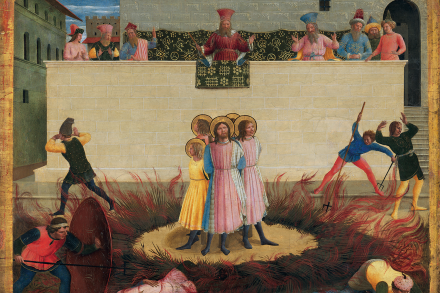
In 1982, Pope John Paul II surprised a few people by beatifying Fra Angelico, the 15th-century Dominican friar from near Fiesole. It’s not clear why he put Beato Angelico on the road to sainthood, given that the artist didn’t perform any miracles. And yet, after spending a few hours immersed in his works, which are both profoundly sacred but also staggeringly beautiful, you begin to understand the decision. He was certainly a hit with popes.

A remarkable insight into Le Carré’s working methods

Exhibitions

When Richard Ovenden of the Bodleian Library wrote to John le Carré asking if the writer would leave it his papers, he got more than he could ever have bargained for. Le Carré not only responded with enthusiasm, explaining that ‘Oxford was Smiley’s spiritual home, as it is mine’, but also sent along 85 boxes of neatly arranged papers and memorabilia. After le Carré’s death in 2020 came a second larger tranche; the total archive consisted of more than 1,200 boxes. This was a writer who threw nothing out. Selected fruits of this vast haul can be seen in a new and impressive exhibition in the Bodleian’s Weston Library (formerly the New Bodleian).

This museum is a lesson for all curators

Exhibitions

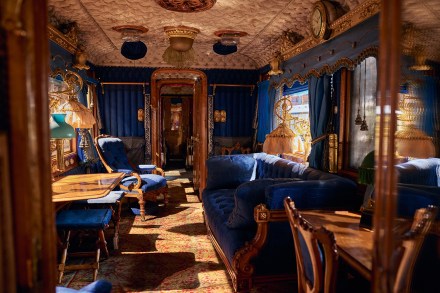
The National Railway Museum is 50 years old, and it’s come over all literary. A quote from Howards End stands at the entrance to the newly refurbished Station Hall: railway termini, proclaims Forster, ‘are our gates to the glorious and the unknown’. T.S. Eliot salutes you on the way out: ‘You are not the same people who left that station.’ Big claims, but as it turns out, largely to the point. The changes to the Station Hall are subtle but numerous, making the argument that as well as being the foundational technology of modern civilisation, railways are a culture in their own right. The aim, say the curators, is to reintroduce the human dimension to a museum that (fairly, and unfairly) is more generally associated with huge, gleaming machines.

The best Turner Prize in years

Exhibitions

So, the Turner Prize: where do we start? It’s Britain’s most prestigious art award, one that used to mean something and now attracts little more than indifference. Taking place every year, it grants £25,000 to a winner chosen from four shortlisted artists, all of whom are obliged to display work together either at Tate Britain, or at a regional gallery. The latest iteration, at Bradford’s Cartwright Hall, is the best in a while – but before we get to that, some context. The Turner was established in 1984, but only really grabbed anyone’s attention when Channel 4 began televising the prize-giving ceremony in the 1990s.

Magnificent: V&A’s Marie Antoinette Style reviewed

Exhibitions

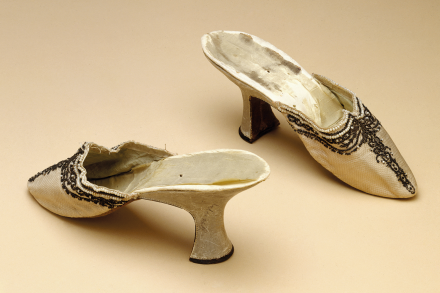
This exhibition will be busy. You’ll shuffle behind fellow pilgrims. But it’ll be worthwhile. It’s a tour de force that tells the story of Marie Antoinette’s 17 years on the throne with detail, focus and flair. There are 34 items here that she owned personally – opulent, carefree objects that resonate with impending disaster. These precious items need protecting from light, and in the first room curator Sarah Grant cleverly runs with this, evoking the candlelit ambience of a Versailles ball by hanging silver baubles from the ceiling and covering the walls with smoked mirrors. Here we have a taste of Marie Antoinette’s wardrobe – its annual budget peaking at £1.

Sondheim understood Seurat better than the National Gallery

Exhibitions

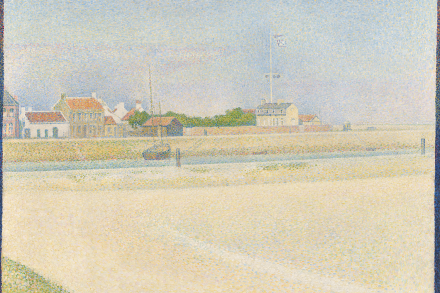
In Sunday in the Park with George, Stephen Sondheim catches something of what makes Georges Seurat so brilliant – not just his technical flair, but his engagement with ordinary life. Sondheim has Seurat sing, or rather woof, a little duet between two dogs meeting on the island of La Grande Jatte; later, Sondheim gives Seurat a pointillist melody as he works, crotchet-dabs of blue, blue, blue, red, red… Seurat’s muse, meanwhile, is called Dot. Seeing the National Gallery’s somewhat overloaded presentation made me long for the light touch of Sondheim.

Dartmoor’s forgotten painter

Exhibitions

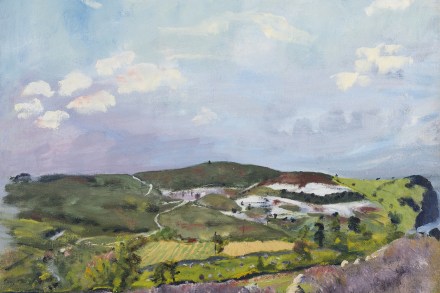
Asolo exhibition opened at Oxford’s Ashmolean in October 1980 that appeared to mark the belated arrival of a major new painter. ‘For an intelligent artist to paint the familiar, and clearly to enjoy painting it,’ wrote critic and dealer David Carritt in the catalogue, ‘now demands single-mindedness and courage. Jean Jones has both.’ The city’s intelligentsia arrived en masse to assess this 53-year-old’s achievements – among them her husband John who was the university’s professor of poetry and her closest friend Iris Murdoch. It looked that year as though Jones might be on her way to the upper echelons of British art.

I’ve had it with Anselm Kiefer

Exhibitions

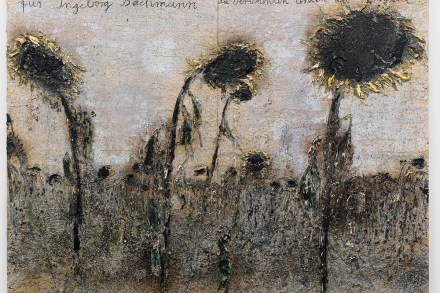
August is always a crap month for exhibitions in London. The collectors are elsewhere, the dealers are presumably hot on their heels, and the galleries are filled with makeweight group shows staged to hold the fort until the end of the holidays. This year, however, even events of that kind are thin on the ground: many establishments have simply shuttered for the month – and given the dire state of the art market, I’m inclined to wonder how many will reopen come September. The doom-auguring sunflower paintings here would look great on the cover of a Metallica record Still, I caught the two Anselm Kiefer shows running concurrently.

Modest, interesting – no masterpieces: Millet at the National Gallery reviewed

Exhibitions

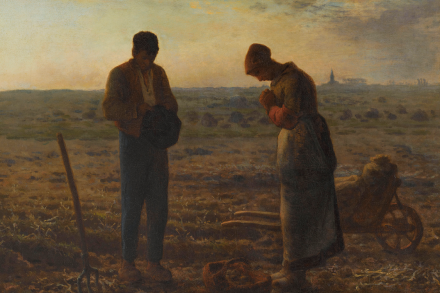
Jean-François Millet (1814-75). One Room. 14 items. Eight paintings. Six drawings and sketches. Modest, interesting. No masterpieces. The show appeals to the contemporary English preference for the unassuming, the humble, the unpretentious. Take ‘The Wood Sawyers’ (oil on canvas, 1850-2). Two figures are sawing a tree trunk with a long two-man bucking saw. Two thick sections have already been cut and the sawyers are busy with a third. The simplified trunk is like a salami, the bark corresponding to the floury skin. The main foreground figure with his blue rump has his foot braced against the trunk and commands our immediate attention. You can see the folds of flesh gathered at the back of his neck as he looks up from the task towards his fellow worker.

Wittily wild visions: Abstract Erotic, at the Courtauld, reviewed

Exhibitions

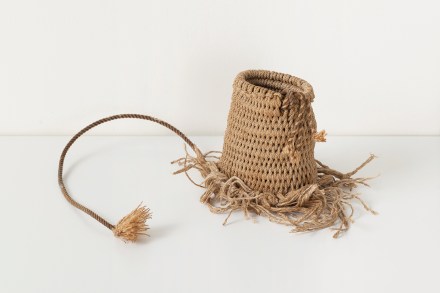
If you came to this show accidentally, or as a layperson, it could confirm any prejudices you might have about avant-garde sculpture. Pretentious, ugly and resorting to kink. Those pendulous string bags, that enormous turd – gimme a break. Except that would be a mistake. Because the work here is the real thing: the 1960s originals that spawned a million imitations and parodies. The exhibition is perhaps a little cool about selling itself, so allow me. This is a snapshot of the work of three artists around the time they all took part in a 1966 New York show called Eccentric Abstraction. Two of the artists, Louise Bourgeois and Eva Hesse, were nascent superstars.

The masterpieces of Sussex’s radical Christian commune

Exhibitions

Ditchling in East Sussex is a small, picturesque village with all the trappings: medieval church, half-timbered house, tea shops, a common, intrusive new housing developments down the road, a good walk from the nearest train station and the Downs on its doorstep. But the resonance of the place owes much to the remarkable artistic activity that has bloomed since Eric Gill moved his family there in 1907. It was part craft commune, part lay monastery, a living experiment in distributism, the radical Christian political philosophy that held that land should be distributed as widely as possible. It was an attempt to resurrect the medieval guild.

Beguiling grot, TfL surrealism and Insta-art: contemporary art roundup

Exhibitions

Last month, I got the train down to Margate to interview the Egyptian-Armenian artist Anna Boghiguian (b. 1946), whose exhibition The Sunken Boat: A glimpse into past histories was about to open at the Turner Contemporary. Long story short, the conversation did not go well: Anna reacted to my questions with some irritation, swatting them away like low-flying bluebottles. I got flustered, she got bored, and eventually so did I. We wrapped things up around the 20-minute mark and I ran away to stare into the abyss. It was a shame, because the show was, for the most part, really good.

Grayson Perry has pulled off another coup at the Wallace Collection

Exhibitions

This show was largely panned in the papers when it opened in April, with critics calling it ‘awkward and snarky’, applying that sturdy English put-down ‘arch’, and generally carping at ‘rich insider’ Sir Grayson Perry for posing as an outsider artist. Word-of-mouth reviews were completely different, however, almost as if gallery-goers, free from the necessity of taking an art-historical position, had just really enjoyed the whole bonkers experience. To get to the exhibition, which is down in the former cellars of Hertford House, you first walk through the Wallace Collection, past its gleaming ormolu and onyx treasures.

The greatest decade for British painting since Turner and Constable? The 1970s

Exhibitions

Slowly the canvas was unfurled across the concrete floor of a warehouse on an industrial estate in Suffolk. On and on it went, a flurry of paint marks and brush strokes, yellow, green and occasionally blue, like a cornfield at harvest time. By the time we got to the end some seven metres of it lay stretched out at our feet. It was the first time anyone had seen this unknown magnum opus by Gillian Ayres since it was rolled up in 1974 – and it looked sensational. Recently I’ve been reflecting on the 1970s for a couple of reasons. One is that I’m working on a book about art in London at that time, the other is that I’ve been helping to organise an exhibition of Ayres’s work from that era at the Heong Gallery, Downing College, Cambridge. Of course, as L.P.

The architects redesigning death

Exhibitions

Unesco doesn’t hand out world-heritage status to absences, but if it did, there would be memorials all over the western world to our genius in erasing death from our consciousness. We have airbrushed the deceased from our lives with a ruthless efficiency, banishing them to suburban cemeteries where they can spend eternity unvisited. Burials and cremations are today spiritless, functional affairs, death rituals perfunctory, public grieving rare, graves unworthily negligible or unspeakably vulgar, our wakes pretexts to get drunk and obliterate the memory of what just happened. I exaggerate, but not much. The Maltese architect Anthony Bonnici wants to change all that.

The cheering fantasies of Oliver Messel

Exhibitions

Through the grey downbeat years of postwar austerity, we nursed cheering fantasies of a life more lavishly colourful and hedonistic. Oliver Messel fed them: born into Edwardian privilege, the epitome of well-connected metropolitan sophistication, he doubled up as interior decorator and stage designer, creating in both roles a unique style of rococo elegance and light-touch whimsy that sweetened and consoled – ‘a gossamer world of gilded enchantment’ as Roy Strong soupily put it. ‘Marie Antoinette would have felt at home in any of his settings.’ Like his rival Cecil Beaton, Oliver Messel sums up an era Posterity has not been kind to Messel.

London’s best contemporary art show is in Penge

Exhibitions

If you’ve been reading the more excitable pages of the arts press lately, you might be aware that the London gallery scene is having one of its periodic ‘moments’. A fair few spaces, mostly concentrated around Fitzrovia, have sprouted up since the pandemic, notable for their bacchanalian openings and tantalisingly gnomic Instagram posts. Their online presence is at best spectral: the most hyped of the bunch, a Smithfield gallery called Ginny on Frederick, has a holding page in place of a website. Still, I like a scene, and London Gallery Weekend, an annual June event, presented a good opportunity to investigate. Niso gallery, on New Cavendish Street, has put on a seductive showing of the Argentinian conceptualist Martina Quesada (open until 28 June).

How do you exhibit living deities?

Exhibitions

The most-watched TV programme in human history isn’t the Moon landings, and it isn’t M*A*S*H; chances are it’s Ramayan, a magnificently cheesy 1980s adaptation of India’s national epic. The show has a status in India that’s hard to overstate. Something like 80 per cent of the entire population watched its original run; in rural areas entire villages would crowd around a single television hooked up to a car battery. When the show ended, omitting the ‘Uttara Kanda’, the fairly controversial last book of the original poem, street sweepers across the country went on strike, demanding the government fund more episodes. The government caved. But while every country has its pieces of cult media, in India the cult is literal. Some viewers would take a ritual bath before tuning in.

Why you didn’t want to get on the wrong side of Cecil Beaton

Exhibitions

‘Remember, Roy, white flowers are the only chic ones.’ So Cecil Beaton remarked to Roy Strong, possibly as a mild put-down to the young curator. But it was a curious put-down to make because Beaton broke his own rule happily, buying mountainous armfuls of speckled yellow, pink and scarlet carnations at Covent Garden and longing to fill his borders with Korean chrysanthemums and purple salvias. This small exhibition at the Garden Museum enjoys the sweet-pea surface of Beaton’s creations, while giving a flash of the glinting secateur that also made up such an important part of his personality. Beaton’s ability as an image-maker was astounding. Those famous photos of his Cambridge days with the Bright Young Things are still outrageous, a mad foray into camp pastoral.

V&A’s new museum is a defiant stand against the vandals

Exhibitions

In last week’s Spectator, Richard Morris lamented museum collections languishing in storage, pleading to ‘get these works out’. There’s an alternative solution: bring the public in. V&A East Storehouse, which opened last weekend, was designed by New York architects Diller Scofidio + Renfro to do just that. The museum’s collections were previously holed up in the creaking, late-Victorian Blythe House. The government decided to sell it in 2015, leading the V&A to find a new home in the Olympics’s former Broadcasting Centre in Hackney Wick, a big box since rebadged as Here East, an ‘innovation campus’. The Storehouse’s entrance indeed blends in with the startups and students sharing the building.

Fascinating royal clutter: The Edwardians, at The King’s Gallery, reviewed

Exhibitions

The Royal Collection Trust has had a rummage in the attic and produced a fascinating show. Displayed in the palatial gallery adjacent to Buckingham Palace, and described on headsets in the reassuring tones of Hugh Bonneville, are public tokens and personal treasures of two generations: Edward VII and Queen Alexandra, and George V and Queen Mary. Frocks, clocks and diplomatic gifts; purchases and mementoes that give the illusion that the royal family might be, after all, not so unlike us. There’s an unusual tea set, with odd, red photos: as princess, Alexandra took family snaps and had them printed on to these porcelain teacups in 1892, more than 100 years before Moonpig.

Architecture has hit a nadir at the Venice Biennale

Exhibitions

Much of Venice’s Giardini this year was as boarded up as a British high street. The Israeli pavilion was empty, apparently awaiting refurbishment. (At the 2024 art biennale, the curators had closed it in the face of pro-Palestinian protests, prompting the latter to demand it should be opened, presumably so they could protest its closure.) The Russian pavilion has been shut, by order of the Biennale, because of the Ukraine war. The Venezuelan pavilion was closed (‘Go look at nature instead,’ said the workman when I approached it.) The Czechoslovakian was shut, the turns taken by the two independent nations faltering during Covid.

Decent redesign, ravishing rehang: the new-look National Gallery reviewed

Exhibitions

A little under a year ago, it emerged that builders working on the redevelopment of the National Gallery’s Sainsbury Wing had discovered an unusual time capsule embedded in a pillar they had been instructed to knock down. It contained a letter signed by Sir John Sainsbury, who, along with his brothers, had thrown the museum a £50 million lifeline to realise the extension in 1990; and clearly, he wasn’t happy with the way his money was being spent. He expressed this with no small amount of elegance: ‘If you have found this note,’ his missive read, ‘you must be engaged in demolishing one of the false columns that have been placed in the foyer of the Sainsbury Wing of the National Gallery.

Poise and gentleness: Hiroshige, at the British Museum, reviewed

Exhibitions

Why is Hiroshige’s work so delightful? While his close predecessor Hokusai has more drama in his draughtsmanship, Hiroshige’s pastoral visions conjure a sense of timeless continuity that appealed to his contemporaries as much as to present-day teens who love the merch. His is a world in which everything has happened before, and will happen again. People race for shelter from a sudden shower of rain; a finely dressed lady adjusts her slipping belt. Human life seems small and predictable against his vast mountains and limpid lakes.

The two young women who blazed a trail for modernism in Ireland

Exhibitions

In 1921, the sternly abstract cubist Albert Gleizes opened the door of his Parisian apartment to two young women in their twenties, the Irish artists Evie Hone and Mainie Jellett. They explained that they wanted him to teach them his method of ‘extreme cubism’. He wasn’t sure that he had a method, nor whether it was teachable. They were inexorable. Their gentle voices and their tenacity, he wrote later, terrified him, and he capitulated. They had accepted his pronouncements on ‘painting without subject’; now they wanted to know how. They were to be trailblazers for modernism in the newly independent Ireland, Jellett as a painter and Evie as both painter and artist in stained glass – the striking east window in Eton College is her work.

Prepare to feel nauseous at this School Dinners exhibition

Exhibitions

If your stomach turns when you walk past a Japanese restaurant with moulded plastic replicas of sushi on display, prepare to feel even more nauseous in the School Dinners exhibition at the Food Museum in Stowmarket, Suffolk. Here, moulded in that same plastic, in (if anything) even more garish colours, you’ll see a sample two-course school dinner from each decade from the 1940s to the 2020s. If orange PVC cod’s roe looks a bit disgusting, a heap of pale, lumpy, plastic 1970s mashed potato with over-boiled carrots is even worse. The sample plate from the 1940s contains chunks of dark brown liver polluting the inside of a jacket potato. (I’m not sure dinner ladies would have put liver inside a jacket potato in the 1940s.

The polarising poet, sculptor and ‘avant-gardener’ who maintained a private militia

Exhibitions

Not many artists engage in the maintenance of a private militia, and it seems fair to assume that those who do may be bound to polarise. The Scottish poet, sculptor, ‘avant-gardener’ and would-be revolutionary Ian Hamilton Finlay was just such a figure: and boy, did he polarise. To his fans, he is a cult figure in the true sense, a limitlessly inventive visionary whose Lanarkshire home and garden remain a site of pilgrimage. To his detractors – notably, a number of vocal Finlay-bashers in the English press – he was a crank, a provincial megalomaniac possessed of artistic, literary and dictatorial pretensions quite out of proportion to his ability.

Was Sir John Soane one of the first modernists?

Exhibitions

Sir John Soane’s story is a good one. Born in 1753 to a bricklayer, at 15 he was apprenticed to George Dance the Younger and at 18 had moved on to Henry Holland. Later came major commissions, a professorship, a knighthood and gold medals. Fame followed. Along the way he added an ‘e’ to his surname and married Eliza Smith, an heiress whose fortune helped him to buy three houses in Lincoln’s Inn Fields as well as the collection that still fills one of them, which he left to posterity as a museum when he died in 1837. Soane’s son compared the image of his father in a library to ‘a eunuch in a seraglo’ Success attracts critics, though, and one of the keenest was Soane’s estranged son George.