Culture

Culture

The good, the bad and the ugly in books, exhibitions, cinema, TV, dance, music, podcasts and theatre.

Embarrassment of riches: South Asian Miniature Painting, at MK Gallery, reviewed

Exhibitions

In 1633, British merchants travelling east were issued with a royal command from Charles I: ‘As the king has considered that there is a great deal of learning fit to be known written in Arabic, and great scarcity of Arabic and Persian books in this country… every ship… at every voyage shall bring home an Arabic or Persian manuscript book, to be delivered to… the Archbishop of Canterbury, who shall dispose of them as the King shall think fit.’ One suspects that a hunger for learning wasn’t the whole story, and that the sight of the exquisite illustrations adorning books sent from India as diplomatic gifts had whetted Charles I’s collector’s appetite. He wasn’t alone.

‘You cannot begin by calling me France’s most famous living artist!’: Sophie Calle interviewed

Exhibitions

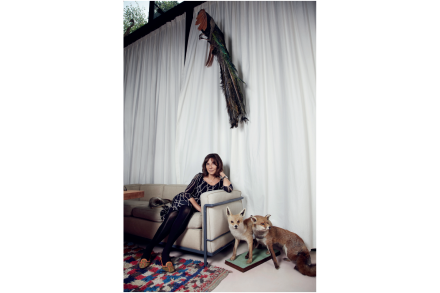
‘You cannot begin by calling me France’s most famous living artist!’ Thus Sophie Calle objected to the first line of the obituary I wrote for her, commissioned for the enormous exhibition, À toi de faire, ma mignonne (‘Over to you, sweetie’), that currently occupies the whole Musée National Picasso-Paris. But modesty aside, it is a fact that no other French artist alive today is so celebrated, loved, debated, denounced and, indeed, imitated, around the world as Calle. Having long mined her own life for her work, Calle now happily mines her death This year is the 50th anniversary of Picasso’s death and that his most important museum should officially mark this by inviting Calle to take over its institution, replacing all his work with her own, is a brilliant provocation.

The importance of lesbianism to British modernism: Double Weave, at Ditchling Museum, reviewed

Exhibitions

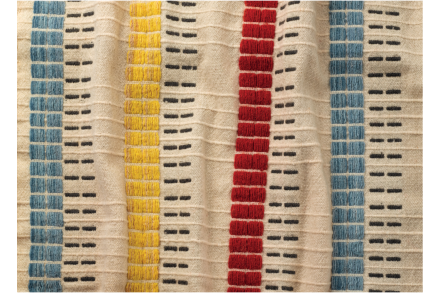
The name of Ditchling used to be synonymous with Eric Gill, but since he was outed as an abuser of his own daughters the association has become an embarrassment. Obliged to quietly drop its most famous name, Ditchling Museum of Art + Craft has been exploring less controversial connections. Its latest show, about Bourne and Allen, is a tribute to a forgotten creative partnership that casts a fascinating sidelight on the contribution of women’s traditional crafts – and lesbianism – to British modernism. After the Festival Hall put them on the map, they were approached to weave the fabrics for Ben-Hur Hilary Bourne was a Ditchling girl.

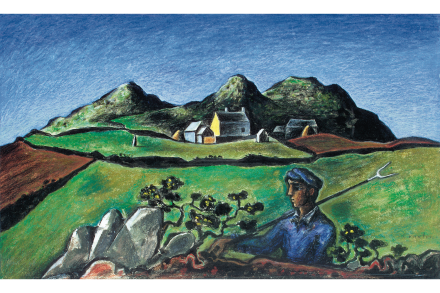
Why did this brilliant Irish artist fall off the radar? 

Exhibitions

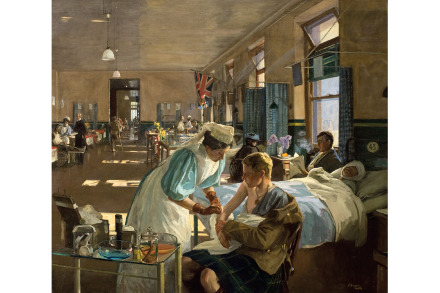
Sir John Lavery has always had a place in Irish affections. His depiction of his wife, Hazel, as the mythical figure of Cathleen ni Houlihan, which appeared on the old ten shilling and subsequently on the watermark of the Irish pound notes, meant, as the joke went, that every Irishman kept her close to his heart. He was indeed Irish – born in Belfast – but was at home in Scotland, and was the best known of the spirited group of painters called the Glasgow Boys. Yet he lived most of his life in London, was friends with Winston Churchill (they took a painting trip together) and also with Michael Collins, the Irish Nationalist, with whom Hazel was, ahem, close. If ever there were a man who embodied the interconnectedness of Britain and Ireland, it was Lavery.

How Philip Guston became a hero to a new generation of figurative painters

Exhibitions

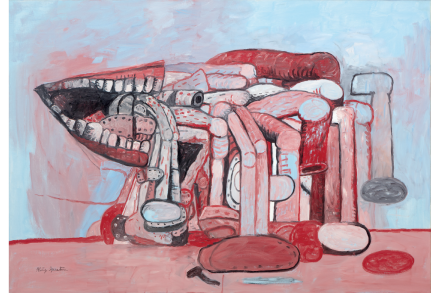
Why do painters represent things? There was a time when the answers seemed obvious. Art glorified power, earthly and divine, and provided moral exemplars of how to behave – in the case of sacred paintings – or how not to in the case of profane ones. When modernism threw all that into doubt, the picture frame remained. The question for modern artists was, what to put in it? Fifteen years of non-representational painting prompted Guston to question its usefulness For the first decade of his career, Philip Guston had an old-fashioned answer: the murals he painted in the style of Italian Renaissance frescoes in the US and Mexico during the 1930s promoted ideals of social justice.

Proof that Rubens really was a champion of the female sex: Rubens & Women, at the Dulwich Picture Gallery reviewed

Exhibitions

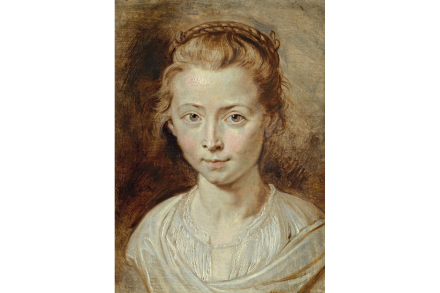
‘She is a princess endowed with all the virtues of sex; long experience has taught her how to govern these people… I think that if Her Highness could govern in her own way, everything would turn out very happily.’ The ‘princess’ in question was Isabel Clara Eugenia, Infanta of Spain and regent of the Spanish Netherlands; ‘these people’ were the pesky, ungovernable Flemings and the author of the glowing testimonial was Peter Paul Rubens who, since the death of Isabel’s husband the Archduke Albert in 1621, had become her trusted diplomatic adviser. It was quite a step up for a mere court painter, especially one with a skeleton in the family closet.

Marina Abramovic’s show is only of interest to diehard fans

Exhibitions

‘Do women have to be naked to get into the Met Museum?’ More than 30 years after the Guerrilla Girls posed this question on their feminist poster, the answer suggested by the Royal Academy’s Marina Abramovic retrospective – touted as the first solo show by a woman artist in the main galleries – is: ‘They don’t have to, but it helps.’ Abramovic achieved fame in the 1970s with a series of gruelling performances that tested the limits of her mental and physical endurance.

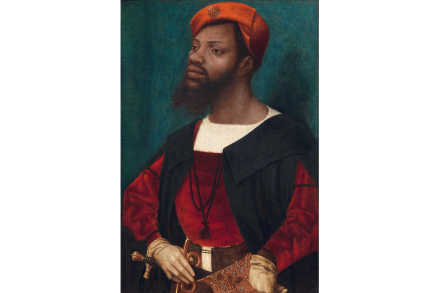
You don’t have to be ‘woke’ to be troubled by the Fitzwilliam Museum’s links to slavery

Exhibitions

What happens when a museum outlives the worldview of its founder? For publicly funded museums with collections amassed during the Empire that no longer reflect the perspectives of a post-imperial multiracial audience, it’s a difficult question. For the Fitzwilliam Museum, there’s an added embarrassment: the £100,000 bequest from Richard, 7th Viscount Fitzwilliam with which it was endowed and built in 1816, was based on an inheritance from the Anglo-Dutch merchant Matthew Decker, Fitzwilliam’s grandfather and a founding director of the South Sea Company that transported more than 50,000 captured Africans across the Atlantic in the first half of the 18th century. Worse, interest on the endowment still contributes to the museum’s funding.

Surreal, pacy and fun: Christian Marclay’s Doors, at White Cube, reviewed

Exhibitions

Sliding doors may change your life, but there’s no mystery in their transparency. A hinged wooden door is another matter; you’re never quite sure what’s behind it. Christian Marclay has a thing about doors; not an obsession, he insists, just a general interest ‘in things we don’t pay much attention to’. For the British launch of his new video montage ‘Doors’ he has filled the ground-floor gallery of White Cube Mason’s Yard with doors picked out of London skips, sawn up and reassembled into what could be taken for minimalist sculptures if the knobs, knockers, locks and hinges weren’t still attached: ‘I don’t want to mess about with their “doorness”,’ he explains.

Lyrical and dreamlike: A World of Private Mystery – British Neo-Romantics, at the Fry Art Gallery, reviewed

Exhibitions

‘My daughter’s moving to Saffron Walden, away from all this,’ said the railway man at Stratford station, gesturing at the tower blocks overlooking the platform. ‘It’s like going back to the 1970s and ’80s.’ For the neo-romantics the pastoral mode was an escape from the grimness of everyday wartime reality Further back, in the case of Saffron Walden’s Fry Art Gallery. Purpose-built by a Victorian banker to house his collection, this gem of a gallery has since been devoted to collecting and showing artists who have lived and worked in north-west Essex, beginning with the group that congregated around Edward Bawden and Eric Ravilious in Great Bardfield from the 1930s.

The greatest artist chronicler of our times: Grayson Perry, at the Edinburgh Art Festival, reviewed

Exhibitions

The busiest show in Edinburgh must be Grayson Perry: Smash Hits which, a month into its run, still has people queuing at 10 a.m. His original title, National Treasure, was rejected because ‘national’ is a politically loaded term in Scotland. But Perry’s lens is resolutely fixed on England and Englishness. Seen from a Scottish perspective, this riot of rococo folkishness is familiar and exotic. Grayson Perry is the greatest artist chronicler of our times, with an omnificent style that’s all substance The exuberant exhibition, which is curated by the National Galleries of Scotland but showing at the Royal Scottish Academy and ends on 12 November, slaps the viewer around the face with its huge narrative tapestries, prints and pots.

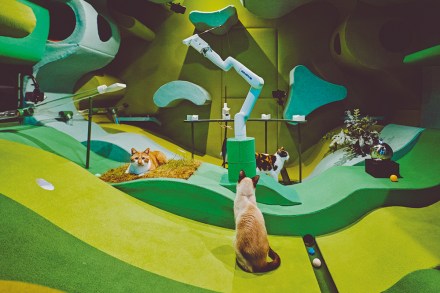
At the Science Gallery I argued with a robot about love and Rilke

Exhibitions

A little-known fact about the Fairlight Computer Musical Instrument, the first sampling synthesiser, introduced in 1979, is that it incorporated a psychotherapist called Liza. Stressed musicians could key in an emotional problem and Liza would begin the session with the soothing opening: ‘What is it that troubles you about x?’ She was flummoxed by a frivolous question from my husband, an early Fairlight owner, about a hole in her bucket but dealt expeditiously with my nine-year-old stepson. When he told her to get lost, she shut the system down.

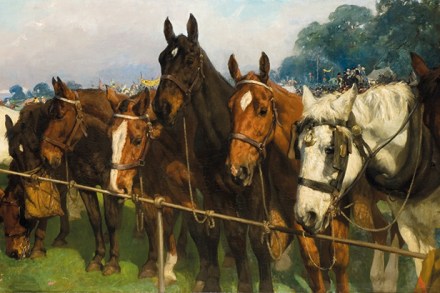
An extraordinary woman: The Art of Lucy Kemp-Welch, at Russell-Cotes Art Gallery, reviewed

Exhibitions

In March 1913 two horse painters met at the Lyceum Club to discuss the establishment of a Society of Animal Painters to raise the profile of their genre. Of the two, it was Alfred Munnings whose profile needed raising. Lucy Kemp-Welch had been a celebrity since her twenties when her 5x10ft canvas ‘Colt Hunting in the New Forest’ caused a sensation at the 1897 RA Summer Exhibition and was purchased by the Chantrey Bequest for the new National Gallery of British Art on Millbank. She threw herself into every activity she depicted, whether rounding up colts or hauling timber The daughter of a Bournemouth solicitor, Kemp-Welch had been riding and sketching horses since the age of five and had developed a photographic memory for catching them in action.

Lumpy, bulgy, human: Threads, at Arnolfini Bristol, reviewed

Exhibitions

Trophy office blocks designed as landmarks are not welcoming to humans; their glass and steel reception areas feel more suited to robots. But this summer the cavernous lobbies of two City buildings – 99 Bishopsgate and 30 Fenchurch Street – have been humanised by To Boldly Sew, an exhibition of wall hangings by the winner of this year’s Brookfield Properties Crafts Award, Alice Kettle. As the owners of Renaissance palazzi and Jacobean mansions understood, wall hangings bring warmth and colour to a cold interior: once more prized than paintings, they doubled as decorations and draught excluders. Now, dignified with the name of ‘fibre arts’, fabrics are back in the fine-art fold and most of the artists working with them are women.

The wonders of 18th-century automata

Exhibitions

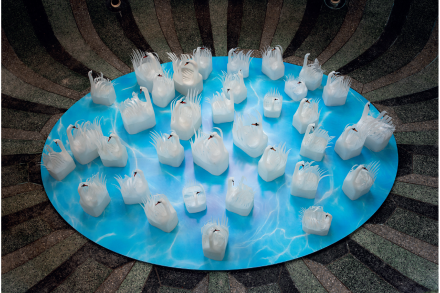
At the Paris International Exhibition of 1867, Mark Twain was mesmerised by a life-sized silver swan with ‘a living grace about his movement and a living intelligence in his eyes… swimming about as comfortably and unconcernedly as if he had been born in a morass instead of a jeweller’s shop’. The Silver Swan has been its leading attraction, drawing spellbound visitors to its afternoon performances The jeweller’s shop this mechanical marvel had been born in 100 years earlier was Cox’s Jewelry Museum in London, but its mechanism of 700 components powered by three clockwork motors was the invention of Belgian-born horologist John Joseph Merlin (1735-1803), aka ‘the Ingenious Mechanic’.

Huge, impersonal canvases designed for the walls of billionaires: Tate Modern’s Capturing the Moment reviewed

Exhibitions

‘Photography has arrived at a point where it is capable of liberating painting from all literature, from the anecdote, and even from the subject. So shouldn’t painters profit from their newly acquired liberty, and make use of it to do other things?’ argued Picasso. The inventor of cubism took advantage of his liberty in ‘Buste de Femme’ (1938) to turn Dora Maar into a precursor of Peppa Pig, flaring her nostrils to form a snout. Perhaps he wanted to teach a photographer a lesson about paint by rubbing her nose in it. Picasso didn’t abandon the subject or the anecdote.

Fascinating forgeries: Art and Artifice – Fakes from the Collection, at the Courtauld, reviewed

Exhibitions

In 1998 curators at the Courtauld Institute received an anonymous phone call informing them that 11 drawings in their collection were fakes. The caller intimated that he was an associate of the notorious forger Eric Hebborn, who had claimed in his 1991 memoir, Drawn to Trouble, to have sold the institute a fake Rowlandson. The Sienese turned their training as restorers of Renaissance paintings to more profitable use The Courtauld had, in fact, already rumbled the Rowlandson before Hebborn boasted of putting one over on it; now it looked like it could be more than one. The other ten included three sketches by Tiepolo, three by Guardi and a drawing by Michelangelo.

Joshua Reynolds’s revival

Exhibitions

In front of the banner advertising the RA Summer Exhibition, the swagger statue of Sir Joshua Reynolds (1723-92) by Alfred Drury stands garlanded with flowers. But the Academy he founded won’t be marking his tercentenary with a retrospective, just a small display and a series of artists’ lectures. For an anniversary show, you have to travel to his native Devon. Ever since the Pre-Raphaelites dubbed him ‘Sir Sloshua’, Reynolds has been out of fashion Ever since the Pre-Raphaelites dubbed him ‘Sir Sloshua’, Joshua Reynolds has been out of fashion: blame the outmoded ideals of beauty he promoted in his Discourses and his role as portraitist to the Georgian establishment.

Two artists who broke the rules: Soutine | Kossoff, at Hastings Contemporary, reviewed

Exhibitions

Rules in art exist to be broken but it takes chutzpah, which could explain why so many rule-breakers in modern figurative art were Jewish. Given that they were breaking the law by making figurative art in the first place, they went for broke. Where Soutine’s subjects look small and doll-like, Kossoff’s feel monumental regardless of scale Born a generation apart, Chaïm Soutine (1893-1943) and Leon Kossoff (1926-2019) had much in common. Both were brought up in Jewish working-class families with no pictures on the walls: Soutine the son of a Belarusian tailor; Kossoff, of a Ukrainian immigrant baker in London’s East End. Both were rule-breakers – Soutine because he didn’t have the patience for the rules, Kossoff because he had difficulty following them.

Birmingham barbershop meets the Folies-Bergère: Hurvin Anderson’s Salon Paintings, at the Hepworth Wakefield, reviewed

Exhibitions

There’s a nice irony to the title Salon Paintings when the salon in question is a barbershop, an irony that won’t be lost on Hurvin Anderson. Born to Jamaican parents in Birmingham in 1965 and trained at Wimbledon and the Royal College at a time when the Euston Road School discipline of measured observation was still being taught in English art schools, Anderson is steeped in the European painting tradition. Explaining the fascination of the mirrored interior of the Birmingham barbershop that first inspired the series of paintings in his exhibition at the Hepworth Wakefield – begun in 2006 and completed this year – he compares it to Manet’s ‘Bar at the Folies-Bergère’: the barbershop as the Caribbean equivalent of the impressionist café.

The 19th century Chinese craze for all things European

Exhibitions

By the 1800s, the mechanical clock had become a status symbol for wealthy Chinese. The first arrived with Jesuit missionaries and Portuguese merchants years earlier, but it wasn’t until the early 19th century that those outside of the imperial court could afford them. Rich merchant families displayed their clocks proudly, like their European counterparts had showed off pineapples. Women’s jackets started to be decorated with ‘clock buttons’ made of enamel and one family embroidered a clock face on to their baby’s silk bib. European aesthetics made their way into other parts of Chinese society too. Traditional ink portraits became colourful and hyper-realistic, inspired by photography. Courtesans learned to play billiards and ate in restaurants decorated like European salons.

Exceptional career woman, unexceptional painter: Lavinia Fontana, at the National Gallery of Ireland, reviewed

Exhibitions

Reviewing the Prado’s joint exhibition of Sofonisba Anguissola and Lavinia Fontana in the Art Newspaper three years ago, Brian Allen pronounced it well worth seeing but predicted that each of these pioneering 16th-century women artists ‘would wither in the spotlight of her own retrospective’. Was he right? In its new monographic exhibition devoted to Fontana, the National Gallery of Ireland puts his waspish prediction to the test. Her ‘Galatea and Cherubs’ and ‘Venus and Mars’ are believed to be the first nudes painted by a woman Ireland’s National Gallery was an early investor in Fontana, acquiring her most ambitious work, ‘The Visit of the Queen of Sheba to King Solomon’ (1599), eight years after opening in 1864.

As seductive as Chagall: Sarah Sze’s The Waiting Room reviewed

Exhibitions

Exiting Peckham Rye station, you’re not aware of it, but standing on the platform you can see a mansard roof with ornamental railings silhouetted against the sky like a French chateau. Designed in the 1860s by Charles Henry Driver, architect of Sao Paolo’s Estacao da Luz, it once covered a vaulted waiting room which, after an intermediate existence as a billiard hall, was closed to the public in 1962. In short, it is just the sort of hidden space to tickle the fancies of impresarios-at-large Artangel, who have made it the site of the first UK installation by American artist Sarah Sze.

The Georgian fashion revolution

Exhibitions

Normally, when you look at portraits you feel obliged to focus on the sitter. But quite often you’re thinking, ‘Ooh, what a lovely frock.’ Or, ‘Fabulous breeches!’ Here it’s the costumes that take centre stage. The point that this exhibition makes is that costume spoke volumes about society, particularly in the long 18th century, over the course of the reigns (and regency) of the four Georges. Compare the flounces and silk of a portrait of Queen Caroline in 1771 with the simple classical white muslin cotton of Princess Sophia in 1796 and you find nothing less than a revolution. The change resembles what happened in dress after the Great War: bye-bye Edwardian hourglass, hello flapper. Here cotton, a fabric inexorably associated with slavery, tells a larger story.

The quiet genius of Gwen John

Exhibitions

In the rush to right the historical gender balance, galleries have been corralling neglected women artists into group exhibitions: the Whitechapel Gallery rounded up 80 women abstract expressionists for its recent Action, Gesture, Paint show. But imbalances can’t be corrected retrospectively. Rather than elevating women artists who didn’t make it in a male-dominated world – not all of whose work, if we’re honest, helps the female cause – we should be celebrating the grit and talent of the few who did. And Berthe Morisot and Gwen John – currently the subjects of solo shows at Dulwich Picture Gallery and Pallant House – had both in spades.

Hitching them together does neither any favours: Hilma af Klint & Piet Mondrian, at Tate Modern, reviewed

Exhibitions

In July 1928, an unknown Swedish woman artist mounted a solo show of her revolutionary abstract paintings at the World Conference on Spiritual Science in London. It was a moment the 65-year-old Hilma af Klint had waited a long time for, but her confident prediction 20 years earlier that ‘the experiments I have undertaken will astound humanity’ was not fulfilled. So deafening, in fact, was the critical silence that greeted her work that she left instructions for it to remain under wraps until 20 years after her death. The world wasn’t ready for her ‘future pictures’. Entering the room devoted to Mondrian’s signature grids, you could be in a different exhibition What a difference a century makes.

Rossetti’s muse was a better painter than he was: The Rossettis, at Tate Britain, reviewed

Exhibitions

‘A queer fellow’ is how John Everett Millais described Dante Gabriel Rossetti after his death, ‘so dogmatic and so irritable when opposed.’ What’s queer in England is quite normal in Italy, where heated arguments are described as ‘discussioni’, but history has tended to forget that Rossetti was Italian. His fellow Pre-Raphaelites, however, were very conscious of his foreignness, though Holman Hunt found the ‘maccaroni’ served at the Rossetti family table – where you were as likely to meet Giuseppe Mazzini as Niccolo Paganini – ‘delicious’.

Is milk racist?

Exhibitions

I was tired when I went to see Milk at the Wellcome Collection, having been up for much of the night feeding my baby. In European and Christian imagery, one sign said, ‘a lactating woman often represents fertility, charity and abundance’, but I was not feeling full of the milk of human kindness. Nor was I in the mood to be lectured about the evils of feeding children milk. As it turned out, this wasn’t really a show about milky motherhood. Cows and women produce milk but it’s unfashionable to dwell too much on that detail. The exhibition has a few sculptures of women; mostly they are headless. A massive black udder greets visitors as they arrive, but the focus of the show is on milk as a ‘highly politicised liquid’.

Artists’ dogs win the rosettes: Portraits of Dogs – From Gainsborough to Hockney, at the Wallace Collection, reviewed

Exhibitions

Walking on Hampstead Heath the December before Covid, I got caught up in a festive party of bichon frises dressed, like their owners, in Christmas jumpers. It seemed bizarre at the time but wouldn’t surprise me now. During lockdown the local dog population exploded and the smaller breeds now wear jumpers all winter. There are no dogs in jumpers in the Wallace Collection’s new show – though, given the level of anthropomorphism, there might as well be. The ‘Allegorical Dog’ section, devoted to Edwin Landseer, includes ‘Trial by Jury’ (c.1840) with a poodle sitting as judge, and a canine interpretation of the parable of Dives and Lazarus featuring a well-fed St Bernard guarding a bone from a hungry terrier (see below).