Culture

Culture

The good, the bad and the ugly in books, exhibitions, cinema, TV, dance, music, podcasts and theatre.

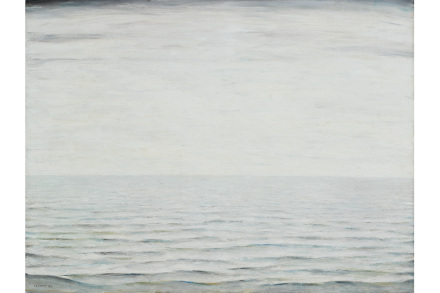
The most original sea painter since Turner? Lowry

Exhibitions

In 1958 an elderly gentleman staying at the Castle Hotel in Berwick-upon-Tweed gave the receptionist a doodle he had made on the hotel’s notepaper. She kept it in a box and 43 years later, on the advice of Antiques Roadshow, sold it at auction for £8,000. ‘I don’t think anyone since Turner has looked at the sea with such an original eye’ A contemporary photograph shows that gentleman in his trademark trilby, dark suit and tie – no casual wear for L.S. Lowry – standing on the pier with Berwick in the background. Lowry (1887-1976) is not best known for his paintings of the sea, but there are 21 – including the receptionist’s sketch – in this interesting little exhibition in the Northumbrian town which he regular visited, and they cast him in an unaccustomed light.

How Miss La La captured Degas’s imagination

Exhibitions

‘Can you come Saturday morning to my studio, 19 bis rue Fontaine?’ Degas wrote to Edmond de Goncourt in 1879. ‘From 10.30 to half-past noon, I will have my négresse and her partner who will come expressly to be at your disposal.’ Not content with dangling from a rope by her teeth, she suspended a 300-kilo cannon barrel from her jaw It’s not what it sounds like. The ‘négresse’ in question was Anna Albertine Olga Brown, stage name Miss La La, an aerialist at the Cirque Fernando who had been sitting – or more accurately hanging – in Degas’s studio for a painting for that year’s fourth Impressionist exhibition. As his friend was working on a circus novel, he thought he might be interested in meeting her.

Breathtaking: Mary Cassatt at Work, at the Philadelphia Museum of Art, reviewed

Exhibitions

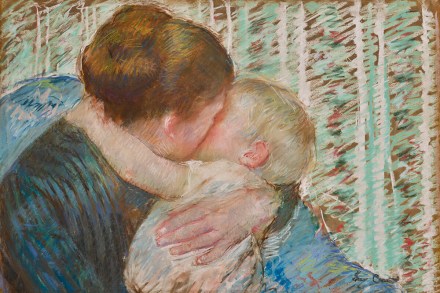
Work – in the sense of toil – is about the last thing a 19th-century painter wished to be associated with. Inspiration and success were gifts bestowed on the lucky few – about as easy to grasp as smoke. For Mary Cassatt, however, art was nothing more than work. ‘Effort upon effort,’ is how she described the process of painting to her friend, the collector Louisine Havemeyer. Pissarro admired her technical skill, Gauguin her charm and strength, but Degas was her true mentor Still, she produced almost 1,000 works in her lifetime, and Mary Cassatt at Work – a new exhibition at the Philadelphia Museum of Art – tells us how. Spoiler: unswerving determination, ambition and, well, work.

Is there still life in British still life?

Exhibitions

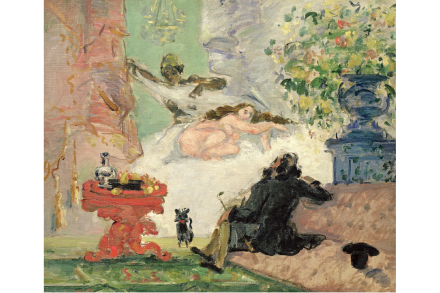
‘The tyrannical rule of nature morte is, at last, over,’ announced Paul Nash in the Listener in 1931. ‘Apples have had their day.’ Since Cézanne fulfilled his famous boast that he would astonish Paris with an apple, artists had been trying the same trick in London, with limited success. Astonishment, unfortunately, only works once. Nash had had it up to here with them apples: tired of post-impressionism, tired of still life. An electric toothbrush occupied the same place in Hamilton’s heart as Mont Sainte-Victoire in Cézanne’s Continental ghosts haunt the tabletops of Pallant House Gallery’s informative new survey of modern and contemporary British still life.

Suppress your groans: this women-only show is fascinating

Exhibitions

In a Victorian art dealer’s shop a woman waits with her young son while the supercilious owner examines her work; behind her two top-hatted gents interrupt their inspection of a drawing of a dancer in a tutu to give her the once-over. The woman’s shabby umbrella, propped against the counter, awaits reopening in the rain outside. She knows what the dealer will say, and so do we. Every picture tells a story, and Emily Mary Osborn’s ‘Nameless and Friendless’ (1857) summarises the plot of Tate Britain’s latest exhibition, Now You See Us. Unlike her picture’s protagonist, Osborn was herself a successful artist in a field dominated by men – not the fate of many of the artists in the Tate’s new survey of four centuries of British art by women.

Beguiling: Yinka Shonibare, at the Serpentine Galleries, reviewed

Exhibitions

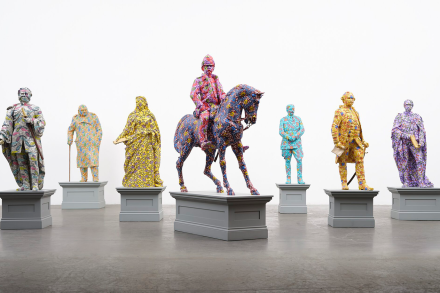
More than seven centuries ago, the medieval cartographer Richard of Haldingham created Hereford Cathedral’s Mappa Mundi; I say ‘created’ because when he drew his map it was largely a work of the imagination. Its terra incognita is populated with bizarre creatures born of the fever dreams of early travel writers: his Africa is inhabited by Monocules, one-eyed, one-legged men who use their single foot as a parasol, and his Asia is roamed by the Bonnacon, a bull-like creature with inward-curling horns whose only defence is his projectile faeces.

Fascinating insight into the mind of Michelangelo

Exhibitions

You’re pushing 60 and an important patron asks you to repeat an artistic feat you accomplished in your thirties. There’s nothing more daunting than having to compete with your younger self, but the patron is the Pope. How can you say no? Besides, it’s an excuse to get away from Florence, where your work for the republicans who expelled the Medici has become an embarrassment since their return. So you tell Pope Clement VII that, yes, you will move to Rome and paint a Last Judgment on the altar wall of the Sistine Chapel.

Kandinsky is the star of Tate’s expressionist show

Exhibitions

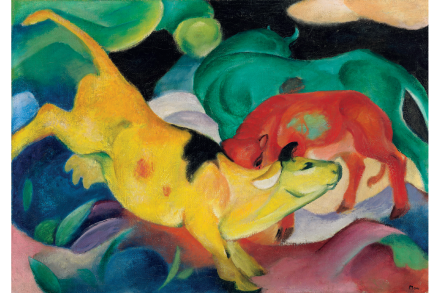
‘We invented the name Blaue Reiter whilst sitting around a coffee table in Marc’s garden at Sindelsdorf… we both loved blue, Marc liked horses and I liked riders, so the name came of its own accord.’ Christened so casually by Wassily Kandinsky and Franz Marc in 1911, the Blue Rider was always more of an idea than an art society, but the Tate Modern’s new exhibition – the first in the UK since 1960 – makes it sound more contemporary by describing it as a transnational collective.

The latest Venice Biennale is ideologically and aesthetically bankrupt 

Exhibitions

Last week’s opening of the 60th edition of the Venice Biennale marks a watershed for the art world. In much of the festival’s gigantic central exhibition, curated by the Brazilian museum director Adriano Pedrosa, as well as in many of the dozens of independently organised national pavilions and countless collateral events, it more obviously than ever before didn’t so much matter what was on show, but why. The politics of visibility and representation has been eating away at the arts for at least a decade, most recently under the banner of ‘decolonisation’. The now nearly complete abdication of aesthetic criteria in favour of a decolonial organising principle is here finally exposed as a wholly inadequate rationale for presenting contemporary art.

How flabby our ideas of draughtsmanship have become

Exhibitions

The term drawing is a broad umbrella, so in an exhibition of 120 works it helps to outline some distinctions. A good place to start is to ask what drawings are for, and that is what Oxford’s Ashmolean Museum has done with its current show of sketches by Flemish masters – staged in collaboration with Antwerp’s Museum Plantin-Moretus – dividing them into studies, designs and stand-alone finished works. Van Dyck’s teenage studies are a measure of how flabby our ideas of draughtsmanship have become If you’ve ever had the chance to visit it, you’ll know what a special place the Plantin-Moretus is.

Impressionism is 150 years old – this is the anniversary show to see

Exhibitions

The time that elapsed between the fall of the Paris Commune and the opening of the first proper impressionist exhibition amounted to less than three years. Over the course of that period, the city had witnessed the collapse of the Second Empire, suffered a siege at the hands of the Prussian army and seen vicious house-to-house fighting between the troops of the Versailles government and thescrappy citizen-army of Paris proper. All Parisians would recall the rivers of blood running down the city’s ritziest shopping streets, zoo animals being butchered for restaurant fodder, and the mass slaughter of rebel prisoners across the public squares of the city’s eastern faubourgs.

The ghostly charcoals of Frank Auerbach

Exhibitions

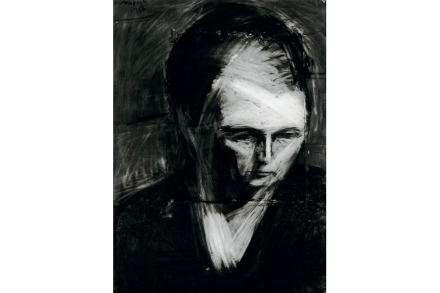
‘In some curious way, the practice of art and the awareness of the imminence of death are connected,’ Frank Auerbach said in 2012. ‘Otherwise, we would not find it necessary to do the work art finally does – to pin something down and take it out of time.’ There’s no sense of the imminence of death in Auerbach’s postwar landscapes of London building sites stirring with new life, but there is in his contemporary charcoal portraits, as scarred and sooty as the Blitzed city in which they were made. Auerbach started making large charcoal drawings from life as a student in David Bomberg’s evening classes at Borough Polytechnic, and carried on because the medium was cheap and allowed the endless revisions he found necessary to pin things down.

Insipid show of a weak painter: Angelica Kauffman, at the Royal Academy, reviewed

Exhibitions

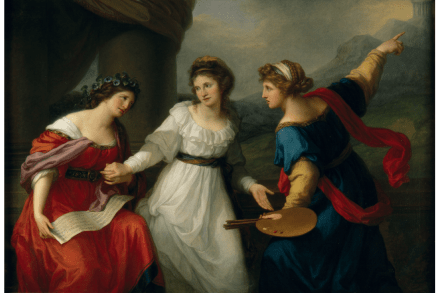
Angelica Kauffman’s funeral in Rome in 1807 was designed by her friend Canova on the model of Raphael’s. The corpse of ‘the great Woman, the always illustrious holy and most pious… was accompanied to the Church by two very numerous Brotherhoods… followed by the rest of the Academicians & Virtuosi who carried in triumph two of her Pictures’. At the Royal Academy in London, the account of her obsequies was read out at the general assembly and entered in the minutes; as a founding member of the institution – one of only two women so honoured, with Mary Moser – Kauffman was gone, but not forgotten. Kauffman was a decorative artist at heart.

The true inventor of the superhero comic? William Blake

Exhibitions

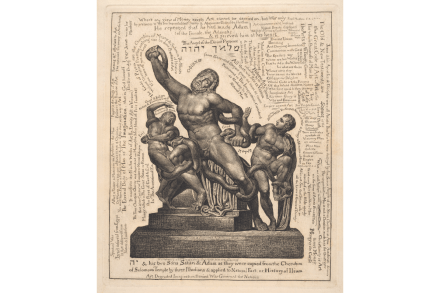
Among the documents in the West Sussex Record Office is an indictment for sedition of a certain William Blake. During an altercation in a Felpham garden in August 1803, he is accused by one John Scofield, a soldier in the British army then at war with France, of having shouted: ‘Damn the King. The soldiers are all slaves.’ Fortunately for the accused, when the case came to trial in Chichester the following January the ‘invented character’ of Scofield’s evidence was judged to be ‘so obvious that an acquittal resulted’. It looks as if Blake got off lightly.

Another exhibition that sees everything through the prism of race

Exhibitions

A wave of totalising race-first exhibitions has swept through UK art institutions of late. The National Portrait Gallery’s remit of ‘reflecting’ British society could reasonably make one wary of its turn at the same project. Indeed, a false, stilted language accompanies curator Ekow Eshun’s The Time is Always Now. To have some 20 artists ‘reframing the black figure’ somehow sounds both ambiguous and politically predetermined. What unites these works is more often a trendy hashtag than ‘lived reality’ Eshun has long been invested in the artistic black diaspora. His 2022 Hayward Gallery show In the Black Fantastic played on fantasy and Afrofuturism and had artists make new worlds that would take over the failing present.

Dazzling but it’s all show: Tate Britain’s Sargent and Fashion reviewed

Exhibitions

Madame Ramon Subercaseaux, the beautiful wife of a Chilean diplomat, was not a Parisienne. So when the 25-year-old John Singer Sargent’s portrait of her in a black and white ensemble straight out of the Renoir playbook won a second-class medal at the 1881 Paris Salon, French pride was wounded. Édouard Pailleron, father of the purebred French children in Sargent’s other Salon submission, kicked up a fuss and had to be placated with another medal. But that was nothing to the scandal that erupted three years later over the American artist’s provocative portrait of femme du monde Virginie Gautreau, salaciously anonymised as ‘Madame X’.

The genius of Yoko Ono

Exhibitions

The first I heard of Yoko Ono was when my sister’s boyfriend brought home a little book of hers called Grapefruit. It was 1970, four years after John Lennon took the bite out of an apple that led to the break-up of the Beatles. The apple had been on a plinth in Ono’s 1966 exhibition at London gallery Indica with a price tag of £200, for which the purchaser was promised the ‘excitement of watching the apple decay’. Lennon then offered Ono an imaginary five shillings to bang an imaginary nail into her conceptual piece, ‘Painting to Hammer a Nail’ (1961). ‘I met a guy who plays the same game I played,’ she reported.

Winning: When Forms Come Alive, at the Hayward, reviewed

Exhibitions

In case you didn’t know, we live in a ‘post-minimalist’ age, sculpturally speaking. Not a maximalist age, though some of the works in the Hayward’s new sculpture show are huge – an age of revolution against neatness. Who’s to blame for this call to disorder? Women. The two prime movers of this movement, if you can call it that, could not be more different, but both rebelled against minimalist geometry. As a student at Black Mountain College in the late 1940s, Ruth Asawa travelled to Toluca, Mexico, and saw villagers looping wire to make baskets for eggs. It struck her as a way of drawing in three dimensions and later, after becoming a mother of six, of working from home.

Like swallowing a pack of Parma Violets: CUTE, at Somerset House, reviewed

Exhibitions

It’s funny how badly some 1960s films have dated. Watch What’s New Pussycat? today and you feel faintly sick. Never mind the chorus line of high-kicking cartoon cupids in the title sequence, what about the lyrics of Tom Jones’s theme song? ‘So go and powder your cute little pussycat nose…’ Yuck. Tim Berners-Lee, asked what uses of his invention he hadn’t foreseen, replied with one word: ‘Kittens.’ But if you think we’ve moved on, you’d better not visit CUTE. Coinciding with the 50th birthday of Japanese cartoon character Hello Kitty, Somerset House’s latest exhibition – ‘a landmark exploration of the irresistible force of cuteness’ – takes as its starting point the craze for funny cat memes unleashed by the internet.

Joyous chaos: Lucy Harwood, at Firstsite, reviewed

Exhibitions

‘Welcome to England’s Most Misunderstood County’, reads an imitation road sign inside the entrance to Firstsite gallery. It’s part of ‘The Essex Way’ (2021), a monumental collage commissioned from local boy Michael Landy to mark the 10th anniversary of the Colchester gallery’s opening. With its discombobulating mix of illustrations of native birdlife and views of landmarks such as the Veolia landfill site at Rainham, Landy’s mural is designed, like the gallery’s current exhibition series, to challenge assumptions about the county now most commonly associated with Towie.

Modern, timeless, effortlessly avant-garde: Pasquarosa, at the Estorick Collection, reviewed

Exhibitions

In February 1929, an exhibition by a young unknown female painter opened at the Arlington Gallery on Bond Street. This was not surprising in itself, given that the gallery specialised in lesser-known artists. More surprising was the fact that this artist was a woman – and Italian. As the critic Emilio Cecchi noted in the catalogue: ‘As regards the best Italian art of today the English public knows very little.’ What piqued people’s interest in this particular Italian artist was her fascinating backstory. Born in 1896 in Anticoli Corrado, a small hill town northeast of Rome known as a nursery for artists’ models, Pasquarosa Marcelli had never painted and was virtually illiterate when she moved to the capital in 1912, aged 16, to work as a model.

The killer satire of James Gillray

Exhibitions

‘I hope the day will never come when I shall neither be the subject of calumny or ridicule, for then I shall be neglected and forgotten’, is how Samuel Johnson greeted the news that James Gillray had caricatured him as Dr Pomposo. In Georgian London, a caricature was a fast-track to celebrity. And, as described by one contemporary observer, the print shop window was ‘the temple of fame in grotesque’. Gillray was chiefly responsible for this. When he emerged on to the print publishing scene in the 1780s, the British art of ‘caricatura’ – an Italian import – was in its infancy. It grew up fast.

The spare, graceful, revelatory sculptures of Kim Lim

Exhibitions

In 1989, the sculptor Lorna Green circulated a questionnaire among 320 of her female peers about their experiences as women in a male-dominated field; three years ago she sent a follow-up survey. The work of 29 respondents to both is currently on show in an instructive exhibition, If Not Now, When? Generations of Women in Sculpture in Britain 1960-2023 at the Saatchi Gallery (until 22 January). They include Kim Lim (1936-97), who is the subject of an overdue retrospective at the Hepworth Wakefield.

David Starkey on the inventor of the portrait

Exhibitions

On 12 November 1549, the 12-year-old Edward VI, newly liberated from the tutelage of his overweening uncle, Lord Protector Somerset, was at last able to enter his father Henry VIII’s private apartments in the Palace of Whitehall. From the extraordinary mixture of treasures and bric-à-brac he found there, he chose one thing: ‘a book of patterns of physiognomies’ by his father’s court painter, Hans Holbein, who had died in 1543. Edward was already familiar with his fellow European rulers from their portraits in the long gallery at St James’s, which seem to have been labelled and arranged as a teaching tool for the boy. Now, on the threshold of power, he wanted to familiarise himself with the establishment of Tudor England.

Masterclass of an exhibition: Impressionists on Paper, at the RA, reviewed

Exhibitions

Viewers have different relationships with small pictures, or perhaps it’s the other way round: small pictures have different relationships with them. A big picture clamours for attention; a small picture you have to lean in to hear. No picture is more intimate than a drawing, and none brings you closer to the artist’s hand. A drawing can’t lie; it wears its facture on its sleeve. If you look closely, you can work out how it was made and even track the artist’s changes of direction. You can see, for instance, how Van Gogh launched into ‘The Fortifications of Paris with Houses’ (1887) in watercolour, then fortified the fortifications with gouache and chalk. A graphic artist by nature, he was at sea with watercolour washes.

Britain’s forgotten female pop artist 

Exhibitions

T o describe Pauline Boty as a ‘pioneer’ is a bit like calling someone a ‘one-off’. It’s not an adequate description of her in any way. Pauline was the only female British pop-art painter of the early 1960s. You may not know of her. She died in 1966, aged 28, and her name has remained very much in obscurity ever since. Pauline, in her youth, appeared to have it all. She had movie-star looks, a provocative intelligence and a magnetic personality. ‘She was beautiful, with this marvellous laugh: clever, very bright, very much the early feminist,’ says designer Celia Birtwell, who lived with her. Male interviewers would ask: ‘What’s a pretty girl like you doing in a place like this?

The art of not taking out the bins: Madelon Vriesendorp, at the Cosmic House, reviewed

Exhibitions

‘I was really angry at this fly,’ the artist Madelon Vriesendorp explains with a grin as I hold out my hand to shake hers, which is in a splint. ‘I jumped onto the bed to swat it, fell over and broke my wrist.’ Vriesendorp is showing me around her latest exhibition, which follows a long list of achievements: she co-founded the ground-breaking architectural practice OMA, and her illustrations of architectural theory defined its visual language for a generation. Now in her late seventies, she’s still characteristically unserious, except about one thing: ‘I’m very serious about jokes.

Rich, beautiful and vital: John Craxton, at Pallant House Gallery, reviewed

Exhibitions

The sensuality of the light in John Craxton’s painting ‘Two Figures and Setting Sun’ (1952-67) has to be seen to be believed. Viewing this large work in Pallant House, you feel its full force. Craxton was concerned with a scene’s essence, rather than simply its appearance and here he achieves not merely an effect but affect. In spite of most of the light being painted in yellows and oranges rather than white, the contrast and refraction of the rays produce a blinding sensation much like staring into the sun on a hot day.   It was as a chorister at Chichester Cathedral that Craxton’s daily encounter with two 12th-century Romanesque bas-reliefs taught him the timelessness of great art; that, even though it was from the distant past, something fresh and modern endured.

Raucous, expressive and laugh-out-loud funny: Nicole Eisenman, at the Whitechapel Gallery, reviewed

Exhibitions

There’s a photograph in Nicole Eisenman’s Whitechapel exhibition of the 28-year-old artist, in 1993, sitting at her easel with a big bow in her hair and a bevy of studio assistants – a feminist piss-take of the trope of the heroic male artist surrounded by adoring acolytes. Her resemblance in the photo to stand-up comic Sarah Silverman is not entirely coincidental; Eisenman is Jewish-American and funny. At the time she was producing the bawdy satires on downtown New York lesbian life – battles of the sexes redrawing Michelangelo’s ‘Battle of Cascina’ in the style of Where’s Wally? – which plaster the wall facing the exhibition entrance. She could have been a cartoonist, but she chose art.