Culture

Culture

The good, the bad and the ugly in books, exhibitions, cinema, TV, dance, music, podcasts and theatre.

Life and Death in Pompeii and Herculaneum

Exhibitions

The Reading Room is currently packed with Roman remains and with visitors attempting (or pretending) to look at them. The latest blockbuster at the BM (sponsored by Goldman Sachs) looks set to exceed all other oversubscribed sensationalist exhibitions, with more than 250 objects in a mazy but airy layout. When I first heard about this show, my main concern was how it could possibly compare or compete with the experience of visiting what’s actually left of the cities of Pompeii and Herculaneum in Italy. The principal attraction of this subject for those with some interest in the fine arts must be the famous wall-paintings, and how could these be transported to London? Yet, as is swiftly apparent on entering the display, there is enough here to make even the specialist excited.

George Bellows; Sydney Lee RA

Exhibitions

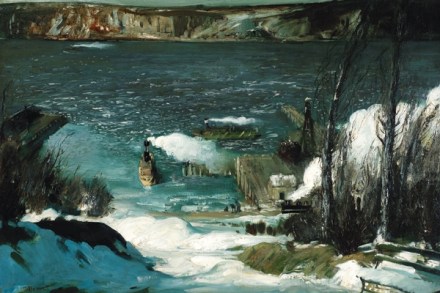
The American artist George Bellows (1882–1925) is best known for his boxing paintings, but as this surprising exhibition reveals, that was only the half of it. We don’t really know his work in this country, apart from the odd picture in a mixed show, but here is indisputable evidence that we have been missing out. Bellows died from appendicitis aged only 42, so this exhibition inevitably offers us work which varies wildly in style and competence, as he tried his hand at different approaches and different subjects. Nevertheless there are at least half-a-dozen paintings of real worth and presence, in addition to the boxing pictures, which I personally find of limited interest, though Bellows’s handling of bodies in dynamic movement is dramatic and convincing.

The Angel of the Odd: an exhibition that ends with a satisfying shiver

Exhibitions

To some extent, all Romanticism has its origins in darkness, coming in the wake of the 1755 Lisbon earthquake that introduced fear into the age of reason. ‘Reason’s Sleep Produces Monsters’ proclaims the opening drawing in Goya’s series ‘Los Caprichos’ (1797–99), which features in this entertaining exhibition. After all the cruelties that man had inflicted on man at the 18th century’s twilight, it was only natural to turn to ghosts and witches for light relief. The exhibition’s title comes from an Edgar Allan Poe story but Goya’s phrase would be equally appropriate. The exhibition starts not with Goya but with F.W.

Shades of Gray | 21 March 2013

Exhibitions

The Anglo-Irish designer Eileen Gray keeps on being rediscovered but she remains a puzzle. The nub of the Gray ‘problem’, which her last large retrospective at the Design Museum in 2005 failed to answer, is this: how did the author of some of the most sensual, disturbing interior design and furniture of the 1910s and 1920s become an uncompromising modernist whose preferred materials were tubular steel, aluminium, plywood and celluloid? Of course artists do reinvent themselves — designers and architects more than most. Careers have odd trajectories that upset linear histories of art.

Barocci exhibition review: is he better unfinished?

Exhibitions

The press release blithely informs us that Federico Barocci (1535–1612) is ‘beloved by artists and art historians throughout the ages’, but I must beg to differ. Not by me, nor by any of my considerable range of friends and acquaintances in both fields, has he been loved or even much known. Barocci is one of those artists who has slipped under the general radar, partly, I suspect, because his work often looks like a sweet and sentimentalised version of Raphael. Raphael is a great genius, but there are a number of paintings by him I find hard to take, particularly when he descends to sickly emotionalism.

Free spirits

Exhibitions

‘Gypsies seem to have been born into the world for the sole purpose of being thieves,’ Cervantes begins his story of The Little Gypsy Girl. ‘They are born of thieving parents, they are brought up with thieves, they study in order to be thieves, and they end up as past masters in the art of thieving.’ But despite their thieving reputation, the bands of gypsy travellers who appeared in western Europe in the 1420s — from Egypt thought the English, from Bohemia thought the French — were a source of fascination. They came and went like the wind, they predicted the future and their costumes and dancing were the definition of exotic. Their appeal to artists was irresistible.

Peter Archer — Notes from an Inland Sea

Exhibitions

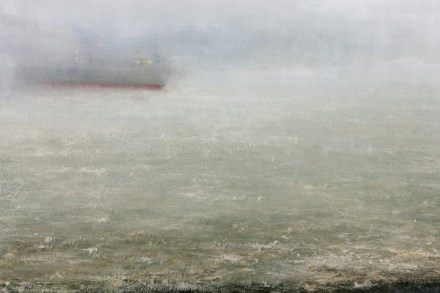
Peter Archer used to paint landscapes on the Cornish side of the Tamar river. Their most notable features were lovingly observed trees and the tall chimneys of abandoned tin mines. One might have expected that when he moved to a coalmining valley in South Wales, his landscapes would have become blacker and its main features hills and slag-heaps. Instead, he has gone to sea, not literally nor even as an observer from some visited shore, but in his imagination. The Welsh coal-mines may have had something to do with it, since these are predominantly grey paintings in which, like Conrad’s Thames Estuary, ‘the air was dark above Gravesend, and farther back still seemed condensed into a mournful gloom, brooding motionless...

Wandering eye

Exhibitions

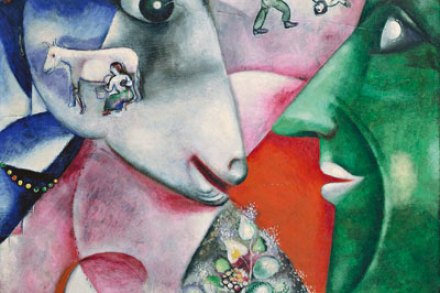
‘When Matisse dies,’ declared Picasso, ‘Chagall will be the only painter left who understands what colour really is.’ Wandering around this splendid show you can see exactly what he meant. Chagall never used colour for cheap effect, but to convey meaning and emotion. The effect of seeing so many of his works together is almost overwhelming — a symphony hung upon a wall. But these aren’t the romantic paintings of Chagall’s later years, the visions of young lovers floating over seas of flowers. These are the urgent artworks of his youth, made at a time of immense upheaval. By focusing on these early years, to the virtual exclusion of his later work, this fascinating retrospective casts Marc Chagall in an entirely different light.

Foundling Hospital tokens

Exhibitions

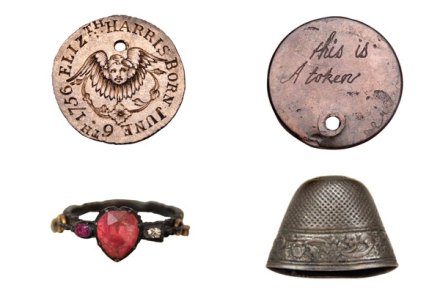
‘Dear Sir, I am the unfortunate woman that lies under sentens of Death in Newgatt...’  So begins a letter of 1757 addressed to the powers that be at the Foundling Hospital in  London’s Bloomsbury. Written in a strong hand, it contains the poignant petition of a woman on death row, Margaret Larney, that her children, who have been admitted to the hospital separately, might ‘know one and other’. Even if the younger child hadn’t died shortly after admission, Margaret’s eloquent plea would certainly have been in vain. When an infant entered the hospital, its former identity was erased and siblings remained ignorant of their blood ties. But now, some 250 years later, Margaret is getting a second hearing.

In the thick of it

Exhibitions

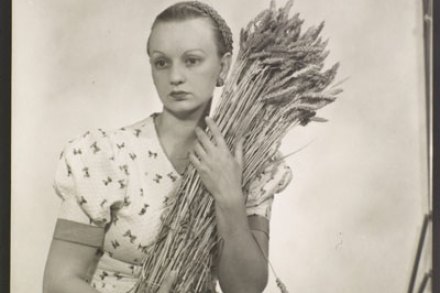
Man Ray, born Michael Emmanuel Radnitzky (1890–1976) in Philadelphia, was a maker of images par excellence. He made sculptures, paintings and photographs, but the medium was always secondary to the image. After all, it is the reproduction of his marvellous painting ‘Observatory Time — The Lovers’, in which Lee Miller’s lips are emblazoned across the sky, that one remembers, or the reproduction of his object ‘Gift’, a flat iron with tacks stuck to its ironing face; not the originals. Perhaps the only sculpture one recalls as a three-dimensional presence is his ‘Indestructible Object’, a metronome with a photo of a woman’s eye attached to its swinging arm; and that’s chiefly because it moves.

The new seekers | 14 February 2013

Exhibitions

Over the past year or so, art world insiders have queued up to denounce the current state of the contemporary art world. Charles Saatchi started the ball rolling with a column at the end of 2011 in the Guardian. Breaking his self-imposed ban on interviews or writing, he launched a withering attack on an art world that, according to him, had descended to ‘the sport of the Eurotrashy, Hedge-fundy Hamptonites; of trendy oligarchs and oiligarchs; and of art dealers with masturbatory levels of self-regard’.

Finding beauty in junk

Exhibitions

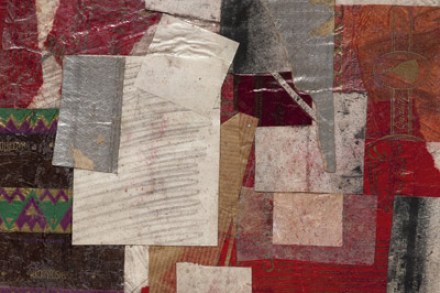
Although Kurt Schwitters (1887–1948) did not invent the technique or theory of collage, he was one of the greatest practitioners of it, raising it in his work to the level of an independent art form. The Cubists may have made art out of collage first, but for them it was intricately allied with painting, whereas Schwitters made collages for their own sake. They are some of the finest things in this rich and varied exhibition, which focuses on his years in Britain (1940–8), though the full range of his work, including a fascinating selection of paintings and sculptures, is also indicated in this typically large Tate display. Viewing it is a potentially exhausting experience, so best to be selective in what you choose to study.

Bring in the lawyers

Exhibitions

When collectors want to purchase an expensive work of art, they contact their lawyers to write up a contract with the dealer, spelling out pages of contingencies and indemnity clauses. ‘We have a steady stream of business writing agreements for collectors and galleries,’ said Jo Backer Laird, a Manhattan arts lawyer and a former general counsel at Christie’s. ‘We didn’t see much of this just ten years ago.

Seraphic misfit

Exhibitions

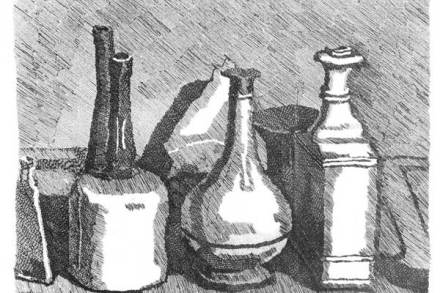
This year marks the 15th anniversary of the Estorick Collection and it is fitting that Giorgio Morandi (1890–1964), one of the most consistently popular of the museum’s artists, should inaugurate the celebrations. Although Morandi’s trademark still-life paintings of bottles and jars have been regularly shown in Britain (the last major show was at the Tate in 2001), the appetite for his work is unassuaged, perhaps because its delights are not revealed all at once. His work encourages repeated looking and gives something back each time, differently articulated. ‘The monk of the bottles’, as he was called, lived with his mother and three sisters in an apartment in Bologna, hardly travelling anywhere, and concentrating on working in his studio.

Line man

Exhibitions

One of the pleasures of the critic’s life is to review exhibitions of work by artists who have been forgotten or overlooked, and to recommend them for general attention. I know some arts editors are only interested in fashionable or mainstream artists, but I’m happy to say that The Spectator’s editorial policy is altogether more wide-ranging. Hence this review of the unjustly neglected Randolph Schwabe (1885–1948), an artist who believed in the value of classical draughtsmanship, which he promulgated through a lifetime of teaching. German by origin (his cotton merchant grandfather settled near Manchester), he trained at the Slade, then studied in Paris and travelled in Italy before returning to England.

Nexus of opposites

Exhibitions

Francesco Clemente (born Naples 1952) began his rise to prominence in this country with two exhibitions at the Royal Academy — the famous New Spirit in Painting of 1981, when figuration was officially relaunched on London (though for some it had never gone away); and Italian Art in the 20th Century eight years later. A third RA venture was a Clemente solo show in 1991, a touring exhibition entitled Three Worlds, memorable as much for its plethora of exciting and witty images (many in pastel or watercolour), as for the beautiful girls thronging the private view. Clemente has long been a fashion icon; in him popular art and high art meet and mingle.

Particularity of place

Exhibitions

John Sell Cotman (1782–1842) is a key figure in the great tradition of English watercolour painting. A prominent member of the Norwich School (he was born in the city), he was a landscape painter of genius, who transcended mere topographical record by making paintings of superb abstract design which also evoke the particularity of place. He could suggest space and light and weather with the lightest and broadest of touches, in images that look curiously modern, if not timeless. He earned a living by teaching and travelling, making saleable studies of antiquities, many of which were reproduced as etchings. Between 1810 and 1821 he focused on the architecture of Norfolk and Normandy, and it is from this work that the exhibition is drawn.

Imperialist ambitions

Exhibitions

In 1997, the Russian Academy of Sciences gave the names Hermitage 4758 and Piotrovsky 4869 to two small planets discovered 500 million kilometres from earth. The signal honour paid to the State Hermitage Museum and Boris and Mikhail Piotrovsky— its dynastic succession of directors — heralded a new era of post-Soviet expansionism for the former Imperial museum: from now on, the sky would be the limit. Since then, the Hermitage has opened branches in London, Las Vegas, Amsterdam, Kazan, Ferrara and Vyborg. More than a goodwill gesture, the St Petersburg museum’s overseas expansion has been a way of getting its collections seen.

Friends reunited | 29 November 2012

Exhibitions

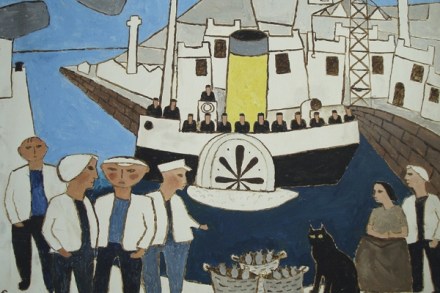
Christopher Wood (1901–30), billed as the great white hope of British Modernism, who perished by his own hand before his full potential could be explored. Friend of Ben Nicholson, with whom he supposedly ‘discovered’ the naïve painter Alfred Wallis in 1928, he was a Europeanised sophisticate who knew Picasso and Cocteau and dabbled in Cubism and Surrealism. He was a talented painter with a penchant for harbour scenes, but, as this fascinating exhibition suggests, his gifts have been exaggerated (no doubt because of his romantic life story), while the achievement of his older contemporary Cedric Morris (1889–1982) has been marginalised and largely ignored.

Keeping the faith

Exhibitions

In 1929 the founder of Italian Futurism, Filippo Tommaso Marinetti, reported from Milan that, after a wartime setback, the movement was ‘in full working order’ under the leadership of ‘the very young and very ingenious Bruno Munari’. Bruno Munari (1907–1998) was 22 at the time. He had arrived in Milan two years earlier as a refugee from his family hotel business in the Veneto and embraced with enthusiasm Giacomo Balla’s suggestion in The Futurist Universe that ‘useful and pleasing’ consumer products in shop windows were ‘a much more rewarding sight than the grimy little pictures nailed on the walls of the passéist painter’s studio’.

Concealed treasures

Exhibitions

The Holburne Museum of Bath is a delight. Its collections were formed by Sir William Holburne (1793–1874), a naval officer who first saw action at the Battle of Trafalgar at the age of 12 and retired to Bath in 1820 to dedicate his celibate life — he shared his house with his three sisters — mostly to travel and collecting. Since 1912, his collections have been housed in a beautiful neoclassical building, originally built as a hotel in the 1790s and situated at the end of Great Pultney Street. They include Imari porcelain, Maiolica pottery, Augsburg silver and Dutch 17th-century landscapes, as well as curios such as a spur, purportedly used by the Duke of Monmouth at the Battle of Sedgemoor (1685).

Dressed to impress

Exhibitions

Does the costume make the man or the man the costume? Well, a little bit of both if the Hollywood Costume exhibition at the V&A is to be believed. Five years in the making, this collection of more than 100 of the most iconic outfits in movie history, from Scarlett O’Hara’s green ‘curtain’ gown to Darth Vader’s suit, is a bold undertaking. The very nature of motion pictures means that there is something a little ghoulish about seeing static ensembles, with the clothes divorced from their character and digital images of famous faces floating above them. But movie-goers have an insatiable appetite for anything that gets them closer to their idols and there is something thrilling about being in such close proximity to items we know so well.

Unexpected structures

Exhibitions

There are only eight single paintings in the current show of early work by Gillian Ayres (born 1930) — eight paintings and the four panels of a mural created for the dining room of Hampstead High School for Girls. The mural is over seven feet high and 27 feet wide, and its scale and achievement are remarkable for a young painter. (Ayres was 27 when she painted it.) But it is less original than the paintings it prepared the way for, and which now hang in the Foreshore Gallery of the Jerwood Foundation’s splendid new space in Hastings. The mural has an undeniably decorative impulse and looks very much of its time, but the paintings have moved beyond period confines and peer expectations.

Missing links

Exhibitions

The primary experience of looking at painting is the crucial encounter between a painted surface and the human eye. Nothing is quite like it, and this unique experience cannot be replaced or replicated by looking at a painting in printed reproduction or on a computer screen. This may be a truism but it is worth emphasising once again in an age that relies increasingly on mediated experience, and lives — almost literally — by the screen. It is a truth brought into especial prominence by the concatenation of three exhibitions currently showing in London. Photography does not require the same intimate experience of viewing.

Neglected master

Exhibitions

Every so often, about once a decade, the work of Mark Gertler (1891–1939) is rediscovered and exhibited. I remember seeing excellent shows of his work at the Ben Uri Art Gallery in 1982 and in 2002, and at Camden Arts Centre in 1992. Each time a well-selected body of his paintings is gathered together, we are reminded of the extraordinary talent of this young artist, who tragically took his own life. Yet for many of those who care about art, Gertler is still best remembered as the wild bohemian obsessed with the Bloomsbury siren Dora Carrington. Certainly, Gertler’s 1913 portrait of her, a striking example of his Neo-Primitive tempera style in the key of blue, and one of the many treats of this exhibition, doesn’t quite explain the attraction.

Bizarre visions

Exhibitions

If you want to see how myths arise from misunderstandings, the Tower of Babel provides a textbook example. In ancient Assyrian babilu means ‘door of God’ and thus correctly describes the Babylonian ziggurat erected to the god Marduk by Nebuchadnezzar II and later seen in ruins by Herodotus. But in Hebrew the word bâlal means ‘to confuse’, hence the confusingly different account in Genesis.

The hate of the new

Exhibitions

The title of the new show at the Palazzo Strozzi is a little confusing. Most of the artists in Italy in the 1930s weren’t beyond fascism; they were in it up to their necks. They didn’t really need much persuading by Mussolini to come up with pictures like Luciano Ricchetti’s 1939 painting ‘Listening to a Speech by the Duce’: enraptured, bare-footed Italian peasants in headscarves sit dangling babies on their knees, hanging on Il Duce’s every word. Today lots of Italians still don’t like to admit it, but much of Florence, and Italy, were really rather keen on Mussolini, and Hitler, too.

Picturing Dickens

Exhibitions

In this Olympic year, when we feel less guilty than usual about promoting and celebrating all things British, it is appropriate to be lauding our greatest writers. Shakespeare is commemorated at the British Museum, but what about Dickens? Unbelievably, in what is after all the bicentenary of his birth, the Charles Dickens Museum in Doughty Street is closed. Thank goodness the Watts Gallery has had the initiative to mount an exhibition devoted to Dickens’s relationship with art — at least somewhere the spirits of Phiz, Dolly Varden and Little Nell may disport themselves with Olympic pizazz in a museum setting. That is, if you think Little Nell would be up for it...

Heavenly bodies

Exhibitions

Fifty years ago, the Stanley Spencer Gallery was founded in a converted Wesleyan Chapel by a group of local enthusiasts who wanted to celebrate the extraordinary achievement of Cookham’s most famous son. As Joan George recounts in her fascinating book, Stanley Spencer Remembered (Taderon Press, £6), at the gallery’s inauguration, Gilbert Spencer (Stan’s younger brother) quoted an inscription remembered from childhood on the chapel’s wall: ‘How amiable are thy tabernacles O Lord of Hosts.’ ‘Nowhere,’ declared Gilbert, ‘would its message be more appropriate than in this Gallery.