Culture

Culture

The good, the bad and the ugly in books, exhibitions, cinema, TV, dance, music, podcasts and theatre.

Unexpected structures

Exhibitions

There are only eight single paintings in the current show of early work by Gillian Ayres (born 1930) — eight paintings and the four panels of a mural created for the dining room of Hampstead High School for Girls. The mural is over seven feet high and 27 feet wide, and its scale and achievement are remarkable for a young painter. (Ayres was 27 when she painted it.) But it is less original than the paintings it prepared the way for, and which now hang in the Foreshore Gallery of the Jerwood Foundation’s splendid new space in Hastings. The mural has an undeniably decorative impulse and looks very much of its time, but the paintings have moved beyond period confines and peer expectations.

Missing links

Exhibitions

The primary experience of looking at painting is the crucial encounter between a painted surface and the human eye. Nothing is quite like it, and this unique experience cannot be replaced or replicated by looking at a painting in printed reproduction or on a computer screen. This may be a truism but it is worth emphasising once again in an age that relies increasingly on mediated experience, and lives — almost literally — by the screen. It is a truth brought into especial prominence by the concatenation of three exhibitions currently showing in London. Photography does not require the same intimate experience of viewing.

Neglected master

Exhibitions

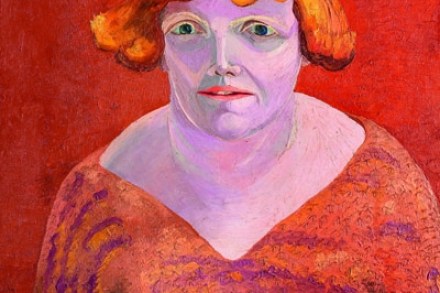
Every so often, about once a decade, the work of Mark Gertler (1891–1939) is rediscovered and exhibited. I remember seeing excellent shows of his work at the Ben Uri Art Gallery in 1982 and in 2002, and at Camden Arts Centre in 1992. Each time a well-selected body of his paintings is gathered together, we are reminded of the extraordinary talent of this young artist, who tragically took his own life. Yet for many of those who care about art, Gertler is still best remembered as the wild bohemian obsessed with the Bloomsbury siren Dora Carrington. Certainly, Gertler’s 1913 portrait of her, a striking example of his Neo-Primitive tempera style in the key of blue, and one of the many treats of this exhibition, doesn’t quite explain the attraction.

Bizarre visions

Exhibitions

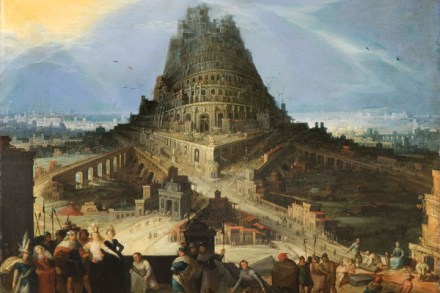
If you want to see how myths arise from misunderstandings, the Tower of Babel provides a textbook example. In ancient Assyrian babilu means ‘door of God’ and thus correctly describes the Babylonian ziggurat erected to the god Marduk by Nebuchadnezzar II and later seen in ruins by Herodotus. But in Hebrew the word bâlal means ‘to confuse’, hence the confusingly different account in Genesis.

The hate of the new

Exhibitions

The title of the new show at the Palazzo Strozzi is a little confusing. Most of the artists in Italy in the 1930s weren’t beyond fascism; they were in it up to their necks. They didn’t really need much persuading by Mussolini to come up with pictures like Luciano Ricchetti’s 1939 painting ‘Listening to a Speech by the Duce’: enraptured, bare-footed Italian peasants in headscarves sit dangling babies on their knees, hanging on Il Duce’s every word. Today lots of Italians still don’t like to admit it, but much of Florence, and Italy, were really rather keen on Mussolini, and Hitler, too.

Picturing Dickens

Exhibitions

In this Olympic year, when we feel less guilty than usual about promoting and celebrating all things British, it is appropriate to be lauding our greatest writers. Shakespeare is commemorated at the British Museum, but what about Dickens? Unbelievably, in what is after all the bicentenary of his birth, the Charles Dickens Museum in Doughty Street is closed. Thank goodness the Watts Gallery has had the initiative to mount an exhibition devoted to Dickens’s relationship with art — at least somewhere the spirits of Phiz, Dolly Varden and Little Nell may disport themselves with Olympic pizazz in a museum setting. That is, if you think Little Nell would be up for it...

Heavenly bodies

Exhibitions

Fifty years ago, the Stanley Spencer Gallery was founded in a converted Wesleyan Chapel by a group of local enthusiasts who wanted to celebrate the extraordinary achievement of Cookham’s most famous son. As Joan George recounts in her fascinating book, Stanley Spencer Remembered (Taderon Press, £6), at the gallery’s inauguration, Gilbert Spencer (Stan’s younger brother) quoted an inscription remembered from childhood on the chapel’s wall: ‘How amiable are thy tabernacles O Lord of Hosts.’ ‘Nowhere,’ declared Gilbert, ‘would its message be more appropriate than in this Gallery.

Between two continents

Exhibitions

Who was Conrad Marca-Relli? Figureheads of the so-called New York School such as Jackson Pollock and Mark Rothko have long since become art world icons — with attention-grabbing auction prices, fat biographies and plays or films about them to match. By comparison, few people in this country are likely to have heard of Marca-Relli. Tate Modern owns not a single work by him, nor has he ever had a solo exhibition in Britain. Yet Marca-Relli made a unique contribution to art at mid-century and was often at the heart of its action. He deserves a better fate. Born to a family of Italian immigrants in Boston in 1913, Corrado di Marcarelli (he changed his name in the 1950s) moved to New York in 1926.

Under the skin | 19 September 2012

Exhibitions

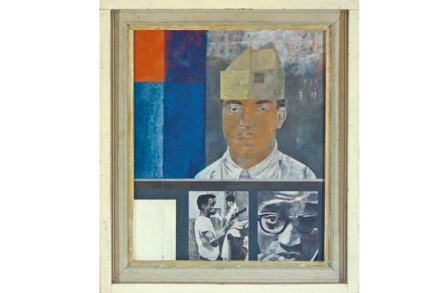
John Berger (born 1926) is one of the most intriguing and richly controversial figures in British arts and letters. Actually, since he lives full-time in France, he can scarcely be considered English in any meaningful way, and is indeed an international figure, widely regarded outside this country as one of Europe’s greatest intellectuals and quite often as some sort of cultural guru. Here he is thought of as a Marxist art critic, a dangerously potent broadcaster and a writer or novelist who defies categorisation. One suspects he is a bit of an embarrassment to the arts establishment, so he tends to be ignored.

Artistic response

Exhibitions

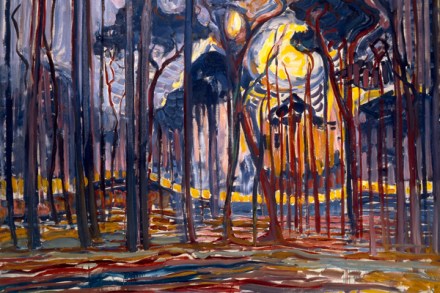
Van Gogh to Kandinsky presents a rare and exciting opportunity to see some 60 paintings as examples of landscape symbolism from major international institutions and private collections. The exhibition extends beyond the usual north European definitions of this subject, with the coupling of the emotionally charged graphic-colourist van Gogh with the increasingly reductive and programmatic application of colour-to-form associated with late Kandinsky. It challenges, therefore, conventional categorisations of modern European art. Who would think, moreover, that Lord Leighton, Hammershøi, Monet and Mondrian could share a common thesis, let alone inhabit the same gallery rooms? In lesser hands, such an ambitious project could have descended into chaos and visual incoherence.

A civilised way of death

Exhibitions

‘Luxury high-rise duplex: lower floor comprising entrance hall with recessed guard posts, grand reception area, kitchen with crockery store, larders and walk-in fridge, armoury and staff WC; upper floor comprising master bedroom with two en-suite bathrooms, staff accommodation, guard rooms and safe deposit. Property provided with the latest hi-tech security systems and 24-hour manned guarding.’ Apart from the lack of a cinema and a gym, this property sounds just the ticket for the jittery billionaire looking to invest in London real estate. But its location is not the fringes of Hyde Park or the South Bank, it’s the side of a mountain near Xuzhou in northeast China, and its accommodation is designed not for the living but for the dead.

At home with the Pre-Raphaelites

Exhibitions

Andrew Lloyd Webber cried when he first came to Wightwick Manor, and standing in the Great Parlour of this magnificent Victorian villa you can see what moved him to tears of joy. Lloyd Webber loves the Pre-Raphaelites (he’s always had the common touch) and Wightwick is a living monument to the one artistic movement that England can truly call its own. There’s William Morris wallpaper on the walls and Charles Kempe stained glass in the windows — and beneath the minstrels’ gallery is Edward Burne-Jones’s ‘Love Among The Ruins’ (which has this month travelled to London for the biggest Pre-Raphaelite exhibition since the 1980s).

Cut to the Chase

Exhibitions

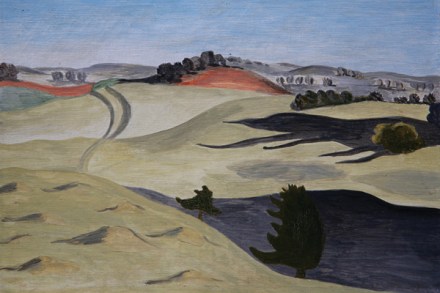
Circles and Tangents sounds like a show of abstract art, but actually the title is somewhat misleading. As Vivienne Light, the exhibition’s curator and author of the accompanying book, explains, the circles are intended to denote networks of artists (not the circular forms in a Ben Nicholson painting, though Nicholson is included in the show), and the tangents are really digressions. Clear? Put more simply, the exhibition focuses on art made on or about Cranborne Chase, the lovely unspoilt stretch of Dorset landscape once William the Conqueror’s hunting ground and more recently the inspiration for countless painters and sculptors.

Conversation pieces

Exhibitions

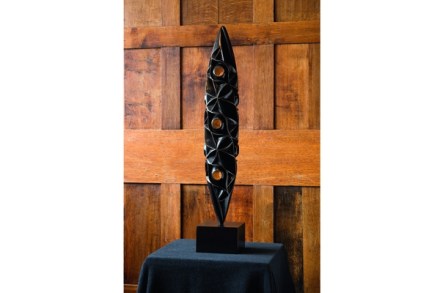
Anyone interested in art holidaying in the Lake District this summer — or indeed taking a short break in the Lakes — is in for a treat. The Lakeland Arts Trust, which administers both Blackwell and Abbot Hall, has mounted a pair of exhibitions which offers a range of painting and sculpture a good deal better than most things currently on view around the country. And many people may find that tuning into the wild beauty of Cumbria will help them to look with greater enjoyment and discernment at contemporary art. Certainly Baillie Scott’s magnificent 1898 Arts and Crafts house, Blackwell, on the shores of Lake Windermere, is the perfect setting for Halima Cassell’s work in clay, glass, marble and porcelain.

Making Russia great

Exhibitions

Catherine the Great was born neither a Catherine nor with any prospects of greatness. As Sophie Frederica Augusta of Anhalt-Zerbst she was a minor German princess with modest expectations, but when the Empress Elizabeth of Russia chose her to be the consort of her nephew and heir, the Grand Duke Peter, Sophie’s and Russia’s fates were transformed. In 1744 the 15-year-old Sophie arrived in her new country, converted to Orthodoxy, changed her name to Catherine and set about becoming history’s ultimate self-made woman. She was to rule Russia for 34 years and turn it into a global power. She overhauled Russia’s economy, foreign policy, legal system and education; she expanded its boundaries and encouraged its arts and sciences.

Slow art

Exhibitions

With the death of the critic and historian Robert Hughes, a great beacon has gone out in the art world of the West. I take his absence personally, not because I knew the man (I met him only once), but because he was such an invigorating and perceptive guide to excellence. Of course I didn’t agree with everything he said, but he wrote like an angel (possibly a fallen one) and he certainly made you think and even revise your opinions. Although I was aware that he’d been unwell for a long time, I was unprepared for his death at the age of 74, and feel robbed of the books he didn’t write. What happened to the second volume of his memoirs, and what else might he have got around to writing?

Unholy alliance

Exhibitions

The British Museum has collaborated with the Royal Shakespeare Company on this exhibition, in order to make links between the rich array of BM treasures and Shakespeare’s plays. I’ve never been very convinced about the intermingling of video screens and art: people almost always gravitate to the moving image, particularly if words are involved and people featured. Clips of actors rolling out Shakespeare’s lines with every appearance of enjoyment are bound to capture the attention of the audience at the expense of artefacts, which simply don’t have the same drama or human interest. ‘Oh look, there’s Siân Phillips — or is it Harriet Walter?

Beyond the expected

Exhibitions

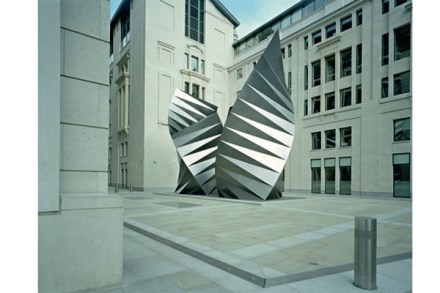
Thomas Heatherwick (born 1970) is one of our most exciting and inventive designers, so it is somewhat unfortunate that he is much associated in the public mind with a project that failed, the memorably named ‘B of the Bang’. This was a sculpture commissioned to commemorate the 2002 Commonwealth Games held in Manchester, and the idea was to create a sunburst of tubes and poles to symbolise an explosion of energy. It was a good idea and a formidable undertaking. Erected in 2005, it was plagued with technical problems and bits even fell off. It was taken down in 2009, and only the documentation remains.

Diana on show

Exhibitions

Metamorphosis (sponsored by Credit Suisse) is more than an exhibition, it is wider in its manifestations and implications. The Sainsbury Wing galleries are full of interesting works of art, but the Metamorphosis festival — for that is what it surely is — extends to the Royal Opera House and beyond, through dance and poetry. Unfortunately, there are only limited performances by the Royal Ballet, but these will be filmed and thus available for viewing, and the poetry is published in a handy illustrated paperback (price £8.99), with a learned but accessible introduction by the director of the National Gallery, Nicholas Penny.

Prophet of alienation

Exhibitions

Nothing gains headlines for art quite like high prices. A few weeks ago, one of the versions of Munch’s famous image of ‘The Scream’ was sold at auction for £74 million, which couldn’t have been bettered as advance publicity for the Tate’s new show. Admittedly, there is not a single version of that key painting in this exhibition (owners are jittery about loaning them — particularly since one was stolen from Norway’s National Gallery in 2004), but there are plenty of other treats for admirers of this Scandinavian ray of sunshine. Among his favourite subjects were sickness and death, lust and jealousy, fear of sexual disease and even fear of life.

Altered images | 30 June 2012

Exhibitions

An important part of the critic’s role is to search out artists, living or dead, whose work has disappeared from general view, and to attempt some kind of reassessment of their value. The trouble with most coverage of the visual arts today is that the same few artists are constantly written about because their work is currently fashionable. Editors seem not to encourage their critics to be wide-ranging. Meanwhile, museums and galleries are not readily inspired to put on exhibitions of less well-known painting and sculpture because they’re primarily concerned with high visitor attendance and sales. As a result, the public is not best served — and neither are the artists.

Viewpoint: Screen test

Exhibitions

Before 2006, the idea of watching a play or an opera from the discomfort of a cinema seat, with the scent of popcorn, nachos and hotdogs wafting through the air, would have been ludicrous. But New York’s Met Opera’s broadcast of a live performance of The Magic Flute to cinemas changed that. Arts institutions the world over, from Glyndebourne to the Bolshoi Ballet, started to copy the Met and soon cinemagoers were pouring out of multiplexes, amazed at the intimacy and immediacy of these screenings.  The amalgamation of live performance and cinema sounded, to my ears at least, to be a terrible idea.

Italian surprise

Exhibitions

It’s a rare pleasure to find an unfamiliar artist of the 18th century whose work speaks to the contemporary mind as lucidly as Carlo Labruzzi (1748–1817). I had never heard of him before this show, being still in my playpen when the last Labruzzi exhibition excited the art world in 1960. Although celebrated in his day, he was largely forgotten in the 19th and for most of the 20th century, but it’s clear from this excellent exhibition that he deserves a permanent place in the history books. Not much is known about him beyond the meagre biography that he was born in Rome, the son of a weaver and finisher of velvet, and that his younger brother Pietro was also an artist and became court painter to the King of Poland.

Red alert

Exhibitions

Rumours of disaffection were widespread even before I had seen this year’s RA summer extravaganza (sponsored by Insight Investment). The usual complaints about the hanging and selection had doubled or trebled, not just from non-members but from the Academicians themselves, but the critic tries to keep an open mind for as long as possible. Unfortunately, my equanimity did not survive the first room. This year, the visitor enters the exhibition via the Central Hall, where a gallimaufry of work has been hung against bright red walls. Some of it survives this shock treatment, but other exhibits are disastrously affected. Is it insensitivity or spite that accounts for the hanging of two early masterpieces by John Hoyland against this destructive red?

Changing tack

Exhibitions

Gustav Klimt first came to Venice in the spring of 1899, in pursuit of Alma Schindler, the young stepdaughter of his friend and fellow artist Carl Moll. The nascent love affair between the artist, who was then in his late thirties, and the 19-year-old Alma was brought to an abrupt end when the girl’s mother read her diary and Klimt was asked to leave. Three years later she married Mahler. But before Klimt departed from Venice, Klimt and Alma had visited San Marco where, as Alma recorded, the Basilica’s mosaics, glittering in the half-light, made a profound impression on him.

Sculptural conundrums

Exhibitions

2012 is proving something of an annus mirabilis for Anthony Caro OM CBE RA, now 88, with no fewer than three exhibitions of his work on view around the country.  And he continues to beaver away daily in his studio in Camden Town, London, with the strength of a man much younger than himself, one who has been manhandling heavy, often intractable materials throughout the course of his creative life.

Glass act | 26 May 2012

Exhibitions

The name of Patrick Reyntiens (born 1925) is indissolubly linked to the recent history of stained glass in this country. Reyntiens bridges the often troublesome gap between craft and art: not only is he a superb and innovative craftsman, but he is also a substantial artist. The second quality is not always recognised. Best known as John Piper’s associate, many assume that Piper was the artist behind their stained- glass collaborations, with Reyntiens as technical expert. Actually, Reyntiens played a more creative role than is generally supposed.

Fruitful oppositions

Exhibitions

There are so many good exhibitions at the moment in the commercial sector that the dedicated gallery-goer can easily spend a day viewing top-quality work without paying a single museum admission fee. The following shows nicely complement some of the current or recent displays in public galleries — such as Mondrian||Nicholson at the Courtauld and the Tate’s Picasso and Modern British Art. Despite the financial squeeze and such new burdens as the bureaucratic nightmare of Artists’ Resale Right, commercial galleries continue to play an extremely important role in the nation’s artistic life, though they are not given much credit for it.

Domestic bliss

Exhibitions

At Home with the World, the Geffrye Museum’s latest exhibition (until 9 September), reinterprets objects from its permanent collection, highlighting those from overseas or those that have been influenced by other cultures. Because the museum concentrates on the changing styles and tastes of the urban middle class, rather than of the aristocracy, we can appreciate what became popular as a result of mass manufacturing and trade. The most obvious example is the craze for ‘taking tea’ from the mid-18th century onwards. The porcelain teapots on display throughout the period living-rooms (that range from 1600 to the present day) remind us that much of what we consider English actually originates elsewhere — in this case, China.