John Spurling

Julian Cooper’s rock profiles

From our UK edition

Like most ambitious artists, Julian Cooper has been pulled this way and that by seemingly conflicting influences. The son and grandson of Lake District landscape painters — his mother was a sculptor — he fell among abstractionists at his London art college, Goldsmith’s, in the late 1960s. But when I first saw his work in the early 1980s, he had emerged as a flagrant figurative painter, with a series of large canvases depicting scenes from Malcolm Lowry’s novel Under the Volcano. There was no subterfuge about these works; they went straight back to Manet and Degas, not as imitations but developments.

What my addiction to Chinese painting made me do

From our UK edition

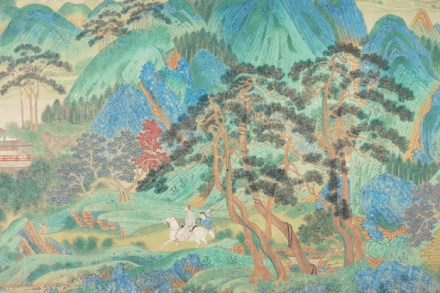
My addiction to Chinese landscape painting began in 1965 at the V&A, in a travelling exhibition of the Crawford Collection from America. The catalogue entries were supplied by the doyen of Chinese art historians in Britain, Michael Sullivan, who died aged 97 just a month before the opening of this latest exhibition of Chinese painting at the V&A. His particularly well-written and stimulating books on Chinese art, especially Symbols of Eternity, published in 1980, kept my addiction smouldering until at last I felt I had to do something about it and wrote a novel, The Ten Thousand Things. Its central character is a 14th-century Chinese landscape-painter, Wang Meng, whose ‘total absorption in the language of painting’ reminded Sullivan of Cézanne.

Peter Archer — Notes from an Inland Sea

From our UK edition

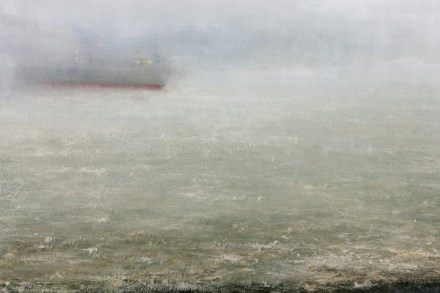
Peter Archer used to paint landscapes on the Cornish side of the Tamar river. Their most notable features were lovingly observed trees and the tall chimneys of abandoned tin mines. One might have expected that when he moved to a coalmining valley in South Wales, his landscapes would have become blacker and its main features hills and slag-heaps. Instead, he has gone to sea, not literally nor even as an observer from some visited shore, but in his imagination. The Welsh coal-mines may have had something to do with it, since these are predominantly grey paintings in which, like Conrad’s Thames Estuary, ‘the air was dark above Gravesend, and farther back still seemed condensed into a mournful gloom, brooding motionless...

Deeper into Mervyn Peake

From our UK edition

The first two volumes of Mervyn Peake’s Gormenghast trilogy were published in 1946 and 1950, but by 1954, when I was first alerted to them by a school-friend, Peake had entered what his first biographer John Watney called ‘a doldrum period’. Overtaken by a wave of younger writers — Kingsley Amis, John Osborne et al — with more obvious contemporary relevance, Peake was beginning to suffer the first symptoms of the Parkinson’s disease that killed him in 1968 at the age of 47.

Back to the sublime

From our UK edition

Martin Greenland: Arrangements of Memory Art Space Gallery, 84 St Peter’s Street, London N1, until 10 October ‘In Painting there must be something Great and Extraordinary to surprise, please and instruct, which is what we call the grand Gusto. ’Tis by this that ordinary things are made beautiful and the beautiful sublime and wonderful,’ wrote Roger de Piles in his Art of Painting, translated into English in 1706, extending the notion of the sublime from literature to painting and opening the road to Romanticism. Martin Greenland’s large, skilful, traditionally painterly landscapes bring us smack back from what Reynolds called ‘the little elegancies of art’ to the sublime.

Apotheosis of Caro

From our UK edition

Anthony Caro’s Chapel of Light Church of St-Jean-Baptiste, Bourbourg The Barbarians and Clay works Musée des Beaux-Arts, Calais, until 23 February 2009 Paper works and Table sculptures Musée de Gravelines, until 21 February 2009 Steel sculptures Lieu d’Art et d’Action Contemporaine, Dunkirk, until 21 February 2009 There was once a small town called Vence, just inland from Nice on the south coast of France, which few people had heard of. Then, between 1947 and 1951, the octogenarian Matisse transformed a derelict garage, used by local nuns as a chapel, into an architectural work of art which has made Vence one of the landmarks of the modern world.

Animal magic

From our UK edition

Graham Greene in his ground-breaking essay on Beatrix Potter published in 1933 writes of ‘her great comedies’, her ‘great near-tragedies’ and ‘her Tempest’ (Little Pig Robinson). He calls Peter Rabbit and his cousin Benjamin ‘two epic personalities’ and invokes Dickens, Forster, Cervantes, Rabelais and Henry James as well as Shakespeare.

Big space, small space

From our UK edition

Liliane Lijn: Stardust Riflemaker, 79 Beak Street, London W1, until 5 July Liliane Lijn has always made ‘far-out’ sculpture, innovative, adventurous and aesthetically exhilarating. Her imagination fires on three cylinders: light, movement and the use of new and untried materials — untried, that’s to say, in art, though already in use for industrial or scientific purposes. Among her early works are the beautiful ‘Liquid Reflections’ (1967, now in the Tate), made of a hollow, revolving acrylic disc containing oil and water, over which roll two transparent plastic balls, and the ‘Poem Machines’ — cones inscribed with poems which, as the cones turn at different speeds, are transformed into purely visual patterns.

Charcoal mastery

From our UK edition

In his foreword to the catalogue of John Hubbard’s Spirit of Trees, Duncan Robinson, the director of the Fitzwilliam Museum, invokes John Constable. Indeed if Constable were alive today he might be John Hubbard. Although Hubbard is American, he has lived in Dorset for 45 years and although his paintings are far more abstract than Constable’s and have been inspired by foreign places as well as British — the Atlas Mountains, Spanish gardens, the Vaucluse in France — they approach nature in a similar way, with romantic feelings but a pragmatic eye.

Uneasy encounters

From our UK edition

Now that Georgia is independent again — it was annexed by Russia in 1801 and broke free from the Soviet Union in 1990 — it is keen to reassert its identity and encourage visitors. But there is a PR problem with its three best-known celebrities: in ancient times the murderous Medea and in modern times Stalin and his hatchet-man Lavrenti Beria. On a recent trip organised by the Georgian Department of Tourism, with a direct flight with BMED from Heathrow, I and three other British journalists were driven to and from an ancient cave city, passing through the town of Gori. Were we not going to stop in the birthplace of Stalin?

Politics of patronage

From our UK edition

‘The state is ruined, but mountains and rivers remain,’ wrote the Chinese poet Du Fu in the 8th century AD during a rebellion that temporarily overthrew the Tang Emperor. Four centuries later, ‘Give us back our mountains and rivers!

Making the day go better

From our UK edition

Collecting art is an addiction. Neither its cost nor its supposed value as an investment has much to do with it. If you are rich you buy expensive art by recognised masters and get advice from experts, but if you are poor you follow your own taste among the lesser or little known and probably enjoy yourself just as much. The addiction is not confined to individuals; it can catch businesses too, although it’s usually started by an individual, as for instance by David Rockefeller in 1959 when he set up what is now the J.P. Morgan Chase collection.

Potent venom

From our UK edition

‘Everything looks menacing,’ Edward Burra once told the Tate’s director Sir John Rothenstein. ‘I’m always expecting something calamitous to happen.’ This was late in Burra’s career, when his by then well-known and characteristic figure paintings had mostly given way to landscapes and still lifes, though without any diminution in their imaginative power or their peculiar sense of humorous unease. There were still figures in some of them, though they had become more insubstantial. ‘Why,’ asked his friend William Chappell, ‘are you painting transparent people?’ ‘Well,’ said Burra, ‘don’t you find as you get older, you start seeing through everything?

The Manx factor

From our UK edition

Bryan Kneale comes from the Isle of Man and, after winning the Rome Prize from the Royal Academy Schools, was one of the leaders of the British sculptural revolution of the 1950s and 60s. In 1970, against the advice of his friends and fellow-artists, he was the first abstract sculptor to join the Royal Academy. Many others followed, and the RA was saved for a while from its institutional fear of innovators. During the 1980s, Kneale was both head of sculpture at the Royal College of Art and professor of sculpture at the RA.

Important relationships

From our UK edition

Fox Talbot invented his ‘photogenic drawing’ process in 1834 and ten years later published The Pencil of Nature, the first book to be illustrated with photographs. There is nothing like Elisabeth Vellacott’s drawings to make you impatient with Fox Talbot’s terms. Photography, which freezes an instant in an instant, is neither nature’s pencil nor any sort of drawing. The more you study Vellacott’s delicate drawings of English and Welsh landscapes, the more you become aware of active, stretched-out time, the time nature has already taken to create this motif and the time taken by the artist to draw it, during which nature is still alive and changeable.

Rough stuff

From our UK edition

The red spot for ‘Sold’ has appeared beside most of Julian Cooper’s mountain paintings at the Art Space Gallery. ‘I’ve always managed to sell work,’ he said in a previous catalogue, ‘since I was a child. That’s the way I was brought up: seeing art not just as a cultural thing, but in practical terms.’ His mother was a sculptor, his father and grandfather painters. Indeed, this dynasty of artists based in the Lake District still does a brisk business in reproductions and postcards of his father’s and grandfather’s landscapes — and some of the originals, too — from the Heaton Cooper Studio in Grasmere.

Hepworth’s silent classicism

From our UK edition

Barbara Hepworth died in a fire in her St Ives home in 1975 and, although her reputation has not diminished since then, it has hardly risen. Rather, perhaps, it has spread, at least among visitors to her studio and garden in St Ives, where she lived the last 26 years of her life, or to Wakefield, where she was born in 1903 and near where her nine-piece group 'The Family of Man' stands magisterially on a grass slope in the Yorkshire Sculpture Park. She was much honoured in her lifetime and much relished the recognition, since she was always very conscious of her status as the first internationally famous woman in what was then a man's profession.