I feared this summing-up of Tracey Emin’s career might be self-congratulatory – biennale here, damehood there. But it’s Emin at her most operatic, facing mortality after surviving extensive surgery for bladder cancer in 2021. Blood and suffering are its subjects: the broken body, and the ascension of the spirit.
The Young British Artists are getting on for 60, and Emin embraces it. Arranged in the centre of the exhibition is a ‘corridor to the afterlife’, inspired by an Egyptian tomb, dark and narrow. Along one side are sexy Polaroids she took of herself 26 years ago, along the other, gruesome hospital selfies. You might not want to look too closely at the latter, but the dialogue between the two is strong. ‘You thought you had problems?’ she seems to be asking her younger self.
‘You thought you had problems?’ she seems to be asking her younger self
We all have to walk this corridor. Plus, there’s no other way to get to the room containing ‘My Bed’ (1998). It stands there in its £2.5 million glory, looking for all the world like an Ikea special, but its sheets straining like those on the bed on which Judith kills Holofernes, also like those of an everyday skank on a bender. Hard to believe it was first exhibited in Australia with a noose hanging over it. It’s so perfect and repellent as it is. The context has changed: it used to look like a scene of debauchery and despair, but after Tracey’s illness it represents the far-off glory days, when a bed was for living in, before she ever gave a thought to a deathbed.
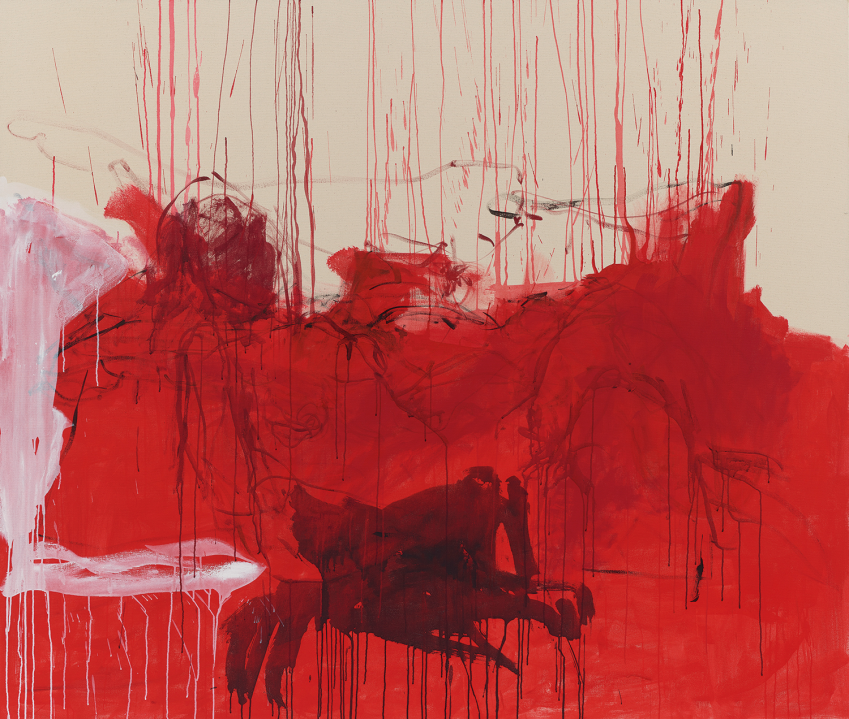
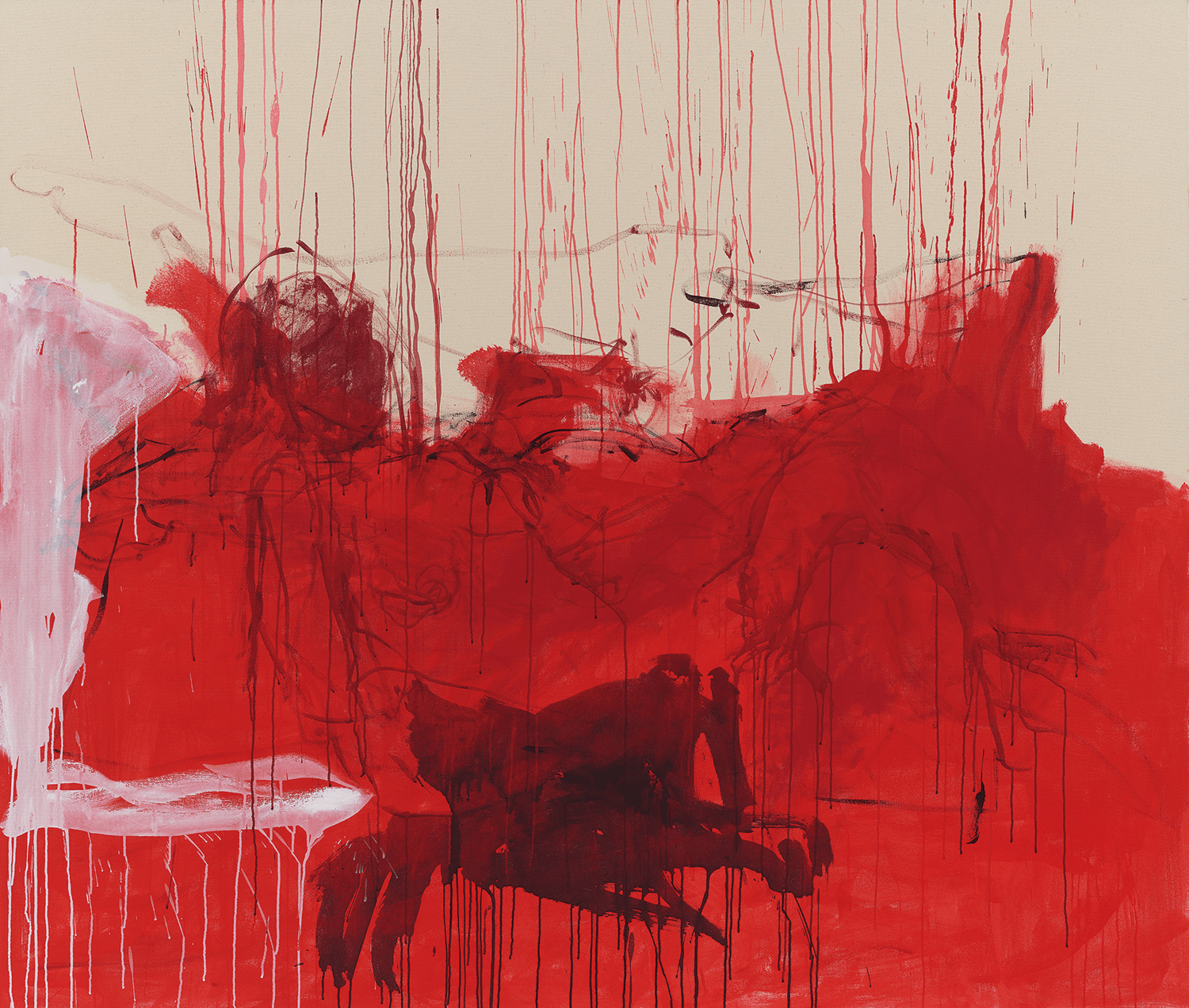
Her painting style has grown to meet her experience. There is a new urgency, a Cy Twombly-like attention to dripping paint, and an obsession with red. ‘I watched Myself die and come alive again’ (2023) has a chilling black spook at the end of the bed. An essay in the catalogue goes a bit too far: ‘While Christ’s wound represents the fulfilment of a prophecy and the verification of death, Tracey’s depiction of her stoma points to survival and echoes the transition into another life.’
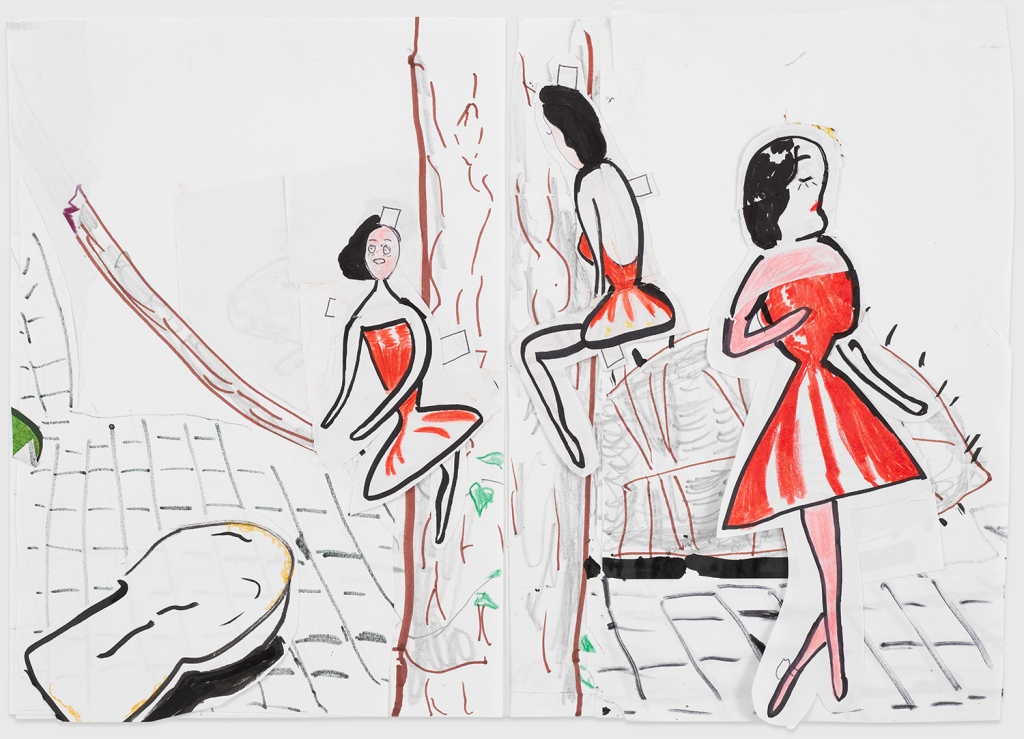
Over at the RA, Rose Wylie’s show didn’t do it for me. I didn’t find depth or meaning in her faux-naive canvases. They flounder, superficially like Philip Guston, but without the underlying structure that gives Guston’s cartoon-like paintings such legibility and menace. Sure, it’s an ironic vision, undermining ‘good’ painting with blobs and stick figures, but to what end? I felt no madness, no passion. The curation didn’t help, offering naff reasons to like her (‘She’s fashion-forward’), too much space in the layout, and deadening, banal captions, such as the one for ‘Breakfast’ (2020), a work which apparently can be ‘read obliquely as a climate-change painting, promoting the consumption of seasonal produce’.
What we needed was some art history, not a kid-friendly biographical approach (‘Wylie grew up in London amid the Blitz… Despite the devastation, Wylie recalls finding it not frightening but fascinating’). And really, why include those hopeless felt-tip flower drawings on lined and hole-punched paper?
Emin’s show, by contrast, is expertly controlled. It tells a life story in an abstract way. It never rests or explains. The work does the work. It begins with a quilt, stitched with garbled anecdotes. Then there’s a spread of 30 or so miniaturised works – representing the juvenilia she destroyed during her breakdown in 1992. You’re then drawn into the next room by the beat of the disco anthem ‘You Make Me Feel (Mighty Real)’, a backing track for ‘Why I Never Became a Dancer’, her video piece from 1995, a rebuke to the boys who chanted ‘slag’ at her. Then there’s ‘How It Feels’ (1996), a painfully frank and ambivalent film about the two abortions she had – in 1990 and 1992. She explains how she ‘broke up’ with art in 1992. What replaced it was the stitched, scrawled, postlapsarian style we know as hers today.
You’re asked to stand in front of a lot of handwritten documents, reading. It’s a weakness to the show. And yet everything she writes is electric, incisive, trawled from the heart.



Comments