Mike Pitts

Mike Pitts is a journalist and archaeologist who specialises in the study of British prehistory. His most recent book is Island at the Edge of the World: The Forgotten History of Easter Island (Bloomsbury).

Were Neanderthals capable of complex speech?

From our UK edition

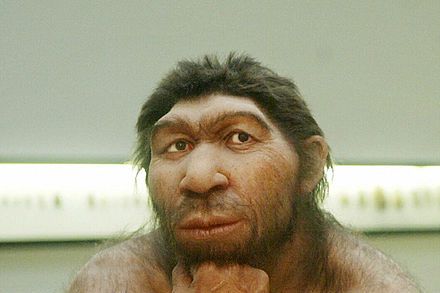
In The Inheritors, Willliam Golding’s second novel, Neanderthals utter only a few short words and think entirely with images. A family is disturbed by the arrival of people who are not like them, and who talk in sentences. The two groups clash and in the end the only Neanderthal to survive is an infant, stolen by the newcomers – that is, us, Homo sapiens. The idea that language gave our ancestors the edge over Neanderthals, leading to their extinction 40,000 years ago, remains strong. New research though suggests it may be wrong. Modern language skills, it seems, were present hundreds of thousands of years ago, before Neanderthals and sapiens had evolved. Linguistically, Neanderthals might even have been a little more advanced than us.

Scientists have confirmed the Ice Age origins of pet dogs

From our UK edition

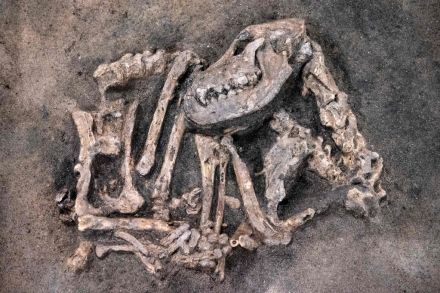
You don’t need to own a dog or a cat to know the two animals behave differently. One is loyal, protective, excitable and eager to please, the other… a cat. Now, large DNA studies have shed light on the historic origins of our closest pets, creating a fable-like explanation for their contrasting personalities. Modern European dogs can trace half their ancestry to dogs that trotted out with men and women as they tracked Ice Age deer, wild cattle and boar, and perhaps even woolly mammoths Dogs first. It had long been thought they are the original tamed animals, and have been hanging around people around a millennia before would-be farmers engaged with other species. Skeletons, up to 35,000 years old, that looked too small to be wolves had been excavated across Europe and Asia.

Why is Australia reburying ancient human remains?

From our UK edition

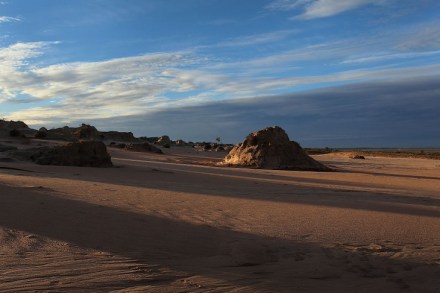
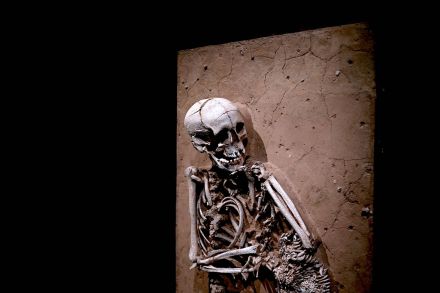
As I write, hundreds of ancient human remains are secretly being buried in a remote desert 1,000km from Sydney (New South Wales national parks service recommends you take extra supplies, fuel and car parts). No one knows who the people were, how, or when they died. But the reburial has stirred deep emotions, with a dividing line drawn between objective science and subjective belief. This is not just an Australian issue. It is about reconciling global history, and understanding ourselves as a species. The story of these remains begins half a century ago when Jim Bowler, a geologist, was studying a necklace of kidney-bean shaped lakes strung out along a creek.

A Ramses show that has little to do with Ramses

From our UK edition

Ramses and the Pharaohs’ Gold is, let’s not shy away from it, a profit-seeking exhibition mounted by an entertainment business. Neon opened its high-tech space at Battersea Power Station last year with dinosaurs, and has partnerships with the likes of Harry Potter and Marvel. The gold mask fronting Ramses’s publicity has nothing to with Ramses. Neither does the other gold and jewellery on display: his tomb was looted long ago, and all that remains is his recycled cedar box, sarcophagus and the king himself. A notable offer in the expansive retail zone is the chance to have your name drawn on papyrus by a robot. But go forewarned, and you will enjoy the experience.

How a set of gold coins divided British archaeologists

From our UK edition

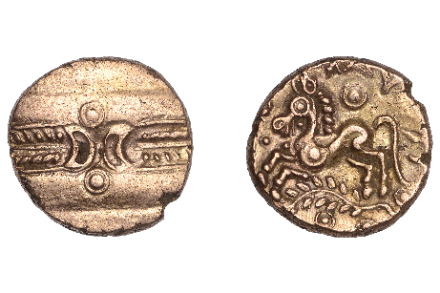
In 2024 a detectorist found some gold coins in Suffolk. The discovery was declared legally treasure. If a museum wanted the coins, the finder would have been rewarded with a sum equivalent to their market value, but none did, so he’s selling them, at an auction estimate of £20,000 to £26,000. Here’s the problem. It costs a lot of public money to record detected antiquities You might think everyone would be happy. Archaeologists have learnt something new. The detectorist will pocket a sum from his hobby, which he will share with the landowner. And he’s promised to donate a portion of the proceedings towards local research. But some archaeologists are decidedly unhappy. When you hear their objections, you might find yourself agreeing with them.

Dazzling: Hawaii, at the British Museum, reviewed

From our UK edition

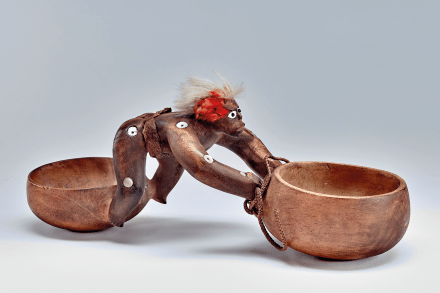
Climb the Reading Room steps to reach the British Museum’s dazzling Hawaii exhibition, and you perform an obeisance. At the top is a representation of Ku, a larger-than-human god of war and chiefly power, carved in stylish fury from the trunk of a breadfruit tree. He once commanded a flight of stairs at the Museum of Mankind in Burlington Gardens. In Hawaii he would have looked down with royal authority from a stone temple mound. We pass below him into the show, it feels, only with his consent. This is a landmark event that tells of moving encounters with stunning exhibits For that we should offer thanks. At an important time for the museum (on which more below), this is a landmark event that tells of moving encounters with stunning exhibits.

Why the Norfolk carnyx matters

From our UK edition

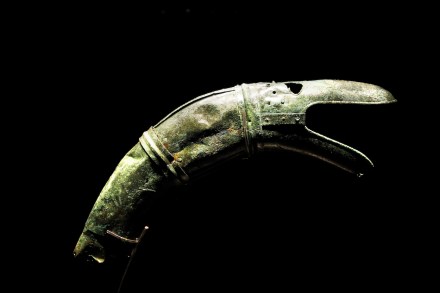
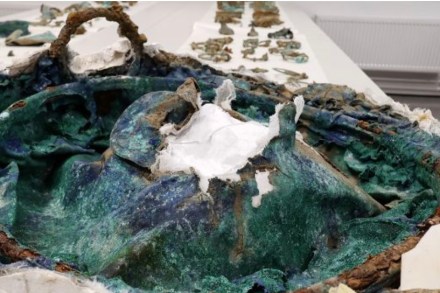
For the archaeologists used to working on major infrastructure jobs, it was a small dig, over in four weeks. Yet Peter Crawley, in charge of excavating the ground ahead of a new local housing project near Thetford in Norfolk, had a hunch it might be important. His team at Pre-Construct Archaeology did a metal-detector survey, and he was proved right. But not in ways he had expected. Curved sheets of corroded green bronze emerged from the soil, packed together in a space no larger than a side table. They lifted the heap in a block of sandy earth. CT scanning at Addenbrooke’s Hospital revealed an extraordinary sight: a compact mass of metalwork, and the unmistakeable shapes of a boar’s head and the central bosses of shields. Underneath was what raised the find into the magical.

Why did scientists think the Beachy Head Lady was African?

From our UK edition

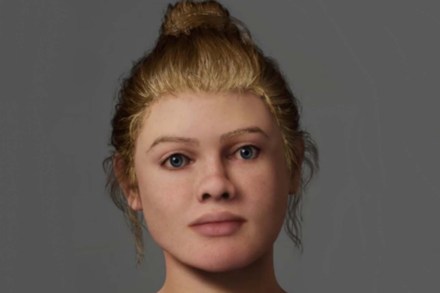
A human skeleton found in a box in the basement of Eastbourne town hall in 2012, has, not for the first time, caused some controversy. Known as the ‘Beachy Head Lady’, her remains were discovered during a study of 250 skeletons in the council’s collection. She was found to be a Roman woman with recent sub-Saharan African ancestry, leading to her being called the ‘first black Briton’ and ‘one of the earliest Africans in Britain’. Now a new study has found that she was, in fact, a light-haired native Briton. The African claim was always controversial. Archaeologists hailed it as evidence that Britain has always been multicultural. Others, who felt the scientists had an agenda, now feel vindicated by the discovery that she actually had blue eyes and light hair.

Were the Romans good for Britain?

From our UK edition

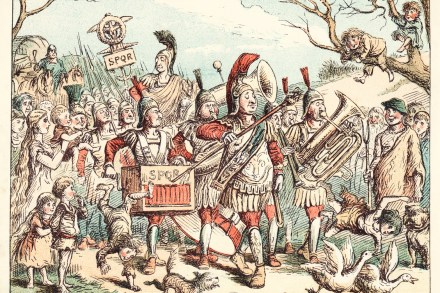
Since the Romans themselves wrote about the subject, we have a clear idea of the good things they did for Britain. Roads, towns, stone and brick buildings, plumbing, writing (IOUs), vineyards and leather bikinis were some of the many gifts of what used to be called Rome’s civilising power. Thanks to archaeology, we know some of these advances were less dramatic than thought – there were Iron Age towns and roads in Britain before the invaders arrived, for example. Now new evidence shows they had a clear negative impact on the native population. As happened centuries later during the Industrial Revolution, the Roman conquest led people to move into towns and their health deteriorated.

Has the history of human evolution been rewritten?

From our UK edition

A new report from the field of human origins had sub-editors reaching for their hyperboles. A million-year-old skull, we have learnt, has rewritten humanity’s story. The finality of this is misleading, but there is nonetheless something going on here. If Neanderthals, Denisovans and sapiens evolved away from each other a million years ago, there must have been earlier human forms not yet seen For decades, Chinese archaeologists have been investigating a site known as Yunxian, beside a tributary of the Yangtze river. The researchers have been rewarded with human fossils – to date, three skulls around a million years old. These bones have been preserved well but the skulls have been crushed.

Was Easter Island less isolated than we previously thought?

From our UK edition

It’s hard to exaggerate how isolated Easter Island was before its discovery by Polynesian sailors eight or nine centuries ago. This tiny island, which you can walk round in a day, is thousands of miles in any direction from inhabitable land. Yet a new study claims that long before the first European ship arrived in 1722, it was reached more than once, and that people sailed back out to other Pacific islands. It seems history’s greatest explorers were even more extraordinary than we first realised. It seems history’s greatest explorers were even more extraordinary than we first realised The first inhabitants of Easter Island, or Rapa Nui as it’s known in the Pacific, have had a bad press.

We finally know what an ancient species of human looked like

From our UK edition

It’s said that were you to meet a suited and well-coiffured male Neanderthal on the train, you’d easily mistake him for a fellow commuter. Face-to-face with Dragon man, however, you’d be forgiven for changing carriages. His head has been described as massive and his teeth enormous, and you could prop a book on his brow ridges. His brain was as big as a modern human’s – but a different shape. New research links him to a handful of bone fragments dubbed ‘Denisovan’, an elusive East Asian being. Dragon man has finally put a face on the last of three human species that co-existed for many thousands of years – the others being Neanderthals, and us.

The remarkable quest to identify Captain Cook’s Endeavour

From our UK edition

The announcement that a shipwreck in Newport Harbor, 200 miles up the coast from New York City, has been proven to be James Cook’s HMS Endeavour, will not surprise those who have followed the search for years. In 1768, when Cook set out to record the transit of Venus in Tahiti, the first of his voyages of discovery, he was a mere lieutenant. The Endeavour was not the best of his ships, and the solo journey – two ships sailed on each of his second and third Pacific voyages – was not the most productive.   Every detail of what has survived of the timbers of ship ‘RI 2394’, matches the Endeavour’s. Keel lengths are identical but for 20 centimetres.

The impossible politics of ‘ancestral remains’

From our UK edition

In 2002 the remains of Sarah Baartman were buried in her South African homeland. She was among thousands of people around the world from whom body parts were collected in recent centuries and stored or displayed in museums. You might think, as tastes and norms change, returning these remains to their communities a simple thing. But a recent report from an All-Party Parliamentary Group on Afrikan Reparations urging such action has proved controversial among archaeologists. The APPG, chaired by Bell Ribeiro-Addy MP, sets out its recommendations in a policy brief called Laying Ancestors to Rest.

How Cornwall led Europe into the Bronze Age

From our UK edition

The first smiths worked with copper and gold. Only when tin came to be added routinely to copper to make bronze did metal replace stone for tools and weapons. The innovation transformed Europe and Asia, creating new classes of makers and traders, and new ways to accumulate wealth and express power. And now a surprising study reveals that most of the tin – archaeologists estimate hundreds of tons a year – came from south-west England. Now a surprising study reveals that most of Europe’s Bronze Age tin – archaeologists estimate hundreds of tons a year – came from south-west England Although tin made up only a tenth of bronze, it was much harder to find than copper. Key tin sources were in the far west or east – principally Devon and Cornwall, or Central Asia.

The significance of the Melsonby hoard

From our UK edition

When the discovery of a new Iron Age hoard was announced this week, a video was released showing a long table laid out with ancient metalwork. The last time I saw anything similar was when the media were shown the Staffordshire Hoard in 2009. That was a pile of Anglo-Saxon military gold and silver, bought by museums in the West Midlands for well over £3 million. Its discovery launched a decade of research by teams of archaeologists and historians. Its impact on thinking about seventh-century England will continue for generations. The Melsonby hoards – two collections of broken iron and bronze (or other copper alloys) buried in adjacent ditches in the first century AD – could be just as thrilling. Already there are features of the hoards that have never been seen before in Britain.

Were the builders of Stonehenge black?

From our UK edition

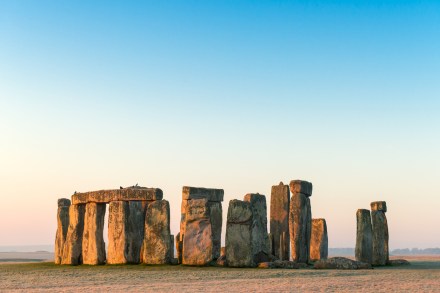
In recent years the study of human ancient DNA – extracted from excavated remains rather than living people – has become so popular that scientists are trying to clamp down on the number of samples taken from long-dead individuals. The research keeps coming, however, and it can be hard to keep up. One recent project might have passed unnoticed outside of its specialism, but for one thing: Silvia Ghirotto, one of the scientists, told a journalist the people who built Stonehenge probably had ‘dark features’. In other words, they were black. The new study, from the University of Ferrara and published in the online journal bioRxiv, analysed ancient DNA from 348 people who died across Eurasia between 45,000 and 1,700 years ago.

How was the Stonehenge Altar Stone moved from Scotland?

From our UK edition

I’ve had a keen interest in Stonehenge since I directed my first excavation there more than 40 years ago. A personal highlight was identifying a skeleton in London’s Natural History Museum, which archaeologists thought had been destroyed in the Blitz, and which turned out to be the remains of an Anglo-Saxon man beheaded beside the stone circle. Claims are made weekly, it seems, for some new insight into Stonehenge’s meaning, history or construction – and not all of them are mad. But I cannot remember an occasion when a single discovery changed the way I think about Stonehenge as much as the one announced this week.  I cannot remember an occasion when a single discovery changed the way I think about Stonehenge as much as the one announced this week.