Oliver Basciano

A parade of monstrous and toxic generals: Beatriz Gonzalez reviewed

From our UK edition

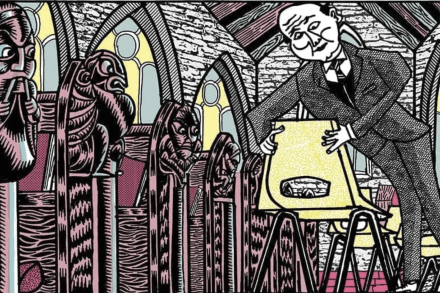
You might be forgiven for thinking that a charity sale of particularly kitschy furniture has been set up just past the entrance of the Barbican Art Gallery. There’s a chunky brown dressing table, an ornate table several decades out of fashion and a trio of bedside tables. They are piled haphazardly and on each is a garishly painted picture, invariably a pastiche of a historical painting or a Biblical scene. Raphael’s 1512 ‘Madonna and Child with St John’ rendered slightly sloppily where the mirror of the bureau once was; ‘The Last Supper’ on the table top; three popes in profile staring impassively from the tops of the nightstands.
Why is the National Portrait Gallery’s collection so poor?

From our UK edition

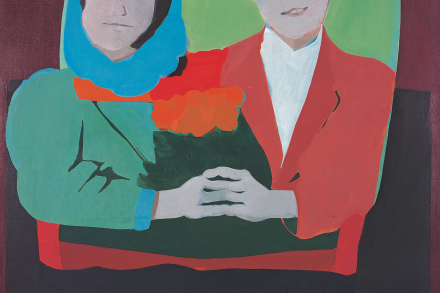
The recent announcement that the National Portrait Gallery has purchased two works by Sonia Boyce and Hew Locke for its collection came as something of a shock. The surprise? The art was actually good. Boyce’s quarterised collage ‘From Someone Else’s Fear Fantasy (A Case Of Mistaken Identity? Well This Is No Bed Of Roses) To Metamorphosis’ (1987), reminiscent of an enlarged and doodled upon set of passport photographs is a complex work of art made better the more attention you give it; Locke’s maximalist approach with the bust ‘Souvenir 17 (Albert Edward, Prince of Wales)’ (2024) may not be to everyone’s taste, but his sculpture is full of humour and pathos.

‘What happened in Russia can happen anywhere’: Pussy Riot interviewed

From our UK edition

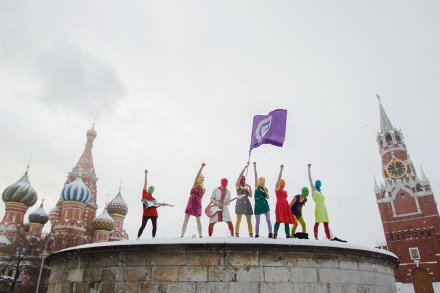
As she recalls a decade of infamy, Maria Alyokhina wanders one of the many anonymous apartments she has lived in since escaping Russia six months ago. ‘We didn’t expect a criminal case, we didn’t expect imprisonment, we didn’t expect international attention. We didn’t expect how many people would support Pussy Riot, would go to the street in balaclavas. We could never have predicted that.’ Alyokhina and Pussy Riot, a loose feminist collective who perform in brightly coloured balaclavas, came to international attention in February 2012 with their ‘punk prayer’, a guerilla music performance in Moscow’s orthodox Cathedral of Christ the Saviour.

Oliver Basciano, Mary Wakefield and Fiona Mountford

From our UK edition

20 min listen

This week on Spectator Out Loud, Oliver Basciano warns that we should brace ourselves for a coup in Brazil (00:53). Then, is three – or more – a crowd? Mary Wakefield discuses this in her Spectator column (08:41), before Fiona Mountford tells us about the sad demise of church pews (14:55).Produced and presented by Oscar Edmondson.

Brace yourself for a coup in Brazil

From our UK edition

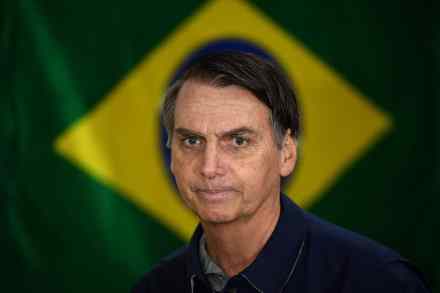
‘Jail, death or victory.’ These are the three alternatives Brazil’s incumbent leader says await him. It is an unusual rallying call for an election campaign, but this is Jair Bolsonaro, the ‘Trump of the Tropics’, and he may well be right. Bolsonaro was elected in 2018 when his initial rival, Luiz Inácio Lula da Silva, the country’s former president, was jailed midway through the campaign on corruption charges. Bolsonaro, a relative unknown, beat the replacement Workers party candidate by a ten percentage point margin. His formula was to focus on anti-corruption and conduct his campaign predominantly via social media.

TikTok intifada: what’s the role of new media in old conflicts?

From our UK edition

34 min listen

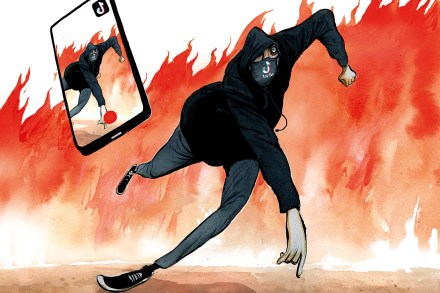
In this week’s podcast, we talk to James Ball, author of this week’s cover story on the ‘TikTok Intifada’ about the themes he uncovers in his analysis of the impact of social media on the conflict in the Middle East. The conversation with James continues with our next guest, Professor Gabriel Weinmann of Haifa University in Israel, the author of an in-depth report on the rise of incendiary, unregulated material on TikTok. As Arab and Israeli youngsters create and consume violent footage on the app, is it time that it was reined in - or is it a lost cause? (00:55)'This is a platform that targets young audiences.

The Turner Prize shortlist is an embarrassment

From our UK edition

In 2019 I was asked to be on the jury for the Turner Prize. I was pretty happy about this. As an art critic, to be asked to judge one of the biggest art prizes feels like something of a professional endorsement. I even rang my mum to tell her. ‘But don’t tell anyone yet!’ I said over the phone. ‘It’s not been announced.’ A week or so later, home to see my parents, I walked into the village pub. One of my dad’s friends looked up from his pint and shouted: ‘I heard you’re judging the Turner Prize!’ Mum isn’t known for discretion. The rest of the evening was spent with various locals asking if I was going to give the award to ‘a pile of bricks’ or ‘an unmade bed’.

The death of the Southbank Centre

From our UK edition

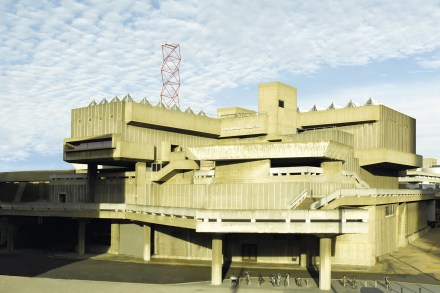
The one thing everyone agrees is that the Southbank Centre is in deep trouble. In May, the institution made an unusually public plea for government help. Management predicted the best-case scenario was ending the financial year with a £5 million loss, having exhausted all reserves, used the £4 million received from the furlough scheme and having gobbled up the remainder of its Arts Council grant. All the while, with the exception of the Hayward Gallery, the 21-acre site on London’s Thameside, incorporating both the Royal Festival Hall and the Queen Elizabeth Hall, remains closed. It was pitiful news, but there was worse to come. With no concerts, performances, talks or readings, drastic staff cuts are in the offing.