Culture

Culture

The good, the bad and the ugly in books, exhibitions, cinema, TV, dance, music, podcasts and theatre.

The real Dick Whittington and the folklore legend

More from Books

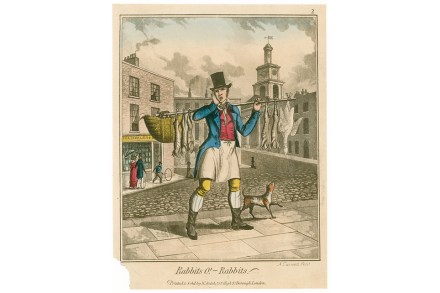
In that dark world the air pulsed with the melancholy clangour of bells. If, as legend has it, the chimes of St Mary-le-Bow told Dick Whittington to turn again, then what were they saying to all the other medieval Londoners, dwelling in houses so crowded on fouled streets that the sun could not break through? In the shadow of implacable plague, even London’s super rich were piercingly aware of life’s fragility. Their homes were scented with lily, lavender and the smoke of applewood. They had to be. The city was a close maze of abattoirs and tanneries and streams sluggish with excrement. Yet here, too, were brightly ornamented religious houses and gardens rich with symbolism and medicinal herbs.

Scotland’s deer are proving deeply divisive

More from Books

On the face of it, a book about a woman stalking one red deer might not sound that exciting. Just one? It’s estimated that there are nearly a million in the Scottish hills and around 60,000 are culled every year. So why write about a single kill? But in Hindsight Jenna Watt goes far deeper into Scotland’s relationship with red deer. It may be a book about deer, but it’s also about people, habitats, history, landownership, grief and belonging. Watt’s interest in the animals stems from reading George Monbiot’s book Feral. From there she falls down the rabbit hole of rewilding, regeneration, conservation and environmentalism.

Why Tate Modern seems more like a playground than an art gallery

More from Books

This book covers the period 1878-2000, offering thought provoking commentary on some 120 years of experiments in being modern, and begins with the famous court case after John Ruskin accused James Whistler of ‘flinging a pot of paint in the public’s face’. But Michael Bird does not limit his perspective to a single artist or cause per chapter. Part of the deep appeal of his writing is the range of reference across literature and art, bringing in key historical events where appropriate. He does a superb job of connecting and deftly summoning context, always seeking to illuminate the larger picture. And he stitches apt quotation through the text, returning to certain sources again and again for added effect, Henry James and Walter Sickert being just two.

Nothing compares with Chips Channon’s diaries for sheer exuberance

More from Books

‘Why was he born so beautiful, why was he born at all?’ When ‘Chips’ Channon strolled into the House of Commons tea room in 1951, this was the chant with which encircling drunken Labour MPs mocked him. Politically, he was inessential they thought, and epicene. He admitted to being the best-dressed of MPs, but reckoned the young socialist Anthony Crosland to be the most beautiful. As a historical record keeper, though, he has cut a deeper and more ineffaceable mark than any of his tormentors. Nothing compares with the unexpurgated Channon diaries. They are rich, exuberant, copious and shatteringly honest.

How Putin manipulated history to help Russians feel good again

More from Books

Every country has an origin story but none has ‘changed it so often’ as Russia, according to Orlando Figes. The subject is inseparable from myth. In this impressive and deeply immersive book, the author sets out to reveal Russia’s history, its people’s perception of their past and the manifold ways in which those in power manipulate both events and legend to shape the present. It is a saga of multi-millennial identity politics. A bestselling historian with a storied background himself, Figes arranges his material chronologically over ten chapters, beginning with the medieval chronicles of Kievan Rus. Those sources launched myths that became fundamental to the Russian understanding of nationhood.

Wall Street madness: Trust, by Hernan Diaz, reviewed

More from Books

‘I don’t trust fiction,’ the famous author told me, both of us several glasses to the good. ‘It contains too much truth.’ I nodded and she laughed and we drank more wine, but that sentence stayed with me in all its aphoristic glory. When she died, this was the first thing I remembered: our conspiratorial conversation in the deepest dark of 1990s Soho. This is not true. It has the feel of lived experience, yet it is entirely invented. The context, its placement and the fact that it is printed in a magazine gives it credence. As readers, we do not expect to be lied to. With a work of fiction, the opposite is true. Lies are all we can hope for.

In praise of Birmingham, Britain’s maligned second city

More from Books

During my gap year in 1981, I worked on the 24th floor of Birmingham’s Alpha Tower for the Regional Manpower Intelligence Unit. The city below, with its express ways racing past the Venetian Gothic of Joseph Chamberlain’s house and the Roman Revival of the town hall, were the realisation of the city planner Herbert Manzoni’s dream of creating a Midlands Motown. The Rotunda, the acres of systems-built tower blocks, even the inverted ziggurat of a modernist central library, together amounted to the antithesis of the smoky, tweedy, horse-powered, cut-throat Birmingham the world now knows from Peaky Blinders. That year, though, was the one which went wrong for Birmingham, Richard Vinen argues.

Sixteen cathedrals to see before you die

More from Books

There can be no clearer illustration of the central role that great cathedrals continue to play in a nation’s life than the outpouring of grief that greeted the catastrophic blaze in Notre-Dame in 2019. President Macron described the building as ‘our history, our literature, our imagination, the place where we experienced all our greatest moments’. Indeed, it is impossible to conceive of any major European city without a cathedral at its heart. Emma J. Wells has written an accessible, authoritative and lavishly illustrated account of the building of 16 of ‘the world’s greatest cathedrals’.

The visionary genius of Harold Wilson

More from Books

‘Our generation owes an apology to the shades of Harold Wilson,’ the polling guru Peter Kellner once told me. Had Wilson not firmly resisted pressure from President Lyndon Johnson to send troops to Vietnam, Kellner and I were both old enough to have fought there. But in 1968 we loftily despised Wilson for twisting and turning to stay out of Vietnam and keep his party together. ‘What are the two worst things about Harold Wilson?’, we asked. ‘His face,’ we replied smugly. Britain has never quite forgiven Wilson for his cleverness. His reputation suffered a catastrophic decline in the immediate aftermath of his premiership.

The short-lived wonder of Creedence Clearwater Revival

More from Books

Million-selling rock bands are rarely happy families. They are an uneasy combination of a creative alliance and a business partnership, which is frequently thrown together on an ad hoc basis by people barely out of their teens. They are tested to destruction by long hours, minimal sleep, deafening noise, international travel, a bedroom schedule that would have made Caligula blush and a seemingly unending cocktail of legal and illegal stimulants. As the old joke goes, there is also a downside. This is the accepted pattern.

A lost brother: My Mind to Me a Kingdom Is, by Paul Stanbridge, reviewed

More from Books

Grief leads us down some strange roads. Few, though, can be as peculiar as those charted by Paul Stanbridge in his auto-fictional My Mind to Me a Kingdom Is. This singular and striking book follows a narrator (the extent to which this figure overlaps with Stanbridge is kept teasingly obscure) mourning the suicide of his brother, an isolated, eccentric mathematician. Yet, while it contains passages of raw tribute, it is a self-consciously tricksy narrative. Stanbridge circles around his brother’s death via some of history’s more overgrown byways, such as ‘Clever Hans’, the mathematical horse, locked-in syndrome and Jean-Jacques Rousseau’s enthusiastic onanism. There’s a suggestion of Olga Tokarczuk’s novel Flights to this omnivorous freewheeling.

Murder most foul: The Marriage Portrait, by Maggie O’Farrell, reviewed

More from Books

There’s a moment near the end of Robert Browning’s dramatic monologue ‘My Last Duchess’ when it becomes clear that the duke, whatever he might claim, did kill his wife: ‘I gave commands;/ Then all smiles stopped’, he lets slip. In The Marriage Portrait, Maggie O’Farrell’s sombre, haunting novel based on the historical couple described in Browning’s poem, this revelation comes rather earlier. The young Lucrezia knows with ‘a peculiar clarity’ that her husband ‘intends to kill her’ right from the first page. After leaving Florence to begin her married life with Alfonso II, Duke of Ferrara, Lucrezia died within a year.

A dying doctor’s last words

More from Books

Facing up to the prospect of one’s own mortality is always jarring; but when you’ve spent your life trying, and sometimes failing, to save others from a terrible death, it carries the knowledge that the journey may be more traumatic than the fear or grief of the end. These are the concerns with which Henry Marsh, the eminent neurosurgeon and author, grapples after his own diagnosis of advanced prostate cancer more than a year ago. He believes this book will be his last and, unsurprisingly, he seems to be cramming everything into it. It makes for a discursive read and jumps about chronologically and topically, as if he wants to include all his important final thoughts.

In the footsteps of the Romantic poets

More from Books

Shelley, walking as a boy through his ‘starlight wood’, looking for ghosts and filled with ‘hopes of high talk with the departed dead’, found nothing in reply. Nothing reverberated. The ghosts were silent. But he felt something else non-human: the springtime breezes bringing a sense of the marvellousness of life itself. And so in that instant (or so he says) his mind changed. No more seeking after gothic horrors or pining for the worst; no more listening to the dead. Instead, ‘the spirit of beauty’ descended on him, illuminated him, shaping his life, becoming his goddess, the only force he could imagine that ‘could free/ This world from its dark slavery’.

Courage on the high seas

More from Books

The Shetland Islands and the Faroes may seem to be somewhere out there in distant waters, marginal and in the greater scheme of things not very important in the history of the world. But from a maritime perspective it is precisely the fact that they are suspended in mid-ocean, surrounded by water that teems with fish (if one knows where to look) that has given them a role in human history out of all proportion to their size. In his fascinating account of the part played by these islands in the harvesting of cod and herring from the North Atlantic, John Goodlad raises vital questions about the world’s food supplies.

The nondescript house that determined the outcome of the second world war

More from Books

Sometimes the struggle for a single small strongpoint can tip the whole balance of a greater battle. One thinks of the closing of the gates of Hougoumont farm at Waterloo, or the bloodless German seizure of Fort Douaumont at Verdun – an error it took an estimated 100,000 French lives to reverse. According to Iain MacGregor, this role at Stalingrad was played by a non-descript four-storey building in the city’s central district, codenamed ‘the Lighthouse’, but subsequently known as ‘Pavlov’s House’, after one of its garrison’s leaders, Sergeant Yakov Pavlov.

How the quarrelsome ‘Jena set’ paved the way for Hitler

Lead book review

Today, the German city of Jena, 150 miles south-west of Berlin, is the world centre of the optical and precision industry; but in the 1790s it spawned an even more marketable commodity. It was then a small medieval town on the banks of the river Saale with crumbling walls, 800 half-timbered houses, a market square and an unruly university. Here, in the philosophy department, Johann Gottlieb Fichte, a young professor inspired by Immanuel Kant and the French Revolution, proclaimed from the pulpit his theory of the ‘Ich’. ‘A person,’ he roared, ‘should be self-determined.’ In an age of absolute power and the divine right of kings, the idea of free will was an incendiary device and Fichte freewheeled his way through each lecture.

Nothing is certain in Russia, where the past is constantly rewritten

Lead book review

Enforced brevity focuses the mind wonderfully. And when the minds in question are two of the West’s most interesting historians of Russia, the result is a distillation of insight that’s vitally timely. Sir Rodric Braithwaite was Britain’s ambassador to Moscow from 1988-92 during the collapse of the USSR (where he was the boss of Christopher Steele, of Trump dossier fame), then chaired the UK’s Joint Intelligence Committee. He went on to write the brilliant Afgantsy, a history of the USSR’s disastrous Afghan war and its impact on the Soviet Union’s collapse, and Moscow 1941, a people’s history of the heroic Soviet fight against Nazism.

A shaggy drug story: Industry of Magic & Light, by David Keenan, reviewed

More from Books

The Scottish writer David Keenan has published five novels in five years: This is Memorial Device (2017), For the Good Times (2019), Xstabeth (2020), last year’s magnum opus Monument Maker and now Industry of Magic & Light. At a comparatively modest 250 pages (Monument Maker weighed in at more than 800), it is practically a novella, or perhaps the sort of pamphlet one might once have picked up in a ‘head shop’ such as Compendium Books in Camden. The last book of Keenan’s I reviewed here I described as ‘either a cycle of novels or one vast fictional gallimaufry’ – to which I now approvingly add a third category. Industry of Magic & Light confirms the enterprise as a shaggy drug story: Then the main band came on.

Cosy crime flourishes in the pick of the summer’s thrillers

More from Books

Cosy crime was once the literary world’s guilty secret, a refuge for any reader seeking entirely unchallenging entertainment – like an Escoffier chef with a private penchant for Mars Bars. It has always proved a great getaway in tough times, which helps explain the extravagant success of Richard Osman’s novels. Murder Before Evensong by the Reverend Richard Coles (Orion, £16.99) follows on Osman’s heels, with the advantage of it being both a more interesting story and a better writer telling it. It begins with an array of clichés, a feature of the cosy genre. Daniel Clement is a man of the cloth, tending the rural flock of a small village whose church’s living is in the hands of the local estate’s predictably irascible squire.

Joy, fear and regret in contemporary Britain

More from Books

For two and a half years, as Britain adjusted from normality to the most disorienting collective trauma of our lifetimes, Will Ashon trawled the country for strangers’ stories. He wrote letters to random addresses, went hitchhiking, talked to the drivers and followed chance connections in pursuit of glimpses into other people’s lives. Once they had consented to speak, he asked some to tell him a secret and others to answer a question from a list. The resulting anonymous confessions, reminiscences, philosophical reflections and anecdotes were obtained via interviews, emails or voice recordings.

In search of the peripatetic philosopher Theophrastus

More from Books

Publishers lately seem to have got the idea that otherwise uncommercial subjects might be rendered sexy if presented with a personal, often confessional, counterpoint. The ostensible subject of Laura Beatty’s book is the pioneering Greek botanist and philosopher Theophrastus. He was a friend of Aristotle’s, and was once thought his intellectual equal, but is now little known except to a few classicists and historians of science. But since no one wants to publish a straight book on Theophrastus, we get instead a book that is at least as much about Laura Beatty, her library researches, her travels in Greece and her kitchen garden. Her publishers describe the book as ‘genre-defying’.

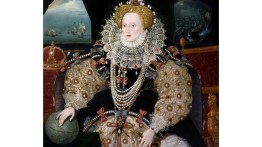
Rocked by rebellion: the short, unhappy reign of Edward VI

More from Books

As Tory writers reflected on the safe passage of the Stuart dynasty through the Exclusion Crisis of 1679-81, an anonymous author urged contemporaries to learn the lessons of English history. The Rebels Doom (1684) offered some thumbnail sketches of various unsuccessful rebellions and attempted revolutions that had threatened the monarchy since the reign of Edward the Confessor, in order to show ‘the Fatal Consequences that have always attended ... Disloyal Violations of Allegiance’. The writer paused especially over one Tudor insurrection from 1549, in which 10,000 rebels from Devon and Cornwall took up arms against the administration of Edward VI and besieged the city of Exeter, but were ultimately crushed by forces led by Lord John Russell.

Why was Henrietta Maria, Charles I’s beautiful wife, so reviled?

More from Books

On 15 June 1645, as Thomas Fairfax’s soldiers picked over the scattered debris on the Naseby battlefield, they made a sensational discovery. Amid the corpses and musket balls, dismembered limbs and severed swords there nestled a carrying case of personal letters and papers. It was nothing less than the king’s private correspondence. The cache included letters between Charles I and his queen, Henrietta Maria – his always opened ‘My deare harte’ – which discussed in detail the tactics and strategies of the war. Never ones to miss a PR opportunity, the Parliamentary high command ordered that a selection should be published with a guiding commentary.

Harpo Marx – genius, idiot savant or lovable overgrown child?

More from Books

It’s hard (if not impossible) to imagine a world worth living in that doesn’t include the Marx Brothers; and equally impossible to imagine the Marx Brothers without their forever silent, animal-loving, hilariously unpredictable Harpo, he of the moppet wig, trampish overcoat packed with stolen silverware and blow torches, and recurringly grotesque facial expressions. For while the greatest comic performers of the silent film era (such as Chaplin and Keaton) couldn’t speak to the camera, Harpo was the only comic of the talkie era who simply wouldn’t, as if human conversation were somehow beneath him.