Culture

Culture

The good, the bad and the ugly in books, exhibitions, cinema, TV, dance, music, podcasts and theatre.

It happened one summer

More from Books

For those unfamiliar with Martin Amis’s short story, ‘What Happened to Me on My Holiday’, written for The New Yorker in 1997, it was a purist exercise in autobiographical fiction; not even the names were changed. For those unfamiliar with Martin Amis’s short story, ‘What Happened to Me on My Holiday’, written for The New Yorker in 1997, it was a purist exercise in autobiographical fiction; not even the names were changed. The Pregnant Widow is a far more complex, troubling piece of work. Amis did indeed spend much of the summer after his second year at Oxford in a castle near the Mediterranean, though not in Tuscany; that would come later.

An institution to love and cherish

More from Books

Books about marriage, like the battered old institution itself, come in and out of fashion with writers, readers and politicians, but never quite die away. These two, from the latest crop, are by women in early middle age, both experienced journalists with several books behind them; but Elizabeth Gilbert, a chirpy American describing herself as ‘a cross between a golden retriever and a barnacle’, is flamboyantly personal and unacademic, while the quietly British Kate Figes is a careful, responsible researcher and interviewer who keeps her own marital history to the margins. All the more surprising, then, to find that their attitudes to marriage have a certain amount in common.

A couple of drifters

More from Books

Paul Torday was 59 when his first novel, the highly acclaimed Salmon Fishing in the Yemen, was published in 2006. Since then, he can barely have stepped away from his keyboard. The Hopeless Life of Charlie Summers is his fourth novel and it represents a return to the comic tone of Salmon Fishing. Or at least it does in part. There are scenes of high comedy here, but some pretty dark swirls too. And hanging over the whole book is the question of what makes for a fulfilled life. The narrator, Hector Chetwode-Talbot — known, mercifully as ‘Eck’ — is a former soldier who has drifted into the City.

Bank-bashing with a vengeance

More from Books

Over the decades of (relative) macroeconomic stab- ility in the second half of the 20th century, profit-seeking com- mercial banks and state-owned central banks worked together to lower the cash-to-asset ratios in the banking industry. An understanding grew that profitable and well-capitalised commercial banks should be able to borrow cash from the central bank if they had trouble maintaining a positive cash reserve balance. The associated arrangements were technical and complex, and were of no interest whatever to politicians and journalists. Fashionable economic commentators regarded them, or rather ignored them, as the municipal drainage of the financial system.

Writing of, or from, yourself

More from Books

'All literature is, finally, autobiographical’, said Borges. ‘Every autobiography becomes an absorbing work of fiction’, responded H. L. Mencken, though not, you understand, directly. Certainly the fictional element in autobiography is evident; Trollope thought that nobody could ever tell the full truth about himself, and A. S. Byatt has said that ‘autobiographies tell more lies than all but the most self-indulgent fiction’. An exaggeration, perhaps, but one with a kernel of truth. Borges’s remark must, however, set any novelist pondering. In the most immediate sense it appears to be untrue. ‘What about invention?’ we may cry, ‘what about the imagination?

Double vision | 30 January 2010

More from Books

Thomas Babington Macaulay’s early essays in the Edinburgh Review were an immediate success, and soon made him a respected figure in Whig society. Thomas Babington Macaulay’s early essays in the Edinburgh Review were an immediate success, and soon made him a respected figure in Whig society. In 1830 Lord Lansdowne offered him a seat in parliament for the rotten borough of Calne. In 1848 he published the first volume of his History of England from the Accession of James II. It was an instant bestseller. He gave his readers a flattering image of themselves. The Whig Revolution of 1688 had made the English ‘the greatest and most highly civilised people that ever the world saw’. By 1857, when he was raised to the peerage, he had become a National Treasure.

Adventure with a difference

More from Books

Probably my opinion of this bold book is worthless. Peter Carey, having decided to write a novel about Alexis de Tocqueville’s visit to the United States in 1831-2, read, among many other works, my biography of Tocqueville, which was published two years ago in, he says, ‘the nick of time’. He is kind enough to call it ‘delightful’, and has plundered it assiduously. What I myself find delightful is the way in which Carey has picked up the signals. I never expected such a close, intelligent reader, and I’m glad to think my work has been of use to him. But this does not make me a dispassionate reviewer. And nobody else has my reasons for studying Carey’s transmogrifications.

Recent crime novels | 30 January 2010

More from Books

Blue Lightning (Macmillan, £16.99) is the fourth novel in Ann Cleeves’ excellent Shetland quartet. Blue Lightning (Macmillan, £16.99) is the fourth novel in Ann Cleeves’ excellent Shetland quartet. It is just as good as its predecessors. Cleeves has found a way to serve up many of the pleasures of the traditional mystery in an unusual modern setting. Her series detective, Jimmy Perez, returns to his own island, Fair Isle, with his artist fiancée, Fran. Autumn storms cut the island off from the rest of the world. Perez anticipated that he would suffer mild embarrassment when he introduced Fran, an outsider from the south saddled with a six-year-old daughter, to his family home.

The grandest of old men

More from Books

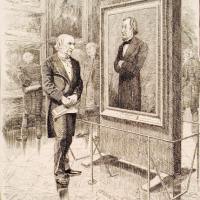
Mr Gladstone’s career in politics was titanic. Mr Gladstone’s career in politics was titanic. He sat for over 60 years in the Commons, was in the cabinet before he was 35, was four times prime minister, almost solved the Irish question, set new standards for the conduct of public business and of foreign policy, and took a leading part in the disruptions both of the Conservative and of the Liberal Party. The post office did get round to issuing a commemorative stamp for his bicentenary, which fell on 29 December; but the press, which used to publish every day in the 1880s a note of his doings, close to the court circular about the Queen’s, has taken it more quietly.

Paris of the gutter

More from Books

Port-au-Prince, the Haitian capital, lies on a marshy bay encircled by mountains. It was founded in 1749 by the colonial French and named after a vessel, Le Prince, which anchored there about 1680 (and not, as the dictator ‘Papa Doc’ Duvalier apparently liked to believe, after The Prince by Machiavelli). Thousands subsist in shanties built on landfill at the harbour’s edge; even a light rainfall can put their homes under flood. Uptown, an illusion of space prevails. The presidential palace, a vast lair of power, stands at one end of a palm-fringed plaza. On Tuesday, 12 January, Port-au-Prince teemed as usual with cigarette vendors, bootblacks and marchandes. On the Rue du Commerce, office workers were making last-minute purchases before returning home. It was 4.

Array of luminaries

More from Books

In November 1660, on a damp night at Gresham College in London, a young shaver named Christopher Wren gave a lecture on astronomy. In the clearly appreciative audience were 12 ‘prominent gentlemen’, who in discussions afterwards, possibly over a drink or two, decided they would meet every week to talk about science and perform experiments. In a flash, this informal gathering coalesced into a society, which they called ‘a Colledge for the Promoting of Physico-Mathematicall Experimentall Learning’. As Bill Bryson writes in his introduction, ‘nobody had ever done anything quite like this before, or would ever do it half as well again.’ In 1662 Charles II granted them a charter, and the society became the Royal Society.

Elder, but no better

More from Books

William Pitt the Elder, Earl of Chatham was hailed by Victorian schoolboys as the man who made England great. He was the patriot leader, the minister who steered the country through the Seven Years War, climaxing in the Year of Victories of 1759. General Wolfe heroically captured Quebec, British troops helped Frederick the Great of Prussia smash the French at the battle of Minden, and the British navy decisively defeated the French at Quiberon Bay. England emerged as the greatest power not just in Europe but in the world, and Pitt was the hero. In fact, Pitt’s reputation was wildly inflated. The war was fought by soldiers making decisions on the spot — it had to be, as letters took several weeks to reach England. Pitt neither planned nor financed the war.

Not cowardly enough

More from Books

Nobody who reads Nigel Farndale’s The Blasphemer is likely to complain about being short-changed. Nobody who reads Nigel Farndale’s The Blasphemer is likely to complain about being short-changed. It tackles five generations of the same family, three wars, Mahler’s ninth symphony and contemporary Islamic terrorism. Along the way, it ponders the nature of male courage, the theological implications of Darwinism and, rather more surprisingly, the existence of angels. As a journalist himself, Farndale also seems to have noted the career path of Sebastian Faulks — that great exemplar for all British journos dreaming of literary glory.

What a difference a gay makes

More from Books

Edmund White is among the most admired of living authors, his oeuvre consisting of 20-odd books of various forms — novels, stories, essays and biographies — though each one is imbued with his preferred subject, homosexuality. Edmund White is among the most admired of living authors, his oeuvre consisting of 20-odd books of various forms — novels, stories, essays and biographies — though each one is imbued with his preferred subject, homosexuality. Now he is most famous for what could be termed his boy-ographies, a regular series of volumes about his passions, practices, predilections and peccadildos, beginning, in 1975, with The Joy of Gay Sex.

Fighting spirit

More from Books

The metaphors that come to us when we are sick, trapped in the no-man’s land bet- ween consciousness and oblivion, are often the most vivid of which our minds are capable. The metaphors that come to us when we are sick, trapped in the no-man’s land bet- ween consciousness and oblivion, are often the most vivid of which our minds are capable. No wonder, then, once we are recovered, that the memory of them may prove impossible to banish. It is the measure of those that came to Peter Stothard when he was receiving treatement for what at the time appeared terminal cancer that they should have inspired this haunting, erudite and beautifully written book.

Decline in New York

More from Books

A connection between poetry and blindness is a classical trope. Homer was thought to be blind — if indeed he was one person — and Milton of course suffered torture by going blind. Blindness is also associated with special powers of insight and intuition, very useful attributes for a poet. Blind poets had to develop long memories, too, if they wished to recite their works. The Odyssey is thought to have been the work of Homer’s old age. Homer and Langley is the work of E. L. Doctorow’s old age. There are fewer Homeric references than you might have expected, given that the narrator is called Homer Collyer and is blind, although, like the classical Homer, not born blind.

The Knights of Glin

More from Books

In this splendid, monumental slab of a book, Desmond Fitzgerald, the 29th Knight of Glin, has made the chronicle of his family epitomise the whole turbulent history of Ireland since the arrival of the Normans. The survey includes chapters by academic genealogists and other historians, with less formal contributions from the Knight himself and his wife, Madam Olda Fitzgerald. The illustrations are comprehensive: ancient maps and land- scapes and portraits ancient and modern. There are a characteristically misty watercolour by Louis le Brocquy and photographs of architectural embellishments, fine furniture and paradisal gardens.

Strictness and susceptibility

More from Books

William Trevor’s collected short stories were published in 1992 and brought together seven collections. William Trevor’s collected short stories were published in 1992 and brought together seven collections. But since reaching the standard age for retirement, Trevor has produced four further volumes, and now Penguin has brought out a handsome new edition, in two slipcased volumes. The industry is impressive, but not nearly as impressive as the quality. Trevor is routinely described as the world’s greatest living writer of short stories (I suppose the competition is Alice Munro), which makes the reviewer’s task a little tricky. It boils down to this: is he?

Celebration of old times

Towards the end of 1979, Antonia Fraser gave an interview to the Washington Post in connection with her book Charles II (renamed ‘Royal Charles’ so as not to confuse a sequel-bombarded American public). She records her final exchange with the interviewer in the tersely effective style of the diaries from which this book is adapted: Man, hopefully, at the end: ‘Just one more question, what is Harold Pinter like about the house, all those pauses and enigmatic statements, I’ve always wondered?’ Me, briskly: ‘Keep wondering.’ ‘Keep wondering.’ Excellent phrase: curt, witty, and just abrupt enough to see off a line of inquiry without giving offence.

A sage on his laurels

More from Books

Last year, at a gathering in a London bookshop, the Nigerian writer Chinua Achebe read poetry and mused over his long career. The evening was a sell-out, the mood adoring. At the end, a Scandinavian blonde raised a hand to ask whether, if he could do it all again, there was anything about Things Fall Apart he would change. There was patronising laughter from the audience, tinged with disapproval. Didn’t the silly girl know the novel was perfect in every way? Achebe did not engage with the question. ‘No, I wouldn’t change a word.’ I was reminded of the exchange reading this slim book, Achebe’s first for more than 20 years.

Fear hovers in China

More from Books

It’s lovely to be the child of a Chinese Revolutionary Martyr. It means your parent died especially heroically for the Communist cause. I had a friend who was such a son; his father, a high-ranking Chiang Kaishek army officer, came over to the Maoist cause and died fighting for it against his former comrades. The big thing for the son was that he had access to his dang-an, the official dossier containing the personal and political details of individual Chinese, which is closely guarded by the security apparatus. Few ever see their dang-an — which can make or break your career — but my friend could add favourable facts to his and excise damning ones.

Tensions in the European Union

More from Books

Perry Anderson was an editor of the New Left Review in the days when there was a New Left, and a pro-European Marxist at a time when this seemed a contradiction in terms. Since then, the opinions of this characteristically English rebel have been softened by years passed in the sociology departments of American universities. He has learned to love the values of American liberal capitalism, albeit with large qualifications. Disappointed idealism has soured his former adulation of French intellectual elites. But some things have not changed. Anderson’s contempt for the English political and intellectual tradition is as sharp as ever, and peppers the pages of this book.

Another damned thick, square book

More from Books

William T. Vollmann ruined my Christmas. But he also made my year. Like a fisherman scared by reports of mysterious beasts and monsters — Here be dragons! Gryphon! Basilisk! Unicorn! Serpent! — I’d been put off for a long time by Vollmann’s reputation as the great white whale of American fiction, the New Maximalists’ Maximalist, a kind of vaster, stodgier, blubberier David Foster Wallace. And Vollmann’s much discussed obsessions with prostitution, destitution, degradation — exhaustingly detailed in his many and often mega-books, from You Bright and Risen Angels (1987) right through to the seven-volume Rising Up and Rising Down: Some Thoughts on Violence, Freedom, and Urgent Means (2003) — are not my own. Frankly, I like nice.

A reader’s writer

More from Books

Some people say that nothing happens to them, but everything happens to the writer who sees the world around him as material for fiction. Francis King is such a writer, which explains why he has been able to go on writing novels and stories for longer than many of his readers and indeed publishers have been alive. When someone who brought out his first book in 1946 while an Oxford undergraduate publishes a novel as good, fresh, intelligent and moving as Cold Snap more than 60 years later, it is almost inevitable that reviewers should remark on his extraordinary literary longevity and his seemingly inexhaustible vitality. And yet this is, in all ways but one, beside the point. To dwell on his age is invidious and misleading.

One for the road

More from Books

Have you ever been on holiday and struggled to choose a guidebook? I mean, where does one start? I imagine in a bookshop. But, if anything, that makes the task even harder. The choice is just too wide. Waterstones sell around 12 guidebooks per major city — far more if you want a whole country (there are a staggering 23 on India, for example). So I asked around. Which guidebook, if any (young travellers are increasingly turning to the web and online travel forums for advice whilst others are too mean to buy a guidebook and rely on friends’ recommendations, a hotel map and a good concièrge), did they choose when heading off on a mini-break? Were they faithful to a particular brand or did they judge a book by its cover? ‘I take the Times World Atlas,’ said one.