Nicholas Haslam

Schlock teaser

From our UK edition

The somewhat straightlaced theatre-going audiences of 1880s America, eager for performances by European artistes like Jenny Lind and solid, home-grown, classical actors such as Otis Skinner, were hardly prepared for the on-stage vulgarity that the (usually) Russian and Polish immigrant impressarios, with their particular nous for show-biz, were to unleash into the saloons and fleapits across the young nation.
What a difference a gay makes

From our UK edition

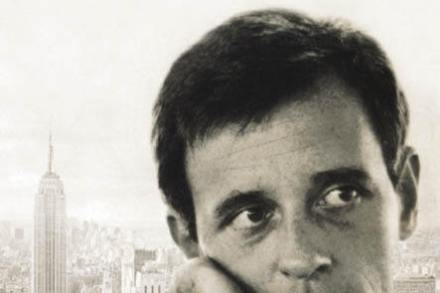
Edmund White is among the most admired of living authors, his oeuvre consisting of 20-odd books of various forms — novels, stories, essays and biographies — though each one is imbued with his preferred subject, homosexuality. Edmund White is among the most admired of living authors, his oeuvre consisting of 20-odd books of various forms — novels, stories, essays and biographies — though each one is imbued with his preferred subject, homosexuality. Now he is most famous for what could be termed his boy-ographies, a regular series of volumes about his passions, practices, predilections and peccadildos, beginning, in 1975, with The Joy of Gay Sex.

All the Men’s Queen

From our UK edition

It is entirely possible that nobody, not even perhaps Queen Elizabeth herself, has ever known what she was really like, so great the charm, the smiling gaze, the gloved arm, the almost wistful voice, the lilting politeness, yet so strong the nerve, so dogged the spirit, so determined the trajectory. And so many were the gossamer veils that enwrapped her aura that these two extremes invariably melded into a rose-centered sweetness. For nearly 70 years Queen Elizabeth, like most royalty, nurtured the cultivation of a façade. To an adoring mass, she was Titania; few glimpsed the dagger beneath her flower-strewn couch. In William Shawcross’s majestic and elegantly written biography, we come closer than any other to the kernel of Queen Elizabeth’s being.

Salt of the earth

From our UK edition

As a young girl in Athens, Maria Callas would watch the films of the extraordinary Hollywood actress Deanna Durbin, and, entranced by that child-star’s utterly perfect voice, vowed to become an opera singer. A couple of decades later la diva divina went backstage at a New York theatre to congratulate another former child star with an equally perfect voice on her performance in her major Broadway triumph. The triumph was My Fair Lady, and the star was Julie Andrews. As a young girl in Athens, Maria Callas would watch the films of the extraordinary Hollywood actress Deanna Durbin, and, entranced by that child-star’s utterly perfect voice, vowed to become an opera singer.

Getting a kick

From our UK edition

One frequently reads of chaps for whom their epiphany was the first sight and sound of Julie Andrews. Mine happened a good few years earlier, lying bed-bound with polio, just after the war. Someone had sent my mother a boxed set of the Broadway cast of Annie Get Your Gun. Ethel Merman’s flamboyant voice belted from the radiogram. I was entranced, learning every note and word perfectly. From then on all I ever wanted was to be Ethel. Reading this book, which is really a re-hash of Merman’s two autobiographies, reminds me of my childhood ambition, tempered with a certain relief that I did not achieve that particular goal. Miss Merman was indeed the biggest star of the American musical theatre for over 60 years.

How now Browne cow?

From our UK edition

The Christmas book market is about to be flooded, if that’s the word for these somewhat juiceless jottings, by not one but two biographies of the actress Coral Browne. This dual assessment is perhaps just as well, as quite clearly there were two Coral Brownes, one a witheringly witty, ravishing (in the early 1960s she was voted one of the three most beautiful women in the world, along with Princess Grace and Nina of aristo folk singers Nina and Frederick), loyal and quintessentially ‘West End’ creature; the other an insecure, sour, mercenary, and often cruel self-creation, the Coral evident in her attitude to, and treatment of, the children of her second husband, the epicene actor Vincent Price.

Around the world in 80 years

From our UK edition

Two summers ago at La Rondinaia, during one of those last evenings before he flew from his sky-high eyrie for the last time, Gore Vidal advised me to read the 19th-century memoirist Augustus Hare’s The Story of my Life, an author with whom he felt great affinity. ‘And read all six volumes, too’, he added. Within a fortnight John Saumarez Smith had produced a set, and within moments I was hooked on Hare. Where but in Hare could one learn that Queen Victoria was in fact christened Victorina, but, in the trial of Queen Caroline, a little girl of that name ‘played a most unpleasant part’, so the Duchess of Kent changed her daughter’s.

Essex girl goes West

From our UK edition

This highly entertaining and self-deprecating autobiography should dispel the myth, however craftily put about by the boy himself, that its author could ever have been a successful rent boy. Promotion of that role-play may rack up millions on the tabloid stage, but Everett is demonstrably far too original, headstrong and downright funny to ever have had the inevitable passivity requisite in a few quids’ quick shag. Judging by his prowess as a raconteur, you’d want Rupert to stay around for a good long time, but, though teenage, leather-clad nights at the Coleherne may have drilled him in the arts of being tied up, about the one thing he can’t deal with is being tied down.

Marriage à la mode

From our UK edition

It is surely rare to find a book that describes a marriage with such breathtaking intimacy as Diana Melly does in her autobiography, Take a Girl Like Me. Not only are both the leading players very much alive, most of the varied cast are still vigorously kicking. Mrs Melly writes the story of her grippingly unconventional life as the wife of that monstre sucré George with an astonishing yet matter-of-fact frankness. In almost any more humdrum liaison, the facts she recounts would matter like mad, and frankly might deter, even prohibit, any hint of matrimonial harmony.

Brilliance and bathos

From our UK edition

That most astute of reviewers, Lynn Barber, recently wrote of this curiously bloodless biography that the subject is a minor star, now only remembered for one film, Alfred Hitchcock’s Lifeboat. While this may be true, I imagine none but a dedicated cineaste can now name a film of Gloria Swanson’s apart from Sunset Boulevard, or any of Norma Shearer’s, both huge stars and Tallulah Bankhead’s Hollywood contemporaries. In fact Tallulah made nearly 60 appearances in films and theatre, some of them laughable, some memorable, all of them idiosyncratic because of her unique style. She was also one of the most famous figures of the 20th century.