Culture

Culture

The good, the bad and the ugly in books, exhibitions, cinema, TV, dance, music, podcasts and theatre.

Reflections on a Metaphysical Flaneur, by Raymond Tallis – review

More from Books

There are books we read for pleasure and there are books we are paid to review. However enjoyable the books we review, they are still, in some sense, ‘work’, and my attitude to them is different. Even when reading them with delight, I find myself ticking off the pages, as so much ‘job done’. I was sent this book weeks ago. But I forgot that I was meant to review it. I have been carrying it round with me, reading and rereading, and it has been like the most engaging, stimulating conversation with an unpredictable, witty new friend. Only lately did I remember that I was actually expected by the Lit Ed to say what I thought about it.

A book you must read: Berlin Noir, the Bernie Gunther saga

One of the givens in detective fiction these days is that the sleuth should be deeply flawed. You almost expect, as you pry open the pages of the latest overnight sensation  to discover that the inspector in question is an internet troll who gets in fights at closing time and closes his eyes to the excesses of the English Defence League while somehow remaining sympathetic and miles better than his boss, who imagines that proper procedure and pins in the board are the way to solve crime. It would be stretching things, even so, to imagine that we might get behind a Berlin detective – known as a ‘bull’ – who happens to be the go-to man for most of the Nazi hierarchy in wartime Germany.

Roddy Doyle: I’m a middle class person commenting on working class life

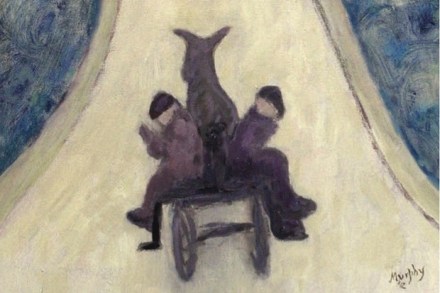
Roddy Doyle was born in Dublin in 1958. He first came to prominence with his debut novel The Commitments, which he self-published in Ireland in 1987. The book was then published in the UK in 1988 by William Heinemann. The two books which followed, The Snapper (1990) and The Van (1991), completed his Barrytown Trilogy. All three books were subsequently made into extremely successful films. In 1993 Doyle won the Booker Prize for his novel Paddy Clarke Ha Ha Ha. The book was praised for Doyle’s ability to write convincingly in the idiom of his main protagonist, Paddy Clarke: a ten-year-old boy residing in Dublin in the 1960s. Doyle’s popularity has continued to soar.

Some brilliant book reviews | 2 August 2013

As ever, there are some absolutely scintillating book reviews in this week’s issue of the magazine. Here is a selection: Sam Leith revels in ‘a blindly good story extremely well told’: Glorious Misadventures: Nikolai Rezanov and the Dream of Russian America by Owen Matthews. ‘Like most if not all imperial adventures, the civilising mission (ho ho) followed the money. Ever since the first Cossack pirate found a way through the Bering Strait, fur, or ‘soft gold’, was what they were all after. The discovery that in Chinese entrepot towns the pelt of a single sea-otter would fetch the equivalent of two years’ salary for an ordinary seaman was all anyone needed to know. Fur, tea and American manufactures were the basis of a Pacific triangle trade.

Birds & People, by Mark Cocker – review

More from Books

‘A world without birds would lay waste the human heart,’ writes Mark Cocker. Following his Birds Britannica and prize-winning Crow Country, in Birds & People he embraces the planet, with the help of the wildlife photographer, David Tipling, and the ‘650 contributors from 81 countries’ to whom the book is dedicated. He begins his cultural celebration of the earth’s 200 recognised bird families with one of ‘the most primitive’, the partridge-like tinamou from South America. Tinamou are loth to fly, not surprisingly since once airborne they tend fatally to crash into things, even houses. A near relative is the completely flightless common ostrich, the largest surviving bird.

Magic, by Ricky Jay – review

More from Books

People, they say, want different things from a book over the summer than they do the rest of the year. If, by chance, you are looking for a book that will both give you a hernia and teach you how to make a bridge disappear, this could be just the thing for you. The motorbike messenger who delivered my copy of Magic had to come in for a glass of water and complained that the effort of carrying it had made his legs bowed. It is, quite simply, the largest book I have ever tried to read — the literary equivalent of the Great Bed of Ware. So what’s inside it? An awful lot of pictures, beautifully reproduced, interspersed with essays on the history of magic.

Empire of the Deep, by Ben Wilson – review

More from Books

‘I never before came across a man whom I could fancy being a Napoleon or a Nelson…His ascendancy over everybody is quite curious: the extent to which every officer and man feels the slightest praise or rebuke would have been before seeing him incomprehensible.’ Thus wrote the 22-year-old Charles Darwin of Robert Fitzroy, the 26-year-old captain of the Beagle, a good but not unusual example of captains during the Royal Navy’s zenith in the decades following Trafalgar.

Glorious Misadventures, by Owen Mathews – review

Lead book review

So: Russia’s imperial possessions on the Pacific North West of America. Remember those? No. Me neither. Something vague about the Russians flogging a bit of Alaska to the United States in the middle of the 19th century perhaps. But until I’d read this book I didn’t know that at one point Continental Russian America, not counting the Aleutian Islands, stretched 1,400 miles from its Eastern Tip (today called Cape Prince of Wales, by little Diomede Island in the Bering Strait) to its southwestern boundary near Sitka. If laid on top of the Continental United States, the territory — which closely corresponds to the modern state of Alaska — would stretch from California to Florida.

The Ghosts of Happy Valley, by Juliet Barnes – review

More from Books

Rift Valley, Kenya The other day when I told the headmaster of a top British public school that I came from Kenya, he quipped, ‘Ah, still living in Happy Valley?’ We will never shake it off, this idea of a Happy Valley in the equatorial highlands where aristocrats supposedly indulged in orgies and drugs — what Cyril Connolly dubbed the three As: Altitude, Alcohol and Adultery. It culminated in Joss Erroll’s 1941 murder. ‘Perhaps Africa was to blame,’ Connolly wrote. ‘It insinuates violence.’ It is 30 years ago that James Fox, inspired by Connolly, resurrected these tawdry events in his book White Mischief. It has never been out of print since.

A Slap in the Face, by William B. irvine – review

More from Books

A friend of mine who works for the NHS has been told recently by a superior that his ‘attention to detail is bordering on the obsessive’. Aside from observing that an obsessive attention to detail might serve the health service well, this is an example of the kind of insult that Professor Irvine would ascribe either to low self-esteem or to narcissism (high self-esteem with no self-knowledge). The speaker wasn’t offering constructive criticism (my friend had been praised for his attention to detail only days before, by a perhaps less negligent superior) but rather emphasising her superiority, something she had no need to do, unless she felt it threatened. My friend’s attention to detail is clearly her problem rather than his. Irvine begins with examples of insult.

Shire, by Ali Smith – review

More from Books

Pastoral elegy is not what you expect to find in a collection of short stories, but then Ali Smith is a wonderfully unexpected writer. In the first story, ‘The Beholder’, which was shortlisted for the Sunday Times Short Story Award, a patient develops a growth on her chest — ‘woody, dark browny, greeny, sort-of circular, ridged a bit like bark, about the size of a two pence piece’. The doctors are mystified, but a gypsy recognises it as ‘a young licitness’, a pun of mishearing later revealed to be ‘a Young Lycidas’, a rose named after Milton’s pastoral elegy.

The Son, by Philipp Meyer – review

More from Books

Colonel Eli McCullough, formerly known as Tiehteti, is a living legend. The first male child born in the Republic of Texas, wrested from Mexico in 1836, Eli has miraculously reached the age of 100. Captured by Comanche Indians in boyhood, he mastered their survival skills, and was well on the way to becoming the most respected member of the tribe when smallpox struck. The all-powerful Comanches — ‘the earth had seen nothing like them since the Mongols’ — had no defence against this invisible enemy. But Eli/Tiehteti, immunised in infancy, survived. Eli rampages through the next few decades, including a spell as state ranger when he is obliged to hunt down what remains of the people to whom he once belonged.

Plato – slave-owning aristocrat or homosexual mystic?

For over two millennia, the writings of Plato had been at the very core of a Western education. Yet  by the dawn of the 21st century, Plato appeared marginalized to the benign pedantry of Classics departments — engagement with his ideas having been spurned by many philosophers and educators over the preceding decades. To many his call to search for truth — and to live according to it — is no longer seen as applicable to our relativistic age. Neel Burton's Plato: Letters to My Son attempts to rescue Plato from irrelevance and guide another generation of readers and leaders along the path of self-knowledge. To understand the thrill of Burton's timely intervention, it is essential to grasp why Plato has fallen out of fashion.

Which Ulysses is the most heroic?

From ‘Ulysses’ by Alfred, Lord Tennyson                                     Come, my friends, ‘Tis not too late to seek a newer world. Push off, and sitting well in order smite The sounding furrows; for my purpose holds To sail beyond the sunset, and the baths Of all the western stars, until I die. It may be that the gulfs will wash us down: It may be we shall touch the Happy Isles, And see the great Achilles, whom we knew.

Some brilliant book reviews

As ever, the Spectator carries some splendid and erudite book reviews this week. There are contributions from stellar writers and thinkers such as Margaret MacMillan, Susan Hill, Alexander Chancellor and John Sutherland. Here is a selection. Margaret MacMillan is captivated by Edwardian Opulence: British Art at the Dawn of the Twentieth Century, a ‘lovely lush book’ edited by Angus Trumble.

Land of Second Chances, by Tim Lewis – review

More from Books

This is a book about Rwanda. It’s a book about cycling. But it’s not, in the end, a book about Rwandan cycling. Well, it is. Tim Lewis gives us the story of Adrien Niyonshuti’s attempts to qualify for the 2012 Olympics under the tutelage of American cycling legend Jock Boyer. Adrien and his teammates are desperate to put Rwanda on the world map for something other than the 1994 genocide. But while the tale has its dramatic moments, it never really bursts into life. It’s too messy for that; as Lewis himself says, ‘situations in Africa are rarely, if ever, neat’. For instance, one of the cyclists refuses to train, being too busy pirating videos for the profitable film showings he organises.

Niccolo Machiavelli, by Corrado Vivanti; The Garments of Court and Palace, by Philip Bobbitt

More from Books

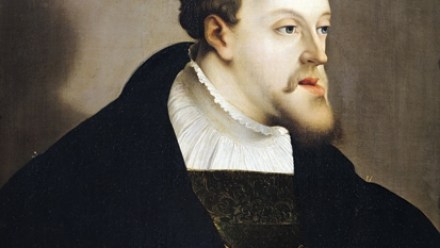
One more anniversary, one more cache of commemorative books. This time we are celebrating the half-millennium since Niccolò Machiavelli produced his notorious work, The Prince. He wrote it after a significant career blip in 1512, when the Florentine Republic fell and the Medici regained power. Machiavelli was not merely sacked from his job — secretary to the Republic — but also accused of conspiracy, imprisoned and horribly tortured. In 1513, he was released into exile, and went to live on his family farm, south of Florence. There he walked, consorted with ‘vulgarity’ (the locals) and read classical writers, including Livy, Tacitus, Sallust, Plutarch, Suetonius and Procopius.

Looking at Books by John Sutherland – essay

More from Books

The sexy thing this summer, as the TV ads tell us, is the e-book. Forget those old 1,000-page blockbusters, two of which would put you over Mr Ryan’s weight limit. Sand, sun, surf — and Kindle. The traditional ‘beach book’ is as obsolete as the Victorian bathing machine. The printed codex has had a long run — it is half a millennium since William Caxton set up his stall around St Paul’s. Few inventions have lasted as long, or done as much good for humanity. But a tipping point has been reached for the ink, paper and board product. More precisely, it will be tipped into the waste-bin of history. Goodbye Gutenberg.

Edwardian Opulence, edited by Angus Trumble – review

Lead book review

She sits there on the cover exuding sex and wealth and a certain knowingness. Mrs Lionel Phillips, who came from a modest background in South Africa, had the good sense to marry one of the ‘Rand Lords’ who made their piles in the new gold and diamond fields. She and her husband bought their way into society in Britain, accumulating houses and furniture and having themselves painted, as in this wonderful portrait, by the fashionable Giovanni Boldini. That of Mr Phillips is more subdued, even sombre.   The face, said the Athenaeum, ‘is amazing in its unscrupulous vulgarity’. Well, one might think, the anonymous critic could have taken a look around him.

The Breath of Night, by Michael Arditti

More from Books

There is always meat in Michael Arditti’s novels. He is a writer who presents moral problems via fiction but is subtle and shrewd enough to know that ‘issue books’, which are tracts not works of the imagination, are dull to read and rarely work as fiction should. He presents us with characters who are fully rounded, credible human beings living through moral dilemmas, affected by them, caring about them, living and dying within their context. In other words, he is an intelligent novelist.

The Annals of Unsolved Crime, by Edward Jay Epstein – review

More from Books

Edward Jay Epstein is an American investigative journalist, now in his late seventies, who has spent at least half a century trying to find answers to the troubling theories and nagging questions that always swirl around notorious crimes. The more famous the crime, the harder it is to get at the truth, especially if the crime has political consequences. For example, John Wilkes Booth, who murdered Abraham Lincoln in 1865, was quickly proven to have been part of a conspiracy involving leaders of the defeated Confederate states; but when a reunited country was later seeking reconciliation, it was found expedient to suppress this fact and portray him instead as a deranged individual who had acted alone.

Wreaking, by James Scudamore – review

More from Books

An abandoned lunatic asylum, a nasty pornographer in a wheelchair, a bizarre glass-ceilinged viewing dome beneath a scummy lake, a vast henchman, a mother who hears angels telling her she must harm her child: these are some of the places and people to be found in James Scudamore’s new novel. Dickensian excess is the name of the game here. It is as if Mr Murdstone and Steerforth and Magwich (and even the foggy salt-flats which herald his startling arrival in fiction) appeared in the same story as Fagin, together with a couple of lost boys, ripe for criminal exploitation. Scudamore’s relish for names, too, is Dickensian.

Two riveting journeys to the heart of India and Pakistan

50 summers have passed since C.L.R. James asked, ‘What do they know of cricket who only cricket know?’ James’s belief, that this quaint game reveals profound truths of those who play and love it, is alive and well: evident in The Great Tamasha by James Astill, which describes India, and Cricket Cauldron by Shaharyar M. Khan, which fumigates Pakistan. Astill, who is a Raja at The Economist, tells the story of India’s turbulent rise with reference to the history of cricket in India, where the sport is a form of entertainment – or tamasha, as numerous sub-continental languages have it. Astill is a self-confessed ‘cricket tragic’ but he is good company nonetheless, with an eye for an anecdote and an ear for a joke.

Booker Prize longlist announced

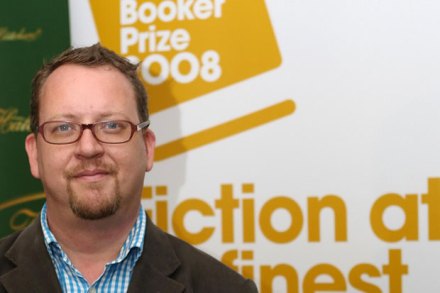
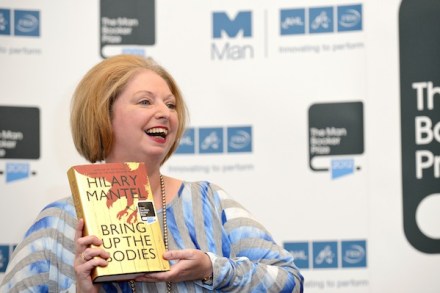
The longlist for the 2013 Booker Prize has been announced (it is below). Most of the commentary surrounding the announcement is about the length of chosen books. Robert Macfarlane, who led the judging panel, has spoken of the thrill of including Colm Tóibín's The Testament of Mary (112 pages), Richard House’s The Kills (912-pages) and 28-year-old Eleanor Catton’s The Luminaries (832 pages) on the same list. Jim Crace's Harvest has made the cut, which will please his fans because he has said that Harvest is his last novel. Macfarlane's panel - Martha Kearney, Stuart Kelly, Natalie Haynes and Robert Douglas-Fairhurst -  will deliberate over the summer. The shortlist will be announced on 10th September 2013.

Stoner by John Williams – review

Faced with a book as simple and true as Stoner, it’s easy to fall into the trap of intentional fallacy. It is the portrait of a quiet farm boy, who receives his Doctorate of Philosophy, teaches literature at the University of Missouri, then dies at the age of sixty-five. His colleagues hold him in no particular esteem. We know all this from the first page. This story of hard graft without recognition, gratifyingly, for literary sleuths, has parallels with the author's life and the reception of his work. John Williams' grandparents were farmers and, after completing his PhD in Missouri, he taught at the University of Denver for the following three decades.  First published in 1965, despite a glowing mention in the New Yorker, Stoner only sold about 2,000 copies.

The week in books | 19 July 2013

The best way to weather the heat wave is to head for the shade with a copy of the new issue of the Spectator, in which you will you find some diverting book reviews to while away an hour or two. Here is a selection: Philip Hensher treads carefully around Winston Churchill’s imperialism, the subject of Lawrence James’ Churchill and Empire: Portrait of an Imperialist. Hensher writes: ‘It is important for historians to make an effort to understand individuals by the standards of their own day, and not ours. There is a dismal school that finds it rewarding to debate whether Napoleon was homophobic or not, but for the most part we have to try to understand where a figure’s standards of judgment and thought stood in relation to the spectrum of opinion of his own day.

The World is Ever Changing, by Nicolas Roeg – a review

More from Books

‘Value and worth in any of the arts has always been about timing,’ writes British director Nicolas Roeg at the age of 84. Few directors understand this better — this matter of good and bad ‘timing’ — than the maker of Performance, Roeg’s debut film of 1970. Even starring Mick Jagger — then the centrefold of popularity — the film stunned critics by its experimental otherness: they hated it. By now, though, opinions have changed and Performance — once, out of its time — is upheld, along with Roeg’s other works, as among the greatest and boldest examples of British cinema. Roeg, however, has only ever been consistent in his commitment to pushing the boundaries of accepted practice in his medium.