Culture

Culture

The good, the bad and the ugly in books, exhibitions, cinema, TV, dance, music, podcasts and theatre.

Europe’s eye-popping first glimpse of the Americas

Arts feature

Coronavirus has cast a dampener over this year’s Mayflower 400 celebrations due to a hidden enemy with which the Pilgrim Fathers were all too familiar: within months of their arrival in America more than half of them had died of a disease whose principal symptom was violent coughing. There was no official artist on the Mayflower. Its ragtag party of Separatist Puritans had only been granted a charter on condition that their religious affiliation, banned in England, was not formally recognised.

Why does anyone still rate Vertigo and its creepy, wonky plot?

Film

Here’s something that may interest you. Or not. (Could go either way.) I was looking over Sight & Sound’s ‘100 Greatest Films of All Time’, which has Alfred Hitchcock’s Vertigo (1958) at number one, having knocked Citizen Kane from the top spot in 2012. (That film always did need a more exciting reveal; would it have helped if Rosebud had turned out to be a massive fireball or dinosaur egg?) But back to Vertigo, which is now the best film ever made. Really? That worried away at me. Who rates this film and why? The storytelling isn’t up to much. It drags and drags. (The first half is a dull schlep around San Francisco as we follow the world’s most obvious stalker.) It’s riddled with plot holes. It’s creepy, but not in a good way.

Netflix’s Caliphate is all too frighteningly plausible

Television

Sweden is now properly celebrated as the Land that Called Coronavirus Correctly. But in the distant past, those with long memories may recall, it had a less flattering reputation as the Land Absolutely Ruddy Swarming With Jihadists. Caliphate — an eight part Swedish-made drama on Netflix — takes you back there in vivid and compelling detail. Partly, it’s an edge-of-seat thriller about a major terrorist attack on Swedish soil —from its conception in Isis-held Raqqa to its execution (or its foiling by the security services: I haven’t got there yet so I don’t know) by a mix of radicalised locals and hardened Isis killers flown in from Syria.

The best recordings of the greatest symphony

Music

I am daunted. Bruckner’s Eighth Symphony is a work that I regard with love, awe and even anxiety. I always wonder whether I’ll be able to cope with such large and deep demands on me and, if I hear a performance or recording that doesn’t disappoint me, be able to articulate why I find it so powerful, one of the supreme masterpieces of Western music, the greatest of symphonies. With musical works that one has the strongest kinship with, there is, as everyone finds, an urgent need to locate the qualities that make it so penetrating an experience, combined with misery at the gap between how one responds and what one feels able to say.

Joyous and very, very funny: Beastie Boys Story reviewed

Pop

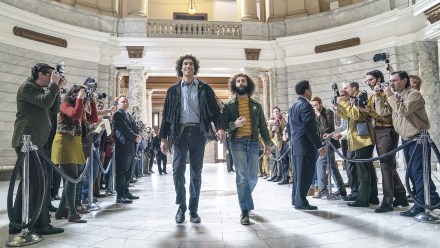
The music of the Beastie Boys was entirely an expression of their personalities, a chance to delightedly splurge out on to record everything that amused them. And early on, in their teens-get-drunk debut album, Licensed To Ill, that resulted in obnoxiousness. But mostly they were kinetic and colourful, which is why the new Apple TV+ film about them works so well. The format suits the story. Beastie Boys Story simply documents a stage show where winningly they talk the audience through their personal history. It’s much like Netflix’s Springsteen on Broadway. But since the third Beastie, Adam Yauch, died in 2012, the band no longer perform, so where Springsteen punctuated his memories with songs, the Beasties do it with film clips.

The National Theatre’s live-streaming policy is bizarre

Theatre

The National’s bizarre livestreaming service continues. On 7 May, for one week only, it released a modern-dress version of Antony and Cleopatra set in a series of strategy rooms, conference centres and five-star hotel suites. The lovestruck Roman was played by a louche, gruff, brooding Ralph Fiennes. Why is this man so watchable? He lacks the least mark of distinction. Face, height, physique and vocal ability are all in the middling range. In real life he could easily have assumed the role of the research assistant’s deputy. Perhaps it’s the Reggie Perrin ordinariness that makes his presence bewitching. Shakespeare was on unusually patchy form when he assembled this huge, rambling history play.

Releasing a charity single is a performance – but don’t mock attention-seeking superstars, pity them

You can’t move for them. At least, you wouldn’t be able to if you could leave your house. NHS charity singles as far as the eye can see – from Queen, from the collection of second division 90s musicians billed as the Indie Allstars, from the rather bigger names gathered together by Radio 1 to record Foo Fighters’ 'Times Like These'. From unknowns – The Singing Dentist, The Ideas. And from the charity hero du jour, Captain Tom Moore, accompanied by star of stage, screen and the Christmas CD market, Michael Ball. Then there are the charity gigs that have been announced, to raise money for the NHS, or to give NHS staff a free night out – gigs by Liam Gallagher, Manic Street Preachers, Rick Astley, Paul Heaton and Jacqui Abbott.

William Boyd on the miraculous snaps of boy genius Jacques Henri Lartigue

Arts feature

What must it be like for an artist to achieve success only at the end of a long, relatively ignored career? The word ‘bittersweet’ seems particularly apt. Yet, late recognition is better, I suppose, than dying in oblivion like Vincent van Gogh, Franz Kafka or John Kennedy Toole. One of my favourite photographers, Jacques Henri Lartigue (1894–1986), did manage to savour the sweet smell of success in his old age. Lartigue’s late flowering was down to New York’s Museum of Modern Art and its then director of photography, John Szarkowski. There’s a very good argument to be made that during Szarkowski’s tenure at MoMA (1962–91) his shows transformed 20th-century photography.

Sumptuous and saucy: Compton Verney’s Cranach show reviewed

Exhibitions

‘Naughty little nudes,’ my history of art teacher used to say of Cranach’s Eves and Venuses. Aren’t they just? Coquettish and compact. Kenneth Clark thought they had ‘chic’. Cranach’s nudes are rarely truly naked. They wear Ascot hats, golden chokers, filmy wisps of gossamer girdle. Take the goddess in the National Gallery’s ‘Cupid Complaining to Venus’ (c.1526–7). Don’t you long for her to take off her ostrich feather hat and tickle you with it? ‘Hallo, Jungs.’ See how she plays footsie with a branch of the tree. How she brushes the back of her hand against its trunk. Note the double necklace. Always accessorise.

Riveting – and disgusting: BFI’s ‘Dogs v Cats’ and ‘Eating In’ collections reviewed

Film

This week I’d like to point you in the direction of the British Film Institute and its free online archive collections, which are properly free. There is no signing up for one of those ‘free trials’ which means that, somewhere down the line, you’ll discover you’ve been paying £4.99 a month for something you didn’t want. And it’s certainly excellent value for the money you don’t pay, as there are 65 of these collections, grouped under various headings — ‘Football on Film’, ‘Black Britain on Film’ — although I plumped for ‘Eating In’, because it’s all any of us do now, and ‘Cats v Dogs’, as if that were even much of a competition…dogs!

Beautiful voice, pretentious album: Fiona Apple’s Fetch the Bolt Cutters reviewed

Pop

Grade: C+ Where did they all come from, the quirky yet meaningful rock chicks who don’t have a decent song between them yet put out albums by the bucketload? Back in the day it was just Joni Mitchell, who had four good songs, Laura Nyro who had two and Dory Previn who had one. Now there are thousands of these creatures, flaunting their intemperance without showing much brilliance. And all slavered over by the (still male) music press. Years of oppression, of being disregarded, they would argue. But disregarded for very good reasons, in almost all cases. Yeah, Carole King is ten times the songwriter James Taylor ever was. I will give you that. We got that wrong. But that doesn’t mean we have to be tormented for eternity by the likes of Laura flipping Marling, does it?

Not merely funny but somehow also joyous: Sky One’s Brassic reviewed

Television

Danny Brocklehurst, the scriptwriter for Sky One’s Brassic, used to work for Shameless in its glory days — although if you didn’t know that already you could probably guess. For a start, the central characters are another close-knit group of ducking-and-diving working-class northerners not overburdened with a social conscience. But there’s also the fact that, no matter what they get up to, they’re clearly supposed to be lovable — coupled with the rather more mysterious fact that they are. However dark the storylines theoretically become, the programme presents them with such an infectious swagger, and such a thorough blurring of realism and wild imagination, that the result is not merely funny but somehow joyous.

How Tom Stoppard foretold what we’re living through

Theatre

A TV play by Tom Stoppard, A Separate Peace, was broadcast live on Zoom last Saturday. I watched as my screen divided itself into four cubes in which appeared the actors, performing from home. The play was written in 1964 and it’s well suited to the split-split screen format because no physical contact occurs between the characters. Director Sam Yates added some rudimentary music and a bit of wobbly background scenery. Mr Brown (David Morrissey) is a mysterious Englishman who asks to be admitted to a private hospital in the middle of the night. Though he has no symptoms he’s given a bed, and he pays his bills in cash. ‘There’s nothing wrong with you,’ complain the medics. ‘That’s why I’m here,’ he says.

The unstoppable rise of television-rewatch podcasts

More from Arts

Talking Sopranos — a new weekly podcast which launched this month— is another example of a seemingly unstoppable sub-genre occupying an ever-growing slice of the podcast market: the television-rewatch podcast. The format is simple: take any much-loved yet expired television series (the kind usually prefaced by words like ‘I can’t believe you haven’t seen…’) and scan the cast list until you find some former stars willing to work for an affordable rate. Record them giving an audio commentary on each episode and, bingo, you’ve got yourself dozens of hours of podcasts — and a massive fan base waiting to be converted to listeners.

A short history of the kimono

'Fashions have changed', said the Japanese writer Ihara Saikaku in 1688. 'Certain shrewd Kyoto people have started to lavish every manner of magnificence on men’s and women’s clothes. By then, everyone in Japan was wearing a kimono. But it was the new, eye-catching, sumptuous ones wrapped around a flourishing breed of fashionistas that Saikaku was talking about. How to show off your wealth and status in Edo-era Japan? Wear the latest kimono. This was the starting point for the V&A’s exhibition Kimono: Kyoto to Catwalk, which opened, then hurriedly closed just days before the lockdown. Those of us lucky enough to catch it can tell you it would’ve been the museum’s summer blockbuster.

Why we love requiems

Arts feature

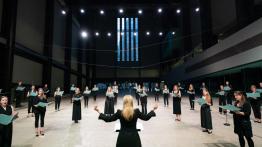
At some point during the 20th century death disappeared. The dying were discreetly removed from our communities and homes, taken to hospitals with short memories and wipe-clean walls. Mourning blacks faded before vanishing altogether; the elaborate funeral monuments of the 19th century shrugged off curlicues and cherubs and arranged themselves into unobtrusive, apologetic sobriety. Coffins — gauchely literal — gave way to the more tasteful euphemism of the ash-filled urn. Only concert halls bucked the trend. Suppressed from everyday life and language, death found a different outlet. How many choral societies or symphony choruses today go a year without performing a requiem mass? How often do Classic FM or Radio 3 go a day without playing music from one?

It costs a lot of money to look this cheap: Metropolitan Opera’s At-Home Gala reviewed

Opera

Desperate times call for desperate measures. With the world’s opera houses currently dark, the New York Metropolitan Opera tackled the crisis the way it knows best — by assembling the most glamorous possible list of vocal megastars and presenting them at astronomical expense. But dollars can’t get around social distancing, and in lockdown even the greatest voice is only as good as the mic on a smartphone. Cue four hours of free-to-view party pieces from 43 of the world’s greatest singers, broadcast live from their homes without orchestra, without editing and without excuses.

Livestream-hopping is just as irritating as being at a real festival

Pop

The ghost of Samuel Beckett oversaw the Hip Hop Loves NY livestream last Thursday night. Time and time again its host, the veteran hip-hop TV presenter Ralph McDaniels — known to all his guests, unnervingly, as ‘Uncle Ralph’ — tried to connect to some Golden Age legend. Time and time again, his attempts at a straightforward interview went wrong. We saw Uncle Ralph, on one half of the screen, ask a question about Covid-19, nod along to the answer, then say, ‘Thank you, doctor.’ But we didn’t have a doctor on screen, or on our audio. We had Ice T. ‘I ain’t no doctor,’ Ice-T said. Cut to Nas. But Nas was inaudible, and his picture was breaking up. ‘I see Chuck D!’ He did, but we didn’t.

The importance of sadism in writing a great screenplay

More from Arts

How do you tell a great story? According to Craig Mazin, you have to be a sadist. ‘As a writer, you are not the New Testament God who turns water into wine,’ Mazin chuckles on his long-running podcast Scriptnotes. ‘You are the Old Testament God who tortures Job because, I don’t know, it seems like fun.’ Mazin wrote HBO’s horrifying, incandescent miniseries Chernobyl, and so knows of what he speaks. In the episode of this podcast titled ‘How to Write a Movie’, he describes how screenwriters build plot out of suffering. He outlines a scenario, making the stakes higher each time. Suppose our main character is a single father desperate to protect his child. Not good enough.

Superbly convincing: Unorthodox reviewed

Television

When I lived briefly in Stamford Hill I was mesmerised by the huge fur hats (shtreimel) worn by the local Hasidic Jews, and the wigs worn by their wives, and the almost tubercular pallor of their children. I often wondered how such a remote, aloof and archaic sect could possibly relate to 21st-century London. The answer, of course, was that they didn’t: they were like ghosts from another age, walking the same streets but not of this world. I wished I could get a glimpse of their private lives — and now, thanks to Unorthodox (Netflix), we all can. Loosely based on a memoir by Deborah Feldman, it tells the story of 19-year old Esther ‘Esty’ Shapiro (Shira Haas) who flees her ultraorthodox Jewish sect in Williamsburg, Brooklyn, for a new life in very secular Berlin.

The artist who left no physical record of her work

More from Arts

While locked-down galleries compete to keep their artists in the public eye — or ear — by uploading interview podcasts, a treasure trove of earlier recordings is being overlooked. Artists’ Lives, part of the British Library’s oral history archive, is a collection of interviews with 370 artists, 200 of which are available on the British Library Sounds website. As an account of British art of the past century they are more comprehensive than Vasari’s Lives and more reliable, coming as they do from the horse’s mouth. They are also exhaustive. But for those who haven’t got all day to follow the fascinating career of Guyanese-born Frank Bowling RA through 17 hours of recordings, edited extracts are now available as Voices of art.

Worth watching for the comments thread alone: NT’s Twelfth Night livestream reviewed

Theatre

‘Enjoy world-class theatre online for free,’ announces the National Theatre. Every Thursday at 7 p.m. a play from the archive is livestreamed. I watched Twelfth Night, from 2017, starring Tamsin Greig as a female Malvolio. What a handsome, absorbing and brilliantly staged production this is. Greig’s comically petulant Malvolia won the plaudits, rightly, while the underrated Tim McMullan turned Sir Toby into a wry, wobbly, loveable drunkard, like a rock star enjoying a month on the lash. Having seen the original, I preferred the online experience, not least because of the noisy comments thread beside the screen. ‘How do you get Russian subtitles?’ ‘When’s the interval?’ ‘Why a female Malvolio?’ ‘Watching from Brussels.

From Middlemarch to Mickey Mouse: a short history of The Spectator’s books and arts pages

Arts feature

The old masters: how well they understood. John Betjeman’s architecture column ran for just over three years in the mid-1950s. Yet during that short run he experienced the moment that comes, sooner or later, to every regular writer in The Spectator’s arts pages. ‘It is maddening the way people corner one and make one discuss politics at the moment,’ he wrote on 23 November 1956, clearly as bored of the Suez crisis as the rest of us were, until recently, by Brexit: Because I write in this paper, people assume that I share its Editor’s views about Suez… But I don’t know what the views of this paper about Suez are, because I never read the political stuff in front.

Top of my mustn’t see list: The Iron Mask reviewed

Film

As all other publications are offering guides saying what to watch from home during this pandemic — ‘the 50 best movies to stream right now’; ‘20 hidden gems available on Netflix’; ‘movie masterpieces for quarantine’ — an equally valuable service would, surely, be telling you what not to watch, under any circumstances, no matter how desperate. So that’s the service I’m offering you today. And the best film not to watch, under any circumstances, this week? Top of my mustn’t-see list? No, not any of the Marvel films, although they are definitely worth a not-watch — each one is dumber than the last. I’ve opted instead for The Iron Mask.

‘I think I’ve found a real paradise’: David Hockney interviewed

Interview

Spring has not been cancelled. Neither have the arts ceased to function. David Hockney’s marvellous exhibition at the National Portrait Gallery may be sadly shut, but the artist himself is firing on all cylinders. ‘I was just drawing on this thing I’m talking to you on,’ he announced when I spoke to him via FaceTime the other day. He was sitting in the sunshine outside his half-timbered farmhouse in Normandy. ‘We’re very busy here,’ Hockney explained, ‘because all the blossom is just coming out, and there’s a lot more to come. The big cherry tree looks glorious right now. Next the leaves will open, but at the moment the blossom is ravishing. The apple trees haven’t started yet!

How The Spectator discovered Helen Mirren

More from Arts

One of the first jobs I ever did for The Spectator was to find out if professional wrestlers fixed the outcome of their fights in advance. This was 1965. The editor who wanted to know was Iain Macleod, a future chancellor of the exchequer filling in time while his party was out of office by dabbling in journalism. He turned out to be an addict of the professional wrestling screened on Saturday afternoon TV. In spite of the spinal disease that had immobilised his back and neck, he mimed what he meant by throttling himself without getting up from his chair in an Indian deathlock. His deputy editor, his political editor and I watched this unnerving performance in horrified silence. ‘Wouldn’t it be better if we sent a man?’ asked the deputy editor after a long pause.