Culture

Culture

The good, the bad and the ugly in books, exhibitions, cinema, TV, dance, music, podcasts and theatre.

The art of the incel

More from Arts

Let’s say you have a diagnosis of autism, depression or anxiety. You sleep too much or too little. You masturbate too often. You play computer games and don’t open the curtains. You have no money and you are often profoundly lonely and frequently bored. From this unedifying starting point, can you, let’s say, weightlift your way out of misery? Can you trick yourself into being sociable? Can you ultimately get beyond your fantasy that a woman will save you (she won’t) and learn to live with everyday misery? Alex Lee Moyer’s documentary TFW NO GF, internet-speak for ‘that feel(ing) when no girlfriend’, is the first attempt to make cinema out of incel subculture (and perhaps thereby also signalling its end).

The power of cheap music: pop podcast round-up

More from Arts

Noël Coward was so right that his words have become a cliché: it is indeed extraordinary how potent cheap music can be. Its potency, however, is not innate. Amanda Prynne, from Coward’s Private Lives, would not have been especially struck by ‘Some day I’ll Find You’ had it been playing on a wireless in a shop; its impact came from hearing it as she again encountered her ex-husband. For cheap music to be potent, context is everything. Without a wider meaning, a cheap little pop song is just notes and chords. With meaning, the most throwaway frippery can become an object of fascination. That’s often true of the best known of songs.

Jeffrey Epstein really was a streak of slime

Television

Did Jeffrey Epstein kill himself or was he murdered — and frankly who cares? Actually, having watched the four-part Netflix series — Jeffrey Epstein: Filthy Rich — about his secretive, sordid life, I care very much. Sure, his squalid death in jail, apparently from suicide while awaiting trial for numerous sex crimes, was thoroughly deserved. But justice would have been far better served if this noisome creep had spent the rest of his days rotting in prison, deprived for ever of all sexual activity save the involuntary variety provided in the showers whenever he dropped the soap. I hadn’t expected to respond quite this viscerally to the Epstein tale. Indeed, before I watched the documentary I was inclined to think that perhaps the nefariousness had been overdone.

As a lyricist, Ian Dury had few equals in the 20th century

Theatre

The National Theatre’s programme of livestreamed shows continues with the Donmar’s 2014 production of Coriolanus starring Tom Hiddleston. The play is not a favourite. The story concerns a victorious Roman general who accepts the role of consul but when his political career falters he takes revenge by befriending his defeated enemy, Aufidius, and marching on his own city. There’s too much bitterness and aggression here, and no romantic sentiment at all. The only significant male/female relationship is between the great conqueror and his preening, pushy mother, Volumnia, who boasts about her son’s triumphs as if they were scouting badges or gold stars won for laying out the nature table. Coriolanus is an unsatisfactory tragic hero.

How John Constable got masterpiece after masterpiece out of a tiny corner of rural Suffolk

Arts feature

Before his marriage John Constable returned regularly in early summer to his native village of East Bergholt. When he wrote from there to his wife-to-be, Maria Bicknell, he almost always exclaimed that Suffolk was ‘in great beauty’. His enthusiasm was never more eloquent than on 22 June 1812, when he declared: ‘Nothing can exceed the beautiful appearance of the country at this time, its freshness, its amenity — the very breeze that passes the window is delightful, it has the voice of Nature.’ I often think about Constable (1776–1837) as I pace across the water meadows on my daily constitutional — partly because this too is an East Anglian landscape not unlike the one he was writing about: flat, leafy, watery, abounding in willows.

Why, Woody, why? A Rainy Day in New York reviewed

Film

A Rainy Day in New York is Woody Allen’s 49th film and it’s not been without its troubles. When accusations of sexual abuse made by his adopted daughter, Dylan Farrow, resurfaced, Amazon Studios ditched it. Then its star, Timothée Chalamet, apologised for being in it and donated his earnings to charity. We may never know the truth about the allegations and I wouldn’t wish to speculate as I’m a coward at heart and don’t want to end up on the wrong side of history. I can only put it like this: whereas I once idolised Allen — ‘Don’t worry. We can walk to the kerb!’ is something I still say when someone parks badly — the decisions he’s now making are definitely landing on the wrong side of creepy.

Skates on the edge of parody: The 1975’s Notes on a Conditional Form reviewed

Pop

Grade: B+ Just what you wanted. An opening track that matches banal piano noodling to an address by Greta Thunberg. Followed by a hugely unconvincing stab at tuneless industrial metal on a song called ‘People’, in which the aforementioned — me and you, not them, of course — are cautioned to ‘WAKE UP!!’ Leafy Wilmslow’s middle-class skag-head prophet, Matty Healy, is back, then, with a series of injunctions for us all, spread over interminable length and always skating on the very edge of parody. The 1975 are probably Britain’s biggest ‘rock’ band — those quote marks are needed — and this vast slab of pretentious, gullible, vacuous commendations to us all went straight in at number one.

Another drama about how women are great and men are rubbish: C4’s Philharmonia reviewed

Television

On the face of it, a French-language drama about a Parisian symphony orchestra mightn’t sound like the most action-packed of TV watches. In fact, though, Philharmonia (Sundays) is pretty much Dallas with violins. The first episode began with the eponymous orchestra blasting out a spot of what Shazam assured me was Dvorak, before its elderly conductor dropped his baton and collapsed to the floor, never to rise again. Cue a pair of Gallically elegant female lower legs making their way through the airport as one Hélène Barizet arrived from New York to take over the role. David was left in a tartan bag in Belfast; Helen was discovered in a tartan bag in a Dundalk phone box Not that her appointment was universally welcomed.

So good and so raw that avoiding it might be the wisest course: Sea Wall reviewed

Theatre

Sea Wall, by Simon Stephens, is a half-hour monologue about grief performed by Andrew Scott. The YouTube clip has been viewed more than 250,000 times. The habitual quirks and irritants of Stephens’s writing are all here: the inept jokes, the laddish swearing, the fascination with 1970s pop, the preference for males over females and the improbable back stories of the characters. The narrator is an Irish cameraman who earns money photographing ‘cushions and digital alarm clocks’ for shopping catalogues. He tells us a bit about his wife and daughter (‘she was a Caesarean’), but he’s far more interested in his father-in-law, Arthur, a scuba-diving maths teacher who retired from the British army with the rank of lieutenant-colonel.

Privatisation is the best option for the South Bank Centre

More from Arts

I must have written about this subject 100 times in 30 years and I’m still having to restate the bloody obvious. London’s South Bank Centre, which has just gone bleating to the government for more money, is the biggest subsidy guzzler in the country and the despair of the rest of British arts. The South Bank receives £19 million a year from the Arts Council, on top of the many millions that go to each of the so-called ‘resident ensembles’ that perform within it. What it does with the money is anyone’s guess because, as far as the eye can see and the nostrils can smell, the South Bank is now a fast-food mall with an occasional classical concert buried within it. How did it get so bad?

The problem with mystery podcasts like Wind of Change

More from Arts

Did the US secretly write a power ballad in order to bring down the Soviet Union? That’s the question behind Wind of Change, a serial documentary that has topped the podcast charts. It’s the work of an investigative journalist called Patrick Radden Keefe who claims to have once received a tip-off, from an intelligence contact, that the song ‘Wind of Change’ — recorded by the hair metallers Scorpions — was actually a CIA campaign to encourage anti-Soviet uprisings. Now he wants to prove it. This week’s episode, the fourth of eight, takes Keefe to a collectors’ convention in Ohio in pursuit of an internet user called ‘Lance Sputnik’ who creates customised versions of GI Joe action figures.

Meet Dion, one of the last living links to the earliest days of rock ’n’ roll

Pop

Only two of the Beatles’ pop contemporaries are depicted on the cover of Sgt. Pepper’s Lonely Hearts Club Band. One is Bob Dylan. The other is Dion DiMucci. In a pleasing third-act twist, Dylan contributes the liner notes to Dion’s new album Blues With Friends — an act of deference that the recipient is still processing. ‘I asked him, I didn’t know if he had the time, but he sent me back those paragraphs and said that I knew how to write a song.’ He whistles. ‘That’s from a Nobel Prize winner. I thought, I’ll take it, I’ll take it!’ So he should. Dion — like Kylie, a single moniker suffices — is one of the last living links to the early days of street-corner rock ’n’ roll.

I’m still not wholly convinced by Kirill Petrenko: Berlin Phil’s Digital Concert Hall reviewed

Classical

At the start of Elgar’s Second Symphony the full orchestra hovers, poised. It pulls back; and then, like a dam breaking, the music surges forward in wave upon wave of golden sound. ‘Rarely, rarely, comest thou, Spirit of Delight!’ writes Elgar, quoting Shelley, at the top of the score, and you won’t hear that spirit captured more exuberantly than in a performance from May 2009 by the Berlin Philharmonic under its future music director Kirill Petrenko. The violins gleam, the horns swell and every player is audibly leaning into the music. Under Petrenko, Elgar’s leaping compound rhythms almost seem to dance.

I so wanted to enjoy White Lines but it’s spectacularly uninvolving

Television

If I could live my life over again my plan used to be that I’d make my fortune very early, spend my winters fox hunting through the season and my summers taking loads of ecstasy in Ibiza and having meaningless sex with beautiful strangers. But having seen the first two episodes of White Lines I’m not so sure about the second part of that equation: it all looks a bit sordid and depressing and really not much fun. ‘Do you know this is not making me want to live in Ibiza AT ALL,’ said the Fawn, as we watched, morosely. And I have to admit, I agree. I so wanted to enjoy this series.

Like a project the BBC might have considered 30 years ago and turned down: The Understudy reviewed

Theatre

Hats off to the Lawrence Batley Theatre for producing a brand-new full-length show on-line. Stephen Fry, with avuncular fruitiness, narrates a dramatisation of David Nicholls’s novel The Understudy, published in 2005. It’s a back-stage comedy about a newly written sex romp inspired by the life of Lord Byron.The show, predictably enough, is entitled, Mad, Bad And Dangerous To Know. Here’s an excerpt. Byron is lying athwart his naked Italian mistress when the Muse summons him to draft a sonnet. ‘I must write here,’ he declares, ‘between a pair of pert peaches nestled.’ This doesn’t quite catch the tone of period drama in its present form.

The Literary Disco podcast made me want to throw my laptop at the wall

More from Arts

One of the stranger things that happened in the period just before lockdown was the sudden disappearance of audiences from TV and radio shows. Late-night hosts told jokes to silent rooms in front of a white background, dutifully pausing for a laugh that never came; panel shows were broadcast without so much as the sound of tumbleweed. Punchlines flopped, charisma evaporated. It was as if Earth’s comedians had been banished to some purgatorial realm, where they would be forced to tell jokes to no one as a form of penance. Comedy needs an audience. It’s not clear that the same is true of short stories. In Selected Shorts, well-known actors read short stories to a room full of people.

The genius of Martha Graham

Dance

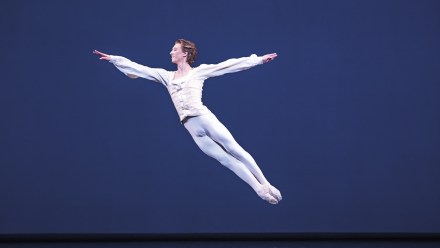
If eight weeks in lockdown have brought out my baser impulses (biscuits by the sleeve, total renunciation of waistbands), it’s also deepened my appetite for culture at its plushest, liveliest heights. It’s not just beaches and brunches I’m craving as spring turns to summer and I round off my second month of working supine on the couch; it’s the sheen of studio lights on the Rothkos at Tate Modern, the whooshing sound when a dancer catapults herself across the Sadler’s Wells stage. Fortunately, watching the Bolshoi’s Swan Lake on Marquee TV last week — the world’s favourite ballet by the world’s foremost company — went some way in filling that void.

Theatre closures are not necessarily a disaster – they offer a chance to remake culture

Theatre stands on the brink of ruin, says Sonia Friedman. And if you believe Twitter, so is my career. I'm apparently 'a disgrace to my profession'. 'Not fit to do my job'. I wear 'grubby' oversized T-shirts, dare to have 'an anagram for a name' (sorry for being foreign) and possess the face of an 'etiolated ferret' and, naturally, for all this, I should be fired.  Leaving aside for a moment my funny name, ferrety face and baggy clothes (all criticisms not without some merit), what was my crime? To suggest that theatre being on the brink of ruin might not be such a disaster. That tongue was firmly lodged in cheek was of course wilfully overlooked. Hey-ho. This is Twitter. Leaping on the most uncharitable interpretation of a tweet is the default setting.

Swanky, stale and sullen, the summer music festival has had its day

Arts feature

‘Festival?’ said Nathan Milstein. ‘What is festival?’ I had naively asked the most immaculate of violinists where he used to play in the summer and he looked at me as if I had proposed an unnatural act. ‘Before the war,’ said Nathan, offering a glimpse of paradise lost, ‘Volodya and I would stay at Senar for six weeks with Rachmaninov.’ Volodya was Horowitz, his best friend. ‘In those days,’ he continued, ‘we liked to spend time with composers. A composer was someone you could talk to. He knew philosophy, literature, lepidoptery. Rachmaninov could name all the butterflies around Lake Lucerne. He liked me better than Volodya, maybe because I was not pianist.

Adapting Wodehouse for the radio is a challenge – but the BBC has succeeded brilliantly

Radio

Everyone knows a Lord Emsworth. Mine lives south of the river and wears caterpillars in his hair and wine on his shirt and has just occasionally written for this magazine. That doesn’t much narrow it down. When you look at him, you understand a little better why P. G. Wodehouse is topping the lists of authors to read during lockdown. It’s not just that the books are funny. With an Emsworth or a Bertie Wooster you’re guaranteed that idling and dithering will land you somewhere. Even if it is in the soup. Adapted for Radio 4 this fortnight, Leave it to Psmith, the second in Wodehouse’s Blandings series, sees the dithering Earl invite a prospective thief into his home after mistaking him for a Canadian poet.

One of the more disturbing films I’ve seen: Arena’s The Changin’ Times of Ike White reviewed

Television

Arena: The Changin’ Times of Ike White (Monday) had an extraordinary story to tell — but one that, halfway through the documentary, already seemed to be complete. So, you might well have thought at that point, how would it fill the rest of the time? The answer, it transpired, was by taking an even more jaw-dropping turn. In the 1970s, Ike White was serving life for murder in a Californian prison when reports of his musical talent reached the record producer Jerry Goldstein. A prodigy on guitar, bass, drums and keyboards, White had until then been making most of his music in the prison’s gas chamber, which he was allowed to use as a rehearsal room.

The best Macbeths to watch online

Theatre

The world’s greatest playwright ought to be dynamite at the movies. But it’s notoriously hard to turn a profit from a Shakespearean adaptation because film-goers want to be entertained, not anointed with the chrism of high art. Macbeth is one of the texts that frequently attracts directors. Justin Kurzel’s 2015 version (Amazon Prime) didn’t triumph at the box office despite two fetching performances from Bamburgh Castle in Northumberland and the snow-wreathed mountains of Skye. The trailer is a marvel. Two exhilarating minutes of virile swordplay, ravishing scenery and dramatic cathedral interiors. The film itself is a cold, muddy slog. Michael Fassbender plays the thane as a gruff Celtic robo-hunk married to a skinny, nun-like beauty, Marion Cotillard.

Drunk singers, Ravel on film and prime Viennese operetta: the addictive joys of classical YouTube

Music

The full addictive potential of classical YouTube needs to be experienced to be understood. And let’s be honest, there are only so many lockdown videos the human spirit can take. Which is why, on a sunny spring afternoon, in the prime of life and health, I find myself watching the late John Cage stroking bits of wire with a feather. The haircuts suggest that we’re in the early 1980s, and a Ron Burgundy type is floating across the screen in a little box. ‘It’s been said that listening to John Cage’s music is like chewing sand,’ he explains, unhelpfully. It seems that we’ve also been watching a live performance by the German artist Joseph Beuys. And that we’re now going over to a firework display at the Pompidou Centre.

Why do they call it a game? It is servitude: Nintendo Switch’s Animal Crossing reviewed

More from Arts

Welcome to my debut as gaming correspondent, the apex of my journalistic career! And how witty of The Spectator to choose someone who has never played a computer game in her life. But luckily I have some grandchildren to advise me. First decision is what games console I want and the general consensus is Nintendo Switch, which has the advantage of being small and portable and not attached to the television. Then — what game? The experts recommend Animal Crossing because, they say, it is foolproof. (Ha!) So I order a Nintendo, which takes days to come (apparently ‘everyone’ is into gaming during lockdown) and go through the rigmarole of registering. What name do I want to call myself? Well, Lynn has the advantage that I might remember it. And what avatar? Huh?

‘I’ve started talking to myself’: Tamsin Greig interviewed

C4’s Friday Night Dinner was the nation’s stop off point for feeling a bit better about ourselves. It featured the Goodman family. Every week the Goodman’s two sons returned to their parents’ home for Shabbat dinner. Every week, things didn't go to plan. Of course, the chaotic Goodmans stand in for all our chaotic families in these times. It is good to know that it isn’t only our own family that is a shambles. The guiding force, the everyday matriarch of that family, is Jackie Goodman – long-suffering mum, played by Tamsin Greig. ‘It is charming because it is all about coming home. I think that’s why people love it. The two boys come home every week to somewhere they know they are loved.

The film that perfectly explains the moment we’re in – and shows us a way out

Is there a movie that perfectly fits the moment we are in? I finally discovered it: Paul Franklin’s 'The Escape' from 2017, based on Robert Sheckley’s famous sci-fi short story 'Store of the Worlds' (1958). Although only 16 minutes long, the movie is done very professionally, with well-known actors (Julian Sands, Olivia Williams) in the central roles. Sheckley’s story begins in what appears to be a destitute suburb of one of our megalopolises: 'Mr. Wayne came to the end of the long, shoulder-high mound of gray rubble, and there was the Store of the Worlds. It was exactly as his friends had described; a small shack constructed of bits of lumber, parts of cars, a piece of galvanized iron, and a few rows of crumbling bricks.