Culture

Culture

The good, the bad and the ugly in books, exhibitions, cinema, TV, dance, music, podcasts and theatre.

See it while it’s still hot: Royal Opera’s Rigoletto reviewed

Classical

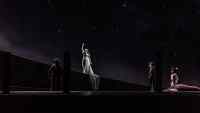
In Oliver Mears’s new production of Verdi’s Rigoletto, the curtain rises on a work of art. The stage is in deep shadow, the backdrop glowing with the rich impasto of an old master painting. Out front, and lit like a Caravaggio, the Duke of Mantua poses amid a mass of human figures in sculptural attitudes. It’s a living representation of some allegorical Renaissance swagger portrait and, as we’re about to see, this Duke is something of a connoisseur. A colossal Venus of Urbino reclines lasciviously above the Act One orgy, replaced in Act Two by an equally gigantic Rubens: Europa riding a wild-eyed bull. Anyway, it looks classy and suitably historic. The offstage band chunters away, and the audience can breathe a sigh of relief.

Two gigs that prove that rock and pop is never just about the music

Pop

The single most boring and pointless thing that is ever said about rock and pop — and it always comes from the Campaign For Real Rock brigade, with their alphabetised vinyl and back copies of Mojo — is that it should be ‘all about the music’. It is never, of course, all about the music, even among the Real Rockers’ heroes. An ugly Elvis would never have become Elvis; if the Stones had been clean-cut, helpful young men, they might as well have been Herman’s Hermits. Had the Clash made exactly the same records but looked and dressed like the Wurzels, elderly men would not still be banging on interminably about how Joe Strummer changed their lives. It is, in fact, never all about the music. You can see that most clearly at shows.

Absurd and amusing, solemn and scholarly: Charles Jencks’s Cosmic House reviewed

More from Arts

An editor once told me: always look at the loos. It was remarkable, she said, how many grand cultural projets, having spent a fortune on the atrium, the concert hall, the galleries, spent pennies on the bogs. The smallest rooms at Charles Jencks’s Cosmic House are among the loveliest loos in London with windows on to the garden and a ‘Jencksiana’ mirror over the sink. This was the Baltimore-born writer, critic and landscape designer’s take on the ‘Serliana’ window devised by the mannerist architect Sebastiano Serlio and it recurs throughout this mad and marvellous post-modern house. Jencks died in 2019 leaving his house on Lansdowne Walk in Holland Park as a stucco memorial. From the pavement, there isn’t much to distinguish No.

No Time to Die is a compelling mess

Times being what they are, James Bond can no longer just be the main character in the Bond films. He’s also had to become a defiant metaphor for them. Since Daniel Craig took over the role, Bond has regularly been told that he’s badly outdated. Yet, by the closing credits, he’s once again proved how much the world still needs him. That this has been reflected at the box office is, I’d suggest, largely down to one neat trick: Craig’s Bond films have thrown in just enough gruff emoting to get people to go along with the pretence that his Bond is a radical reinterpretation, while still essentially sticking to their trusty old-school methods.

Fortifying snapshot of the gardener’s year: Saatchi Gallery’s RHS Botanical Art show reviewed

Exhibitions

Elizabeth Blackadder, who died last month at the age of 89, was probably the most distinctive botanical artist of our time. Her paintings of lilies and irises, of cats poking their heads imperiously between poppies and freesias, are more alive than any such chocolate-box description could convey. The first woman to be elected to both the Royal and the Royal Scottish academies, Blackadder showed that botanical painting did not need to be twee and parochial. It could be as vibrant and interesting as narrative. The 15 artists and 19 photographers participating in this year’s Royal Horticultural Society exhibition at the Saatchi Gallery follow in Blackadder’s tradition.

A lockdown masterpiece and the Jessica Rabbit of concertos: contemporary classical roundup

Classical

So it finally happened: I experienced my first vocal setting of the word ‘Covid’. An encounter that was, inevitably, more harrowing than when I caught the virus itself. ‘Coviiiiiiid!’ yowled the singer, while the orchestra emitted a boom, crack, snap, rumble rumble, shriek, bang, dissonance dissonance. Rice Crispies fans, eat your heart out. It was part of Exiles, a 30-minute new commission by Julian Anderson for the opening concert of the LSO season.

How the British musical conquered the world

Arts feature

What do Henry VIII’s wives, a Rastafarian musical icon and a drag queen have in common? They are all the subjects of new stage shows that are heralding a golden age of the British musical. Let’s start with the court of Henry VIII. A pair of friends at Cambridge University, Toby Marlow and Lucy Moss, decided to write their own musical four years ago because the student theatre society couldn’t afford to pay the royalties for an existing one. They based it on the life stories of the six women who were unfortunate enough to marry Henry VIII. Six, as this debut effort came to be known, opens on Broadway this week, with huge advance ticket sales already achieved. ‘Historically, Britain was a place of Shakespeare, and new plays.

Skirt-swishing and stomach-dropping: Ukrainian Ballet Gala, at Sadler’s Wells, reviewed

Dance

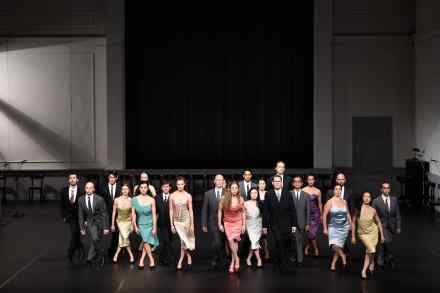
Like musical supergroups and Olympic basketball teams, ballet galas tend to prize individual gifts over group cohesion. A recent one produced by dramaturg Olga Danylyuk and Royal Ballet alumni Ivan Putrov gathers Ukrainian dancers stationed at companies around America and Europe, plus soloists from the Ukrainian National Ballet, for a showcase of homeland talent. There’s definite star power on show — the cast is rounded off with leads from the Royal Ballet and English National Ballet, and Putrov himself was set to perform before an injury sidelined him — but with it some contrasting and occasionally competing performance styles. These come to bear in System A/I, a new ensemble piece from Ludovic Ondiviela about androids powered by artificial intelligence.

Delivers in spades: The Many Saints of Newark reviewed

Cinema

So how exactly did Tony Soprano become a New Jersey mob boss? It’s 1967 and young Anthony is struggling to find meaning and purpose in his life. Luckily, his doting uncle Dickie Moltisanti (Alessandro Nivola) offers the love and support his feckless parents are incapable of giving. Unluckily, Moltisanti is not quite the role model he’d like to be. Dickie complains about this on a visit to his uncle, Aldo ‘Hollywood Dick’ Moltisanti (Ray Liotta), who is languishing in jail for having killed a made man.

Somewhere between eye-opening and jaw-dropping: Sky’s Hawking – Can You Hear Me? reviewed

Television

It is, of course, not unknown for a man to become famous with the support of his family — and, once he has, to prefer global adulation to being with them, before leaving his wife for a younger woman. What’s rather less common is when the man in question is almost completely paralysed. This was the story told by Hawking: Can You Hear Me? and, in advance, it might have sounded an over-familiar one. After all, not only was Stephen Hawking one of the few physicists to become a tabloid staple, but he was also played to Oscar-winning effect by Eddie Redmayne in The Theory of Everything. As it transpired, though, the programme proved somewhere between eye-opening and jaw-dropping.

God, it’s slight: Lindsey Buckingham’s new album reviewed

The Listener

Grade: B– The first time Lindsey Buckingham had a big falling out with Stevie Nicks we at least got some half-decent, if occasionally soporific, music out of it. That was Fleetwood Mac’s Rumours, a soft-limbed, coked-up AOR colossus that for many defines mid-1970s music. It contained Buckingham’s finest moment, ‘Go Your Own Way’ — the weird, awkward, staggered rhythm of the verse somehow enhancing the howl of rage in the chorus. A howl of rage directed at the ethereal and slightly irritating Nicks, of course. Nearly 50 years later, they’re still at it. Nicks reportedly had him fired from the band’s latest tour because she couldn’t bear to be anywhere near him.

A terrific night of opera: Zanetto/Orfeo ed Euridice, Arcola Theatre, reviewed

Classical

For a one-hit composer, we hear rather a lot of Pietro Mascagni. His reputation rests on his 1890 debut Cavalleria Rusticana, the one-act Sicilian shocker that’s usually yoked (not always to its advantage) to Leoncavallo’s Pagliacci. But in recent years we’ve also seen the cod-medieval car crash of Isabeau, and a couple of outings for Iris, an opera that fuses orientalist opulence with tentacle porn, but not in a good way. In fairness, there have been winners too: Opera Holland Park revived L’amico Fritz in July, and this sun-kissed romcom about an Alsatian cherry farmer slipped down like a Negroni with audiences thirsty for a strong, sweet triple-shot of escapism, verismo-style.

How the good intentions of Title IX ended up punishing the innocent

Radio

How do we have difficult conversations? Especially in an age of polarisation, where everything is immediately politicised? But also where calls for ‘nuance’ and ‘complication’ are sometimes used to justify what is really just bigotry. Is it possible to be both protective of the vulnerable and to allow for a larger pursuit of justice and compassion? These are the questions I was left with after listening to the podcast series The Inbox (part of the larger anthology The 11th), a tricky but sensitive look at the questions that surround the adjudication of sexual violence accusations on college campuses through the Title IX system. Sarah Viren wrote an essay for the New York Times about the accusations of sexual harassment against her wife that went viral.

Teenage Fanclub are not a dramatic group, but they are lovely

Pop

They may no longer get many teenagers at their shows spending all their money on merchandise, then throwing up on the way home, though that certainly happened at the end of the 1980s, when they began, but people do love Teenage Fanclub. Their teenage fans are now middle-aged, and have spent the intervening years growing up with the band. They’ve listened as the group started singing about parenthood, long-term relationships, ageing, and they’ve stayed with a group who reflected their own lives back at them. The music, too, has changed. Where the early Fanclub records were sparky, messy alt-rock, they have spent the decades refining themselves so their songs are now polished miniatures, undramatic at first sight, but filigreed and burnished like tiny masterpieces.

Sexist, classist and pro-global warming: Frozen, at Theatre Royal Drury Lane, reviewed

Theatre

Frozen the musical declares war on woke politics. The 2013 Disney movie has been turned into a song-and-dance show that openly celebrates sexism, classism and misogyny. Plus, it salutes the joys of global warming. It’s set in a Scandinavian realm ruled by a kindly monarch who lives in a castle attended by fawning servants. No sign of social mobility here. An impetuous young princess, Anna, falls in love with an eligible duke, Hans, but their betrothal annoys Anna’s sister, Princess Elsa. This is dangerous because Elsa has magical powers that she can’t control. She accidentally casts a spell on Anna, who falls to the ground with a terrible illness. Things get worse when a cold snap arrives from the north and plunges the entire kingdom into a new ice age.

The yumminess of paint

Exhibitions

‘Painting has always been dead,’ Willem de Kooning once mused. ‘But I was never worried about it.’ The exhibition Mixing It Up: Painting Today at the Hayward Gallery is crammed with work by 31 artists who likewise don’t allow the allegedly moribund state of their medium to keep them away from pigments and palette. This is well worth a visit, not only to see such good things as ‘Hold the Right Rail’ by the 87-year-old Rose Wylie, containing a patch of yellow curtain that somehow holds the eye and stays in the memory; the kind of magic that paint can work like nothing else. Elsewhere there is plenty of evidence on show of ebullient pleasure in the material itself, whether thick or thin, loose and free or applied with a delicate touch.

A pep-talk nightmare: Everybody’s Talking About Jamie reviewed

Cinema

It’s a hard heart that doesn’t warm to the musical drama Everybody’s Talking About Jamie. I don’t have a hard heart, and I was warmed, but I also have an impatient heart and my patience was sometimes tested. There’s a point in this film where you might, for example, be asking yourself: do we really need yet another song about empowerment set in the school canteen? Or: can we not have another a pep talk about being true to yourself? On reflection, I would say my heart was only around 42 per cent warmed, at a guess. The starting point for the whole Jamie phenomenon was a BBC3 documentary about a working-class 16-year-old from Sheffield, Jamie Campbell, who aspired to be a drag queen and wanted to go to his school prom in a dress.

Why The Sopranos remains the greatest gangster drama of all time

Arts feature

The Sopranos is called the greatest television show in history. It is the tale of Anthony ‘Tony’ Soprano, a middle-aged man in psychotherapy who also happens to run a New Jersey crime family. Anthony means ‘priceless’; the choice of name is surely deliberate. The Sopranos is complex — all masterpieces are — but it is fundamentally about greed: for money; for sex (the crew inhabit the Bada Bing! lap-dancing club, where breasts are landscape); for alcohol; for power; for the base drug of food. In the first episode Tony, who is played by James Gandolfini as a human devil, all need and charm (he is defiantly sexy with his fat hands and dachshund’s eyes), is almost human-looking. By the end, he is immense.

A podcast that will rescue your relationship: Where Should We Begin? reviewed

Radio

Let me give you a free piece of relationship advice: just break up. If it’s more work than pleasure, if your heart sinks when they call, if you catch yourself writing ‘have sex’ on your to-do list, break up. Life is short, death is certain, relationships are for loving in, and if you can’t be with the one you love, you can at least leave the one you’re with. I give this advice because I know that people in bad relationships don’t take it. They are like those evacuation refuseniks, stumping around on the volcanic hillside, saying they’ve lived there 20 years and they’ll be damned if the whole thing blowing sky-high will change that.

Opera della Luna is a little miracle: Curtain Raisers at Wilton’s Music Hall reviewed

Classical

Arthur Sullivan knew better than to mess with a winning formula. ‘Cox and Box, based on J. Maddison Morton’s farce Box and Cox’ reads the title page of his first comic opera, composed to a libretto by F.C. Burnand a good five years before he latched up with W.S. Gilbert. ‘Those boys hit on a brilliant idea,’ Billy Wilder is supposed to have said when he saw the musical that Andrew Lloyd Webber and Don Black had created from his movie Sunset Boulevard. ‘They didn’t change a thing.’ Gilbert’s comic beats are sharper and faster; and he’d doubtless have shortened it by about 15 minutes.

Intensely powerful: Herself reviewed

Cinema

Herself is an intensely powerful film about domestic violence that isn’t Nil By Mouth or The Killer Inside Me or any of the other films that have you begging: ‘Oh, sweet Jesus, please make this stop.’ Actually, it starts like that, but then becomes something else — something that never loses sight of why we’re here but is also an uplifting tale about a woman who wants to rebuild her life by building a home. And now I’ve made it sound like some cheesy, feelgood monstrosity. Trust me, it isn’t. Herself is produced by Sharon Horgan and directed by Phyllida Lloyd (The Iron Lady, the Mamma Mia! franchise) because women make films from top to bottom these days. Get over it. (Below-the-line commenters: I said this just to bait you.

Bleak, unashamedly macho and grown-up: BBC2’s The North Water reviewed

Television

‘The world is hell, and men are both the tormented souls and the devils within it.’ This was the cheery epigraph from Schopenhauer with which The North Water introduced itself — aptly, as it transpired. Certainly, BBC2’s starry new Victorian drama is not for those who prefer their television characters to be loveable. The first person we met was Irishman Henry Drax (Colin Farrell), who gruntingly concluded his business with a Hull prostitute before heading for the docks in a way familiar to viewers of Victorian TV dramas: shamble up the cobbles, straight on past the women in shawls, turn left at the urchins.

Sale of the century: the contents of the Sitwells’ mansion are going under the hammer

More from Arts

In my bedroom there is a small lidded laundry basket. It was designed by Geoffrey Lusty for Lloyd Loom, a company that has, since 1917, been producing surprisingly durable furniture made from lacquered woven paper fabric for the middle classes. The basket is globular and stands on three spindly legs. It is weatherbeaten, and slightly worn, because it was produced in 1957, at the dawn of the Space Era. Indeed, it is a Sputnik wicker linen basket, designed in the style of the famous satellite. Only 100 were ever produced. Why is this double design classic not in a museum? It may be that one is. As far as this one is concerned, however, I bought it at an auction in Bedfordshire last month for just over two hundred quid.

Tsunami of piffle: Rockets and Blue Lights at the Dorfman Theatre reviewed

Theatre

Deep breath. Here goes. Winsome Pinnock’s new play about Turner opens with one of the most confusing and illogical scenes you’re ever likely to see. A teacher on a school trip is showing her pupils a Turner painting displayed in a gallery housed inside a ship donated by the producers of a film starring a famous actress, Lou, who happens to be on board wearing a sumptuous outfit for an awards ceremony, which she plans to avoid for fear that a coveted prize will be handed to a rival. Lou invites the school teacher to an after party that is scheduled to start when the awards ceremony ends. She then gets distracted by the sight of movement on the surface of the Turner canvas. The painted figures, frets Lou, appear to be shifting and jerking.

Exuberance and class: Ariadne auf Naxos at Edinburgh Festival reviewed

Classical

For some reason, I’d got it into my head that the main work in the Gringolts Quartet’s midday recital at the Edinburgh Festival was going to be Beethoven’s Quartet in C sharp minor, Op.131. No problem with that, of course; it’s exactly the sort of big serious work you’d expect a big serious international violin soloist like Ilya Gringolts to play when he forms a string quartet, and then to bring on tour to a big serious international festival like Edinburgh. Still, it’s not a piece that you can really listen to before lunch without a certain amount of mental preparation; and it was while revisiting the Festival website that I saw that I’d got it all wrong. They were actually due to play the Quartet Op.106 in G major by Antonin Dvorak.

Cast a spell, clear and sharp as frost: The Unthanks reviewed

Pop

As August unwound, the EIF settled into the cavernous gazebo that is Edinburgh Park, and things began to loosen up. First there was an outbreak of vigorous clog dancing — more on which later. This escalated within 48 hours to a polite mini stampede from our designated seats towards the front of the stage at the start of Damon Albarn’s show, instigated at the artist’s request. ‘I’ve checked and we’re allowed,’ said Albarn sensibly. In 2021 we must take rebellion as we find it. When he lit a cigarette near the end it felt like civilisation was teetering on the very brink. As it transpired, this wasn’t really music designed for rushing the stage.