Culture

Culture

The good, the bad and the ugly in books, exhibitions, cinema, TV, dance, music, podcasts and theatre.

Ian McKellen is riveting: Hamlet, at Theatre Royal Windsor, reviewed

Theatre

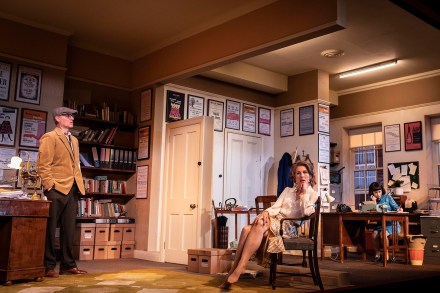
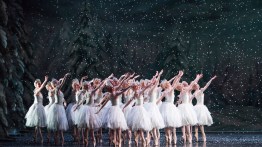
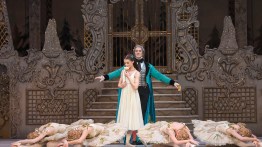
Ian McKellen in his early eighties plays the Dane in his mid-twenties. A production with such a strange innovation should be conventional in all other details so that the virtues and demerits of the experiment can be judged in the right context. But Sean Mathias’s show adds extra puzzles. Elsinore is a modern palace ruled by Claudius, in a charcoal suit, and Gertrude in a chic emerald dress, pinched at the waist. Nice togs. But the audience knows how a constitutional monarchy works and that a rightful heir succeeds automatically and peacefully. So why are these murderous nutcases roaming the corridors plotting to slit each other’s throats? That contradiction goes unexplained.

When musical collaborations go right – and when they go horribly wrong

Pop

Big Red Machine release their second album later this month. It’s a fine name for ten tonnes of agricultural apparatus but perhaps not quite so persuasive for a pop group, particularly one with a considerably lower profile than most of its members. A collective formed by the National’s Aaron Dessner and Bon Iver’s Justin Vernon, Big Red Machine has corralled the likes of Robin Pecknold (Fleet Foxes), Sharon Van Etten and Taylor Swift into making a collaborative record called How Long Do You Think It’s Gonna Last?. It sounds intriguing on paper, but the quality of musical collaborations is notoriously hard to gauge from the cast list.

Mesmerising and monstrous: @zola reviewed

Cinema

The distinction between on and offline life blurred long ago. The greatest spats, sexual self-fashionings and mad soliloquies now unfurl on social media. The splenetic rhythms and fundamental shallowness of this medium make it a questionable source for art, but Janicza Bravo’s @zola — the first film ever released based entirely on a series of viral tweets — makes a tight, original fist of such material. @zola is A’Ziah ‘Zola’ Wells King, who in 2015 as a 19-year-old exotic dancer and stripper living in Detroit unleashed a 148-tweet thread, billed as #thestory, which detailed a chain of nasty but fascinating events during a surreal trip to Tampa.

The history of the Theatre Royal Drury Lane is the theatrical history of England

Arts feature

Andrew Lloyd Webber has not been in the best of moods lately, largely thanks to all the Covid delays to his new musical Cinderella, now finally about to open — for the umpteenth announced time — at the Gillian Lynne Theatre. The bigger news, however, is that his theatre at the other end of Drury Lane, the grand old Theatre Royal, is finally finished after massive renovations. Lloyd Webber has spent an awesome £60 million on the rebirth of his Grade I-listed theatre, known to show folk as ‘the Lane’, with his wife Madeleine heavily involved and in cahoots with the heritage expert Simon Thurley and the great theatre architect Steve Tompkins. The result? Oh my goodness! The sheer elegance of its 1812 Greek revival design by Benjamin Wyatt is drop-dead.

When did Sunday night TV become so grim? Baptiste reviewed

Television

There was, you may remember, a time when Sunday night television was rather a jolly affair: gently plotted and full of rosy-cheeked yokels, twinkly coppers and warm-hearted patriarchs. Well, not any more — as BBC1’s Baptiste and ITV’s Professor T confirm. Both feature main characters, and quite a few supporting ones, with backstories so abidingly grim that you can only hope they don’t send out annual Christmas circulars. So it is that Julien Baptiste — French detective turned freelance missing-persons hunter — now has a dead daughter to go with his imprisoned son. Meanwhile, Cambridge academic Jasper Tempest’s OCD is clearly linked to the fact that, at the age of seven, he found his alcoholic father hanging from a noose in the family hallway.

Springtime for Putin: Grange Park’s The Life and Death of Alexander Litvinenko reviewed

Opera

Alexander Litvinenko lies in a London hospital, dying of polonium poisoning. That photograph from 2006 haunts the memory: the medical robe, the electronic monitors, Litvinenko’s accusing gaze and bald, ravaged head. But in case we needed reminding, Grange Park Opera handed out copies of Death of a Dissident, the account of the crime by Litvinenko’s widow Marina, and the principal source for Anthony Bolton and Kit Hesketh-Harvey’s new opera The Life and Death of Alexander Litvinenko. Minutes later, a hospital bed rolled on stage replicating that exact image. And then Litvinenko — the tenor Adrian Dwyer — opened his mouth and started to sing. Opera plays a high-stakes game with dramatic realism at the best of times, but this was startlingly upfront.

What really went on at Britain’s Bikini Atoll?

Arts feature

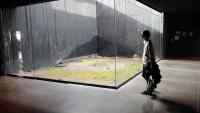
Nearly a century ago, some Chinese water deer swam the River Ore to Orford Ness. They had escaped from the ornamental deer park at Woburn Abbey in Bedfordshire and, perhaps through ancestral homing instinct, headed as far east as possible without falling into the North Sea. They climbed unsteadily on to this strange shingle spit at the end of England and made it home, along with the gulls, thistles, wild poppies and the brown hares who, reportedly, are too burly to be airlifted by the Ness’s marsh harriers and barn owls. The pioneering deers’ descendants have borne witness since to many faces of human folly. From the first world war to the end of the Cold War, the Ness was home to experiments with airborne weaponry, radar and atom bombs.

I laughed quite a lot when I shouldn’t have: Old reviewed

Cinema

The biggest challenge in reviewing M. Night Shyamalan’s Old lies in describing its central idea without making the film sound considerably cleverer and more interesting than it is, but I’ll give it my best shot. Just remember: if I fail, and Old does sound clever or interesting at any point, it totally isn’t. This is directed and written by Shyamalan who is one of the most consistently inconsistent of film makers (Sixth Sense, good; The Village, so-so; Last Airbender, let’s never talk of it again). The central idea has it that a group of holidaymakers are trapped on a tropical, secluded beach where ageing is accelerated and, as they discover, every 30 minutes there amounts to a year.

Floods you with fascinating facts: Trees A Crowd reviewed

Radio

Listening to Trees A Crowd, a podcast exploring the ‘56(ish) native trees of the British Isles’, solved one of childhood’s great mysteries for me. Why, when you plant a pip from one type of apple, does it grow into a completely different type of apple tree? The answer — one kind of apple tree will typically cross-pollinate with another variety to pass on a different set of genes — is less interesting than the next bit. Which is that if you do plant, say, a Braeburn seed, and it takes, you’re likely to end up with crab apples.

Rich and strange: Eileen Agar at Whitechapel Gallery reviewed

Exhibitions

Heads turn, strangers gawp, matrons tut or look in envy. A man doffs his bowler hat knowing when he is outdone. The model walking imperturbably along a London street is Eileen Agar, her headwear the ‘Ceremonial Hat for Eating Bouillabaisse’, encrusted with crustaceans, spangled with starfish. If the Little Mermaid,in her leggy period, had been invited to Ascot, she might have worn something like this. A British Pathé newsreel of Agar wearing the same hat plays on a loop in the Eileen Agar: Angel of Anarchy exhibition at the Whitechapel Gallery. (You can also see it on YouTube.) About 50 seconds in you catch her trying not to smile. ‘Life’s meaning is lost without the spirit of play,’ Agar wrote in one of her notebooks.

One for hardcore Tennessee Williams fans only: The Two Character Play reviewed

Theatre

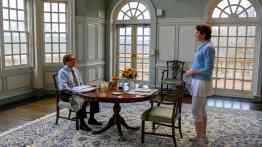
It can be difficult to remember that Tennessee Williams, the great songster of the Deep South during the 1950s, was still churning out plays when he died in 1983. In the 1960s he was past his peak and he began to experiment with form, perhaps hoping to compete with fashionable youngsters like Tom Stoppard and Harold Pinter. Hampstead Theatre staged the world première of his absurdist melodrama The Two Character Play in 1967. And now, a mere 54 years later (an interlude that hints at its merits as a crowd-pleaser), the show has returned to its cradle. Sam Yates directs. This is an obscure and sometimes baffling script that features some excellent innovations and ideas.

The techniques of totalitarianism are still fully in play today

Television

How to Become a Tyrant (Netflix) is ideal history TV for Generation No Attention Span. Presented in six bite-sized chunks by Peter Dinklage, aka the ‘Imp’ Tyrion Lannister from Game of Thrones, it tells you most of the things you need to know about Hitler, Stalin, Mao, Gaddafi, Kim Il-Sung, Idi Amin and Saddam Hussein, without obliging you to think or grapple with any tedious detail. Instead of examining the dictators individually, it explores their careers thematically, looking for the ingredients they have in common.

Quietly devastating: Nowhere Special reviewed

Cinema

Off the Rails is one of those gentle ensemble comedies that we do so well (Calendar Girls, The Best Exotic Marigold Hotel, etc.), except when we don’t, and it all falls rather flat, and feels like the B-side of a Richard Curtis film. This comes in, alas, at the flatter, B-side end of the spectrum, even if its heart is in the right place and all the other things you say when a film doesn’t deserve a kicking. But you can’t really say it’s any good. Plot-wise the deal is: to comply with the dying wish of their best friend, Liz (Sally Phillips), Kate (Jenny Seagrove) and Cassie (Kelly Preston) must take her 18-year-old daughter, Maddie (Elizabeth Dormer-Phillips), on the interrailing trip around Europe that they never quite finished when they were young.

The best theatre podcasts

Radio

All the world’s on stage again so where to go to for insight into what to see and why? Podcasts, of course. Lowe’s ‘luck’ is that he happens to be friends, neighbours, or have starred, with everyone he interviews Let’s start with Literally! With Rob Lowe. An hour-long conversation between the most swoonable actor in the world who we’ve all forgotten, and everyone he knows and likes, from Alec Baldwin and Oprah Winfrey to St Elmo’s Fire co-star Demi Moore. It’s a wonderful and eye-opening listen. Lowe combines the enthusiasm and curiosity of the best interviewers with a knowledge and experience that makes conversation flow until the cup spilleth over.

Zips along with enormous vim: Malcolm Arnold’s The Dancing Master reviewed

Opera

Malcolm Arnold composed his opera The Dancing Master in 1952 for BBC television. It never appeared, the problem being the source material — William Wycherley’s 1671 farce The Gentleman Dancing Master. Jokes about wedding nights and ‘scarlet foppery’ might have flown in the reign of Charles II but the New Elizabethans at Broadcasting House were altogether more shockable. ‘Too bawdy for family audiences,’ was Auntie’s official verdict, leaving The Dancing Master largely forgotten until a premiere recording late last year, and now — conducted by John Andrews and using almost the same cast — its first ever professional production, at the Buxton International Festival.

Full of masterpieces: Paula Rego at Tate Britain reviewed

Exhibitions

The Victorian dictum ‘every picture tells a story’ is true of Paula Rego’s works, but it’s only part of the truth. Rego has said that she hopes and expects that when people look at her pictures, ‘Things will come out that I’m not even aware of.’ And that’s right too: every marvellous picture tells so many stories, and is so charged with under- and overtones, that no one, including its creator, can be aware of everything that’s going on. That’s certainly true of many works in the Rego retrospective at Tate Britain. All notable painters and sculptors are, of course, sui generis. They don’t follow established rules; instead they make up a new set to suit their own creative personalities.

A short history of millionaire composers

Arts feature

Let me tell you about the very rich. They are different from you and me, though if you’ve spent much time in the world of classical music, and you hadn’t realised just how different, you could do worse than attend an opening night at Grange Park Opera. True, Grange Park’s founder, Wasfi Kani, is famously adept at cultivating donors: you don’t build an opera house on the late Duchess of Roxburghe’s Surrey estate without a certain fundraising flair. It was when Joanna Lumley shimmered on stage in a midnight-blue ball gown and suggested that we might each like to leave the company at least £25,000 in our wills that I really choked on my prosecco.

The vivid memory-scapes of Hong Kong master Wong Kar Wai

More from Arts

The films of Wong Kar Wai are a kind of map of Hong Kong. In them the city becomes a magnificent metropolis of missed connections, a tempestuous port where ill-fated lovers cross paths like ships in the night. And Wong has filmed the city from so many angles, with such spatial precision, that if the People’s Republic were ever to grow impatient with the territory’s seditious tendencies and raze it to the ground, Hong Kong could be reconstructed, flawlessly, from Wong’s films alone. A major retrospective on the Chinese film director is under way at the BFI and ICA. It couldn’t be more felicitous, since Wong Kar Wai is that most retrospective of filmmakers, always looking back, his characters ever in search of lost time.

Looks lovely if nothing else: Craig and Bruno’s Great British Road Trips reviewed

Television

To its huge credit, ITV has managed to find perhaps the last two television celebrities who’ve never before been filmed travelling around Britain while exchanging light banter and using the word ‘iconic’ a lot. In Craig and Bruno’s Great British Road Trips, the Strictly judges are driving a Union flag-bedecked Mini through such telegenic staples of heart-warming TV dramas as the Lake District, the Yorkshire Dales and the Scottish Highlands. For the opening episode, the choice fell on the Cornish coast, which certainly helped the programme achieve its primary aim of looking lovely. But this, as it transpired, was just as well — because for a fair amount of the time, not much else happened.

Wallace Shawn’s Designated Mourner feels like watching the news

Radio

Pity the aesthete, the flâneur and the opera-goer. Those who find the contents of their own heads so dull and mundane they must fill them instead with the fantastical inventions of our most extravagant lunatics. They have been locked out of the theatres and cinemas and public spaces that make them feel at their most alive and abandoned to the content programming of Netflix and whatever Tenet was supposed to be. They’ve been deprived, sheltered, cut off from the only thing that gives their lives meaning. I’m describing me. I’m asking you to feel sorry for me.

The real death of rock

Pop

What would a rock band have to do now to be seen as heralding the future? Twenty years ago, it was enough to be in possession of sharp cheekbones, tight jeans and 11 fantastic songs. The first album by the Strokes, Is This It, was released 20 years ago this month. It spread around the world in a way that would be impossible now. Only Australia got the album in July 2001. The UK release was not for another month, to tie in with the Reading and Leeds festivals. The US vinyl version was released on 11 September, but the CD edition was held back, so they could remove the song ‘New York City Cops’, whose refrain of ‘they ain’t too smart’ didn’t itself seem too smart in the wake of 9/11.

Comedy genius: Garsington Opera’s Le Comte Ory reviewed

Classical

Melons. An absolutely cracking pair of melons, right there on a platter: the centrepiece of the banquet that the chaste, all-female inhabitants of the castle of Formoutiers have provided for their surprise guests, a band of nuns. Except these sisters all seem to be singing well below the stave, and judging from the way she adjusts her crotch, Mother Superior has something more than a chastity belt beneath her habit. We all know where this is going. You can’t get your melons out on stage unless, sooner or later, some great hairy bloke in a wimple is going to shove them down his front. It’s the law.

Lame and formulaic: Black Widow reviewed

Cinema

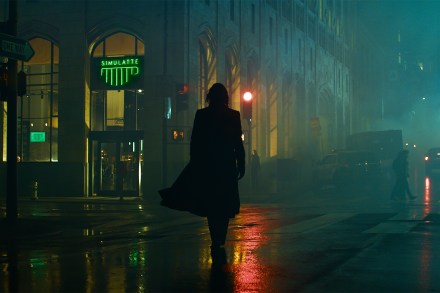
Black Widow is the latest Marvel film and although I’d sworn off these films a while ago, due to sheer boredom, I was tempted back by the fact that this one stars a lady (Scarlett Johansson) and another lady (Florence Pugh) and even a third lady (Rachel Weisz) and is directed by a lady (Cate Shortland). Could be wonderful, I thought, except it isn’t. More women is its only decent idea. Otherwise, it’s business as usual. Otherwise, it’s all formulaic bish-bosh, smash-crash action scenes broken up by lame jokes and lame philosophising along the lines of: ‘Your pain only makes you stronger.’ Not if you’re dying in hospital and they’ve run out of morphine, I was minded to shout at the screen.

Joan Eardley deserves to be ranked alongside Bacon and de Kooning

Arts feature

Painting is a fight and few artists demonstrate this more emphatically than the volatile and complicated post-war master, Joan Eardley. Scotland’s great English artist or England’s great Scottish artist, box her as you will, she’s revered north of the border, but often oddly dismissed south of it. The Scottish public have been enthralled by her work for decades, and spoiled in their access to it, with 60 or so pieces in the National Galleries of Scotland collection alone (the Tate has just one). You’re rarely far from an Eardley here, and never more so than in this, her centenary year, which sees some 20 shows and events lined up to celebrate her life and work. Only one of the exhibitions is in England, the country of Eardley’s birth.