Culture

Culture

The good, the bad and the ugly in books, exhibitions, cinema, TV, dance, music, podcasts and theatre.

One of many soul acts looking back 50 years and doing very good business: Black Pumas, at the Roundhouse, reviewed

Pop

No musician ever went bust overestimating the public desire to hear classic soul. Slapping on a Motown backbeat has revived many a career and made many a star. At the simplest level, what wedding band are you going to hire: the one playing note-for-note recreations of acid-rock wig-outs from 1968, or the one playing note-for-note recreations of the Motown, Stax and Atlantic catalogues from the same year? It’s hardly evidence of the appalling taste of the music-buying public. If we’re going to play that silly ‘What pop era was best?

The supreme pictures of the Courtauld finally have a home of equal magnificence

More from Arts

When the Courtauld Gallery’s impressionist pictures were shown at the Fondation Louis Vuitton in Paris in 2019, the Parisian public was so bowled over by the exhibition that some were inclined to claim Samuel Courtauld as an honorary Frenchman. This was not completely unreasonable; after all Courtauld (1876–1947) was a Francophile from an old Huguenot family. But it was even more of a compliment to the magnificent array of French art he had put together. In this city of impressionism, home to the Musée d’Orsay and the Orangerie, half a million visitors came to see it.

Decent dream pop: Beach House’s Once Twice Melody reviewed

The Listener

Grade: B+ Everything these days devolves to prog — and not always very good prog. Where once synths were vastly expensive, difficult to master and hell to maintain they are now in a place beyond ubiquity; every sound you want conjured by the press of a key, your song suddenly washed over with sonics that make it sound more important than it really is. It almost makes you yearn for Yes and ELP — at least they knew they were pretentious dullards using electronic wizardry to elevate the slightest of compositions. Dream pop and its self-harming kid sister shoe-gazing — both genres dating from the mid-1980s and the likes of the Cocteau Twins — were always going to lend themselves to prog’s grandiosity.

The art and science of Fabergé

Arts feature

After all the magnificent presents she’d received from his workshop, Queen Alexandra was eager to meet the most famous jeweller in Russia. ‘If Mr Fabergé ever comes to London,’ she said to Henry Bainbridge, a manager of the design house, ‘you must bring him to see me.’ Peter Carl Fabergé paid a rare visit to the capital to inspect his new shop — the only one located outside the Russian empire — at 48 Dover Street in 1908. ‘The Queen wants to see me! What for?’ he asked an exasperated Bainbridge. ‘Well, you know what an admirer she is of all your things.’ Insisting that she would not wish to be troubled, Fabergé demurred, polished off his lunch and requested the time of the next train.

The sound of a hunch coming good

Music

Joan Wasser is New York loud. Her resting register is CAPS LOCK, rising to flashing neon when roused to laughter or, occasionally, indignation. ‘I was born a very expressive person,’ says the singer. ‘I was always talking to people in the street that I didn’t know. I’m not super afraid of expressing how I feel, and I take chances very quickly.’ Bold spontaneity has served her well. The Solution is Restless, Wasser’s latest album as her artistic alter ego, Joan As Policewoman, is the sound of a hunch coming good. The record stems from a single day spent extemporising with her friend David Okumu and the late and legendary Afrobeat drummer Tony Allen.

Lumpily scripted and poorly plotted: Cry Macho reviewed

Cinema

Clint Eastwood is 91; Cry Macho may well be his last film. Or maybe not. He has, after all, been directing himself as majestically craggy old guys for decades. Craggiest and most majestic of all, he was, in 1992, Will Munny in Unforgiven and, in 2008, Walt Kowalski in Gran Torino. In both those films, and now in Cry Macho, he is not just craggy, he is also broken. Munny is an old, widowed gunfighter barely surviving on his pig farm in Kansas. Kowalski, also widowed, is angry with America and missing, bitterly, the great days of the Detroit car makers. And now, in Cry Macho, he is Mike Milo, widowed and a ruined rodeo star-turned-horse breeder. He has been looking old but tough for 30 years; now he really looks old and not so tough.

Albrecht Dürer was a 16th-century Andy Warhol

Arts feature

On 6 January 1506, Albrecht Dürer wrote from Venice to his friend Willibald Pirckheimer, who was at home in Nuremberg. The artist had already been in the city for a little while, and like many people who visit Venice he had spent a good deal of time shopping. Pirckheimer had asked him to buy some jewellery for him, ‘a few pearls and precious stones’, and the artist had been looking out for something suitable. There were, however, difficulties. For one thing, he says: ‘I can find nothing good enough or worth the money; everything is snapped up by the Germans.’ For another, Dürer complained, there were a lot of swindlers around. These ‘always expect four times the value for anything, for they are the falsest knaves’.

An affectionate exercise in comic sabotage: Pride & Prejudice* (*sort of) reviewed

Theatre

Let’s be honest. Jane Austen is popular because War and Peace doesn’t fit inside a handbag. Austen’s best-loved novel, Pride and Prejudice, has been updated in a fetching new production that treats the sacred text as a screwball comedy. The fun starts before curtain-up with the cast of five girls messing about on stage and struggling with a chandelier that almost shatters but doesn’t. This improv bit is irritatingly predictable. Then the show begins and the girls start to curse, laugh and pontificate their way through the tale. We get a feminist lecture explaining that Mrs Bennet’s predicament owes itself to the laws of bequest that prevented women from inheriting property. So if Mr Bennet dies, his wife and five daughters will be destitute.

The best podcasts about money

Radio

Stories about money are never about money. They are about pain, about family, about atrocity, about luck, about health, about politics. And while we get a kind of vicarious thrill from listening to other people’s financial tales of woe, whether we are morally condemning a millennial for buying a daily flat white when she could be putting that $3 into a savings account that earns zero interest in the hopes that the city she lives in won’t be underwater from rising sea levels by the time she has enough for a deposit or just feeling gratitude that we are better off than the poor shmuck explaining their hundreds of thousands of dollars in student debt, rarely are these stories allowed to be as complex as their situations truly are.

The unseen Victoria Wood

More from Arts

For a few years now I have been living with Victoria Wood. That sounds all wrong, obviously, and yet no more apt phrase suggests itself. Not long after her death I was invited to write her authorised biography, and in due course a vast collection of documents was delivered to my address. Packed into storage boxes, which I stacked in corners and stuffed under beds, her intellectual legacy became a physical fact. It was in sifting through this remarkable archive that I started to come across work — masses of it — that had never seen the light of day. At its core was a stash of 100 television sketches.

A riveting cheese dream of a film: Spencer reviewed

Cinema

Go see Pablo Larrain’s Spencer, which stars Kristen Stewart as Princess Diana, and the next day you will wonder: did I go to the cinema last night or did I have a cheese dream? Did she really clear the room of staff by saying she wished to masturbate, or was it the cheddar and crackers I foolishly had before bed? This is a total cheese dream of a film —did she really just eat a pearl? — but also it’s a riveting one as well as a thrillingly entertaining one. Plus it all somehow feels true even if it isn’t. Broken woman, unfeeling family. That seems about right. This is a total cheese dream of a film – did she really just eat a pearl?

Oh dear, Abba’s new album is a bit of a dog: Voyage reviewed

Music

I assume that somewhere on the guided ‘Piers and Queers’ walking tour of Brighton, the participants are enjoined to regard, in awe, the Dome — the venue at which Abba, on 6 April 1974, won the Eurovision Song Contest, thus both launching themselves as a wildly successful band and establishing the town (as it was then) as a mecca (probably the wrong choice of word there) for the UK’s swiftly growing gay community. Hitherto it had been a rather frowsy, Tory-voting seaside resort, best known for dirty weekends and petty villains. The Swedes won with ‘Waterloo’, of course, which may have provided our nation with some much-needed succour. A remembrance of good things past.

In Bennington it was a badge of dishonour not to have slept with your professor

Radio

It is incredibly hard to convey the fleeting invincibility and passionate self-significance that we feel on the cusp of adulthood. Youth goes: the skin fades, the face slackens, the lower back begins to groan in protest. The world dims and we dim with it. Yet generally speaking, we’re as personally winded by that realisation as we are indifferent to it in others. When everyone suffers, no one cares. Why should I bother with someone else’s wasted youth? I’ve got one of my own right here. Still, I was intrigued by the appearance of Once Upon a Time at… Bennington College, an eight-part oral history of three literary superstars’ time at university together.

The tyranny of the visual

Arts feature

In 1450, the Duke of Urbino, Federico da Montefeltro, became monocular after losing vision in his right eye following a jousting accident. In order to improve the peripheral vision of his left eye, he had surgeons cut off the bridge of his nose. In Piero della Francesca’s 1472 portrait, the Duke is depicted in profile, so we can see that an equilateral triangle of flesh and bone has been chopped from what must have been an elegant aquiline beak. I have been more fortunate. In the past year I’ve had four operations at Moorfields Eye Hospital in London to repair a detached retina that made me blind in one eye. I didn’t have to cut off my nose to spite my face and improve my vision. What was impossible in the 15th century has become routine in the 21st.

Like Alan Bennett but less funny: ‘night, Mother at Hampstead Theatre reviewed

Theatre

’night, Mother is a two-hander that opens like a comedy sketch. ‘I’m going to kill myself, Mama,’ says Jessie. She’s cleaning a pistol and loading it with bullets. ‘I’ll shoot myself in a couple of hours.’ The pair live together in a lonely farmhouse, and Jessie wants to make sure her mother will be able to cope after her death. She tours the kitchen explaining where the fuses and the cleaning materials are kept. Mama, who doesn’t seem unduly alarmed, offers to phone her son and get him to thwart the suicide attempt. ‘I’ll just have to do it before he gets here,’ says Jessie. This is an intensely dramatic set-up which ought to be either gripping or hilarious, or both. Somehow it lacks punch.

A blisteringly bonkers first episode: Doctor Who – Flux reviewed

Television

BBC1 continuity excitedly introduced the first in the new series of Doctor Who as ‘bigger and better than ever’ — presumably because the more accurate ‘bigger and better than it’s been for a bit’ doesn’t have quite the same punch. Still, Sunday’s programme was a definite, even exhilarating improvement on those of recent years. Since Chris Chibnall became the showrunner in 2018, thrills have taken a firm second place to solemn lectures on how the most dangerous monster of all is human prejudice. Yet at no stage here did the Doctor (Jodie Whittaker) encounter some acknowledged hero of black and/or women’s history — and so allow us a self-satisfied bask in having risen above the bigotry of less enlightened times.

This is how G&S should be staged: ENO’s HMS Pinafore reviewed

Opera

Until 1881, HMS Pinafore was the second-longest-running show in West End history. Within a year of its première it had broken America too; at one point there were eight competing productions on Broadway alone. The single most wrongheaded notion that still clings to Gilbert and Sullivan’s operas is that they’re somehow low-rent or parochial. They were blockbuster international hits, superbly written, lavishly staged and exported far beyond the Anglosphere. Pinafore was performed in Denmark as Frigate Jutland and in Vienna, Johann Strauss was driven off stage by the runaway success of The Mikado. In the words of the operetta historian Richard Traubner, Gilbert and Sullivan’s collaborations were ‘simply the best musical productions of the Victorian age’.

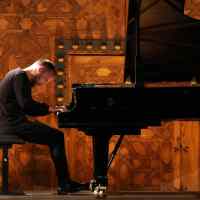
Very much NSFW: Jean-Efflam Bavouzet/Quatuor Danel at Wigmore Hall reviewed

Classical

‘Drammatico’, wrote César Franck over the opening of his Piano Quintet, and you’d better believe he meant it. The score bulges with clues: piu dolce; espressivo sempre; eventually (and steamiest of all if you’re even slightly attuned to the absinthe-dazed atmosphere of French Wagnerism) tenero ma con passione — ‘tenderly, but with passion’. It was too much for Camille Saint-Saëns, who played the piano in the world première in 1880. The gossip was that Saint-Saëns knew of Franck’s infatuation with the composer Augusta Holmès, and was repulsed by music that — to jealous ears — sounded like the one-handed diary of a 58-year-old lecher.

Grimy, echt and gripping: Netflix’s The Forgotten Battle reviewed

Film

The Forgotten Battle is a Dutch feature film commemorating the desperate and relatively little-known Allied assault on the Scheldt estuary in October and November 1944. When I went to the battlefield decades later with veterans of 47 RM Commando, they told me it was worse than D-Day because the Germans knew they were coming and had prepared stronger defences. Nearly 13,000 Allied soldiers were killed or wounded (about the same as the German casualties), half of them Canadians. It has been a long time since I watched a half-decent second world war movie, mostly because they hardly bother making them any more.

The best podcasts to help you become a better painter

Radio

There’s a great documentary film on Netflix at the moment about the late artist Bob Ross, he of the happy little trees and friendly perm, and the battles fought over his estate. It coincides with the revival on BBC4 of his Joy of Painting TV programmes, which originally aired in the US between 1983 and 1994, but have lately struck a chord with pandemic--stressed audiences here. They are, basically, free therapy, with a suburban far-out vibe and colour-laden fan brush. I was sceptical about how genuine Ross’s demeanour was until I saw the film, which left me in no doubt that he was exactly as he appeared. When someone is as enthusiastic and well-meaning as he was, you can’t help but stifle any sniggers and jump on board.

Every MP must see this play: Value Engineering – Scenes from the Grenfell Inquiry reviewed

Theatre

Scenes from the Grenfell Inquiry is a gripping, horrifying drama. Nicolas Kent and Richard Norton-Taylor have sifted through the public hearings and dramatised the most arresting exchanges. Ron Cook, often miscast as a comedian, is superb as the frosty and occasionally irascible inquisitor, Richard Millett. Early on, he asks the witnesses ‘not to indulge in a merry-go-round of buck-passing’. Later, he comments acidly, ‘That invitation has not been accepted.’ Every witness has something to hide and something to be ashamed of. A fireman searching for a child on the upper floors can’t explain why he didn’t rouse families from their flats and help them escape. A witness describes the inferno’s ghastly noise, ‘like sparklers’.

Joyous perfection from a band that’s sure to go far: Gabriels at The Social reviewed

Pop

The bigger the next big thing, the smaller the room you want them playing in. You want the people who got inside to be thankful they made it in (not least because the more exclusive the show, the more hysterical the tweets afterwards: ‘You plebs couldn’t get a ticket, but I saw the very future of the planet!’). You want the air so thick with heat and chatter before the band comes on that there is a sense of event before a note has been played. You want everyone there — band and audience alike — to feel they are at the only place that matters, regardless of it being a nondescript Thursday evening.

Small but perfectly formed: the Royal College of Music Museum reopening reviewed

Exhibitions

Haydn is looking well — in fact, he’s positively glowing. The dignified pose; the modest, intelligent smile: it’s only when you squint closely at the portrait that Thomas Hardy painted in London in 1791 that you clock the full peachy-pink smoothness of his complexion. It’s curious, because Haydn suffered disfiguring smallpox as a child, and a contemporary waxwork bust in Vienna is cratered like a moon in a periwig. Hardy’s portrait is a promotional image, commissioned by the music publisher John Bland. This is the Georgian equivalent of a celebrity headshot: a photoshopped, endlessly-reproduceable selling tool, so potent that it’s still being used to shift recordings 230 years later. Well, of course it is.

Exquisite to look at, strangely tense and wholly riveting: Netflix’s Passing reviewed

Film

Passing is Rebecca Hall’s adaptation of the Nella Larsen novella (1929) about two biracial women, one of whom chooses to pass for white, and one who does not, and the effect they have on each other, and it’s superbly done. It’s tightly made, exquisite to look at, strangely tense, wholly riveting and it’s also, let’s be honest, just the right length for a film (90 minutes). Hall — who wrote the screenplay and directs, and is otherwise an actress — is the daughter of theatre director Peter Hall and opera singer Maria Ewing and you could say she has skin in the game. When she was growing up, she has said, she would sometimes look at her mother and wonder: are you a black woman?

Richly layered and intricate: Royal Ballet’s The Dante Project reviewed

Dance

Where does the artist end and their work begin? Like 2015’s Woolf Works, Wayne McGregor’s new ballet swirls creator and creation to meditate on a journey of self-realisation. The subject this time is Dante, the Italian poet who redirected the course of western art and literature with The Divine Comedy. Over three acts, each based on a realm of the afterlife, an Everyman navigates sin, penance and salvation. There’s a lot to unpack — as ever, McGregor crafts a rich, layered choreographic language, and Thomas Adès’s accompanying score is just as intricate — but density is The Dante Project’s forte, elevating it to cosmic heights.