Culture

Culture

The good, the bad and the ugly in books, exhibitions, cinema, TV, dance, music, podcasts and theatre.

Repetitive, spiritless, god-bothering music: Kanye West’s Donda reviewed

The Listener

Grade: C– The nicest thing one can say is that this is a marginally better album than we would have got from either of the other two presidential candidates. Just about. But sheesh, it’s still nearly two hours of the most repetitive, spiritless, god-bothering music you will ever hear, full of portentousness and self-pity and utterly devoid of any insight or humour. Rap, trap, snap, all the tiresome bases covered. Decent tunes and memorable rhythms are few and far between. I like West, the man, for his stoic refusal to kowtow to the stupid liberal orthodoxies demanded by the music business. But his self-importance is now so bloated he resembles Mr Creosote from Monty Python’s The Meaning of Life, in those terrible few seconds before he eats a final wafer-thin mint.

A fantastical fever dream that’s hard to follow or enjoy: Annette reviewed

Cinema

Leos Carax is the director whose films have always been wilfully odd. Ron and Russell Mael (the brothers from the band Sparks) have also always been wilfully odd. Annette is a collaboration between the three and is therefore wilfully odd in spades. Starring Adam Driver and Marion Cotillard, it is a fantastical, fever-dreamish, sung-through rock opera and I bet you won’t see a more wilfully odd film this year. As regular readers will know, I am generally fond of any film that busts all known Hollywood formats. Yet while I tried with every fibre of my being to like Annette I did not entirely succeed. The original idea came from the Mael brothers who are currently enjoying a moment, having been the subject of a recent Edgar Wright documentary.

Up there with Succession and Chernobyl: The White Lotus, Sky Atlantic, reviewed

Television

Every now and then, you see a new series — Succession, say, or Chernobyl or To the Lake — which reminds you why you watch TV. The latest such joy is The White Lotus (Sky Atlantic), a darkly comic satirical drama created, written and directed by Mike White. White seems to be a curious and engaging character with lots of hinterland. His father used to be a speechwriter for ‘religious right’ preachers Jerry Falwell and Pat Robertson (and later came out as gay). He wrote the charming comedy School of Rock because, though not himself a rock fan, his friend Jack Black wanted an excuse to perform all his favourite songs. He was runner-up in the competitive reality TV show Survivor: David vs. Goliath.

The art of the pillbox

Arts feature

When Oscar Wilde famously claimed: ‘All art is quite useless’, he may not have had artistic subjects in mind. But it’s certainly true that since the Romantic era, artists have had a special affection for the superannuated. An image of an abandoned building with some sort of past, not necessarily glorious, appeals to our emotions, be it Rachel Whiteread’s ‘House’ or Constable’s ‘Hadleigh Castle’. Even ephemera pre-loved by strangers evoke nostalgia when incorporated in the shadow boxes of Joseph Cornell or the assemblages of Peter Blake. But what about things that are not just obsolete but have never had any use at all? That’s the curious question prompted by a new exhibition at Bodmin Keep, Cornwall’s Army Museum.

The genius of Basic Instinct

Cinema

Our occasional series on cinema’s most underrated films arrives at what many have considered the peak of misogynistic trash.  We’re in 1980s America, and a bunch of Hollywood execs are puffing on cigars, sipping scotch. ‘You know, I’ve been hearing a lot about these so-called “liberated women”. What do you think they’re like?’ And thus — or so I imagine — the erotic thriller was born.  Everything we’ve learned from the #MeToo accusations, scandalous trials and casting-couch innuendos suggests powerful men might have been shocked to learn that there were women engaging in sexual activity voluntarily — without having to be coerced or forced.

Must all history programming be ‘relevant’?

Radio

When it comes to history programming, television’s loss is increasingly audio’s gain. People moan to me most weeks over the lack of really good, rigorous, eye-opening documentaries on the screen, and I can only nod along in agreement. Oh for a Kenneth Clark-style lecture! More Michael Wood! There’s an especially strong appetite for the adventurous commissions of the 1990s and 2000s. It’s principally podcasts, now, that are pouring into this void. Stephen Fry’s Edwardian Secrets, a 12-episode sequel to his previous series on the Victorians, even sounds like an extended BBC4 documentary, replete with talking heads, choral background music and just a dash of Horrible Histories.

Good noisy fun: black midi, at the Edinburgh International Festival, reviewed

Pop

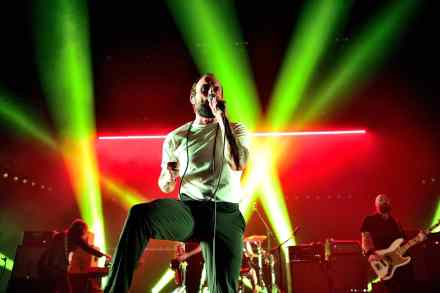
This year we must love Edinburgh for her soul rather than her looks. The EIF should be commended for making the best of a tricky hand, but the lodgings for its music programme bring to mind a fallen society beauty forced from her New Town villa into a rented bedsit. Edinburgh Park is a cathedral-sized tent in a business park, wedged between the city bypass and a shopping mall. The wooden floor planks buck and roll like a galleon deck. There is a roof but no sides and the Covid-quelling ventilation is, shall we say, robust. So yes, forget the optics. In 2021, content is everything. As it transpires, it proved a fitting spot in which to experience three artists engaged in similar quests to remould the traditional and familiar.

The central performances are tremendous: Glyndebourne’s Luisa Miller, reviewed

Classical

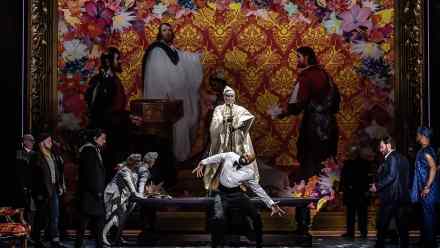
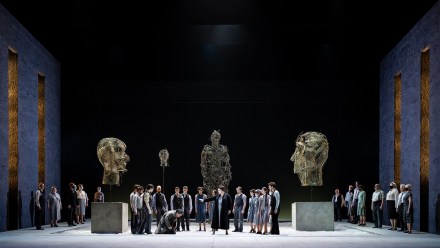
Opera buffs enjoy their jargon. We all do it, scattering words like ‘spinto’ and ‘Fach’ like an enthusiastic pizza waiter with an outsize peppermill. It’s principally a means of signalling that you’re part of the club. But occasionally it’s genuinely useful, and Glyndebourne’s new production of Verdi’s Luisa Miller had me thinking about the concept of ‘tinta musicale’, a term used to describe Verdi’s sense that each of his operas should have its own distinctive sonic colour. The late-summer warmth that suffuses Falstaff, for example, or the maritime translucence of Simon Boccanegra. Or take La traviata: the enervated violins of the prelude, the hectic brilliance once the curtain rises.

Captures the rapturous gaiety of the original: Globe’s Twelfth Night reviewed

Theatre

The new Lily Allen vehicle opens in a spruced-up terrace in the East End. Allen plays a self-satisfied yuppie, Jenny, whose cynical husband has invited two ghastly friends over for a bitchy booze-up. At first sight this looks like a Hampstead comedy from the 1970s but it’s a horror story, and it has a huge black hole at its core. A classic horror yarn should be driven by a single, powerful premise. In Ira Levin’s Deathtrap, a failing playwright has to bump off a talented rival to restore his fortunes. In Psycho, a bland motel is terrorised by a deranged and violent loner. Even Shakespeare dipped into the horror genre. In Hamlet, a vacillating prince is ordered to commit murder by his father’s ghost.

How we killed comedy theatre: Nigel Planer interviewed

Arts feature

Nigel Planer is on a mission to bring farce back to the West End. ‘There’s a lot of snobbery in comedy,’ he tells me when we meet at a hotel bar near the Old Vic. ‘People say, “Oh that’s comedy. It can’t have any meaning”.’ The actor and writer is still best known for playing Neil the hippie in the 1980s sitcom The Young Ones and he can recall a time when farce was a staple of London theatre. ‘I remember going along and really enjoying myself, you know, a nice big cast, actors falling over, characters treating someone differently because they think it’s someone else. All that stuff simply delights. But it’s become unfashionable.

Contains moments of spellbinding banality: Radio 4’s The Poet Laureate has Gone to his Shed reviewed

Radio

The interview podcast is a genre immoderately drawn to gimmicks, as the logical space of possible formats is gradually exhausted. The interviewee, quite often themselves a podcaster, might be, for example, invited to noisily eat lunch while nominating their top-five deceased childhood pets. The theory is that fanciful formats encourage the interviewee to open up. Under such conditions, the interview itself can come to seem incidental to the main event, the atmosphere chummy, comfortable, back-scratching, but fundamentally uninterested: you do my interview, I’ll do yours, no real questions asked.

Apocalypse, Seventies-style: BritBox’s Survivors reviewed

Television

When the apocalypse comes, I want it to be scripted by a 1970s screenwriter. That’s my conclusion after watching the first few episodes of Terry Nation’s landmark 1975 ‘cosy catastrophe’ series Survivors on BritBox. Everything was so much more innocent and charming back then, including the end of the world. Survivors establishes its MacGuffin in the opening credits: a montage which begins with a masked, enigmatic oriental man in a laboratory where he accidentally smashes a vial; we then see clips of him in a suit travelling through various airports, with passport stamps (New York, London, etc) taunting us from the past with just how easy it was back then to be a jet-setting international traveller.

An intensely quiet and soulful performance from Nicolas Cage: Pig reviewed

Cinema

What use does a fallen and corrupted world have for a man of integrity? This was not the question I had anticipated walking away with after viewing the new Nicolas Cage indie Pig, but much of the film, from Cage’s intensely quiet and soulful performance to the new ideas it has to offer a very old narrative, was a satisfying surprise. The film is ultimately a story of revenge, but it plays out in unexpected ways. Cage is Robin Feld, a man living off the grid with only a truffle pig and a recording of his deceased wife for companions and a trade in the luxury food item as an income. But when his cabin is invaded and he is attacked and his pig is abducted, he’s forced to con-front his old life as a chef in Portland to get her back.

Neither Tristan nor Isolde quite convinced: Glyndebourne’s Tristan und Isolde reviewed

Opera

Glyndebourne is nothing if not honest. ‘In response to the ongoing Covid-19 restrictions our 2021 performances of Tristan und Isolde will be presented as a concert staging, after the 2003 production by Nikolaus Lehnhoff’, says the programme, and what we get is not a full production but a compromise imposed by the peculiar circumstances of August 2021. The London Philharmonic Orchestra huddles on stage. Behind them the back wall glows and fades in washes of blue and pink; in front, a stepped apron extends over the redundant orchestra pit. The singers slip on and off from the wings or, in a basic but effective trick of lighting design, appear to materialise from the embracing darkness. It’s an approach to Wagner that can work well.

Homeric levels of misery: Paradise, at the Olivier Theatre, reviewed

Theatre

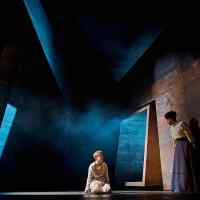
The National Theatre has given Sophocles’s Philoctetes a makeover and a new title, Paradise. This must be ironic because the location is hell on earth. The action starts in a dirt circle sprawling with smashed military gear where a group of plump female vagrants are waking up in a clutch of filthy old tents. They’re living on a Caribbean island which also houses a prison for migrants. In a nearby cave dwells an exiled Homeric archer, Philoctetes, who survives by eating squirrels which he kills with his handmade bow. A committed anti-vegan, Philoctetes shuns the plentiful rice, garlic and mangos that grow naturally in the tropics. Enter two British soldiers in contemporary battle fatigues, who want to track Philoctetes down. The Brits are called Odysseus and Neoptolemus.

Why I will miss our mighty cooling towers – and I suspect I am not alone

Arts feature

One afternoon earlier this summer we drove through Rugeley in Staffordshire. There, looming above the A51, were the cooling towers of the power station: a pinkish red, resembling terracotta, with curving convex sides, like modernist vases on a pharaonic scale. At 385 feet high, they were a little taller than the dome of St Paul’s Cathedral. We remarked on how surprisingly good they looked as we passed them on 4 June, en route to a spot in the Staffordshire countryside where we were going to stay. On 6 June there was a distant rumble like thunder but we thought little of it. However, that evening when we glanced at the horizon there was a gap where the towers had been.

A total mess: BBC2’s The Watch reviewed

Television

Last Sunday on Channel 4, a man called Eric Nicoli proudly remembered ‘the bravest thing I’ve ever done’. In November 1975, Rowntree was poised to launch the Trek chocolate bar. The packaging was ready, along with an advertising campaign featuring, for some reason, potholers. But as the company’s new product manager, Eric couldn’t rid himself of the niggling feeling that Trek was boring. So — and this is the brave bit — he went to the boss and said that Rowntree should think again. ‘You better be bloody right, young man,’ the boss replied. And with that, Eric returned to the drawing board where he came up with the name Yorkie and an advertising campaign featuring, for some reason, lorry drivers.

Sinatra, Bacon and a YouTube star: Edinburgh Fringe Festival round-up

Theatre

Sinatra: Raw (Pleasance, until 15 August) takes us inside the mind of the 20th century’s greatest crooner. The performer, Richard Shelton, catches Sinatra in confessional mode in the 1970s as he looks back on his chequered career. In the early days, a promoter suggested the stage name ‘Frankie Satin’ but his tough-minded mother, Dolly, vetoed the idea. The show’s best sections investigate the harrowing details of his tangled and doomed romance with Ava Gardener. Fame and wealth never sweetened Sinatra’s prickly character. ‘Drink is my worst enemy,’ he quips, necking whisky from a tumbler. ‘But, like the Bible says, you’ve got to love your enemies.

Why do I find sketch shows – even the better ones – so embarrassing and charmless?

Radio

On sketch shows, the wisdom once was that you needed a punchline. That is, a slightly hammy, summative sign-off to let people know that they had come to the end of any given bit, to help the audience keep its bearings. The rules changed when the team behind Monty Python, who hated writing that mugging final joke, discovered that you could simply cut to Graham Chapman wearing a dress in a field and saying in a stern voice: ‘And now for something completely different’ — and it turned out that this was not only just as good, it was actually quite a lot better. This is the problem with sketch shows: you can hear the aching labour of the actors and the writers trying to be funny (and when they’re particularly bad, you can hear them praying for it too).

The best Cold War thriller I’ve seen that I fully understand: The Courier reviewed

Cinema

The Courier is a Cold War spy thriller and the prospect of a Cold War spy thriller always makes my heart sink. There will be agents. There will be double agents and triple agents and maybe even quadruple agents. Is he working for our side while pretending to work for the Soviets as someone pretending to be working for us? After any Le Carré adaptation, for example, I also need debriefing in a wood-panelled room filled with cigarette smoke and there is still no saying I’ll emerge any the wiser. But The Courier isn’t like that. This is a damn good, explosively tense story that focuses on the friendship that develops between two men on opposite sides. And it is plainly wonderful.

Glorious: Bernardo Bellotto at the National Gallery reviewed

Exhibitions

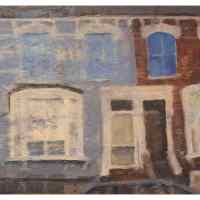
What is the National Gallery playing at? Why, in this summer of stop-start tropical storms, is the NG making visitors — visitors with prebooked, time-slotted tickets, mind — queue outside and in the rain? Why are its cloakrooms still closed and umbrellas forbidden? My husband had to stash his behind a balustrade on Orange Street. Why, with a 1:45 ticket, were we not through the doors until 2:05? Why make your harassed marshals, doing the best they can, shout ticket times and field questions from furious picture-fanciers? Lousy sort of freedom this. The V&A, by the way, is just as bad.

Hugely unmemorable: Billie Eilish’s Happier Than Ever reviewed

The Listener

Grade: C+ Time to get the razor out again — Billie’s back. The slurred and affected can’t-be-arsed-to-get-out-of-bed vocals. The relentless, catatonic introspection, self-pity and boilerplate psychological insights. The queen of sadgurls has a new album — and yes, of course, the title is the closest Billie has ever come to making a joke. Of course she’s not happy — that would be her schtick sold down the river. If Billie ever professed herself really happy her fans would quickly go elsewhere to slake their misery jones. Eilish has talent, along with the over-weening narcissism that comes with affording your every feeling a sense of great, dramatic import. But it is spread very thin here.

Hugely pleasurable – a vision of summer: Jennifer Packer at the Serpentine Gallery reviewed

Exhibitions

We need to talk about Eric. In Jennifer Packer’s portrait of her friend and fellow artist, Eric N. Mack sits on a yellow chair that might have been borrowed from Van Gogh’s bedroom. He’s wearing excellent odd socks, one pink to rhyme with his shoes, the other yellow matching his trousers and chair. But it’s Eric’s face that’s most compelling. Like the ‘Mona Lisa’, Eric’s expression is inscrutable. He might be thinking about what’s for tea, the crisis in pictorial representation or, quite likely, nodding off. This enigmatic quality is intentional. ‘When I painted Eric, I wanted accuracy, but I also wanted to privilege his subjectivity and privacy,’ says Packer.

A podcast that listens to what anti-vaxxers think rather than lecturing them

Radio

Work is our new religion. There are people whose primary job is writing listicles of celebrity gossip, illustrated with gifs from the Fast & Furious franchise, who refer to being a writer as a ‘calling’. If I think about this for too long my brain simply shuts down to protect itself. What we used to do for God we now do for our work. In a secular culture, it seems totally normal — admirable, even — to sacrifice the possibility of having a family, to give up all leisure time, to starve yourself or live on insane, totally made-up diets like intermittent fasting or paleo for the sake of your job as an Instagram beauty influencer or whatever. But to wear a habit and be celibate and fast out of a religious devotion? That must be a cult!

Switch over to Eurosport: BBC’s Olympic coverage reviewed

Television

I’ve not been allowed anywhere near the TV remote control this week because of some kind of infernal sporting event taking place in Japan. You may gather that I have mixed feelings about the Olympics: on the one hand, I like most of the competitors, who are so much more affable and modest (those delightful Gadirova twins!) than the overpaid, overindulged prima donnas who recently took part in the Euros. Also, it’s impossible not to get sucked into the drama of individual stories such as that of Beth Schriever, the humble, underfunded former teaching assistant who took gold in the women’s BMX.