Culture

Culture

The good, the bad and the ugly in books, exhibitions, cinema, TV, dance, music, podcasts and theatre.

Taking to the skies

Exhibitions

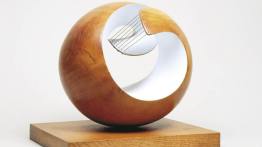
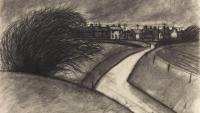
In the first retrospective of his work for nearly 40 years, Peter Lanyon (1918–64) is given the kind of recognition long his due. In the first retrospective of his work for nearly 40 years, Peter Lanyon (1918–64) is given the kind of recognition long his due. A major figure in the St Ives group, his work holds its own on an international stage even though it remains rooted in his native Cornwall. He was an inventive and innovative painter who conjured up the sensation of being in certain places and experiencing particular weather conditions. This was not an art bound to the earth’s surface, and it began by delving beneath it, with the Cornish miners, and increasingly rising above it — quite literally — into the air in a glider.

When Stone gets stick

‘I saw this goddam politician on your British television last night,’ says the film director Oliver Stone. ‘He was yapping about how he can’t cut the defence budget because of blah, blah, blah.’ Was it, by any chance, Liam Fox at the Tory party conference? ‘Something like that… I thought, this is so disgusting.’ His voice is dry and cool, but the words are angry. ‘This love of national security is insane,’ he continues. ‘If you build the foundation of your society on security, you’re going to be disappointed. People talk about terrorism: but if your entire national debate becomes about fighting terrorists, you lose. They win.

Imagine there’s no Lennon

True, we’d have lost some nice songs. But we might also be free of a great deal of today’s fatuous pop-star posturing Had he been spared a madman’s bullet in December 1980, as he left his apartment in New York, John Lennon would have turned 70 last week, a hypothetical event that was celebrated at the weekend by balloons, concerts, congregations and homilies the world over. It was also marked by the unveiling of a ‘John Lennon Peace Monument’ in Liverpool and the presentation of the Lennon Ono Grant for Peace in Reykjavik. Lennon’s was a tragic death, to be sure, and it is perfectly reasonable to mark this sad anniversary by recalling the gilded days of his youth. But let’s keep things in perspective.

Tales from Afar

More from Arts

If you heard Australian bluesman C.W. Stoneking’s first album, King Hokum, then you will know what to expect from his second: Jungle Blues. If you heard Australian bluesman C.W. Stoneking’s first album, King Hokum, then you will know what to expect from his second: Jungle Blues. If you didn’t, then let me point out that Stoneking is a prize mimic. With a banjo in his hands, and the wail of a Howlin’ Wolf or Robert Johnson in his throat, this 36-year-old (white) man (raised by American parents in an Aboriginal community) sets about recreating every lurch and inflection of 1920s blues and calypso music. The horns swoon, the drums shuffle — and you’d swear you can hear the crackle of old vinyl, dusty between its grooves.

Nice work, Zuck!

Cinema

The Social Network 12A, Nationwide The Social Network is a brilliantly entertaining and fascinating film about a subject in which I have absolutely no interest: Facebook. I could be no more surprised if, say, someone were to make a brilliantly entertaining and fascinating film about fish-gutting or car-tuning or being put on hold by the bank before finally being put through to someone you can’t understand. (I am thinking of outsourcing myself to Bombay, just to be similarly annoying.) But this hurtles along so smartly and masterfully the subject sweeps you up as does its main, knotty character: a man who cares nothing for money yet makes zillions while losing his only friend in the process.

Body language

More from Arts

The Dance Umbrella season has always been a unique window on international choreography, as well as a great platform for national talent. This year is no different, and the number of international visitors is delectably high. As always, blockbusters share the season with smaller but no lesser entities. Last week I went to see two from the latter category and was utterly intrigued, though not equally impressed. Those who have faithfully followed Phoenix Dance Company for the past decade might recall the Portuguese performance-maker Rui Horta and his somewhat mind-probing aesthetics. His Talk Show is a rather dramatic development of the formulae first seen and applauded in Phoenix’s performance of Can You See Me.

Bourgeois frippery

Theatre

Regime change at Hampstead Theatre. The era of special measures is over and Ed Hall, son of Sir Peter, has taken charge. Hall’s debut show is daring in its complete lack of audacity. Regime change at Hampstead Theatre. The era of special measures is over and Ed Hall, son of Sir Peter, has taken charge. Hall’s debut show is daring in its complete lack of audacity. Shelagh Stephenson’s new play Enlightenment is the sort of bourgeois frippery we were used to yawning through under the previous administration. We’re in a posh house in Angstead Garden Suburb where two yuppie liberals are struggling to cope with the disappearance of their gap-year son in south-east Asia. Mum consults a psychic. Dad invites a TV producer to make a shock-doc highlighting their plight.

Women of substance

Radio

Jude Kelly missed a trick when she set off in search of that very British creation, the battleaxe, for this week’s Archive on 4. Jude Kelly missed a trick when she set off in search of that very British creation, the battleaxe, for this week’s Archive on 4. The stage director and now head of the South Bank Centre in London gave us Ena Sharples and Hattie Jacques, Hyacinth Bucket and Thora Hird but no hair-rollered hyenas from the radio files. Maybe the typical battleaxe was just too loud, too mouthy to work as a caricature on air? Maybe Sharples needed her hairnet and hatchet face as visual props for her powerplay? On air, she would just have sounded like a screech owl, an accusation levelled at many a sharp-witted woman in ages past.

Back to basics

Television

One of the few professional stand-up comics I’ve met who wasn’t bitter, twisted, malign, graceless, grumpy, chippy, egomaniacal and slightly to the left of Stalin is Mark Billingham. One of the few professional stand-up comics I’ve met who wasn’t bitter, twisted, malign, graceless, grumpy, chippy, egomaniacal and slightly to the left of Stalin is Mark Billingham. We bonded at the Dubai literary festival earlier this year, and I liked him so much that I very nearly bought one of his bestselling crime thrillers.

French foray

More from Arts

One surefire sign of maturity is the acceptance that you have friends who are more talented than you are. I learnt that lesson early, which, considering my manifold shortcomings, was just as well, frankly. I have mates who are better practical gardeners than I am, and ones who are more creative garden designers. I like to think that this is not so much a source of deflation or envy as a spur to my ambition. The spur pricked recently in France. I had been invited by Clare Whateley, of French Gardens Today, to join a very jolly small party of knowledgeable gardeners who were visiting gardens in northern Brittany. I was particularly pleased because I had worked with two of them at the Royal Horticultural Society’s garden at Wisley in 1975.

THEATRE: Review – Broken Glass

It’s November 1938 and Sylvia, a paranoid Jewish woman in Brooklyn, is struck by hysterical paralysis.  But what’s really constricting her: fear of Germany’s Nazis or fear of her husband at home?   There’s something crude and jagged about Arthur Miller’s late play, Broken Glass, but in the Tricycle Theatre’s new production, it’s given a bright sparkle, thanks to a near flawless ensemble cast.  For Miller, as he told his collaborator David Thacker  the title Broken Glass signified not only Kristallnacht, which obsesses Sylvia, but also the moment in the Jewish marriage ceremony when the bridegroom shatters a glass goblet under his foot.

Arts debate: ‘Brutal and vulgar’

Arts feature

From the start, the combatively worded motion — ‘Time for the arts to stand on its own two feet and stop sponging off the tax-payer’ — came under attack in the Spectator arts debate at Church House last month. From the start, the combatively worded motion — ‘Time for the arts to stand on its own two feet and stop sponging off the tax-payer’ — came under attack in the Spectator arts debate at Church House last month. Speaking for the motion were Nigel Farage MEP, Tiffany Jenkins and Marc Sidwell; against were Ben Bradshaw MP, Matthew Taylor and the Culture Secretary Ed Vaizey, who called it ‘brutal, vulgar, left-wing, and hostile to excellence and quality’.

A place to dream

Exhibitions

As regular readers of this column will know, I am not an admirer of large exhibitions. The exhaustive is exhausting, and I refuse to believe that the general visitor can absorb the contents of a blockbuster show on a single viewing. Of course in these days of enforced leisure, more and more viewers are able to return to exhibitions (particularly if mounted by institutions of which they are members), though the time and expense involved deters those with jobs from making repeated visits. Vast exhibitions are designed to bring glory on the host museum and garner headlines as well as visitor numbers.

The Great Escape

Arts feature

Hollywood’s gloss on reality makes Olivia Glazebrook want to weep. Why can’t the Americans learn from the French? When Hollywood wants to captivate an audience of ‘grown-ups’ — those who have become desperate to escape the awful dreariness and suffering of their everyday lives — it shows them an alternative soothing world into which they can be plugged, for just a few hours. These poor suckers — we’ll call them ‘cinema-goers’ — yearn for this glossy, idealised world, which will be not a dream (because dreams can be puzzling and obtuse) but a calming vision, populated by beautiful characters who will look human, but not too human.

Enough is enough

Cinema

Really? This was necessary? Why? What’s the point? OK, I suppose revisiting Wall Street all these years later is timely, given the banking crisis and resultant global meltdown. Really? This was necessary? Why? What’s the point? OK, I suppose revisiting Wall Street all these years later is timely, given the banking crisis and resultant global meltdown. I’ll allow you that, albeit grudgingly. But this is celebratory in tone, rather than outraged. You will want to shake it and shout, ‘Goddamn it, get angry!’ It sheds no new light on anything. It says zilch. There is no point.

Family Circle

Theatre

‘We’re a beastly family, and I hate us!’ laments Sorel Bliss in Hay Fever. And at first it seems all four Blisses share that sentiment. ‘We’re a beastly family, and I hate us!’ laments Sorel Bliss in Hay Fever. And at first it seems all four Blisses share that sentiment. Each has invited a guest to their house in Cookham, and appears to be hoping not just for a weekend of feverish passion but also for a permanent escape: as much from themselves as from the others. When the guests arrive, however, the Blisses taunt and ignore them by turns. As for feverish passion, it seems readily transferable.

Visual tricks

Opera

Any seasoned opera-goer is likely to have had the experience of attending a performance where most things are right, but the overall impression is dismal; and also where, even more puzzlingly, most things are wrong but somehow the total effect is good or even overwhelming. To some extent it is relative to the work being performed, but not entirely; and to a much greater extent it depends on what your expectations are — I always try to have low ones, but expectations aren’t voluntary, alas. Last Sunday’s performance of Tristan und Isolde at the Royal Festival Hall was, emphatically, the second kind of occasion. It’s not hard to list what was wrong with it, and that will sound damning.

Sound barrier

Music

I had been waiting a while for it to happen, and happen it did last weekend. ‘Turn your music down,’ said my 11-year-old daughter from the next room. I had been waiting a while for it to happen, and happen it did last weekend. ‘Turn your music down,’ said my 11-year-old daughter from the next room. ‘I’m trying to think.’ At last the generation gap has asserted itself. She does like some of my music, although she increasingly leans towards showtunes and has far more interest in classical music than I had at that age. ‘It’s too loud,’ she clarified.

Faltering partnership

More from Arts

According to some, Onegin is the ultimate expression of John Cranko’s choreographic and theatrical genius. According to some, Onegin is the ultimate expression of John Cranko’s choreographic and theatrical genius. I disagree, for I think that other works are a much better testament to his unique creativity. But I like Onegin because it is one of those works in which choreography and acting go seamlessly hand in hand, thus creating a tension that makes one overlook and forgive much of the poor choreography — of which there is a good handful. That, though, is only when things work as they should. When they do not, the outcome can be dreary, like the performance I saw on the opening night of the new Royal Ballet season.

All about sex

Television

The Song of Lunch (BBC2) was a rum old go. Christopher Reid’s poem, about a publisher half-hoping to rekindle a past love affair over an Italian meal, was read out by Alan Rickman, who acted the publisher and recreated the lines on film. The Song of Lunch (BBC2) was a rum old go. Christopher Reid’s poem, about a publisher half-hoping to rekindle a past love affair over an Italian meal, was read out by Alan Rickman, who acted the publisher and recreated the lines on film. Thus, when the poet wrote, ‘he drinks until the ice rests on his upper lip’, you see the ice, actually resting on his upper lip!

Memory’s weird ways

Radio

‘She goes off to the Maldives. That’s all I can remember about her,’ laughed Alan Bennett as he struggled to recall the name of the Australian physiotherapist he’d invented for his TV play about Miss Fozzard and her feet. ‘She goes off to the Maldives. That’s all I can remember about her,’ laughed Alan Bennett as he struggled to recall the name of the Australian physiotherapist he’d invented for his TV play about Miss Fozzard and her feet. Bennett had volunteered to subject himself to a Mastermind-style grilling from Mark Lawson (for Radio 4’s Front Row) after one of the contestants on the TV quiz had chosen Bennett’s plays as his specialist subject.

An artist of the sinking world

Arts feature

Julian Perry (born 1960) paints images of genuine topicality in an immaculate high-definition realist style. Julian Perry (born 1960) paints images of genuine topicality in an immaculate high-definition realist style. His last show in 2007 dealt with the allotment sheds bulldozed by the relentless encroachment of the Olympic site. Since then he has been painting pictures of coastal erosion, visiting locations around England and composing hallucinatory images of deracination and loss. ‘Clifftop with Fridge Freezers’ was one of the first of the new series. I asked him to describe the subject.

Art fairs: Satellite superiority

Exhibitions

It is a critical moment for the Biennale des Antiquaires in Paris — and for the French art trade. It is a critical moment for the Biennale des Antiquaires in Paris — and for the French art trade. For this year’s edition of this most august art and antiques fair (which ended last week) — ostensibly celebrating its 25th anniversary — came as a real shock. It was not that the fair was poor; it was simply underwhelming. How can it be that this once peerless event is no longer distinguishable from any other good international fine art and antiques fair?

Liberating Visions

Exhibitions

Victor Willing (1928–88) is perhaps the least classifiable of the brilliant early-1950s Slade generation, which includes his wife Paula Rego. Victor Willing (1928–88) is perhaps the least classifiable of the brilliant early-1950s Slade generation, which includes his wife Paula Rego. So it is uniquely appropriate that this first major posthumous exhibition should be at the beautiful museum built in her honour and opened last year. Willing’s career is dramatically divided. In his twenties he was briefly successful with portraits and still-lives.