Culture

Culture

The good, the bad and the ugly in books, exhibitions, cinema, TV, dance, music, podcasts and theatre.

The Glory Days of Advertising

The More Doctors Smoke Camels Than Any Other Cigarette! advertisement is, I think, pretty familiar. Those were the days! Here's a terrific collection of splendid (and some not so splendid) ads from the Mad Men era (and some from before it). Among my tobacco-favourites: "Born Gentle"? Class. Don Draper would have been proud. Rightly so, too. Should have been accompanied by another ad making a "Born Free" case. Then there's this Marlboro gem: "You need never feel over-smoked" is a mild form of genius. Clearly this boy would grow up to be the Marlboro Cowboy. And, seasonally, this: It's true: smoking is fun! Finally, for pipe smokers everywhere: All gone the way of all flesh now, alas. [Hat-tip: Heresy Corner who makes a number of salient points too.

Fresh and feisty

Exhibitions

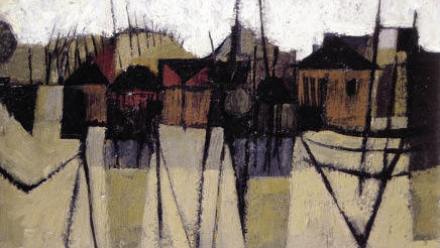
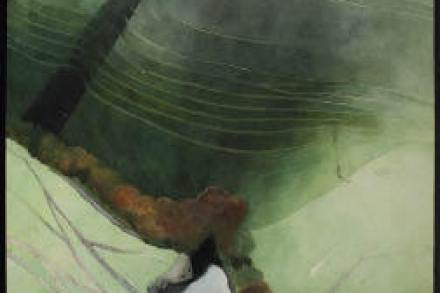
Harry Becker (1865–1928) is one of those artists too often dismissed as being of regional interest only, who feature but rarely in the art chronicles of the period. Harry Becker (1865–1928) is one of those artists too often dismissed as being of regional interest only, who feature but rarely in the art chronicles of the period. He is most widely known for his illustrations to Adrian Bell’s celebrated Suffolk trilogy — Corduroy, Silver Ley and The Cherry Tree — and it is worth noting that Becker’s pictures were matched to Bell’s prose after the artist’s death, though they seem to be made for each other in their near-perfect fit. Becker only moved from London to Suffolk in 1913, but he found there his perfect setting.

The art of giving

Arts feature

How will the arts world plug the funding gap? Igor Toronyi-Lalic investigates It’s an idea so simple in concept, so elegant in execution, so bursting with potential, that you kick yourself for not thinking of it yourself. ‘You put your project here,’ explains 28-year-old solicitor and budding internet entrepreneur Michael Troughton, scrolling down the front page of his flash new website. ‘And you put your money there.’ Even his cat comes to investigate. What Troughton is describing is WeFund.co.uk, the first British attempt to apply crowdfunding to arts financing. Barack Obama used crowdfunding for his 2008 presidential bid — that is, asking a lot of people to give a small amount of money.

Middle East meets West

More from Arts

The Islamic-art market has seen some changes since it emerged in the late-19th century. At that time, anything Middle Eastern was likely to be classified as ‘Persian’, while for most of the 20th century the preferred term was ‘Islamic art’. Now, it is ‘art of the Islamic world’, and the market is stronger than ever. Last month at Sotheby’s saw a new record for an Islamic weapon: almost £4 million for a dagger from 15th-century al-Andalus. The Islamic-art market has seen some changes since it emerged in the late-19th century. At that time, anything Middle Eastern was likely to be classified as ‘Persian’, while for most of the 20th century the preferred term was ‘Islamic art’.

Double diamond

More from Arts

Emanuel Gat’s Winter Variations is not just another male duet. It is also an intense dance piece which captivates viewers from the opening sequence with its unique interplay of movement, music and enthralling performance. Emanuel Gat’s Winter Variations is not just another male duet. It is also an intense dance piece which captivates viewers from the opening sequence with its unique interplay of movement, music and enthralling performance. Created in collaboration with Roy Assaf, who performs it with Gat, this new work explores the choreographic motifs and ideas first seen in Gat’s 2004 Winter Voyage. But you don’t need to be familiar with the previous creation in order to appreciate the sheer beauty of the new piece.

Fashionable folk

Music

I have never felt greatly inclined to grow a beard myself. (Not that I could ever manage the full naval Prince Michael of Kent. A rather precious goatee would probably be the limit of my facial hair-growing powers, and the contumely and derision it would surely attract from all right-thinking people obviously rule that out.) But pop music has recently entered one of its occasional beardie phases, as folk music not only gains new popularity, but also comes right back into fashion, on both sides of the Atlantic. In the US we have such bands as Midlake discarding the soft-rock stylings of their first album to go way down deep into late-1960s British folk-rock.

Spellbound

Opera

Jonas Kaufmann’s ascent to the position of the leading German lyric-dramatic tenor has been surprisingly gradual. I first saw him in Edinburgh in 2001, giving a Lieder recital in the Queen’s Hall, and was immediately astonished that I hadn’t heard of him before. For the next few years, I heard him there in more recitals, and in concert performances of Der Freischütz, Capriccio and culminating as Walther in Die Meistersinger in 2006. Jonas Kaufmann’s ascent to the position of the leading German lyric-dramatic tenor has been surprisingly gradual. I first saw him in Edinburgh in 2001, giving a Lieder recital in the Queen’s Hall, and was immediately astonished that I hadn’t heard of him before.

Rare voices

Music

The Church of England is not known for being tirelessly dogmatic in the face of shifting public opinion, just for being buffeted by it. One such shift in recent years has been how acceptable women are in the scheme of official worship. Clearly, the time of equal rights for women is upon us, yet the issue of female bishops drags on without resolution, much as the issue of female priests did before. There will eventually be a conclusion, and it will be an enlightened one, but for the moment tradition seems to be fighting yet another rearguard action. How is it so easily overlooked that the head of this Church is a woman? At least the papacy is consistent in matters of sex.

Trouble ahead

Cinema

This is, I should confess, not a film I meant to see. I meant to see Harry Potter, but turned up for the screening in the right place at the wrong time — a week early, I’m such a schmuck — and had to take what was showing, which was You Again, with the tag line: ‘What doesn’t kill you...will marry your brother.’ Instantly, I doubted the veracity of this — I can’t put my finger on what made me doubtful, I just felt it in my bones, and called my brother. ‘Jon,’ I said, ‘if I had athlete’s foot and it didn’t kill me, would you marry it?’ ‘No,’ he said. ‘And I’m already married to Mary, as you know.

Rallying cry

Television

Britain’s Trillion Pound Horror Story (Channel 4, Thursday) was unquestionably the most important programme that will appear on British television this year. Britain’s Trillion Pound Horror Story (Channel 4, Thursday) was unquestionably the most important programme that will appear on British television this year. Yes, even more important than Downton Abbey. The thing that really drove home just how important was the point, quite early on, where the Fawn turned to me and said, ‘Ohmygod! Where do we emigrate to?’ And it’s not as though the Fawn has ever been one of those irksome left-liberal wives who keeps undermining her husband’s thought-through right-wing wisdom with prissy right-on inanities based on nothing more solid than hormones. No, sirree.

Dramatic moments

Radio

Two dramas, two very different plots and personnel. One was political, the other intensely personal. Both were new, commissioned for radio, and defiantly worth paying the licence fee for. This was theatre at its riveting and thought-provoking best, and for which we as listeners didn’t have to leave the house or pay the price of a West End ticket. (The writers, meanwhile, will most probably not have a secure, cash-rich pension to look forward to, unlike the striking staff of the Corporation whose brief exodus produced a startling change to the morning routine just when it’s most needed at the beginning of dreary November.

The Poetry of Opposition

Hosannas are due to Danny Finkelstein and Iain Martin for finding and publicising this poem written by Chris Bryant, Labour MP for the Rhondda and a shadow justice minister. It's about The Cuts and why They Are A Bad Thing. Make of it what you will. Supine by Chris Bryant One arm stretched out behind my head, dipped back, I push the other through the water’s swirl And past my thigh before the next attack, Propelling me, with languorous aqueous grace I could not possibly repeat at pace. The rhythm of the stroke, as lengths unfurl, Calms down my daily work obsessions, Inspires free-style inquisitive reflections, About what happens when we all cut back. Above me, on the polycarb’nate roof A single leaf is twisting in the gale.

THEATRE: The Two-Character Play 

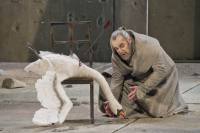
For ten years, Tennessee Williams poured his soul into The Two-Character Play.  It was the longest he ever spent working on one play and it would prove to be his most overtly personal expression. The Two-Character Play is the story of a hopeless brother and sister -  she riddled with substance abuse and delusions, he with despair – a dark fantasy of Williams’ relationship with his sister Rose, who was probably schizophrenic and was lobotomized against his wishes. For ten years, Tennessee Williams poured his soul into The Two-Character Play.  It was the longest he ever spent working on one play and it would prove to be his most overtly personal expression.

Apocalypse soon

Writing in the Irish Times, Morgan Kelly has denigrated the Irish government’s handling of the economy. Comparisons are often counter-factual – Irish politics is not divided along lines of left and right, and the Celtic Tiger was made of tissue paper. But, to English readers - servicing a colossal national debt with their punitive tax bills, facing crumbling house prices, waiting for the moment when mortgages become beyond the reach of all but the cash rich, and encumbered with billions in worthless global bank assets - it is a truly terrifying read. I urge CoffeeHousers’ to read the whole piece, but here is its essence: ‘By next year Ireland will have run out of cash, and the terms of a formal bailout will have to be agreed.

The creator of Downton

Those who have just enjoyed their final Downton fix of the year may be interested to read Taki's opinion of its creator, Julian Fellowes, in this week's magazine: It was during a von Bülow lunch in a St James’s club which is also mine, and I was seated next to a plump, bald man who smiled brightly and introduced himself as Julian Fellowes. ‘My wife is lady-in-waiting to Princess Michael of Kent,’ was his opening line. I burst out laughing but, in order not to be rude, I said nothing. My first thought was, is he bragging or complaining? Now that I have read an interview he gave to a tabloid newspaper, I guess it was the former. Amazing what fools men and women can make of themselves even in middle age.

Look and learn | 6 November 2010

Exhibitions

The greatest myth to affect Paul Gauguin (1848–1903) is the one of his own life: the romantic bohemian who escaped to the South Seas. The greatest myth to affect Paul Gauguin (1848–1903) is the one of his own life: the romantic bohemian who escaped to the South Seas. This has spawned numerous popular interpretations from novels such as Somerset Maugham’s Moon and Sixpence to films which include Lust for Life (though principally about van Gogh, it features Anthony Quinn as an unforgettable Gauguin) and the Danish–French Wolf at the Door (1986).

The accidental pianist

Arts feature

James Rhodes is being hailed as one of Britain’s most exciting new musicians, and has just signed a six-album deal. Here, he describes his journey from psychiatric hospital to concert hall So I’m sitting in what’s laughably called the Serenity Garden at a London psychiatric hospital that shall remain nameless, and one of the patients approaches me quietly and asks me what I do. Not what I’m locked up for (psych hospital etiquette forbids it), but what I do. She’s cute in an anorexic, self-harming kind of way, so I tell her that I play the piano. ‘What, like in a band?’ she asks, remarkably unslurred by meds. ‘No,’ I say. ‘Just me. I’m a concert pianist. Classical shit.’ ‘Wow! Seriously?

All in the mind | 6 November 2010

More from Arts

‘All of us have had the experience of confusion or bafflement when we repetitively forget something, do something that (consciously) we absolutely did not want to do or lose something important to us.’ Indeed. ‘Freud took these episodes seriously and showed how these apparently innocent events provide windows into our unconscious minds.’ Ah. ‘All of us have had the experience of confusion or bafflement when we repetitively forget something, do something that (consciously) we absolutely did not want to do or lose something important to us.’ Indeed. ‘Freud took these episodes seriously and showed how these apparently innocent events provide windows into our unconscious minds.’ Ah.

Static and staid

Opera

The Royal Opera last revived its production of Gounod’s Roméo et Juliette ten years ago, with what were then known as the lovebirds, Gheorghiu and Alagna, who imparted their own kind of glamour to the work. The Royal Opera last revived its production of Gounod’s Roméo et Juliette ten years ago, with what were then known as the lovebirds, Gheorghiu and Alagna, who imparted their own kind of glamour to the work. Nicolas Joël’s production badly needs some pepping up, since it is a desperately static and staid affair, as revived by Stephen Barlow, with some hyperactive running around on the part of the principals, while the chorus remain rooted to whichever spot they are on.

Hitting the wrong note

Music

When I told a young pianist that I was planning to write a piece about wrong notes he nearly tore my throat out. ‘I’d like to see you on stage in front of thousands of people trying to play Brahms’s Second Piano Concerto,’ he snapped. My friend hasn’t played the concerto yet and presumably he’s dreading it: even the most seasoned soloists describe its left-hand leaps as the equivalent of a motorcycle jump across the Grand Canyon. At any rate, he left me in no doubt that wrong notes are a seriously touchy subject for pianists. No other instrument commands such a thrilling emotional range — but its demands in terms of memory and motor skills are incredibly cruel. And we pianophiles are cruel, too.

Act of vision

Theatre

A wretched, stinking, mouldy, crumbling slice of old Glasgae toon has dropped on to the Lyttelton stage. Ena Lamont Stewart’s play, Men Should Weep, is an enthralling act of homage to her slum childhood and it follows the travails of the Morrison family, all nine of them, wedged into two filthy rooms in Glasgow’s east end. A wretched, stinking, mouldy, crumbling slice of old Glasgae toon has dropped on to the Lyttelton stage. Ena Lamont Stewart’s play, Men Should Weep, is an enthralling act of homage to her slum childhood and it follows the travails of the Morrison family, all nine of them, wedged into two filthy rooms in Glasgow’s east end. The play takes a while to ensnare your loyalty. The first act is a slack and linear piece of documentary reportage.

Life’s losers

Cinema

Mike Leigh’s latest film feels cruel and is uncomfortable to watch which isn’t necessarily a bad thing — you can’t expect cinema to offer only comfort and warmth, my dears; cinema is not like the lobby of a country-house hotel — but it does make it a rather horrible experience. Mike Leigh’s latest film feels cruel and is uncomfortable to watch which isn’t necessarily a bad thing — you can’t expect cinema to offer only comfort and warmth, my dears; cinema is not like the lobby of a country-house hotel — but it does make it a rather horrible experience. I did not enjoy Another Year although, as that may be its point, this does not mean it failed to achieve what it set out to achieve, if it set out to achieve anything.

The mighty Bausch

More from Arts

Sadler’s Wells Contrary to some claims, the late Pina Bausch did not invent Tanztheater. Contrary to some claims, the late Pina Bausch did not invent Tanztheater. Nor did all her productions stick to the mind-boggling aesthetic she is universally known and remembered for. Just look at the Iphigenie auf Tauris she created in 1974, shortly after being appointed director of dance for the Wuppertal theatres. Although the germ of what eventually bloomed as Bausch’s own Tanztheater is detectable in this dance–opera, pure dance still reigns supreme; the choreography is not as rhapsodic as it is in her later creations, and the only words one hears are those delivered — more or less beautifully — by the singers.

Moments of magic

Radio

The talk is that we’ve yet to experience the cuts that will have to be implemented to balance the nation’s books, but on the quiet, in suburban backstreets, behind closed doors, along cultural throughways and byways not often visited we know that they’re already happening, big time. The talk is that we’ve yet to experience the cuts that will have to be implemented to balance the nation’s books, but on the quiet, in suburban backstreets, behind closed doors, along cultural throughways and byways not often visited we know that they’re already happening, big time. Look no further than Sunday’s Classic Serial on Radio 4 for a signal of how they might affect what we’ll be listening to in future decades (not just years).

All over the shop

Television

I’m writing this near Ludlow, a town which has miraculously kept its centre. I’m writing this near Ludlow, a town which has miraculously kept its centre. On Saturday last there was a bustling market, selling hundreds of things you might actually want to buy. Around it were the shops: independent butchers with pheasants hanging above the door, bakers you had to hurry past because you’d want to buy enough cakes to bring on a heart attack, independent clothiers selling long-forgotten styles, none made for 7p an hour by children in Bangladesh. It all looked marvellous.

UnEnglish triumph

Exhibitions

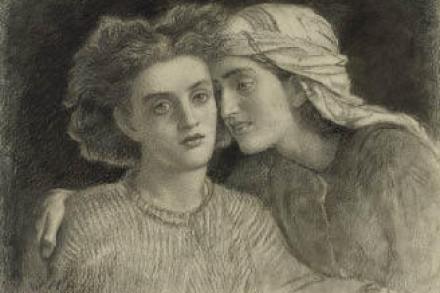
Sometimes an exhibition does what it says on the tin. The Pre-Raphaelites and Italy, the Ashmolean’s first major show post-revamp, is such an exhibition. Sometimes an exhibition does what it says on the tin. The Pre-Raphaelites and Italy, the Ashmolean’s first major show post-revamp, is such an exhibition. This fidelity is simultaneously its strength and its weakness. In a dazzling and far-reaching show, the exhibition organisers ultimately leave us questioning the nature and meaning not only of Pre-Raphaelitism but also of 19th-century concepts of Italy. This may be part of the exhibition’s achievement. It does not make for the easy ride exhibition-goers have come to expect from the Pre-Raphaelites.