Culture

Culture

The good, the bad and the ugly in books, exhibitions, cinema, TV, dance, music, podcasts and theatre.

The inspirational Suu Kyi

Radio

‘To be speaking to you through the BBC has a very special meaning for me. ‘To be speaking to you through the BBC has a very special meaning for me. It means that once again I am officially a free person,’ says Aung San Suu Kyi at the beginning of the first of her Reith Lectures on Radio 4 (Tuesday mornings). That connection between the BBC and the powerful, emotive word ‘freedom’, made by one of the most influential figures of the 21st century, has finally broken through to the politicians who are deciding on the fate of the World Service.

A Superbly Accessible Introduction

The text that codified the old legend of the learned man who sells his soul to the devil, Christopher Marlowe’s Doctor Faustus is one of the most influential plays in English history. It’s also one of the worst, from the point of view of the director. Scenes of intense religious struggle are intercut with the crudest of groundling comedy skits, in the most incongruous of juxtapositions. It may be Marlowe’s way of emphasizing that, under his silks, Faustus is as ineffectual and decayed as the world he inhabits, but it doesn’t do much for narrative flow.

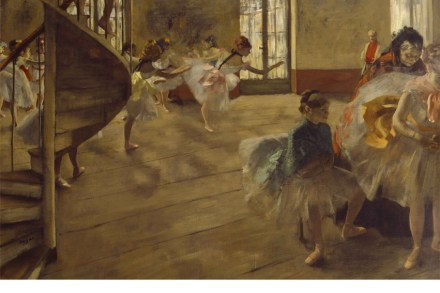
Lautrec’s dancing muse

Exhibitions

Henri de Toulouse-Lautrec (1864–1901), diminutive aristocrat and radical artist, was roundly travestied in John Huston’s 1952 film Moulin Rouge, and at once entered the popular imagination as an atrociously romanticised figure doomed for early death. Henri de Toulouse-Lautrec (1864–1901), diminutive aristocrat and radical artist, was roundly travestied in John Huston’s 1952 film Moulin Rouge, and at once entered the popular imagination as an atrociously romanticised figure doomed for early death. In fact, Lautrec was a tough and original artist, incisive and unsparing in his observation though also compassionate of the human comedy, a perfect painter of what then passed for modern life.

Viewpoint – Valuing culture

Arts feature

How should we measure the value of a work of art? Let’s take, for example, Michelangelo’s statue of David in the Accademia in Florence. How should we measure the value of a work of art? Let’s take, for example, Michelangelo’s statue of David in the Accademia in Florence. The 17ft marble figure attracts a huge number of visitors from all over the world, so the box denoting popularity gets a tick. The revenue box gets ticked as well because of the gallery’s entrance fees and the money spent on accompanying T-shirts and postcards. And also to be considered is the amount this piece would fetch in a hypothetical sale.

Growing old gracefully | 25 June 2011

Arts feature

Michael Tanner says that the Wigmore Hall, celebrating its 110th birthday, combines Edwardian grandeur with contemporary appeal The Wigmore Hall is so expert in advertising itself with taste and discretion that it manages to give the impression, simultaneously, of belonging to a previous era and thus having all the charm of the Edwardian age at its most appealing, while also showing its adaptability to contemporary technology and, at least as important, to contemporary music. Even its website contrives to have a winningly traditional air, while of course being completely up-to-date. Certainly the building itself, especially as you approach it, evokes the age in which it was constructed, 110 years ago, with its pointed glass canopy and its lengthy, narrow, mahogany-lined entrance hall.

Keeping an eagle eye

Exhibitions

The resident ravens of the Tower of London seem to croak a little louder these days. A few yards from their gathering spot, a golden eagle, traditional symbol of power and kingship, perches on a military standard, keeping watch. It is one of several exhibits on display at the newly refurbished Fusilier Museum in the Tower of London. The Royal Regiment of Fusiliers is a British infantry regiment named after the Fusil musket and raised at the Tower in 1685. In 1809, having routed the French in Martinique, the Fusiliers carried off the eagle insignia, which had originally belonged to the 82nd Regiment of the French Line, serving under Napoleon.

Radio rage

Radio

It’s the small things that drive you mad. It’s the small things that drive you mad. Every so often I start worrying about the big stuff — God, or lung cancer or early-onset Alzheimer’s — but a cigarette and a cup of coffee usually puts me right, even if it makes cancer a little more likely. What reduces me to a quaking heap is losing a bank statement or rushing off to work and discovering I can’t find my car keys. Such minor inconveniences make me feel as though my whole life is collapsing into chaos and the universe itself is out of joint. Cue whimpering self-pity. Just occasionally, however, I am able to summon up a manly rage, as happened the other day when I was contacted by the Today programme on Radio 4.

Schiller’s killer Miller

Theatre

I bumped into a restoration expert last week. ‘What’s new in heritage these days?’ I asked him. ‘Oh, same old, same old,’ he told me. I bumped into a restoration expert last week. ‘What’s new in heritage these days?’ I asked him. ‘Oh, same old, same old,’ he told me. In similar vein, London has been enjoying a spate of classic revivals on stage. At the Donmar a production of Schiller’s Kabale und Liebe (Intrigue and Love) has been barmily retitled Luise Miller. This promotes a minor character to the protagonist’s role. It incorrectly suggests the atmosphere of Romford roundabouts and roaring hen parties.

The real thing | 25 June 2011

Cinema

Bridesmaids isn’t directed by Judd Apatow, the reigning champion of American comedy, but it might as well be. Bridesmaids isn’t directed by Judd Apatow, the reigning champion of American comedy, but it might as well be. In addition to establishing himself as Hollywood’s leading comedy director — The 40-Year-Old Virgin, Knocked Up, Funny People — he is the industry’s most prolific auteur producer, having overseen a string of recent hits including Superbad, Forgetting Sarah Marshall and Get Him to the Greek.

Four by Two

Radio

All eyes will be on Andy Murray this week and perhaps next, but 50 years ago it was British women tennis players who were on top, with two of them fighting for the trophy in the final at Wimbledon. Christine Truman lost by a narrow margin but only after she fell and hurt her ankle. The victor, Angela Mortimer, afterwards declared, ‘Well, I knew I must make her twist ...It’s not a nice thing to do ...but I knew that if she has an injury I must exploit it.’ It was 1961. Who would have thought a woman could be so mercilessly competitive back then, years before the Pill and The Female Eunuch?

The glory of Rory

Television

I watched Rory McIlroy win the Open Golf last weekend (it was on Sky, so there was no Peter Allis and his reminiscences of clubhouse banter past; to my surprise, I missed him). What sportspersons need is ANF — attraction to non-fans. You might be a great admirer of, say, Ashley Cole, but his ANF-rating is near zero. Whereas David Beckham and George Best are way up there, appealing even to people who hate football. We try to like Andy Murray, but his ANF is poor, whereas Roger Federer is a near-perfect ten. Muhammad Ali had a terrific ANF, something no other boxer can approach.

Exciting New Adam Curtis* Project!

Better still, it's only three minutes long! Sadly the video can't be embedded so you'll have to hop over here to watch and enjoy it. Norm, mind you, was ahead of the game as far back as 2007. Previous Curtis-sniping here. *Not to be confused with that other Adam Curtis of course.

Art and place

Arts feature

James Hamilton says that regional art galleries are as evocative as local landscape It is always a cause for celebration when a new art gallery opens. There is something about the existence of its galleries that indicates a nation’s state of health. Lively galleries demonstrate that a nation is not so caught in the imperative to pay for schools and hospitals that it can’t, in the worst of times, present the fruits of the difficult lives and hard-won insights of painters and sculptors. In Wakefield, following the Turner Contemporary at Margate, the Hepworth opened on 21 May. That two relatively small towns in the English regions should be so blessed with expensive new kit in difficult times is wonderful to see.

Rubies and pearls

Music

It’s so rare I want to shout about anything from the rooftops but I do want to shout from the rooftops about The Ruby Dolls and their latest show, Rubies in the Attic, which takes cabaret and shapes it into something so original that if you can catch it you must. It’s so rare I want to shout about anything from the rooftops but I do want to shout from the rooftops about The Ruby Dolls and their latest show, Rubies in the Attic, which takes cabaret and shapes it into something so original that if you can catch it you must. The Dolls, whom I caught at the Riverside Studios in Hammersmith, are four women — Jessica Sedler, Tara Siddall, Jenny Grove and Susanna Fiore — who dress glamorously in the Forties style (oh, if only I could wear red lipstick like that!

The art of architecture

More from Arts

Leighton House, studio-home of Frederic, Lord Leighton (1830–96), is one of my favourite museums, and always a treat to visit. Leighton House, studio-home of Frederic, Lord Leighton (1830–96), is one of my favourite museums, and always a treat to visit. This small but informative exhibition about the architect George Aitchison (1825–1910) who built it is a well-timed adjunct to the V&A’s great survey of the Aesthetic Movement, in which he is also included. Leighton House is Aitchison’s monument, for there are few other buildings to his name, apart from imposing warehouses; certainly no churches or country houses.

Talented exports

Music

If the atmosphere in Tokyo at the moment is relatively radiation-free — it is said to be less than in the cabin of the aircraft which flew us here — the mood among the local population is one of getting on with life. If the atmosphere in Tokyo at the moment is relatively radiation-free — it is said to be less than in the cabin of the aircraft which flew us here — the mood among the local population is one of getting on with life. Apparently, they collectively held their breaths (and stopped drinking the water) for about 24 hours at the time of the earthquake, and then turned what was left of their attention to abusing the Tokyo Electric Power Company. One of the things they have got on with is attending concerts of Western music.

Shock and awe | 18 June 2011

More from Arts

Two weeks ago, the unsettling proximity of a perfectly sculpted naked male butt with my nose made me think again about the critic/artist relationship. I am talking, of course, about Dave St Pierre’s much talked about performance of Un peu de tendresse bordel de merde! at Sadler’s Wells, the raunchiness of which attracted and dominated the interest of various media for a few days. Chastely translated into ‘a little tenderness, for crying out loud’ — although a more appropriate translation would be ‘a little tenderness, for fuck’s sake!’ — the 2006 work, like many other examples of modern day dance- theatre, relies considerably on shock values, although it also includes some excellent choreography.

Academic loser

Theatre

Here’s the thing. This box-set business. Do you get it? I tried. I failed. But everyone else goes stark raving mad about these fictional treasures. Once you’ve sampled a box set (or boxed-set?), you’re hooked. Here’s the thing. This box-set business. Do you get it? I tried. I failed. But everyone else goes stark raving mad about these fictional treasures. Once you’ve sampled a box set (or boxed-set?), you’re hooked. You won’t be seen again until you’ve visited every corner of the dream kingdom encased within its magical walls. Didn’t happen to me, though. I sat through the first six minutes of The Wire in total bafflement.

Limited vision

Radio

It must be a fix, surely? The list of tunes voted online ‘by the nation’ as the eight favourite ‘discs’ we would like to be marooned with on a desert island is the dullest, most unoriginal, least controversial combination we listeners could possibly have come up with. It must be a fix, surely? The list of tunes voted online ‘by the nation’ as the eight favourite ‘discs’ we would like to be marooned with on a desert island is the dullest, most unoriginal, least controversial combination we listeners could possibly have come up with. The organisers of the poll as they studied its results must have been rueing the meeting when they came up with the idea of turning Desert Island Discs into an internet quiz.

Stuff of legend

Television

A few years ago, my at-the-time-quite-impoverished screenwriter friend Jake Michie told me about this brilliant new children’s TV series he’d dreamed up about the Knights of the Round Table. A few years ago, my at-the-time-quite-impoverished screenwriter friend Jake Michie told me about this brilliant new children’s TV series he’d dreamed up about the Knights of the Round Table. All the male leads would be young and pretty with boy band haircuts; Arthur would be a bit of a rugger-bugger lunk, while the real hero would be a younger Merlin who would use his magic to get his pal out of all sorts of scrapes; and obviously there’d be monsters and demons and suchlike to stop the kids getting bored. I was appalled.

Live truths

Arts feature

I met a Distinguished Old Rock Critic at a party recently, and was delighted to find that the obvious acronym didn’t apply. I met a Distinguished Old Rock Critic at a party recently, and was delighted to find that the obvious acronym didn’t apply. We chewed on this and that: CDs vs downloads, the blackboard-scraping quality of Chris Martin’s voice, and the unending need to hear the wonderful new music we know is out there somewhere but can’t seem to find. He is my senior by some years but the bug is still in his system, which I found encouraging. I met a Distinguished Old Rock Star recently, too, and he admitted he couldn’t give a monkey’s about any of it, and listened to as little as he could get away with.

Priestley values

Arts feature

The J.B. Priestley flame is kept alive today by his son Tom, who resides in the same Notting Hill flat he has lived in for more than 50 years. His father — novelist, dramatist, scribe, broadcaster, socialist (who died in 1984) — was glad that Tom, now 79, hadn’t chosen the same life. ‘The only time he came here to the flat he said, “Don’t be a writer. Dreadful business.”’ Tom is a retired film editor who manages the literary estate. He is the offspring of J.B.’s second marriage to Jane Bannerman, the divorced wife of the humorist writer Bevan Wyndham Lewis. There was one more Mrs Priestley after her — Jacquetta Hawkes, the distinguished but flinty archaeologist.

Identity crisis | 11 June 2011

Arts feature

Laura Gascoigne on how the Venice Biennale is searching for its place in art history Picture one of the world’s largest private yachts moored at the quayside of the Riva dei Sette Martiri, protected by a metal perimeter fence and a security detail. Now imagine two battered sea freight containers dumped in the shape of a tau cross on the quay just out of spitting distance of the security fencing. One is Roman Abramovich’s 115m superyacht Luna; the other is a Haitian pavilion showing Vodou-inspired sculpture by the Grand Rue Sculptors from the slums of Port-au-Prince. Welcome to the opening of this year’s Venice Biennale (until 27 November), bigger than ever and more deeply riven with contradictions.

Puccini’s riddle

Opera

Puccini’s last, incomplete opera Turandot is a work that I usually find disgusting and boring, so much so that it is one of the very few repertoire works that I avoid seeing. Puccini’s last, incomplete opera Turandot is a work that I usually find disgusting and boring, so much so that it is one of the very few repertoire works that I avoid seeing. However, having loathed Christopher Alden’s production of A Midsummer Night’s Dream so intensely a fortnight ago, I couldn’t resist the opportunity to see Turandot done by Welsh National Opera in his production of 1994, now revived, and I wasn’t disappointed: I found it disgusting and interesting. Alden and Turandot are made for one another.

It’s a set-up

Cinema

I’ll say this for DreamWorks: when it latches on to a concept it doesn’t let it go. I’ll say this for DreamWorks: when it latches on to a concept it doesn’t let it go. There have been four Shreks (with a spin-off, Puss in Boots, due in November), it’s preparing a third Madagascar, it has begun work on a sequel to How to Train Your Dragon and now this, Kung Fu Panda 2, and so should any of these films feel like more of the same, it’s probably because they are more of the same. As it happens, I didn’t see the first Kung Fu Panda — God must have been feeling kindly towards me that week — but this still feels like more of the same. How does that work?