Culture

Culture

The good, the bad and the ugly in books, exhibitions, cinema, TV, dance, music, podcasts and theatre.

Never say goodbye

Arts feature

Michael Henderson considers the perennial appeal of Bob Dylan Bob Dylan turns 70 next week, and from Duluth to Derby they will blow out the candles. The Minnesotan troubadour, who rolled into New York the year Kennedy became president, will pay no attention. As he wrote in one of his better songs, ‘Me, I’m still on the road, heading for another joint.’ Like Ken Dodd, a different kind of minstrel, he will stop performing only when they put him in a box. It would not be unkind to say he has been crooning like a 70-year-old for some while. His voice, which was never an instrument of beauty, lost whatever shape it may have had at least a decade ago.

Read all about it

Exhibitions

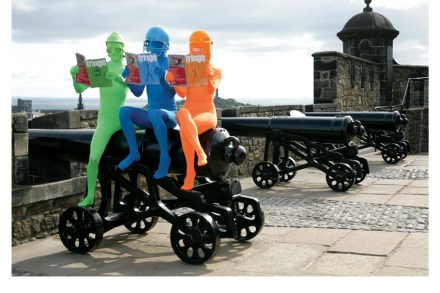
As newspapers are consulted increasingly on screen, and newsprint is all set to become a thing of the past, artists are turning their attention to this endangered medium. The Irish Expressionist painter Michael Kane (born 1935) has produced a provocative series of 100 paintings in ink, acrylic paint and collage, done on newsprint magazine pages taken mostly from the Irish Times (see above). The results are witty and moving, powerful comments on the age-old imperatives of humanity, acted out against the media stories and features of yesterday. Kane responds to the pictures and headlines he’s painting over, either as shapes or narratives, juxtaposing and repositioning to good effect. Man and the city is his great theme.

Family at war | 21 May 2011

Theatre

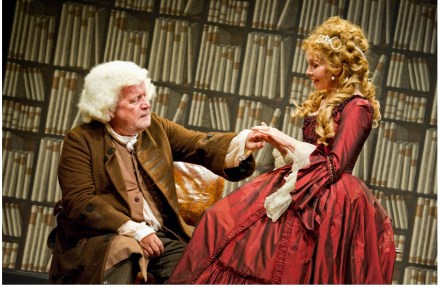
Edward Albee doesn’t like the word ‘revival’. His plays aren’t dead, he says, just lurking. His 1966 drama A Delicate Balance has been coaxed back into the limelight by James Macdonald in a sumptuous new version starring Penelope Wilton and Imelda Staunton. Edward Albee doesn’t like the word ‘revival’. His plays aren’t dead, he says, just lurking. His 1966 drama A Delicate Balance has been coaxed back into the limelight by James Macdonald in a sumptuous new version starring Penelope Wilton and Imelda Staunton. We’re in a New England mansion whose unshowy opulence is brilliantly suggested by designer Laura Hopkins. The chairs are elegant, costly and fading. The shelves are neatly crammed with dilapidated classics.

Spark of the divine

Opera

With its new production of Janácek’s last and in some ways most intractable opera, From the House of the Dead, Opera North shows once more that it is the most intelligently adventurous company in the UK, using its money where it is most needed: not on elaborate and perverse staging, but on high-class soloists and a small but excellent chorus, and an orchestra that can rival any in the country.

Incomparable Verdi

More from Arts

Call me biased, but I believe that my illustrious compatriot Giuseppe Verdi composed ballet music like no one else. It is a pity he never felt like penning a full ballet score, and limited himself to composing balletic interludes for his glorious operas. As demonstrated by the work of eminent scholars, he possessed the unique ability to mentally choreograph a ballet. His approach to ballet music thus started with a detailed visualisation of the action, which fed into the unique innovative fluidity of his balletic compositions. Take, for instance, the complex Peregrina ballet, composed for the Paris Opéra staging of Don Carlos. The demands of creating a work that would suit the hierarchy of the corps de ballet — i.e.

Crowded house

Music

In ‘Poetry of Departures’, in which Philip Larkin imagines escaping his existence as a librarian for a life of wild daring and adventure, he writes: We all hate home And having to be there; I detest my room, It’s specially-chosen junk, the good books, the good bed. In ‘Poetry of Departures’, in which Philip Larkin imagines escaping his existence as a librarian for a life of wild daring and adventure, he writes: We all hate home And having to be there; I detest my room, It’s specially-chosen junk, the good books, the good bed. And my life, in perfect order. It is, he concludes, ‘reprehensibly perfect’. I wish I could say my life was so well organised.

Object lesson

Radio

What are we supposed to make of those odd pictures of Osama bin Laden sitting crouched in a dingy, undecorated concrete room watching something blurred on a small TV screen? Is this really the face of jihadist evil? These were the questions behind this week’s provoking 15-minute drama in the From Fact to Fiction slot on Saturday (Radio 4). What are we supposed to make of those odd pictures of Osama bin Laden sitting crouched in a dingy, undecorated concrete room watching something blurred on a small TV screen? Is this really the face of jihadist evil? These were the questions behind this week’s provoking 15-minute drama in the From Fact to Fiction slot on Saturday (Radio 4).

Big Brother Beeb

Television

For the past few weeks, unnoticed by all but the most sharp-eyed critics, BBC1 has been running a Celebrate Communitarianism season. The first programmes were: Envy of the World!!!, in which children at Great Ormond Street hospital spent a week being forcibly denied vital drug treatment. Then, in a touching scene right at the end, just as they were all on the brink of death, a big pink bunny with NHS printed all over his fur came hopping in with all the medicines and dialysis machines they needed, accompanied by Sir Jimmy Savile saying, ‘Now then, now then. As it ’appens, I have fixed it for YOU to understand why it is we have the best healthcare system in the world.’ So You Think You’re Hard Enough?

Peanut Tweeter

Pretty much my new favourite thing: Peanut Tweeter. Random tweets from around the world inserted into not-wholly-random Peanuts galleries. Weirdly cool and fun. Hurrah for the internet. Thus: And: Many more here.

Vocal heroes

Exhibitions

Foundling Voices at the Foundling Museum in London’s Bloomsbury (until 30 October) is the fruit of an oral history project that recorded the memories of 74 men and women (the youngest is now 68, the oldest 98) born to unmarried mothers who were placed as babies in the care of the Foundling Hospital Schools in the first half of the 20th century. Foundling Voices at the Foundling Museum in London’s Bloomsbury (until 30 October) is the fruit of an oral history project that recorded the memories of 74 men and women (the youngest is now 68, the oldest 98) born to unmarried mothers who were placed as babies in the care of the Foundling Hospital Schools in the first half of the 20th century.

American view – Sword of controversy

Arts feature

‘I’ve refused to become a prisoner of “Piss Christ”,’ said the photographer Andres Serrano, referring to his 1987 photograph of a crucifix submerged in a glass filled with urine. ‘I’ve refused to become a prisoner of “Piss Christ”,’ said the photographer Andres Serrano, referring to his 1987 photograph of a crucifix submerged in a glass filled with urine. But the fact remains that he has become a very wealthy prisoner of that work.

Power of invention

Exhibitions

Lorenzo Lotto’s portraits alone should have secured him a place in history as a major Renaissance painter. Lorenzo Lotto’s portraits alone should have secured him a place in history as a major Renaissance painter. Yet, ironically, while his works continued to be admired, his name was all but forgotten. This paradoxical state of affairs came about because Lotto suffered from a steady series of posthumous misattributions, his works being assigned to the most bafflingly diverse range of other artists from Giorgione, Pordenone, Titian, Tintoretto, Dosso Dossi and Veronese to Perugino, Leonardo, Andrea del Sarto, Holbein, even Van Dyck, and an obscure 17th-century German Baroque artist Johann Carl Loth, known in Italy as Carlotto.

Parisian perspectives

Exhibitions

In 1879, two young brothers moved into a new fifth-floor apartment at no. 31 Boulevard Haussmann, overlooking the Opéra. Flush with inheritances from their father’s army bunk business, Gustave Caillebotte, 31, and his brother Martial, 26, were exactly the sort of children of the Second Empire for whom these new Parisian mansion blocks had been built. In 1879, two young brothers moved into a new fifth-floor apartment at no. 31 Boulevard Haussmann, overlooking the Opéra. Flush with inheritances from their father’s army bunk business, Gustave Caillebotte, 31, and his brother Martial, 26, were exactly the sort of children of the Second Empire for whom these new Parisian mansion blocks had been built.

Portraits of a marriage

Arts feature

Andrew Lambirth on the special relationship between the artists Zoran Music and Ida Barbarigo that is explored in an exhibition that shows their work together for the first time in more than half a century At the Estorick Collection, a modest north London townhouse, there is until 12 June a most engaging exhibition devoted to two artists, husband and wife, whose work is not particularly well known in this country, though both are recognised and celebrated internationally. Ida Barbarigo (born Venice 1925) first met Zoran Music (1909–2005) at an exhibition of his paintings in Trieste in the spring of 1944. Their burgeoning friendship was interrupted when Music was arrested by the Nazis, who first accused him of spying and then wanted to recruit him.

Cut to the chase

Cinema

As Attack the Block is being touted as ‘the new Shaun of the Dead’ I expected a light-hearted romp rather than something quite bloody and nasty, although this does, at least, come in at a highly manageable 88 minutes. As Attack the Block is being touted as ‘the new Shaun of the Dead’ I expected a light-hearted romp rather than something quite bloody and nasty, although this does, at least, come in at a highly manageable 88 minutes. (Next week’s fourth Pirates of the Caribbean film is 140 minutes, can you believe, but don’t worry, I’m already in training for the boredom. I paired socks all morning, will be watching paint dry this afternoon and, just to make sure, I’m setting off tomorrow for a camping trip to Wales.

Bono without the jokes

Theatre

I rarely visit the Jermyn Street theatre because it’s too nice. I rarely visit the Jermyn Street theatre because it’s too nice. A small, raffish space just off Piccadilly, it has plush crimson seats and good-natured staff who never to fail to press a welcoming glass of claret into my hand. To criticise one of their shows would feel like abuse of hospitality. So in discussing Anthony Biggs’s production of Ibsen’s late play Little Eyolf let’s focus on the positive. The costumes are nice. Now we can move on. Though written when he was in his mid-60s, the play finds Ibsen in suicidal teenager mode and taking a perverse delight in cramming every scene with wrist-slashing reversals of fortune.

Double toil and trouble

Theatre

‘Shakespeare’s Lost Play Re-imagined’, thus Gregory Doran’s subtitle to Cardenio. The play appears to have been lost in the Globe fire of 1613, but why should the RSC’s chief associate director have wanted to ‘re-imagine’ and stage it as the inaugural production in the refurbished Swan? ‘Shakespeare’s Lost Play Re-imagined’, thus Gregory Doran’s subtitle to Cardenio. The play appears to have been lost in the Globe fire of 1613, but why should the RSC’s chief associate director have wanted to ‘re-imagine’ and stage it as the inaugural production in the refurbished Swan?

Moving with the times

Music

It is inevitable that a festival the size of the Proms should become a showcase not just for the artists taking part, but also for the way classical music is perceived more generally. There would be no point in a public services’ provider such as the BBC launching such an enterprise every year if it didn’t deliver what people wanted. And indeed it is clear that it matters very much to the BBC how many people do actually attend these concerts: the blurb is as full as ever of figures showing how last year was a ‘record-breaking’ year; and now how this year there were ‘376 tickets sold every minute during the first hour of BBC Proms booking’. Buzz, buzz, buzz.

Cartoon counselling

Television

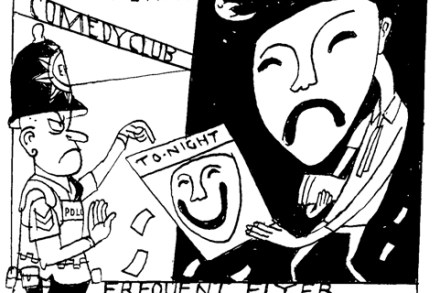
The Trouble with Love and Sex (Wednesday, BBC2) was extraordinary and quite successful. They took two couples plus one lonely single chap, recorded them talking to counsellors at Relate (formerly the Marriage Guidance Council, following the same rule by which the Royal Association for the Protection and Furtherance of Deaf Persons would become Eh?) and then turned the resulting dialogue into cartoons, so you heard their real voices but saw only drawings of people who didn’t look like them. These days, when people will suffer almost any humiliation to get on television, I am sure they could have found folk who would eagerly have appeared on camera to talk about the most intimate details of their marriage. But it wouldn’t have worked so well.

Cut short

Radio

‘She hung up and ended the interview,’ said John Humphrys on Saturday morning’s Today programme (Radio 4), sounding rather bemused. ‘She hung up and ended the interview,’ said John Humphrys on Saturday morning’s Today programme (Radio 4), sounding rather bemused. Had he really been cut off mid-round? The battle not yet won. He’d just been talking to Reem Haddad, director of Syrian state television and also, or so the BBC’s website declares, a spokesperson for the Syrian administration (an odd combination of roles, one might think). Haddad had questioned Humphrys’s use of the number ‘500-odd’ persons as having been killed by state troops during the current uprising in Homs and Deraa.

Free spirit

Exhibitions

Joan Miró (1893–1983) was a great imaginative artist and a pure painter of genius. Joan Miró (1893–1983) was a great imaginative artist and a pure painter of genius. He produced a huge body of work over a long life, and this excellent selection of it transforms the uninspiring galleries at Tate Modern, which have rarely looked so good. This exhibition offers the political interpretation. You can see Miró as a surrealist, as a formalist or as a political artist. Actually, he was none of these, but allowed each to touch upon the wellsprings of his creativity and have some sort of relationship with his art.

Breaking the spell

Opera

Fidelio, once regarded as an uncomplicated celebration of what its title suggests, and of freedom, especially political freedom, has become a problem work, and most productions of it amount to uninterestingly complicated attempts to circumvent issues which shouldn’t have been present in the director’s mind in the first place. Fidelio, once regarded as an uncomplicated celebration of what its title suggests, and of freedom, especially political freedom, has become a problem work, and most productions of it amount to uninterestingly complicated attempts to circumvent issues which shouldn’t have been present in the director’s mind in the first place.

Lost in space | 7 May 2011

Theatre

The RSC isn’t limited to Shakespeare. The RSC isn’t limited to Shakespeare. It’s also one of the richest and most prolific fringe operations in the country. ‘We have between 30 and 40 writers working on plays for us at any one time.’ Golly. Some Stratford bigwig wants to tell the tale of the Russian space programme so a Casualty writer, Rona Munro, has been hired to knock out a script. The programme note is an act of contrition. ‘I have had to take some glaring liberties with time and space and imagined events,’ Munro confesses. A strange approach to scientific history. ‘I ask forgiveness of the dead,’ she goes on, ‘and the indulgence of the living, some of whom have been fictionalised.’ OK, love.

Volume control

Music

Thousands of years ago, in or about 1977, I remember reading the intemperate jazzer Benny Green writing about Genesis, whose years of commercial success were just beginning. Green was not impressed. ‘It’s all very loud bits and very quiet bits,’ he said, or words to that effect. You can just imagine his customary wasp-chewing grimace of lofty contempt. But then everyone over a certain age hated pop music in those days, and senior jazzers were often wheeled out to express the silent majority’s view. Green’s comment hit home with me partly because, at the time, I adored Genesis, and partly because he was right. It was all very loud bits and very quiet bits. That was the fun of it.

One man and his dog | 7 May 2011

Cinema

My Dog Tulip is a tender and exquisite animation about one man and his dog which gets as close to what it is to love dogs as I’ve ever encountered, and goes a considerable way to making up for what dog-lovers have had to put up with at the cinema in recent years (Hotel for Dogs, Beverly Hills Chihuahua, Marley & Me; utter tripe). My Dog Tulip is a tender and exquisite animation about one man and his dog which gets as close to what it is to love dogs as I’ve ever encountered, and goes a considerable way to making up for what dog-lovers have had to put up with at the cinema in recent years (Hotel for Dogs, Beverly Hills Chihuahua, Marley & Me; utter tripe). This is based on the 1956 memoir by J.R.