Culture

Culture

The good, the bad and the ugly in books, exhibitions, cinema, TV, dance, music, podcasts and theatre.

Måns Zelmerlöw’s ‘Heroes’ shows why Sweden rules the pop world

This is a blog written after the first screening of Måns Zelmerlöw's Heroes, which went on to win the Swedish nomination and the 2015 Eurovision Song Contest. The world’s most-watched cultural event is some time away, but for Eurovision affectionados the entertainment has started already. Britain and Sweden are the continent’s two greatest exporters of pop music, but the UK Eurovision contestant is annointed by the BBC whose institutional snobbishness and soft xenophobia prevents it from understanding the contest. Sweden asks Swedes to choose from one of 28 entries in a six-stage event called Melody Festival, now in full flow. For MelFest, a song starts with songwriters.

Harry Potter star Rupert Grint makes a million

Since finishing filming Harry Potter, Rupert Grint has struggled to match the success of his former co-stars Daniel Radcliffe and Emma Watson in the acting world. The actor received mixed reviews for his recent turn on Broadway in  It's Only a Play, with the Washington Post claiming his performance exhausted 'the comic possibilities'. However, Mr S is happy to reveal that while his acting credentials may have taken a beating of late, financially the 26-year-old thespian is still sitting comfortably. According to annual reports posted on Companies House today for his company Clay 10 Limited, the actor has made a profit of  just under £1.1 million for the year ending August 2014.

The Spectator declares war on bad public art

Arts feature

Like peace, love and lemon-meringue pie, ‘public art’ seems unarguably attractive. Who but a philistine curmudgeon would deny the populace access to the immediate visual thrills and the enduring solace of beauty that the offer of public art seems to promise? Public art is surely a democratic benefit. Never mind that in the past century its most forceful expression was the grim and malignantly deceitful narratives of Soviet socialist realism, with their ruddy-faced, grinning and buxom tractor drivers disguising a more real reality of starvation, intolerance and torture. Public art is here to be enjoyed at a desolate piazza near you. And then you begin to think about it. Has public art ever achieved any level of popular approval or intellectual respect?

Don’t mock Elvis’s style – he was ahead of the curve

Exhibitions

In the giftshop at the new Elvis exhibition at the Dome, you can buy your own version of his flared white jumpsuits. I can’t think of anyone who could wear one and not look ridiculous — particularly if they had a bit of a weight problem. But Elvis, who would have turned 80 this year, managed to pull it off. This selection of the best Elvisiana from Graceland is full of the sort of kitschy excess that would sit so awkwardly on anyone else: his outsized solitaire diamond ring, the gold phone by his bedside table, the Harley-Davidson golf carts he used to rocket through Graceland’s grounds.

Sculpture Victorious at Tate Britain reviewed: entertainingly barmy

Exhibitions

In the centre of the new exhibition Sculpture Victorious at Tate Britain there is a huge white elephant. The beast is not, I should add, entirely colourless. On the contrary, it has a howdah richly decorated in gold and green, and numerous trappings, and tassels covering its pale grey hide. Its whiteness is entirely proverbial. After all, what can you do with a porcelain pachyderm, standing over seven feet tall? The Victorian period, a text on the wall proclaims, was ‘a golden age for British sculpture’. This is perfectly true, in the sense that a colossal amount of the stuff was turned out during Victoria’s reign.

Paul Mason’s diary: My Greek TV drama

Diary

It’ll be a Skype interview, says the producer from Greek television, and not live. In TV-speak that usually means not urgent and not important, but I’ve become vaguely interesting to Greeks because of the ‘Moscovici draft’ — a doomed attempt to resolve the crisis, leaked to me amid denials of its existence. The interview goes on a bit and the tone is deferential. At the appointed time, I fire up Greek television to see how many clips they’ve used. Instead of me, a panel of five bearded men in an expansive studio are conducting an earnest preview of my interview.

Small things in the cathedral

Poems

A place to see the little things between the monuments and tombs. As in the chapel of St Gabriel, a pencil. Here they are, behind the obvious. Next to the chapter house, a cupboard with a bowl, four toilet rolls. How small things quietly wait, make us forgivable. Inside the vestry, just inside the door, an iron.

The dos and don’ts of the Russian art scene

More from Arts

They’re doing fantastic deals on five-star hotels in St Petersburg the weekend the Francis Bacon exhibition opens at the Hermitage. With tensions between Russia and the west at their highest since the Cold War, ‘no one’, I’m told, wants to come here. No one, that is, except large numbers of elderly but well-heeled people from the Norwich area, many of them trustees and friends of the University of East Anglia’s Sainsbury Centre for Visual Arts — co-organisers of the exhibition — who have flown out here for the gala opening. If 2014’s UK-Russia Year of Culture passed virtually unnoticed for political reasons, the western visitor won’t experience the slightest sense of tension on the placid streets of St Petersburg.

The Boy Next Door reviewed: a terrible new J-Lo movie that’s disturbingly enjoyable

Cinema

Stateside critics, who panned Jennifer Lopez’s new film The Boy Next Door on its US release last month, may be unaware of the ability of the British to enjoy a film so bad it’s almost good. I suspect many Brits will shamefacedly delight in this so-called erotic thriller’s camp silliness, its truly dreadful script and its almost mockingly implausible premise. This is a film where a bespectacled Jenny from the Block plays a classics teacher (yes) who receives a pretty copy of Homer’s 3,000-year-old poem ‘The Iliad’ as a gift and quite sincerely exclaims, ‘Wow, is this a first edition?’ How can you follow a gem like that? The answer is with many more inadvertent jokes of a similar ilk, made all the funnier for their intended gravitas.

Muswell Hill reviewed: a guide on how to sock it to London trendies

Theatre

Torben Betts is much admired by his near-namesake Quentin Letts for socking it to London trendies. Letts is one of the few individuals who enjoys the twin blessings of a Critics’ Circle membership card and a functioning brain so his views deserve serious attention. The title of Betts’s 2012 play Muswell Hill shifts its target into the cross hairs with no subtlety whatsoever. Curtain up. Married couple, Jess and Mat, are nervily tidying their yuppie dream home in expectation of supper guests. Jess is a sex-bomb accountant. Mat is a blankly handsome scribbler whose debut novel keeps getting rejected. Then a missile strikes. Mat casually mentions his acquaintanceship with an Australian electrician whom Jess has been secretly entertaining. Tense silence. The doorbell rings.

A legendary piece of iconoclastic dance returns. Does the piece still stand up?

More from Arts

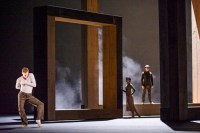
Funny how things turn upside-down with time. A work of contemporary dance that made an iconoclastic splash decades ago is revived today, exactly as it was, as if it were a museum piece. Yet more long-standing dance traditions — such as flamenco and circus — are constantly being remodelled. The contemporary work is that legendary 1987 invention of Eurocrash by the Belgian dance-inventor Wim Vandekeybus, What the Body Does Not Remember. The icons it trashed included rules about the place of grace in dancing, even the place of knowledge — Vandekeybus was a photographer and experimental theatre performer when he made this, his first dance piece, never bettered. Those icons have had boots in their faces for a generation since, so does this piece stand up?

There’s nothing wrong with getting into Thomas Tallis on the back of Fifty Shades of Grey

Music

Great works of art may have a strange afterlife. Deracinated from the world that created them they are at the mercy of what people think is important centuries later. Nothing shows this more clearly than the contribution that Tallis’s ‘Spem in alium’ has made to Fifty Shades of Grey. In case you are none the wiser, ‘Spem in alium’ is probably the most complex piece of music to come from the 16th century, and just possibly from any century. Written for 40 independent voices, it is unlikely to be sung with every note in place, though any sort of approximation shows just how majestic it is. Whether this was in the mind of E.L.

Critical on Sky1 reviewed: a new medical drama where everyone radiates an unusual degree of competence and concern

Television

Sky1’s new hospital drama Critical (Tuesday) can’t be accused of making a timid start. Within seconds, an urgent request had come over the loudspeaker system for ‘the trauma corps’ to head to the emergency department, causing the main members of the cast to sprint down various corridors at impressive speed. Meanwhile, a patient was briskly wheeled to the same department from a helicopter on the roof, pausing only to cough up blood all over the lift. Moments after that, the trauma corps were already exchanging the kind of rapid-fire medical speak — ‘Dullness to percussion on the left side!’— that most viewers mightn’t entirely comprehend but that clearly translates as variations on the phrase, ‘Uh-oh’.

The pleasures and perils of podcast listening

Radio

No phrase is better calculated to tense the neck muscles of a regular podcast listener than ‘We have something special for you now.’ Having your radio shows downloaded to your phone, music player or computer, rather than plucked out of the air the old-fashioned way, immediately grants the listener a great deal of extra freedom: you choose the feeds to which you subscribe, you decide which episodes to hear and in which order. But it also demands from the listener a measure of extra trust, or at least a ruthless readiness to skip, because what a producer puts on a feed can vary much more than in the scheduled-to-the-second world of broadcast radio.

Daffodils

More from Books

These sprightly flowers are no cowards. They poke forth sun seeking heads, proudly proclaim when earth remains clenched in winter’s pale dead. See, before you rise to your day, these shattering yellows hold sway, say something we cannot, or have forgotten, in garden, park and verge, believe, before there is proof, of what will come, sun’s surer rays, a time for warmer                             weather. But for now an icy wind ripples and the daffodils shudder and shiver, stunned by the life within them.

House of Cards creator reveals rift with BBC over ‘insensitive’ Margaret Thatcher plot

The third series of the American adaptation of House of Cards, which stars Kevin Spacey, will see the programme go in a different direction to the political trilogy on which it is based. Despite this, the House of Cards author Lord Dobbs is confident that he will be happier with the end product than he was with the BBC adaptation, which aired in the nineties. Speaking to the Radio Times, Dobbs says that he fell out with the production team during the final series over their treatment of the death of Baroness Thatcher. Dobbs was so appalled by the BBC's changes to his political thriller that he asked for his name to be removed from the end credits. 'It bore so little resemblance to my book; in fact I don't think my book had anything to do with it.

Oscars 2015: Neil Patrick Harris took it too far

Birdman soared past longtime favourite Boyhood at the 87th Academy Awards, as Alejandro González Iñárritu's hilarious Hollywood satire unexpectedly took both of the top prizes - best picture and director - and joint top number of awards overall, in a slightly awkward ceremony where many of the host's razor-edged jokes drew clear disapproval from the audience. While many were predicting a slightly irreverent evening, Neil Patrick Harris, a veteran host of the Tony Awards, arguably took his jokes at the podium too far.

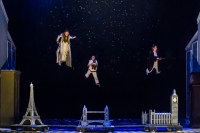
Will the real Swan Lake please stand up

Arts feature

It is the end of an era — the Royal Ballet’s extravagant Fabergé-egg Swan Lake production by Anthony Dowell is on its last legs. When this 28-year-old production finishes the current run on 9 April, that will be it for one of the most controversial classical productions of the past half-century. It’s the one set in Romanov Russia, festooned with ribbons and golden squiggles, with swans in champagne ball-gowns rather than pristine white feathers. Hallucinatory, glamorous and opulently symbolist? Or hectic, fussy and tatty? Adjectives divide between the adoring and the withering for Yolanda Sonnabend’s Gustave Moreau-esque designs and for Dowell’s hyperactive staging.

Sargent, National Portrait Gallery, review: he was so good he should have been better

Exhibitions

The artist Malcolm Morley once fantasised about a magazine that would be devoted to the practice of painting just as some publications are to — say — cricket. It would be filled with articles extolling feats of the brush, rather than the bat. ‘Well painted, sir!’ the contributors would exclaim at an especially brilliant display of visual agility. ‘Fine stroke!’ If such a periodical had existed in the late Victorian and Edwardian ages, no one would have been heaped with more praise than John Singer Sargent (1856–1925). Sargent: Portraits of Artists and Friends at the National Portrait Gallery is filled with mesmerising displays of his skills. There are so many, indeed, that to list them would be to describe just about every picture on view.

Annie’s Fish

Poems

It hangs, a mobile in the stairwell, always in motion however slight. Each silver scale as it sparkles there a neighbourly lodestar guiding us home to where we shall meet for ever in friendship beyond the darkness of your loss. Nothing you made that did not shine, nothing you dreamed can leave us now. And so we give thanks for this precious gift as it swims through the air to the sound of your laughter.

The Heckler: how funny really was Spitting Image?

More from Arts

Hold the front page! Spitting Image is back! Well, sort of. A new six-part series, from (some of) the team behind Fluck and Law’s puppetry satire show, will be broadcast on ITV this spring. Called Newzoids, it promises to provide a ‘biting look at the world of politics and celebrity’. Cue ecstatic reports in all the papers about how hilarious the original was, and how much we’ve all missed it. There’s only one problem with this analysis. Whisper it on Wardour Street, but Spitting Image wasn’t actually all that funny.

Why Putin is even less of a human than Stalin was

Radio

LBC likes to tell us it’s ‘Leading Britain’s Conversation’, though in the case of weekday pre-lunch presenter James O’Brien you’ll have to sit through a series of bombastic monologues from the host before any punters get a word in edgeways. O’Brien knows everything, and he doesn’t mind telling you. Still, I understand that running a talk show is no job for timid introverts who might burst into tears if callers start giving them a hard time. The trick is pretending to listen sympathetically while being ready to drop the guillotine without compunction (after all, these people aren’t your friends, they’re just statistics for the business plan).

How to Hold Your Breath, Royal Court, review: yet more state-funded misanthropy

Theatre

‘We hate the system and we want the system to pay us to say we hate the system.’ The oratorio of subsidised theatre rises, in triumphant blast, at the Royal Court whose current empress Vicky Featherstone has chosen to direct an interesting new play by Zinnie Harris. I’d call it a quasi-symbolist extraterrestrial tragicomic chicklit road-movie spoof with Chomsky-esque anti-corporate neo-collectivist socioeconomic textual underpinning but I fear this may lend it a clarity of purpose, and a firmness of character, which it doesn’t quite possess. We start with Dana, a chippy frump on the last lap of her sex life, bedding a UN drudge named Jarron who claims to be ‘a demon, a devil, a god’.

Fifty Shades of Grey, review: ‘Use a condom!’ my sister shouted

Cinema

And so, in the end, I went with my sister, Toni, to see Fifty Shades of Grey and we saw it at noon on Valentine’s Day at the Odeon in Muswell Hill. In the audience on that particular day at that particular time there were eight other women, all around our age, and all on their own. The Fifty Shades phenomenon has been described as ‘soft porn for middle-aged housewives’ and it’s said as an insult, but it sounds rather good to my sister and me. Indeed, after what feels like a lifetime of pairing socks and putting meals on the table and basically performing the role of main drudge at Drudge Central we feel we deserve a little soft porn and who knows, if we like it, we could work our way up to hard porn?

La Donna del Lago, Metropolitan Opera, review: Colm Toibin on a night of masterful singing

Opera

La Donna del Lago, based on a poem by Sir Walter Scott, is one of the nine serious, dramatic operas that Rossini wrote for Teatro San Carlo in Naples between 1815 and 1822. At the time the opera was produced he had at his disposal not only a great soprano, for whom he wrote with considerable flair, but two expert tenors and a contralto taking the part of the young male lover. In the first-ever production at the Met in New York that has just opened, the colours move from the sultry sky of Scotland in the first act to the starkness of a field after battle and then the sumptuous golds in King James V’s palace in the second act. Something like this happens too in the vocal writing, which ranges from the stunningly beautiful to tones that are darker and more restrained.

Dippygate: Natural History Museum’s diplodocus sacrificed on the commercial altar

There was outcry last month when it was announced that 'Dippy the Diplodocus' is to be removed from the Natural History Museum's vast Hintze Hall, where he has been greeting visitors for the last 35 years. Instead a giant skeleton of blue whale will be suspended from the ceiling, in what they spin as an 'important and necessary change'. Officially, 'the blue whale symbolises' the museum's 'desire for people to be completely engaged in current issues about humans’ impact on the natural world and our chance to build a sustainable future.' Or so a spokesman of the museum says. However, a source tells of a more cynical explanation for the departure.