Guy Dammann

The sound of Iceland

From our UK edition

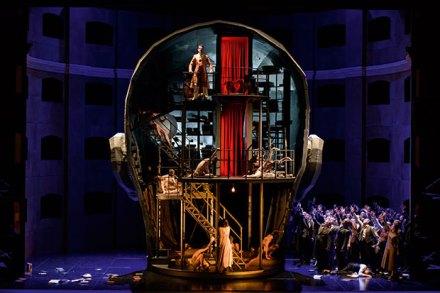
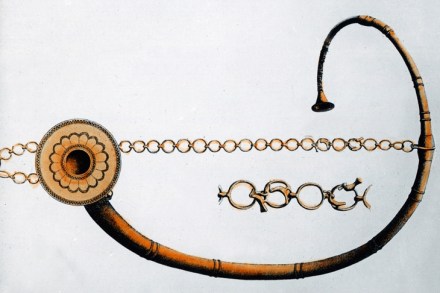
The lur is a horn, modelled in bronze after a number of 3,000-year-old instruments discovered at various archaeological sites across Scandinavia. Its unrefined yet distinctive sound — penetrating, direct and rough-edged — seems to rise up through the body rather than enter through the ears, like the stirring of a long-forgotten memory. The instrument, whose long neck reaches high above the heads of its players, is the first thing one hears in Jon Leifs’s second Edda oratorio. Two of them intone bare, open fifths, resonating against sustained low notes in the woodwind, rising up through the orchestral texture as it fills out. When the choir enters, they too sing in fifths, lurching from one bare harmony to another, incanting the coming of the Aesir, the Norse Gods.
Vienna

From our UK edition

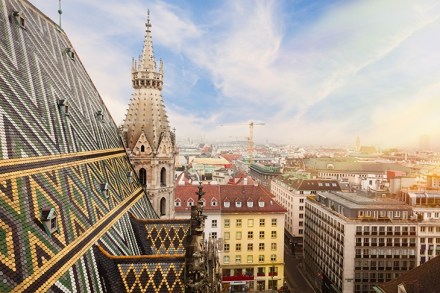
Two things always strike me when I visit Vienna. The first is how easterly the city lies. This was more apparent last century, when on maps of Europe the silhouette of Austria poked itself like a swollen proboscis into the dark shadows of the eastern bloc. But even today, with Bratislava, Brno and Gyor as its closest international neighbours, it’s a good reminder of how much ‘western European’ culture comes from quite far east. The second thing is how at home there I feel. The names and faces on the billboards are conductors and pianists, stars of opera and ballet. For once, you get the feeling celebrity is selling something worth buying.

Coming up for air | 30 November 2017

From our UK edition

The musicians of Ensemble Grizzana are arranged in the usual way for their concert at St Paul’s Hall in Huddersfield. Another player, the percussionist Dmitra Lazaridou Chatzigoga, sits among them. The table beside her holds a small and rather beaten-up zither and a tray of the kind of objects you might find at the back of a spare kitchen drawer: two filter baskets from stove-top espresso machines, a tea-strainer, letter opener, a cog, a nut and bolt. Visitors to Huddersfield’s annual contemporary music festival, now in its 40th edition, are used to eccentricity. The presence of such a tray on the Wigmore Hall stage would raise eyebrows well beyond their usual range, but here it’s pretty much business as usual.

Prague

From our UK edition

Prague. Prague. It helps to say the name at least twice as a countermeasure to the ridiculous ease of modern travel — especially when visiting cities of one syllable. Another countermeasure is to arrive by train, where the sweep of the landscape gives a better sense of Prague as the grand Bohemian capital than as a retreat for Hapsburg aristocrats and easyJet stag parties. There are direct trains from Munich and Budapest, and of course Vienna and Bratislava, to Prague’s Hlavní nádraží station, originally christened Wilsonovo nádraží after the US president who championed Czechoslovak independence. A new Wilson monument stands outside the station, replacing the original statue, which the Nazis melted down for its bronze.

The Nobel Prize for literature, at long last, has been awarded to a complete idiot

From our UK edition

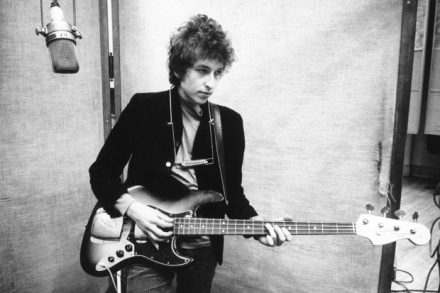
Bob Dylan has won the Nobel Prize for literature. And quite right too. But many people seem discomfited by the news, as if the award might represent a token gesture by the Swedish Academy. It doesn’t. The award is serious and we should take it seriously. The protests seem to fall into two camps. The first camp argues that Dylan is a musician, not a poet, and that therefore the award, while being made to a great artist, is a category mistake. The second camp grants that Dylan can be considered a poet, but that his poetry does not merit being ranked alongside that of Yeats, Eliot, Pasternak, Brodsky, Tranströmer and others. The first argument does not identify a category error so much as exemplify one.

I can’t get no Satiesfaction

From our UK edition

After peaking at around the tenth instalment, birthday celebrations get progressively less interesting, for their subjects at least. I remember the lunch we held for my great-aunt Winnie’s 100th birthday. It was a jolly affair and she received the toast with a fine speech of thanks. When the cheering subsided, she delivered the speech again, verbatim. Classical music nowadays seems largely to be propped up by birthday celebrations for people who couldn’t care less, mostly because they’re dead. For some decades, the planning of concert seasons has come down to whether the number of years since a composer died or was born has a zero on the end of it.

Shtumming the spiel

From our UK edition

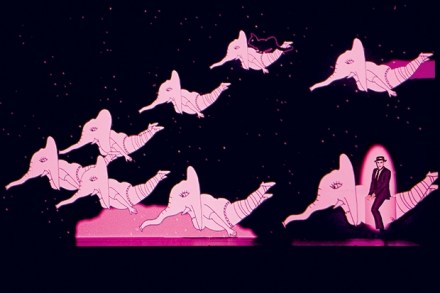
London may cry foul over Hamlet’s misplaced to-be-ing and not-to-be-ing but Edinburgh is in raptures over a Magic Flute which ditches its spoken dialogue entirely. Directed by Barrie Kosky and Suzanne Andrade, and first seen a couple of years ago on Kosky’s adopted home turf at the Berlin Comic Opera, the production turns Mozart and Schikaneder’s beloved singspiel into a sing-stumm, in which silent-movie captions and moon-faced gazes replace the original spiel, underscored by fortepiano improvisations with a spot of Chinese opera thrown in for good measure. Not your usual night at the opera, then, but it certainly drove the Festival Theatre audience wild. The visual style mixes up Buster Keaton, F.W.

Boo the knee-jerk reaction to William Tell not the rape scene

From our UK edition

'I blame Princess Diana', was my guest’s response to it all. Certainly, there is much we might lay at the feet of our long lamented People’s Princess, but I struggled to see how the current situation was her fault. The situation in question was as follows: a sizeable group of offended opera goers sought, with an extended imitation of disgruntled livestock, to bring the third act of the Royal Opera’s new production of William Tell to its knees. And there they were again, booing and braying their way through the curtain call, making sure the production’s director Damiano Michieletto knew their unease was intended personally. Certainly, something was to blame.

Country house opera

From our UK edition

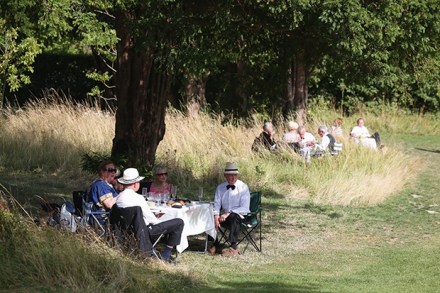
I stole a blanket last night. Rather a nice one, in fact. I feel bad about it, of course, but guilt is less inconvenient than pneumonia; and after trying to blow-dry my waterlogged dinner jacket with the winds howling through Garsington Opera’s ‘airy’ pavilion, it seemed like pneumonia or the blanket were the options. Forgive the melodramatic, self-justificatory tone. That, too, has its roots in the evening’s diversions, which included a performance of Intermezzo, Richard Strauss’s melodramatic and self-justificatory autobiographical account of a marital misunderstanding. It’s an odd piece, lovely in some ways, trite and misogynistic in others.

Ways of hearing

From our UK edition

‘What gives your lies such power?’ asks the bewildered Sicilian leader in Szymanowski’s opera Krol Roger. The question is addressed to a charismatic shepherd, on trial for propagating a lascivious new religion of unbridled sensuality. Roger’s wife, Roxana, has already converted along with many of his subjects, while the city’s conservative and clerical factions clamour for the blasphemer’s death. But Roger resolves to see for himself. Or rather hear for himself.

Opera North’s Gianni Schicchi and La vida breve reviewed: a flawless double helping of verismo

From our UK edition

Is there a more beautiful aria than ‘O mio babbino caro’ from Puccini’s Gianni Schicchi? There are more overwhelming moments in opera, to be sure, but few arias can rival it for the way its beauty kicks you in the back of the knees; its gentle rocking motion causes your shoulders to slump while the little floated top notes dilate the music’s gaze, drawing the listener irresistibly into its secret promise of untroubled bliss. Nor does it help that the aria’s whole point is to be irresistible. ‘Daddy dearest, I love him so,’ sings Schicchi’s teenage daughter Lauretta.