Culture

Culture

The good, the bad and the ugly in books, exhibitions, cinema, TV, dance, music, podcasts and theatre.

Got the message?

Cinema

To cut to the chase, my ten-year-old daughter really liked Beauty and the Beast. And given you’re probably going to be watching this as a child’s plus-one, I’d say hers is the view that matters. Her favourite character was Le Fou, the baddie’s gay sidekick, though I’m not sure she realised. But then the gay scene that Disney’s been making such a fuss about, in which the adorably camp and chubby Josh Gad gives Luke Evans — the fabulous Gaston — a bit of a shoulder massage when they’re relaxing at the inn, honestly isn’t such a big deal. Sorry. This would be a digression, except that there’s been so much baggage piled on to B and the B that the ideology is what you end up looking out for.

Tail-end Terry

More from Arts

It is often said that Terence Rattigan’s ‘thing’ was his homosexuality and that his disguising of it coloured everything he wrote. But he had, I think, another secret up his sleeve that is still little known. He was a tailgunner in the RAF. Indeed the service was his family and a thread of blue serge runs through his career. He died in 1977, aged 66. After Harrow and Oxford, the war rudely interrupted his dazzling entrée as a dashing young Thirties playwright. After basic training, Rattigan was assigned as a wireless operator and airgunner to a squadron of Sunderlands, hunting enemy submarines in the Atlantic. One moment he was banking nice fat royalties from West End hits such as French Without Tears.

A matter of life and death | 16 March 2017

Radio

It was the crime story that showed us just how much China has changed since its years of social, political and economic isolation. The discovery on 16 November 2011 of the dead body of the British businessman Neil Heywood in Room 1605 of the Lucky Holiday Hotel in the Chinese city of Chongqing was not in itself so shocking. Sordid maybe, as it was declared by the Chinese authorities that he had died of excessive alcohol consumption. But nothing more than that. The revelations that followed, though, transformed the case into an international cause célèbre, the inner workings of Chinese politics unravelling before the greedy eyes of the foreign media. Heywood, it has been suggested, was if not a spy then at least an ‘informer’ working for the British government.

His dark materials | 16 March 2017

More from Arts

The enticingly subversive films of Paul Verhoeven were very tempting to me as a schoolboy. When I hit 14, the Dutch director released RoboCop and the excitement among me and my friends at catching two hours of unmitigated ultra-violence reached fever pitch. He did not disappoint. That was in 1988 and it was interesting later on to read several newspaper articles accusing Verhoeven of having made a fascistic screed in favour of zero-tolerance law enforcement. This was not something any of us had considered up to that point, but satire, yes, even back then we had an inkling of what that was and RoboCop seemed to fit the bill nicely. Verhoeven’s latest movie Elle (reviewed by Deborah Ross last week) shows the old powers haven’t waned.

Cheltenham Festival 2017: Susan Hill’s betting tips

For 23 years I lived in the North Cotswolds, heart of National Hunt racing country, where March comes round with a quickening of hearts. From Monday night of Gold Cup Week, helicopters bringing racegoers clattered over my chimney pots, en route to the hotel on the hill. Those were the days when the independent bookie, Simon, of Roughley Racing in Chipping Campden, wore a sports jacket and a flower in his button hole. Sadly, his friendly little betting shop was swept away by the rise of the internet and the demise of a lot of old boys who hung out every day for hours, watching the races on his TV and putting 50p on each way here and there. It was all great fun. The pubs and hotels put on Race Nights in the run-up.

Buffy the Vampire Slayer made me the man I am

Buffy the Vampire Slayer turned 20 yesterday, which will make millennials feel as old as the actors who supposedly passed for teenagers back then. When Buffy came out I was eight. At first I was hooked by the horror aesthetic. Later I began to appreciate how it dealt with adolescent crises through supernatural allegory. But only now do I realise how lucky I was to have grown up with an empowered feminist to look up to (and have my first crush on). For those who didn’t watch Joss Whedon’s show between 1997 and 2003, Buffy Summers (Sarah Michelle Gellar) is a popular cheerleader type who falls in social status after she finds out she is the Chosen One: i.e, the only girl in the world with the power to fight various demons.

How Buffy the Vampire Slayer transformed pop culture

Buffy, the Vampire Slayer. Right there, those four ridiculous words, are why it shouldn't have worked. What was this? Some low-camp Russ Meyer knock-off? Joss Whedon's generation-defining TV hit debuted 20 years ago tonight. Its anniversary is being marked by the fans who adored it and the critics whose cool detachment it drove a stake through. It is fourteen years since Sunnydale collapsed into the Hellmouth and Buffy left the airwaves after seven seasons. But far from turning to dust, this unlikeliest of cultural landmarks has enjoyed an afterlife through graphic novels, fan fiction, merchandise, conventions and the long-running chatter about a Hollywood adaptation, a rumour that has proved harder to kill than the show’s durable lead. (She died twice.

Paradise lost | 9 March 2017

Arts feature

The American dream was a consumerist idyll: all of life was to be packaged, stylised, affordable and improvable. Three bedrooms, two-point-five children, two cars and one mortgage. The sense was first caught by Alexis de Tocqueville in Democracy in America (1835–40), where he talks about a people more excited by success than fearful of failure. We all know when the dream died: on 9 November 2016. People in Brooklyn were crying. In Manhattan they couldn’t breathe. A national angst had been revealed: the land of plenty had become the land of the plenty cross. But when did the dream start?

Victim mentality

Cinema

Elle has been described as ‘a rape revenge comedy’, which seems unlikely, and also as ‘post-feminist’, which is likely as, in my experience, that simply means anything goes so long as you acknowledge that feminism has happened. The film stars Isabelle Huppert, who was Oscar-nominated for her performance, and who has repeatedly said that her character, Michèle, is not ‘a victim’ although, as you have to watch Michèle being raped or near-raped several times, I don’t know how we can be so sure about that. Perhaps I’m just not sufficiently in touch with my ‘post-feminist’ side to fully comprehend.

Changing of the Bard

Theatre

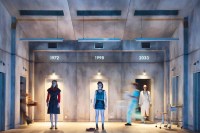
Hamlet was probably written sometime between 1599 and 1602. The Almeida’s new version opens with a couple of security guards watching surveillance footage taken in a corridor. Well, of course it does. Nothing says ‘late medieval Denmark’ like closed-circuit television. Hamlet (Andrew Scott) appears. His black shirt and matching trousers suggest a snooker pro at the Crucible or a steward on a Virgin train. Scott is known as a ‘character actor’ (code for ‘baddie’) rather than a leading man.

On the money | 9 March 2017

Television

Fans of tough investigative journalism should probably avoid Channel 4’s How’d You Get So Rich? Presenter Katherine Ryan’s main tactic is to ask wealthy people how much they paid for something and, when they tell her, to repeat their answer in a tone of wondering admiration. Yet, despite her best efforts to keep it shallow, the programme does end up shedding some light on our peculiar attitudes to the very rich — and in particular our capacity to feel superior and inferior to them at the same time. Ryan, a Canadian comedian who’ll be familiar to anybody who’s watched virtually any panel show, began Monday’s opening episode at the Shropshire pile owned by Steve Smith, the founder of Poundland.

Scottish power

Opera

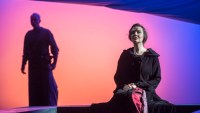
‘Perhaps in this world nothing ever happens without purpose,’ sings old, blind King Arkel in Debussy’s Pelléas et Mélisande, and that at least is something to hold on to. God knows, you need it. Peel away the fairy-tale trappings of Maeterlinck’s original play, and the world of this opera is profoundly cruel. Its characters are often passive observers of their own fate (Pelléas admits before his final scene that he’s never yet returned his beloved Mélisande’s gaze). And yet Debussy pretty much compels you to feel for them, in a score of all-but-unbearable tenderness and beauty.

From page to stage

Arts feature

Reading Elena Ferrante’s Neapolitan quartet is a heady experience. You not only see, hear, know her characters — you can almost taste them. The villain of the first of the four books, which follow the friendship of mercurial Lila and striving Lenù from childhood into their sixties, is Don Achille, an ‘ogre’ who sweats the smells of ‘salami, provolone, mortadella, lardo and prosciutto’. Lila herself, always wriggling free of the nets of others, is ‘skinny, like a salted anchovy’. Nino, loved by both Lila and Lenù, is ‘an anomalous, sweet fruit’.

Snap happy

Exhibitions

These days the world is experiencing an unprecedented overload of photographs, a global glut of pictures. More and more are taken every day on smartphones and tablets. They zip around the world by the billion. When I went to Wolfgang Tillmans’s exhibition at Tate Modern, the galleries were full of people taking snaps of the exhibits. Some visitors posed to have their pictures taken in front of the larger ones — huge photographic prints of such diverse subjects as the waves of the Atlantic Ocean, a weed growing in a London garden and a hugely enlarged close-up of a male bottom. These, and a great many more, are shown in galleries with a messy, provisional look, more like a classroom or workshop than a conventional exhibition of art.

Dublin’s Jewish museum

Notes on...

I love small museums, and the Irish Jewish Museum in Dublin is a little gem, located in the neighbourhood once known as ‘Little Jerusalem’, a centre of Jewish life around the South Circular Road. The museum itself is a converted terraced house at 3 Walworth Road, within walking distance of the streets so evocative of Leopold Bloom’s Dublin. It is crammed with impressive artefacts from Jewish life in Ireland — Torah scrolls, a menorah in the shape of a harp — but also with small details and modest memorials of Irish Jewish life, which is now so sadly in decline. (There are estimated to be hardly 1,000 Jews in Ireland today, and many of them are older people whose offspring have gone elsewhere.

Statue-esque

Opera

Why set a supremely great play to music? The Winter’s Tale, the play of Shakespeare’s that I love most, has much of his most beautiful and intelligent poetry, as well as some of his most condensed and puzzling lines. Ryan Wigglesworth, in several of the innumerable interviews about his new opera, says he has been obsessed by the play for decades. So have I, but if I were a composer I think that would be a reason for leaving well alone. Wigglesworth has made his own libretto by using snippets of Shakespeare, enough to remind one of the original, but frustrating, most of the time, in producing a strip-cartoon version of the text. The idea, presumably, is to amplify this telegrammatic digest with the music.

Parting shots

Cinema

Gurinder Chadha’s modern comedies have fun with cultural divides. Girls kick footballs in Bend It Like Beckham. A gaggle of Punjabis hit Blackpool in Bhaji on the Beach. Jane Austen goes to Bollywood in Bride & Prejudice. In all these films (we may discount Angus, Thongs and Perfect Snogging), Indians and Britons grapple with the knotty ongoing project of mutual comprehension. But there are only so many perky scripts anyone can shoot about multiculturalism. In Viceroy’s House Chadha spools back 70 years to Partition, when the price of India’s independence from her colonial master was to be sundered in two, unleashing what remains the planet’s largest ever migration of refugees.

The terrible truth

Television

Here’s the bad news. One day you or someone like you will be shopping in a mall or enjoying a concert or about to catch a train when the first sudden, sharp crack will rend the air and your world will change forever. Around you, people will start to crumple and as the panic and horror finally dawn the screams will begin while the automatic rifle fire escalates and those still standing will begin to flee — but where to? If you run away from the gunfire you’re being herded into a trap. If you run towards it you’ll be shot, either killed immediately, or casually, later, as you lie wounded, probably by knife to save ammo.

All in the mind | 2 March 2017

Radio

At the third UK International Radio Drama Festival held last week in Herne Bay, entitled ‘And Let Us Listen to the Moon’, the entries included an Australian play about Chekhov, the limericks of Edward Lear translated into Serbian, a Czech version of Hamlet in which the palace at Elsinore is transformed into a sporting arena, and a play from Palestine in Arabic about three female political activists. Fifty dramas from 17 countries and in 15 different languages were broadcast at various venues across the Kentish town.

All that jazz | 2 March 2017

Theatre

It’s every impresario’s dream. Buy a little off-West End venue to try out stuff for fun. Andrew Lloyd Webber has snaffled up the St James Theatre (rebranded The Other Palace), which he intends to run as a warm-up track for new musicals. First off the blocks The Wild Party, a New York import set in the 1920s. We meet a couple of vaudeville veterans, Queenie and Burrs, whose romance has hit the rocks. To rekindle the flame they invite everyone they know around for a party. Hang on. A party? Booze, drugs, flirtation, seduction: the recipe for destroying a romance, not salvaging it. But never mind. The guests have started to arrive, direct from the Scott and Zelda Tribute Society. Everyone is talented, sophisticated and glamorously tragic.

Moonlight richly deserved to trump La La Land. Here’s why

Moonlight is, in fact, a traditional story about identity, and finding out who you are, but it has rarely been better told, or more achingly, or while navigating a subject that hasn’t come up much at the cinema, if at all. (Being black and gay.) True enough, everyone expected La La Land to win best picture at the Oscars, but it’s Moonlight that deserved the award - and every award going (aside from the one that’s been put aside for Annette Bening). I liked La La Land well enough at the time, but someone please make it go away now. The film is written and directed by Barry Jenkins, as based on Tarell Alvin McCraney’s semi-autobiographical but never performed play In Moonlight Black Boys Look Blue.

Snap, crackle and pop

Arts feature

As you go into the new Wellcome Collection exhibition, Electricity: The Spark of Life, you might have in mind a sentence from Mary Shelley’s original electrifying novel Frankenstein; Or, the Modern Prometheus: ‘I collected the instruments of life around me, that I might infuse a spark of being into the lifeless thing that lay at my feet.’ A copy of the 1831 edition of her book, with its startling anatomical frontispiece, awaits you, among many other wonders. The exhibition, a collaboration between the Wellcome, the Teylers Museum of Haarlem and the Museum of Science and Industry, Manchester, is packed with electrical instruments, together with models, artefacts, books, film loops and pictures.

On the make

Exhibitions

Rudolfo Paolozzi was a great maker. In the summer, he worked almost without stopping in the family’s ice-cream shop, making gallon after gallon of vanilla custard. In the slack winter months, when the shop made its money on cigarettes and sweets, he built radios from odds and sods. It was on one of these homemade radios that he heard Mussolini’s declaration, on 10 June 1940, that Italy, the country he had left for Scotland 20 years before, had entered the war. That night a mob attacked the ice-cream shop at 10 Albert Street, off Leith Walk in Edinburgh. The family lived above the shop and later, Rudolfo’s son Eduardo, then aged 16, would remember how it had been before and what the men had done.

American psyche

Exhibitions

The latest exhibition at the Royal Academy is entitled America after the Fall. It deals with painting in the United States during the 1930s: that is, the decade before the tidal surge of abstract expressionism. So this show is a sort of prequel to the RA’s great ab ex blockbuster of last autumn. It might have been called, ‘Before Jackson Began Dripping’. Not much in this selection, though, can compare to the power of the abstract expressionists at their peak in the Forties and Fifties — not even an early work by Pollock himself. But it does include a couple of masterpieces by Edward Hopper, plus several pictures so brashly over the top as to be quite interesting, several others that are simply terrible — and one of the world’s most familiar images.