Culture

Culture

The good, the bad and the ugly in books, exhibitions, cinema, TV, dance, music, podcasts and theatre.

Pump up the volume | 23 February 2017

Cinema

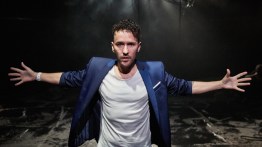
Xavier Dolan’s It’s Only the End of the World is one of those angst-ridden dramas focusing on what is commonly referred to as a ‘dysfunctional family’ as if there might be any other kind and it isn’t just a question of degree. This family certainly doesn’t hold back. This family has everyone shouting at everyone else for 95 minutes, blurting out brutal truths that might equally be brutal untruths (hard to tell). It has not been rapturously received. It was jeered at Cannes (even though it won the Grand Prix) and has been described by various critics as ‘insufferable’ and ‘intolerable’, which can only make you think that they haven’t seen an Avengers film for a while.

Tough love | 23 February 2017

Opera

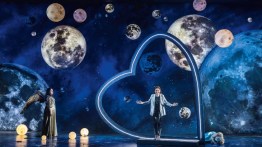
Frank Martin is one of those composers whose work seems to survive only by virtue of constantly renewed neglect. His quite large body of work is well represented in the CD catalogues, but rarely performed in the UK. One of his most powerful works is Le Vin herbé, though his fully-fledged opera on The Tempest also deserves revival. Welsh National Opera, ever adventurous, has mounted a staged version of Le Vin herbé, and despite its being more of a cantata than an opera and in English. The text is based on Joseph Bédier’s version of the Tristan myth, so some reference to Wagner, in discussing it, is inevitable.

Olden but golden | 23 February 2017

Radio

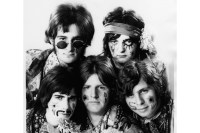
This weekend Brian Matthew will present his last-ever Sounds of the 60s show on Radio 2. Now 88, he’s been in charge at breakfast time on Saturdays since 1990, his gravelly voice deepening and getting hoarser with the years. You could tell he was well past his clubbing prime, or for that matter being able to dance along to Bryan Ferry. Yet this has never mattered. Matthew’s band of devoted listeners have cherished his weekly two hours on air precisely because of his age. It has meant he was there when those classic Sixties’ records were made. He met the Beatles in their prime, and Dusty Springfield, Steve Winwood, Alan Price, Sandie Shaw.

Occupational hazard

Television

Rival law-enforcement agencies arguing about which of them should investigate a murder has, of course, been a staple of crime dramas for decades. Rather less common, though, is for the agencies in question to be the Metropolitan Police, the Gestapo and the SS. SS-GB (BBC1, Sunday), based on Len Deighton’s novel, poses the undeniably interesting question of what this country would have been like in 1941 if Germany had won the Battle of Britain. Its primary answer is that — in every way — it would have been very murky indeed. Again, plenty of crime dramas over the years have created a suitably noirish atmosphere, while cunningly saving on the lighting budget at the same time.

Comic effect | 23 February 2017

More from Arts

Borag Thungg, Earthlets! If those words mean something to you, then congratulations — you are leading a good life. If not, then you owe it to yourself to pay attention. They are the words of greeting that Tharg the Mighty, the extraterrestrial editor of 2000AD, has spoken to the British sci-fi comic’s readers for the past 40 years. And 40 years is right. 2000AD enters its fifth decade this year, and various celebrations have been planned to mark the occasion. Among them is an exhibition at the fantastic Cartoon Museum in central London, where 85 pieces of original artwork are on show for our delectation. It’s an exhibition that does exactly what it should: show off the great variety of 2000AD.

Building block | 23 February 2017

More from Arts

What a strange affair it now seems, the Mansion House Square brouhaha. How very revealing of the battle for the soul of architecture that reached maximum ferocity in the late 1980s and which still echoes today. Where developers now jostle to build ever taller, fatter and odder-shaped City skyscrapers, this was a time when it took 34 years to get just one building built. An ambitious bronze tower and plaza by the German-American modernist pioneer Mies van der Rohe was finally rejected in favour of an utterly different post-modern corner block (with no plaza, but a roof garden) by Sir James Stirling. Both were shepherded by a man in search of his personal monument: the property developer Peter, now Lord, Palumbo.

I want Elle to win an Oscar – but I also wish it hadn’t been made

Is it possible simultaneously to want a film to win an Oscar and to wish it hadn’t been made? That’s how confused I felt after seeing Elle with Isabelle Huppert – a woman for whom the adjective hard-boiled (in a French way) doesn’t even come close to her unvarying self-possession. Elle, directed by Paul Verhoeven, is about rape, violent rape, and the aftermath of rape, but this is as odd a depiction of victimhood as you can get. Huppert – Michèle Leblanc in the movie – is plainly brutalised by a sudden attack in her home by a masked intruder, in a wetsuit, who hits her repeatedly to subjugate her – every woman’s worst nightmare.

A thoroughly entertaining shot of Mozartian optimism: Mid Wales Opera’s Magic Flute reviewed

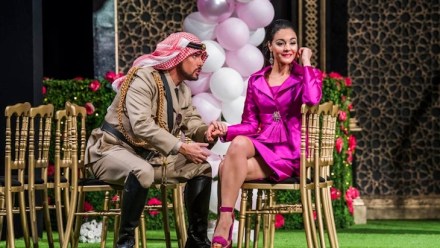
The Magic Flute Mid Wales Opera, touring until 4 May The backdrop is a hexagonal matrix, glowing in neon blue. Mist billows from the wings, and as a figure in a pink gas mask huddles in the foreground, a Victorian funeral party marches slowly across the stage. 'Where am I?' asks Tamino in the first scene of The Magic Flute and in Richard Studer's new production for Mid Wales Opera, the answer seems to be the faintly eerie world of 1970s British sci-fi – an episode of Sapphire and Steel perhaps, or Tom Baker-era Doctor Who. Well, why not? Mozart and Schikaneder – whose libretto invokes Egyptian gods while specifying that Tamino should wear 'Japanese hunting costume' – clearly weren't too fussed.

The obsession with diversity in theatre risks spoiling Shakespeare

Twelfth Night launched at the National Theatre this week, with Malvolio turned into Malvolia. ‘We’ve definitely upped the gender-bendedness of the play,’ says Phoebe Fox, who is acting Olivia. Otiose, one might think, since the original is gender-bent to perfection. But Shakespeare did not have to wrestle with the strict controls now demanded in the subsidised theatre. In the same feature in which Phoebe Fox speaks, Ben Power, the deputy director of the National, tells the Sunday Times, ‘There are agendas we are aware of now, and we have targets in terms of gender and ethnicity, because we want to be as diverse as possible, speaking to our audiences, reflecting the nation to them.

The critics are wrong: Moonlight is boring and pointless

Either all the critics are wrong, or I’m wrong. According to the lot of them, and every right-thinking pundit, Moonlight, the film about a black youth discovering his sexuality, is one of those transformative films which leaves every other movie nowhere. In a just world, as Deborah Ross of this parish put it, 'it’s Moonlight that deserves every award going' at the Oscars rather than stupid La La Land. I don’t have any sort of axe to grind on the latter but what I can tell you is that I saw Moonlight last night, and if I hadn’t been nicely brought up and unwilling to upset anyone, I’d have been off like a shot half an hour before it finished on the basis that this was 30 minutes from an evanescent life that I’ll never have back.

Thoroughly modern Monteverdi

Arts feature

‘Eppur si muove’ — And yet it moves. Galileo’s defiant insistence that the Earth revolves round the Sun, his refusal to submit to the Inquisition, is a familiar one. It’s the battle cry not of a reformer but of a revolutionary, a passionate teller of truths. It’s a credo he shared with composer Claudio Monteverdi. Born barely three years after the astronomer, Monteverdi faced his own inquisition. Defying those who would make music an immoveable sphere, bound in place by harmonic proprieties and structural conventions, he made works that rejected tidy formalism in favour of messy, fleshy humanity. His was music that moved in every sense, that lived as vividly as those who inspired it.

The good, the bad and the ugly

Exhibitions

Vladimir Putin notoriously declared the collapse of the Soviet Union in 1989 to be one of the greatest disasters of the 20th century. However, as Revolution: Russian Art 1917–32 — an ambitious exhibition at the Royal Academy — helps to make clear, the true catastrophe had occurred 82 years earlier, in 1917. Like many of the tragedies of human history, the Russian revolution was accompanied, at least in the early stages, by energy, hope and creativity as well as by murderous cruelty and messianic delusion.

Diary – 16 February 2017

Diary

I’m boning up on conversational Spanish for a trip to the Primera Persona festival in Barcelona with Alexei Sayle. We’re due to talk about The Young Ones — the comedy series we made together 35 years ago. For some reason the show is huge in Catalonia — perhaps it’s scatological: one of their regional symbols is a pooping peasant. The Catalan-dubbed version is still playing on TV, so, as well as Spanish, I am refreshing my catchphrases in Catalan. When I visited Barcelona last year to make a travel programme called Catalunya Experience for Catalan TV3, people asked for selfies and threw peace signs at me in the street, because I played the hippie character, Neil, in The Young Ones.

Raising the roof

More from Arts

It is a ‘fantastic night out’, insists the theatre’s artistic director. Gemma Bodinetz is right, of course, but it is easy to see how those unfamiliar with Fiddler on the Roof might take some convincing. The first act ends with a pogrom, the second with the village’s Jews being expelled from the country. This doesn’t immediately suggest an evening of joyous, life-affirming entertainment. ‘It’s the story of people being forced to leave their homes by the powers that be, and that scenario, sadly, is still playing itself out all over the world today. But it’s also about family and joy and love and it has terrific songs,’ says Bodinetz. It opens the first season of Liverpool Everyman’s new repertory company later this month.

Stuffed but dissatisfied

Theatre

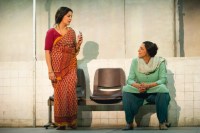
Sandi Toksvig’s new play opens in a Gravesend care home where five grannies and a temporary nurse are threatened by rising floodwaters. In Act One the ladies prepare for a rescue party that fails to materialise. In Act Two they build a life raft out of plastic bottles. There’s a bizarre sequence involving a silly young burglar who gets beaten up and flung through a window by a woman of 71. The ending is more of a petering out than a conclusion. All the characters feel interchangeable apart from the nurse, who claims to come from Cheltenham. Her name, Hope Daly, prompts one of the old dears to quip. ‘My life in a nutshell.’ Later Hope admits, ‘I’m from Croydon, OK? I don’t tell people because I don’t need the pity.

Let’s not dance

Features

Why will people simply not believe you when you tell them that you don’t want to dance? Their reactions mimic the classic pattern of grief: first confusion, then denial, then anger. They tug at your arm like they’re trying to pull it from the socket. ‘Come on, you have to dance!’ ‘No I don’t.’ ‘Oh come on! You want to really.’ ‘No I don’t.’ ‘Yes you do! Of course you do! Everybody likes dancing!’ It’s at this stage that I sometimes get all dark on them, losing the smile, injecting a note of firmness or perhaps even menace, and pointing out that if I wanted to dance I would be dancing, but as I’m not dancing they can safely infer that I don’t want to dance.

British sea power

Opera

The story so far: in 1986 English National Opera hired Jonathan Miller to direct Gilbert and Sullivan’s The Mikado. The result was so fresh and funny that it’s been a mainstay of the ENO schedule for more than three decades, to the indignation of hardcore opera fans who can’t understand why audiences keep flocking to hummable melodies and humour instead of, say, Berg’s Lulu. Attempting to repeat the formula, ENO then made the rookie error of engaging Ken Russell who, being Ken Russell, promptly updated Princess Ida to the 21st century and set it in a futuristic sushi bar. Finally, in 2015 they entrusted The Pirates of Penzance to Mike Leigh, whose G&S biopic Topsy-Turvy seemed to guarantee a safe pair of hands. Good call.

United nations

Radio

The Indian Prime Minister has twigged something that President Trump has yet to understand. On Monday, celebrated as World Radio Day, Narendra Modi tweeted his congratulations to ‘all radio lovers and those who work for the radio industry and keep the medium active and vibrant’. Modi uses radio to reach out to those in his country who live in its most remote and inaccessible corners, giving a monthly address to the nation known as ‘Mann Ki Baat’ (or ‘To mind’). He says it’s his way of ‘sharing his thoughts’ with his citizens, and a useful way of extending the tentacles of government into those areas where television sets are uncommon, let alone computer screens or smartphones.

Three ages of man

Cinema

Moonlight is, in fact, a traditional story about identity, and finding out who you are, but it has rarely been better told, or more achingly, or while navigating a subject that hasn’t come up much at the cinema, if at all. (Being black and gay.) True enough, it was La La Land that swept the boards at the Baftas, and La La Land will probably sweep the boards at the Oscars, but it’s Moonlight that deserves every award going (aside from the one that’s been put aside for Annette Bening). I liked La La Land well enough at the time, but someone please make it go away now. The film is written and directed by Barry Jenkins, as based on Tarell Alvin McCraney’s semi-autobiographical but never performed play In Moonlight Black Boys Look Blue.

Fatal attraction | 16 February 2017

Television

Recently on holiday I did a very bad thing. I nearly left the Fawn to die on a precipitous mountain path in the Canary Islands because she was having a terrible attack of vertigo that was threatening to spoil my fun. No, worse: it actually did spoil my fun. Now that I’m old and boring I desperately need little jabs of adrenaline to remind me I’m still alive, and this particular route was doing the job quite nicely. Although it’s actually so undangerous that even my eightysomething dad can do it, it’s reasonably steep, it’s gobsmackingly picturesque, and it does now and then give you at least the illusion of a thrill because if you were to slip over the precipitous edge you’d definitely, definitely die.

Some like it hot

Arts feature

In the mid-6th century, legend has it, St Brendan set off from Ireland with a currach-load of monks on a mission to find the Isle of the Blessed. The Irish like to think that his Atlantic odyssey took him to Newfoundland before the Vikings; what seems more probable, if you believe the medieval account, is that it brought him close to the shores of Iceland where he passed a mountainous island with ‘a great smoke issuing from its summit’ and ‘flames shooting up into the sky’. If there were any doubts that what is meant here is a volcano, they would be dispelled by the drawing in the margin of the version of the Navigatio Sancti Brendani Abbatis currently on show at the Bodleian Libraries.

GCSEs and the arts of lobbying

More from life

For the past six years or so a variety of arts organisations have been campaigning against the English Baccalaureate, or the ‘EBacc’, as it’s known. To meet this standard, schoolchildren have to get grade C or above in seven GCSEs (Eng lang, Eng lit, maths, two sciences, a humanity and a foreign language) and, according to the campaigners, this means students have been turning away from arts GCSE subjects such as music, drama and dance. They claim that since the EBacc’s introduction by Michael Gove, arts education has been decimated. Now, I have some sympathy for the lobby groups making this argument.

Drake’s progress

Music

Those poor Canadian rappers. Hailing from a country with a functioning benefits system, sensible firearms restrictions and relatively harmonious race relations, it must be a job convincing people of their authenticity. Aubrey Drake Graham, however, has risen above this cruel accident of birth — in Toronto, to a white Jewish mother — to become not only one of the world’s most respected rappers, but its biggest pop star too. For a man with the world at his feet, Drake manages to find an impressive number of things to complain about in his lyrics, from fickle friends to the administrative headache of paying two mortgages. But if the approval of others is all he really needs, he certainly got it at a sold-out O2.

Rules of engagement

Radio

The BBC foreign correspondent Hugh Sykes was meant to be talking about how music has shaped his life with Sarah Walker on Essential Classics last week (Radio 3, Friday), but their conversation actually gave us far more crucial insights into why he has won awards for his work, reporting from troubled places such as Tehran, Baghdad, Belfast, Berlin and Islamabad. He stressed the importance of checking your facts, ‘Verify, verify, verify’, and especially now that the demand for instant news coincides and conflicts with the torrents of information flooding the internet. ‘Never report anything until you’ve got at least two sources,’ Sykes insisted. He also explained how easy he found it to get people talking. ‘I’m holding a microphone. I ask a question.