Culture

Culture

The good, the bad and the ugly in books, exhibitions, cinema, TV, dance, music, podcasts and theatre.

All dressed up, nowhere to go

Cinema

Rules Don’t Apply is Warren Beatty’s first film appearance in 15 years and his first as writer, director, producer and star since Bulworth, 19 years ago. Plenty of time, then, to figure out what he wanted to say, and how he wanted to say it, but Rules is entirely baffling. Is it a tale of Old Hollywood? Is it a biopic of Howard Hughes? Is it a love story? Unfortunately, it can never decide, so tries to be all of the above and therefore succeeds at none. After an onscreen warning from the late Hughes himself — ‘Never check an interesting fact’ — the prologue opens in 1964, but then jumps back to 1958 as a small-town, virginal, Baptist beauty queen is flown into Hollywood as a contract actress for Hughes’s RKO studio.

Psycho thriller

Television

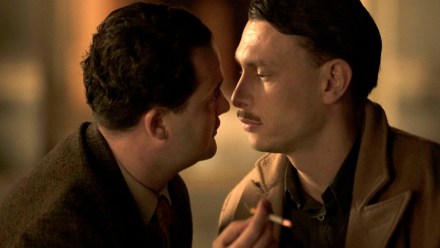
Psychological thrillers — or ‘thrillers’ as they used to be known — have become almost as ubiquitous on television as they are in the average bookshop. On the whole, this is now a genre where contented domesticity exists solely to be undermined, and where the chief function of the past is to come back and haunt people — which is clearly what it’s going to do in Channel 4’s Born to Kill, even if Thursday’s increasingly intriguing first episode was in no hurry to explain exactly how. To begin with, 16-year-old Sam (Jack Rowan) seemed to be on a solo mission to overturn all preconceptions about teenage boys.

The real deal | 20 April 2017

Radio

How about this for an inspiring response to what could have been a personal tragedy. Chi-chi Nwanoku was in the sixth form at school, a promising athlete hoping to represent Great Britain as a 100-metre sprinter, when she injured her knee playing football. ‘It was a poignantly painful moment,’ she recalls, but thanks to a far-seeing music teacher and headmaster, and her own inimitable character, the accident was turned into a springboard not just for her but, through her, for many other young musicians too. When she returned to school, she was told, ‘We think you could have a career in music,’ and she was taken into the music room where two double basses were lying ready for her. She was not at all impressed at first.

Take a bow

Opera

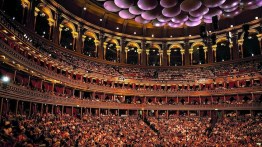
Monteverdi 450 — the Monteverdi Choir and English Baroque Soloists’ tour of his three operas to 33 cities across two continents — began with his penultimate work Il ritorno d’Ulisse in patria, at Bristol’s Colston Hall. It was a marvellous occasion, uplifting and entertaining. I hadn’t been to the Colston Hall before, and was most impressed by its acoustics. Apparently it is due to have a £48 million makeover next year (call that £75 million) but it seemed new and with agreeably hard seats which counteracted any tendency the hall’s tropical heat might have to induce drowsiness. The opera was performed in a semi-concert version, which I am more and more inclined to hope is opera-in-general’s way forward.

Pleasure boats

More from Arts

There isn’t a luxury ship that wouldn’t look better for having sunk. Barnacles and rot bring such romance to the lines, like spider webs in the sea. Even the decay Damien Hirst has applied to his Treasures from the Wreck of the Unbelievable is quite appealing. It crawls over many of the objects that he claims to have salvaged from a shipwreck of the 1st or 2nd century ad. A mouldering Mickey Mouse. A bronze portrait of the artist encrusted in faux-coral. It’s Trimalchio meets Disneyland meets Twenty Thousand Leagues Under the Sea. It so happens that Hirst’s exhibition at the Punta della Dogana and Palazzo Grassi in Venice (until 3 December) coincides with a search for another wreckage, this one truly ancient.

The BBC’s adaptation of Decline and Fall was near-perfect

A politician once told me ‘You should try to remember to try to encourage us when we get things right and not just scold us when we get things wrong.’ I’m not sure anyone could keep to that civil piece of advice when it comes to politicians. But it should certainly apply to broadcasters. The BBC comes in for plenty of stick, and rightly so at times. But in recent weeks it has done something wonderful. Its adaptation of Decline and Fall – the third and last episode of which aired on Friday night – was a triumph. I had always assumed that this earliest of Evelyn Waugh’s novels was un-filmable. The plot is slightly sketchier, the characters slightly more limited than in Waugh’s later novels.

Concrete cuckoo

Arts feature

The Catholic Church’s Second Vatican Council provides a salutary example of a tiny ‘elite’ foisting ‘anti-elitist’ practices on the ‘non-elite’ — and coming a cropper. Vatican II’s dates are important. The Council was convened in 1962 and concluded in December 1965. These were the high years of the most uncompromising architectural modernism and, just as pertinently, of the craze for theatre-in-the-round, whose champions considered the proscenium arch to be an authoritarian (very possibly ‘fascist’) instrument inimical to ‘participation’. Rome’s neophilia left much of the clerisy bewildered. It was admitting temporal fashions to a spiritual domain. Maynooth’s head was spinning.

The good, the indifferent and the simply awful

Exhibitions

‘There is only one thing worse than homosexual art,’ the painter Patrick Procktor was once heard to declare at a private view in the 1960s. ‘And that’s heterosexual art.’ It would have been intriguing to hear his views on Queer British Art at Tate Britain. All the more so since it includes several of his own works, including a fine line-drawing study of the playwright Joe Orton, completely naked except for his socks — which he kept on because he felt they were sexy — and reclining somewhat in the manner of Manet’s Olympia. In fact, many of those included might have had reservations — Oscar Wilde, for example, one of whose characters observed, ‘The only artists I have ever known who are personally delightful are bad artists.

The Spectator’s notes | 12 April 2017

The Spectator's Notes

Each Easter, I think of David Jones (1895-1974). He was a distinguished painter and, I would (though unqualified) say, a great poet. There is a new, thorough biography of him by Thomas Dilworth (Cape). A sympathetic review in the Guardian wrestles with why he is not better known: ‘The centrality of religion to Jones’s work offers a clue to his obscurity.’ Jones recognised this possibility himself, writing about ‘The Break’ in culture, which began in the 19th century. He thought it had to do with the decline of religion, but more with a changed attitude to art, caused by mass production and affecting what he called ‘the entire world of sacrament and sign’.

First Bourne

More from Arts

‘Modern’ dance was no laughing matter in 1987. Harold King, director of the now-defunct London City Ballet, cattily typified it as ‘lesbians in bovver boots playing a mouth organ and banging a drum on the banks of the Thames’. Camp, funny and unashamedly ‘accessible’, even Matthew Bourne’s earliest efforts were a far cry from the earnest output of his more contemporary contemporaries as his 30th anniversary retrospective, Early Adventures, reminds us. Bourne’s early pieces were conceived on a modest scale with taped music and only a handful of dancers, but the works in the current triple bill show that his gift for creating character and narrative was evident from the start.

Seeking closure | 12 April 2017

Cinema

The Sense of an Ending is an adaptation of Julian Barnes’s 2011 Man Booker prize-winning novel starring Jim Broadbent (we love Jim Broadbent), Harriet Walter (we love Harriet Walter) and Charlotte Rampling (we love, love, love Charlotte Rampling). With such a cast, you’d be minded to think it can’t fail, and it doesn’t in this respect. The performances are transfixing throughout. But it does not satisfy emotionally, as the ending of The Sense of an Ending makes no sense. It’s a (Non)Sense of an Ending. Same with the book, which, on completing, I think I threw across the room with a: what? Is that it?

Look back in anger | 12 April 2017

Television

‘What we really need is a faux-historical drama series about police brutality and black activism set in 1970s London,’ said no TV viewer, ever. But TV commissioning editors have more important priorities, these days, than mere plausibility, entertainment or value-for-subscription fee. So naturally, when the chance arose to make Guerrilla (Sky Atlantic, Thursday) — a six-parter about Black Panther-style revolutionaries, starring Idris Elba and written by the guy who did 12 Years a Slave — the senior luvvies at Sky were on it like a mistimed high-five. I like Idris Elba.

Tales of the unexpected | 12 April 2017

Radio

It’s the oddest place to find a profound meditation on the death of Christ, but there it is on Radio 2 every year on the night of Good Friday, on the ‘light music’ station, and not on Radio 3 or Radio 4, where you might expect to find it. This year At the Foot of the Cross was sandwiched between Desmond Carrington — All Time Great and Sara Cox’s disco beats, the uncompromising reflections on the nature of belief adding a certain bite to the evening. Diane Louise Jordan and her host of guests at the Watford Colosseum (including the Bach Choir and the tenor Wynne Evans) created a sequence of words and music designed to encourage us to think about the grief of the disciples, the tyranny of Rome, the agony of Christ as he walked towards Golgotha.

Law in action

Theatre

It’s like Raging Bull. The great Scorsese movie asks if a professional boxer can exclude violence from his family life. Nina Raine’s new play Consent puts the same question to criminal barristers. We meet four lawyers engaged in cases of varying unpleasantness who like to share a drink after a long day in court. They gossip about the more horrific behaviour of their clients with frivolous and mocking detachment. But when their personal relationships start to falter under the strains of infidelity, they’re unable to relinquish their professional expertise, and their homes become legalistic battlefields. This sounds like a small discovery but Raine turns it into a grand canvas.

The decade the music died

Music

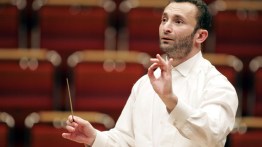
For much of the past half-century, London has been the world’s orchestral capital. Not always in quality, but numerically without rival. Five full symphony orchestras and twice as many pint-sized ones kept up a constant clamour for attention. Each month brought new recordings with premier artists. Every orchestra had its own ethos, history and thumbprint. The Philharmonia was moulded by Karajan and Klemperer, the London Philharmonic by Boult and Tennstedt, the Royal Philharmonic by Beecham, the BBC by Boulez and the London Symphony Orchestra by its high spirits. Tales abound of maestros departing with a punch on the nose and beer bottles rolling in rehearsal. All of which added greatly to the sum of human happiness. London musicians, always cheap, learned to be quick.

A woman of genius

Arts feature

‘Your favourite virtue?’ ‘I don’t have any: they are all boring,’ wrote the 21-year-old Camille Claudel in a Victorian album belonging to an English friend in 1886. The remark perfectly matches the photograph of the aspiring sculptor taken two years earlier by César: childlike, sullen, attitudinous, beautiful. Claudel was in England on a break from working in Auguste Rodin’s studio, where she had been taken on as an assistant in 1884. She had met Rodin through her mentor Alfred Boucher, who discovered her precocious teenage talent on a visit to his hometown of Nogent-sur-Seine in the 1870s, and continued to supervise her subsequent studies in Paris.

Home is where the art is

Exhibitions

The house in which I lived in Tokyo was built by my landlady, a former geisha. It stood on a plot of land given to her by her last lover. It was small, full of light and positioned to enjoy the large ginkgo tree in the garden next door. It was easily the best designed house I have ever lived in. Nostalgia for that house and my former life in Tokyo overwhelmed me as I wandered through the new exhibition at the Barbican — The Japanese House: Architecture and Life after 1945. Exhibitions on architecture are notoriously hard to pull off but this succeeds triumphantly. Japanese domestic architecture has consistently produced some of the most influential examples of modern design. By the end of the second world war B-29 bombing had destroyed a third of Japanese housing stock.

Age as allegory

Television

Sky Atlantic — available only to Sky customers — has the cunning/infuriating policy of broadcasting the kind of programmes most likely to appeal to people who pride themselves on not being Sky customers. (Basically, the liberal, metropolitan you-know-what.) Now, to a list that includes Veep, Curb Your Enthusiasm, Girls and Last Week Tonight with John Oliver, we can add The Trip, whose third series Sky has poached from the BBC. Like the first two — set in the Lake District and Italy — The Trip to Spain (Thursday) is directed by Michael Winterbottom and features Rob Brydon and Steve Coogan playing versions of themselves that feel teasingly close to the truth.

Bob Dylan: Triplicate

More from Arts

Having seen Bob Dylan play live a few years ago, I’m pretty sure he is not the first person I would choose to cover three albums’ worth of American jazz-age standards. The sound which came out of his mouth on that occasion resembled that of a demented, elderly dog. ‘Just Like A Woman’ had a chorus which went: ‘Grassum, grassum — rassum rassum rassum’, a neat twist on the original lyrics. It was joltingly inhuman. However, he has been on the Benylin, I think, because his voice here is not quite so gratingly hilarious.

Poetry in motion | 6 April 2017

Cinema

Films can be poetry — or like poetry; or poetic, at least — but can poetry ever be film? That is our question for today, and I’ll attempt to answer it, although there is absolutely no saying that I’ll be able to do so. Always touch and go, that. A Quiet Passion is Terence Davies’s biopic of the 19th-century American poet Emily Dickinson, author of ‘Hope is the thing with feathers/ That perches in the soul’ and ‘Because I Could Not Stop for Death’ (look it up; do) and, all in all, 1,800 (incredibly wonderful) poems, of which only 10 were published in her lifetime. Who was this woman? She’s fixed in our minds as a recluse who would only talk from behind her bedroom door, but was she always?

Dazzled by Balanchine

More from Arts

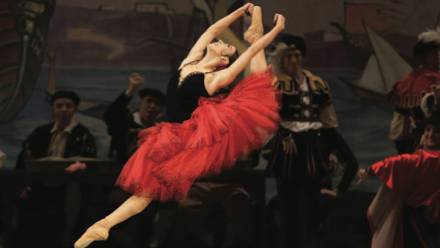
A trio of dazzling scores, the soft clack of gemstones on hips and collarbones, a glittering parure of solos, duets and ensembles: George Balanchine’s Jewels returns to the Covent Garden repertoire to celebrate its 50th anniversary. The ballet’s three plotless elements celebrate the various facets of classical dance. ‘Emeralds’, set to snatches of Gabriel Fauré, pays lyrical homage to ‘the France of elegance, comfort, dress, perfume’. The American-accented ‘Rubies’ riffs on Stravinsky’s 1929 Capriccio for piano and orchestra, and ‘Diamonds’ joins forces with Tchaikovsky in an exultant hymn of praise to the classical ballerina (a role shared on Saturday by Lauren Cuthbertson and a sublime Marianela Nuñez).

Kill the DJ

Theatre

Don Juan in Soho rehashes an old Spanish yarn about a sexual glutton ruined by his appetite. Setting the story in modern London puts a strain on today’s play-goer, who tends to regard excessive promiscuity as a disease rather than a glamorous adventure. And the central character, a vulgar aristocrat named DJ who grades everyone on a scale of ‘fuckability’, contravenes the sentimental egalitarianism of our current sexual code. Writer Patrick Marber offers us a version of London where the social structure of the Regency still endures. Educated Englishmen are the only fully evolved human beings. Beneath them swarms an amusing underclass of thick, greedy motormouths from whom the Englishman must recruit his prostitutes and servants.

The future of Today

Radio

I wonder what Sarah Sands will do to Radio 4’s Today programme? She is the first editor in more than 30 years to come from outside the BBC, having previously run Evgeny Lebedev’s London Evening Standard. One assumes, then, that the BBC feels that the old war horse needs a bit of shaking up, and perhaps a slight tilting on the political rudder. Sands is, almost uniquely for the boss class of the BBC, Conservative inclined, even if she was a Remainer and is of a somewhat liberal disposition. I was rather cheered by her appointment — and said so in print — as I think she is an excellent journalist. However, one former staffer, reading these comments of mine, remarked: ‘But isn’t she exactly the sort of London-centred metropolitan liberal you so despise?

The curious incident of Cambridge’s Latin graffiti

A weird one, this. Yesterday, a short walk away from me in Chesterton, Cambridge, an enigmatic threat appeared in three-foot-high letters on a new row of upmarket houses flanking the banks of the Cam. But these weren’t the usual slapdash daubings. No, the letters were lavishly painted across four houses by a ladder-wielding vigilante ten feet above the ground. The stunt has made national headlines, not so much for the content of the protest as for its medium – Latin. Well, it is and it isn’t Latin. It proclaims, Locus in domos loci populum! Purists will object that the Romans had to muddle through without the indulgent hyperbole of exclamation marks.