Culture

Culture

The good, the bad and the ugly in books, exhibitions, cinema, TV, dance, music, podcasts and theatre.

Director’s cut | 21 September 2017

Music

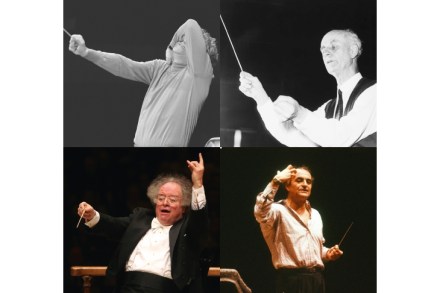
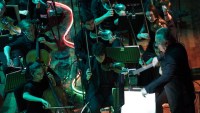
Much fuss has been made of the title given to Sir Simon Rattle on arrival at the London Symphony Orchestra. Unlike his LSO predecessors — Valery Gergiev, Colin Davis, Michael Tilson Thomas, Claudio Abbado, André Previn — all of whom were engaged as principal conductor, Rattle has been named music director, a position that bears serious administrative responsibilities. As Rattle put it recently in one of a dozen media interviews: ‘Valery wasn’t interested, nor Claudio. Colin loved them to bits, but he made it very clear that he did not want anything to do with the running or the auditions or the personnel… I will be much more involved with the day to day.’ But will he?

Speech therapy

Theatre

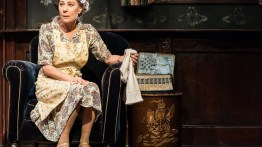
Oslo opened in the spring of 2016 at a modest venue in New York. It moved to Broadway and this imported version has arrived at the National on its way to a prebooked run at the Harold Pinter Theatre. It’s bound to be a hit because it’s good fun, it gives a knotty political theme a thorough examination, and it’s aimed squarely at the ignorant. In the early 1990s Norwegian diplomats set up ‘back-channel’ talks between the PLO and Israel. The play follows that process and it treats geopolitics like a flat-share comedy. The bickering partners are hauled in by the lordly Norwegians and forced to hammer out their differences around the table. Play-goers need have no prior knowledge of Israel and its fraught relationship with the Palestinians.

LCD Soundsystem: American Dream

More from Arts

Grade: B+ Number one. Everywhere, just about. You have to say that the man has a certain sureness of touch. Hip enough not to be quite mainstream, rock enough not to be quite pop. The knowing nods — to Depeche Mode, Eno, 1970s post-punk and 1980s grandiosity and always, always, Bowie. Fifteen years on from James Murphy’s first excursion in these clothes and the man from New Jersey, now grizzled and greying, has come up with an album as good as any he’s made — which is a qualified nod of admiration: I often find his tunes too eager to please, the neatly corralled stabs of funk a little forced. Murphy always wants to have his cake and eat it, get the dance crowd in and the indie kids too. You have to say that, commercially, this formula works.

No balls

Cinema

Borg vs McEnroe is a dramatised account of one of the greatest tennis rivalries of all time — between Bjorn Borg and John McEnroe (the clue was always in the title) — that doesn’t hit nearly as hard as it should. It does the job. It gets us from A to B. But it doesn’t dazzle. It doesn’t have the dramatic smarts to lend either surprising tension or excitement to otherwise familiar events, or shed any new light on them. It’s more the pt-pt-pt-pt of a stolid baseline rally and now, you will be thankful to hear, that’s it with the tennis puns. (I only had two anyhow.) The film stars Sverrir Gudnason as Borg and Shia LaBeouf as McEnroe and it all plays out in the lead-up to their most famous showdown.

Loose ends

Television

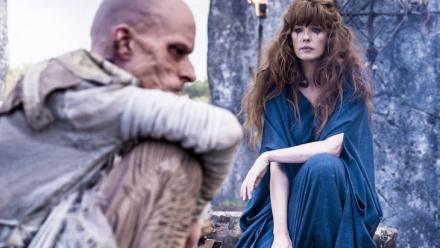
On Sunday night, Holliday Grainger was on two terrestrial channels at the same time playing a possibly smitten sidekick of a gruff but kindly detective with a beard. Even so, she needn’t worry too much about getting typecast. In BBC1’s Strike, she continued as the immaculately turned-out, London-dwelling Robin, who uses such traditional sleuthing methods as Google searches. On Channel 4, not only was she dressed in rags, with a spectacular facial scar and a weird hairdo, she was also living in an unnamed dystopian city, where her detective work relied on a handy capacity to read minds. This was the first and highly promising episode of Electric Dreams, which has set itself the ambitious task of adapting ten sci-fi stories by Philip K.

Small wonders

Opera

It has been a reasonably good week for peripatetic opera-loving female-underwear fetishists. In La bohème at Covent Garden Musetta slipped out of her knickers and swung them round, as everyone, except me, mentioned in their reviews; and now, in Leeds, in the first of Opera North’s ‘Little Greats’, what laughter the actors in the drama got was from Tonio and others trying on Nedda’s bra. This new production of Pagliacci by Charles Edwards, sadly under-attended, was possibly too ingenious. It is set in a rehearsal room, and we see the first day of rehearsals and then the final run-through. It kind of works, but anyone unfamiliar with the opera would have found it mysterious, and some of the time I felt I was on shifting sands.

Fickle fortune | 21 September 2017

More from Arts

Here’s an intriguing thought experiment: could Damien Hirst disappear? By that I mean not the 52-year-old artist himself — that would be sensational indeed — but the vast fame, the huge prices, the hectares of newsprint, profiles, reviews and interviews by the thousand. Could all that just fade from our collective memory into a black hole of oblivion? The answer is: yes, quite easily. Artists vanish all the time. Take the case of Hans Makart (1840–1884). He was a contemporary of Monet, Manet and Degas, but enormously more acclaimed in his lifetime than any of those. A period of Viennese life was dubbed the ‘Makart era’, a fashionable idiom was named the ‘Makartstil’. One reason for his success was that he was a master of PR.

Frills and furbelows

More from Arts

Over the winter of 1859–60, a handsome young man could be seen patrolling the shores of the Gulf of Messina in a rowing boat, skimming the water’s surface with a net. The net’s fine mesh was not designed for fishing, and the young man was not a Sicilian fisherman. He was the 25-year-old German biologist Ernst Haeckel from Potsdam searching for minute plankton known as Radiolaria. In February he wrote excitedly to his fiancée, Anna Sethe, that he had caught 12 new species in a single day — ‘among them the most charming little creatures’ — and hoped to make it a full century before leaving. Haeckel had a degree in medicine but no interest in treating patients, whose visits he curtailed by holding surgeries from 5 to 6 a.m.

The icemen cometh

More from Arts

You wouldn’t want to stumble upon the Scythians. Armed with battle-axes, bows and daggers, and covered in fearsome tattoos, the horse-mad nomads ranged the Russian steppe from around 900 to 200 BC, turning squirrels into fur coats and human teeth into earrings. At their mightiest, they controlled territory from the Black Sea to the north border of China. They left behind no written record, only enormous burial mounds, chiefly in the Altai mountains and plains of southern Siberia. Chambers that weren’t looted in antiquity were preserved in the permafrost only to be discovered millennia later. It is thanks to Peter the Great and the expeditions he launched that so many objects have now been retrieved from the ice.

Art of darkness | 14 September 2017

Arts feature

Stephen King, 69, has sold more than 350 million books, and tries not to apologise for being working-class, or imaginative, or rich. The snobbery has ebbed a little, though; in 2003 he won the National Book Foundation’s Medal for Distinguished Contribution to American Letters, and now the BFI is screening a series of adaptations of his novels, which show how versatile he is. Why can’t you write stories like Rita Hayworth and Shawshank Redemption, a woman asked him once. I did write it, he told her, but she did not believe him. King has published 59 novels, but he is a recovering addict and can’t remember writing them all. Most of Cujo (1981), a story about a rabid dog and adultery, is news to him.

Space odyssey | 14 September 2017

Exhibitions

Rachel Whiteread is an indefatigable explorer of internal space. By turning humble items such as hot-water bottles and sinks inside out — that is, casting the cavities — Whiteread has accomplished one of the traditional tasks of art: revealing structure, beauty and mystery in the everyday. Her work is a remarkable contribution to an overlooked genre: the sculpture of inanimate things or still-life statuary. Nonetheless the large-scale, mid-career Whiteread retrospective at Tate Britain, which ought to be a triumph, does not quite come off. Ironically, since her idiom is derived from minimalism, the exhibition fails to observe the law that less is more.

Rockies horror show

Television

Tin Star, the latest Sky Atlantic drama, has a comfortingly familiar premise: Jim Worth (Tim Roth), an ex-detective from London with an alcohol problem, heads out to rural Canada with his family to start a new life only to find himself embroiled in crime, violence and personal tragedy far worse than anything back home. It begins well. There’s a lovely establishing scene where Roth walks down the street with his new Canadian sheriff’s badge and everyone greets him, as people presumably do in sleepy Canadian Rockies towns like Little Big Bear, where everyone’s got time for one another. In the police station, his two junior officers have so little crime to solve they’re playing video games.

The sound of no hands clapping

Music

‘We’re going to live for ever!’ declares Robert Powell as Gustav Mahler at the end of Ken Russell’s 1974 biopic. We’ve just had the big reveal (Russell said it ‘out-Hollywoods Hollywood’) in which Mahler admits to his young wife Alma that she inspired the lyrical theme in the first movement of his Sixth Symphony. It’s a tale for which the only source is Alma herself, but hey, over the course of the movie we’ve already had exploding garden sheds, interpretative dance and Cosima Wagner in fetish gear. Russell cues the music, and few film-makers have understood better how to cut to a composer’s emotional core. As the credits roll, the first movement of Mahler’s Sixth blazes triumphantly to its close, glockenspiel jangling.

DIY Bohème

Opera

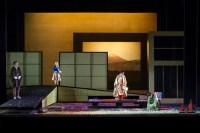
The Royal Opera’s one production that, it has always confidently been claimed, need never be replaced has been replaced. John Copley, vintage 1974, has given way to Richard Jones, in a production full of his trademark quirkinesses and mischief, though he is respectful enough of Bohème to keep his irony out of sight for the last two acts. Stewart Laing is the designer, with a separate movement director (I thought that’s what directors did) in Sarah Fahie. Snow falls continuously before the curtain rises, but the set of Act One inevitably strikes you as a gauntlet thrown down to Copley. Flat 7b, which is the abode of the bohemians, is nothing more than roof beams, with a single chair, no bed, a tiny stove that produces plumes of smoke emitted from a tall chimney.

Northern rock

Music

A fortnight ago, the debut album by a young British guitar band entered the chart at No. 6. You might have expected to see this pored over with some interest by the press, for whom the search for the New Arctic Monkeys, the New Oasis and the New Smiths has long been a matter of urgency. Instead, you will scour the daily newspaper arts pages in vain for mentions of the Sherlocks, and you won’t fare much better looking at the specialist music magazines. According to the self-anointed tastemakers of British pop, they might as well not exist.

Nut job

Cinema

The film-maker Darren Aronofsky says he wrote Mother! in five days as if in a ‘fever dream’ and, as a general rule, what happens in a fever dream should stay in the fever dream, as the content will be plainly nuts. This is plainly nuts. This is even plainly nuts with an exclamation mark. Plainly nuts! However, it’s never plainly dull, so it does have that going for it. I think. Described as a psychological horror thriller, the set-up has a poet and his younger wife living in a magnificent, isolated house in the countryside that she is doing up. She is Mother (Jennifer Lawrence) and he is Him (Javier Bardem). She is in thrall to Him, and exists only to serve Him, while he is suffering from writer’s block and is distant.

Ave, Maria

Opera

Anyone who thinks that an artist’s life is irrelevant to their artistic achievement, and for that matter anyone who thinks that it isn’t, must be given pause by Maria Callas. It is now exactly 40 years since her death and everything she recorded is available on multiple pressings. But of the huge body of material that has appeared about her, only a small percentage concerns itself with the recordings. There are innumerable biographies, memoirs, refutations of memoirs, studies of the influence of her fluctuating erotic life on her singing, her meteoric rise, the Great Decade, the tragic decline, and so on. All of these might be fascinating, but they draw attention away from the only thing that mattered about her: her art.

Sir Peter Hall (1930–2017) on Harold Pinter, actors and making love

Sir Peter Hall has died at the age of 86. He spoke to The Spectator in 2009: Even at 78 and from a distance, Sir Peter Hall has the look of an alpha male. There he is about 100 or so feet away, advancing towards me across the polished boards of his rehearsal room; head forward, bear-like, with the lonely charisma of a boxing champ. As he passes, the younger members of the Peter Hall Company fall back smiling, deferring. He’s king here, a Lear (act one). He pauses to pat a gamine young beauty on the arm, stroke his beard, pull his plump lips into a roguish grin — then moves on to the table where his lunch and I are waiting. One small sandwich, one large pile of lettuce.

The Last Night of the Proms is still an exceptional British party

Wouldn’t you just know it: there’s another row about Last Night of the Proms. Apparently the Scots in their open air Last Night weren’t given the opportunity to sing Jerusalem and Rule Britannia, whereas the Welsh and Northern Irish were. Which just adds to the popular perennial row about EU flags versus Union Jacks at the event. It’s all a bit baffling if you were actually there. I was, and all my little prejudices about it were well and truly seen off. It was the most joyful affair.

Made in Port Talbot

Arts feature

Port Talbot, on the coast of South Wales, is literally overlooked. Most experience the town while flying over it on the M4, held aloft by concrete stilts planted in terraced streets. From that four-lane gantry, the only landmarks are the dockyard cranes and belching steelworks. Over Easter in 2011, National Theatre Wales staged a piece of street theatre that was crafted as a civic resurrection. The Passion of Port Talbot featured Michael Sheen as a Messiah-like teacher who harkens to oral memories. ‘I remember!’ he hollered on the third day, while attached to a crucifix on a traffic island by Aberavon beach, before reeling off a litany of local names: of villages, streets, sweet shops, pubs, clubs, mountains.

Viennese whirl

Opera

‘First performance: Vienna, October 3, 1880’ declares the programme for Opera della Luna’s new production of Johann Strauss’s The Queen’s Lace Handkerchief. ‘First British Performance: Wilton’s Music Hall, London, August 29, 2017’. They’re not joking: this really is the first full UK staging of the Waltz King’s single most successful (in his lifetime, anyway) operetta. It’s a major event, and the director Jeff Clarke duly follows up with one of those quasi-academic articles that you get in programme books at big opera houses explaining how La bohème predicted Mussolini, or whatever. Still kept awake at night by the liberal reform agenda of Crown Prince Rudolf of Austria-Hungary?

Male order | 7 September 2017

Cinema

The starting point for Taylor Sheridan’s crime-thriller Wind River is explicitly stated at the end when the following words come up on screen: ‘While missing person statistics are compiled for every other demographic [in the US], none exist for Native American women.’ A shocking fact that has to be worthy of a film, although whether this film is worthy of that fact, and isn’t just another genre melodrama featuring an American White Man coming to the rescue, has to be up for question. Also, it contains a brutal rape scene, just so you know. (I didn’t know. But wish I had, as I’d have likely steered clear.

Keeping it in the family

Theatre

A new orthodoxy governs the casting process in Hollywood. An actor’s ethnicity must match the character’s. If you extend this decree to Shakespeare, you need Macbeth to be played by a Highlander, Shylock by a Venetian Jew, Richard III by an English hunchback and Cleopatra by an Egyptian who has slept with her brother. As for Hamlet, the play can only be entrusted to a family of incestuous Scandinavians. Gyles Brandreth (whose name means ‘firebrand’ or ‘sword’ in old Norse) has anticipated the trend by staging a production alongside his son and his daughter-in-law. Benet Brandreth plays the Dane while his wife, Kosha, plays Ophelia, Gertrude, Rosencrantz, Laertes and Horatio. Brandreth Snr takes the older roles.

Second thoughts | 7 September 2017

Television

I had planned to review David Mitchell and Robert Webb’s new Channel 4 sitcom Back without constantly referring to their last one Peep Show. Not only did it seem too obvious a way to go; it also felt a bit unfair to compare a deservedly revered programme that ran for 12 years with a single episode that went out on Wednesday. But then I saw that single episode. It’s possible, I suppose, that one day Mitchell and Webb may head in a completely different sitcom direction. Mitchell may not play an uptight, well-meaning loser, or Webb a preening, conscience-free charmer. For now, though, it’s pretty much as you were.