Culture

Culture

The good, the bad and the ugly in books, exhibitions, cinema, TV, dance, music, podcasts and theatre.

Bowled over by Bruckner

Music

The two Proms concerts given on consecutive evenings by the Royal Concertgebouw Orchestra were well planned: a short opening work, and after the interval a long and demanding symphony. Moreover, the big symphonies were by Bruckner and Mahler, to the latter of whom this orchestra has been devoted almost since its foundation. Willem Mengelberg, the orchestra’s chief for 50 years, was the only conductor, Mahler said, that he could trust with his works, and the orchestra has been headed by a succession of distinguished Mahlerians ever since.Bruckner, meanwhile, entered the orchestra’s repertoire in a major way in the 1950s, and has been there ever since.

The listening project

Radio

As Classic FM celebrated its quarter-century on Wednesday with not a recording but a live broadcast of a concert from Dumfries House in Scotland — Bach, Mendelssohn, Chopin and Liszt, and the première of a specially commissioned work by the Welsh composer Paul Mealor — Radio 3 has upped the ante by announcing an autumn schedule that promises to be ‘an antidote to today’s often frenzied world’. Its new programming ranges from a special opera season and a series of organ and choral music to ‘an immersive audio impression’ of what it feels like to hang vertically on the side of a mountain, wind whistling through the ears, feet teetering on the edge.

The National: Sleep Well Beast

More from Arts

Grade: A– There are plenty of websites where fans try to discern, without any success, what in the name of Christ The National are actually singing about. Thousands of words have been expended on just one — rather lovely — song, ‘Vanderlyle Crybaby Geeks’, from the album High Violet. The answer is, they’re more often than not singing about nothing. They’re just nice words that sound good next to each other. It’s euphonious gibberish. The Cincinnati boys are back doing the same stuff with their first album in four years. The lead single is entitled ‘The System Only Dreams in Total Darkness’, which may be the most pretentious and pompous name for a pop song I’ve ever heard — and I remember Yes only too well.

Moor and more

Arts feature

In 1824 an ambitious teenage actor fled to England from his native New York where he had been beaten up once too often. He built a career here, being billed as ‘a Most Extraordinary Novelty, a Man of Colour’. What audiences encountered, however, was not the expected comedy of a simpleton mangling the Bard. They got instead an actor of thrilling charisma and deep natural ability. Ira Aldridge soon became the first black actor to play Othello, taking over the part from the brandy-sodden genius Edmund Kean, who died mid-run due to what one obituary called his ‘vortex of dissipation’. Thanks to a slew of highly prejudiced reviews in London, Ira became a classic example of a tour de force who was forced to tour.

Animal or vegetable?

Theatre

Against by Christopher Shinn sets out to unlock the secrets of America’s spiritual malaise. Two main settings represent the wealthy and the dispossessed. At a university campus, an inquisitive Jesus-freak named Luke interrogates people about their experiences of violence. At an online retailer, oppressed wage slaves toil for hours and mate fleetingly during their tea breaks. Shinn’s characters also fall into two categories. The rich are eloquent, idealistic and disingenuous. The poor are earthy, impulsive and honest. The play is built around a series of formalised conversations, recorded interviews, writing tutorials, a Q&A session at a town hall, a stilted reunion between two old school-friends, and so on.

Straight to hell

Television

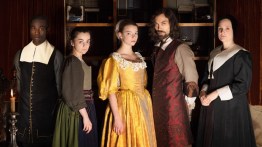
No, The State (Channel 4) wasn’t a recruiting manual for the Islamic State, though I did feel uneasy about it throughout the four episodes. The fundamental problem is this: if you’re going to make a watchable drama about bad people doing terrible things, you inevitably have to humanise them. And from there it’s just a short step to making them sympathetic. Peter Kosminsky’s drama followed four British Muslims to Syria to join IS.

Moral maze

Cinema

Una is a psychological drama about a woman who was abused by a man when she was 12, and who confronts him 15 years later, and it’s a hoot. I’m toying with you. Of course it isn’t. It’s disquieting. It’s disturbing. It’s difficult. It’s 90 minutes of uncomfortably shifting in your chair and wishing you were at the latest heist caper that doesn’t make sense. But it is also compelling, up to a point, and your responses will be so complicated that you won’t know where to start unpicking them. Or how. The film is based on the play Blackbird by the Scottish playwright David Harrower, which has won multiple awards and starred Jeff Daniels and Michelle Williams on Broadway.

‘Smile, segue and shut up’

Radio

Three weeks before Classic FM launched, I was on the radio in Hong Kong, introducing hits by Rick Astley and Wet Wet Wet. I’d just turned 21, and was working as a presenter for British Forces Radio. A phone call came from London. ‘My name is Michael Bukht. I’m setting up a new radio station and have heard good things about you. We’d like you to present our afternoon show. By the way, do you know anything about classical music?’ Michael Bukht would not have fared well in today’s consensual media world, where respect is the watchword. He was a bit of a bully, capable of exploding at anyone promoting views not aligned with his own. But he had absolute belief in what he was doing.

Game of Thrones bungles the execution of its last great villain

Another season of Game of Thrones is over, and nobody knows when it will return. After a run of seven short weeks, last night’s extended ‘The Dragon and the Wolf’ brought the curtain down on Westeros for the time being, except the curtain here was the colossal wall of ice that is the last barrier between the living and the dead. ‘The Dragon and the Wolf’ is a strange beast – extending its running time to 80 minutes allows the filmmakers to avoid most of the pitfalls of this season (notably the characters’ mysterious ability to teleport around the vast continent) but they are missing the confidence to know exactly what to do with that space.

What lies beneath | 24 August 2017

Arts feature

Last year, Gary Hume made a painting of himself paddling. At a casual glance, or even a longer look, it might not appear to be what it is. What you see is a wrinkled, pinkish surface with a sort of dome of curving green and blueish shapes at the bottom. This, to Hume, is a sort of self-portrait as a child at the seaside. ‘I’m on the beach, I’ve got the ripples going around my ankles making little coloured shapes, and all the sand.’ Hume’s paintings are like that. They may look abstract, but it turns out that they are startlingly real. One from some years ago consists of six shiny black rectangles with yellow bars between them.

Twin peaks | 24 August 2017

Music

Schoenberg began Gurrelieder in 1900, but he didn’t hear it until 1913. By then, he’d moved on, and he ostentatiously refused to acknowledge the applause for what (as it turned out) would be the greatest public triumph of his career. Radical artist snubs ignorant masses: it’s a gesture that could stand for much of classical music’s post-1913 history. Even today, you won’t get far into a discussion with contemporary music buffs before someone declares that concertgoers need to be ‘educated’. Which always reminds me of a friend’s account of the night at Reading when Guns N’ Roses decided to play new material instead of the hits that the audience felt they’d paid to hear.

Losing the plot | 24 August 2017

Cinema

Steven Soderbergh’s Logan Lucky is a heist caper that, to be fair, does what it says on the can. There is a heist. It is a caper. It also features an all-star cast and is said to be ‘the perfect summer entertainment’, which may or may not wash, depending on whether you believe the enjoyment of films is seasonally variable, or an average film is an average film, whatever the weather. It’s USP is that it’s ‘a red-necked Oceans’ or ‘a hillbilly Oceans’ so, in other words, it’s a riff on Oceans. Soderbergh directed the Ocean’s franchise, so it is hardly a stretch for him. Or us, for that matter.

Arcade Fire: Everything Now

More from Arts

Grade: D+ Well, this is truly awful. Perhaps the worst album by a major band since Mardi Gras by Creedence Clearwater Revival back in ’72. And that’s a lot better than this pompous, trite and at times desperate drivel. Their first album, Funeral, was quirkily anthemic and packed with memorable tunes. The second — Neon Bible — reminded me, chillingly, of Echo and the Bunnymen outtakes. The decline has continued apace. This time, Daft Punk have stapled on some bangin’ beats in an attempt to make the band seem hip. This stratagem has not worked. It makes them seem like dads at a rave. They still plough that post-punk early-1980s furrow for inspiration, but the soil is by now exhausted: hell, at times they sound like U2. And bad U2, at that.

Hit and miss | 24 August 2017

More from Arts

Truman Capote should have been called Truman Persons. His father, Archulus, abbreviated his first name and introduced himself as Arch Persons. ‘And that,’ scoffed his son, ‘sounded like a flock of bishops.’ The young scribbler was thrilled when his divorced mother married a rich Cuban, Joseph Capote, whose zippy and eccentric name he gladly adopted. He got a job at the New Yorker and found the magazine’s celebrated wits, including Dorothy Parker and James Thurber, were embittered molluscs who hated each other. Capote’s literary life, as related by Bob Kingdom, is a parade of inspired bitchiness. He had the knack of getting to a character’s core problem. For Gore Vidal it was the knowledge that he had never written a masterpiece.

Universal appeal | 24 August 2017

Radio

Yet another sign that we are living in very strange times: a pair of celebrities, their names made by TV, have switched over to radio for their next project. Not starring in their own series on BBC2 or Channel 4, but on a medium that could have become redundant yet is refusing to give way (the latest Rajar figures indicated that listening is on the up across all networks). Plenty of stars made by radio have gone on to household-name status on TV (Steve Coogan, David Mitchell, Chris Morris). But Eric Monkman and Bobby Seagull, who began trending on Twitter because of their appearances on BBC2’s University Challenge — Monkman, the geek with his razor-sharp eagerness to get on the button; Seagull, the cool, smiley guy — are now starring on Radio 4 in their own show.

For goodness’ sake

Television

Most new Netflix series are greeted not merely with acclaim, but with a level of gratitude that the returning Christ might find a little excessive two minutes before Armageddon. In this respect, then, Atypical is proving rather atypical. The reason for the mixed reception is that its 18-year-old protagonist, Sam, has autism — and, as we know, in these righteous times fictional characters are judged not on whether they’re convincing individual creations but whether they’re virtuous enough as representatives of an entire group. Happily for the bloggers, by that all-important criterion, Atypical was bound to fall a little short.

Action soars but acting plummets on Game of Thrones

The penultimate episode of a season of Game of Thrones is usually the point where something spectacularly game changing happens. In previous seasons, there’s been Ned Stark’s execution, the Battle of Blackwater Bay, the Red Wedding, the wildling attack on the Wall, the dragons in Meereen, and the Battle of the Bastards. It is sensible, therefore, to always enter the penultimate episode with a sense of trepidation and excitement, knowing that the events will not be inconsequential. Last night’s ‘Beyond the Wall’ ended up being less ‘Rains of Castermere’ and more ‘Dance of Dragons’ (i.e. nothing of any huge import happened).

Whatever happened to Alice?

Arts feature

In 1987, the art of opera changed decisively. John Adams’s opera Nixon in China was so unlike the usual run of new operas in its concept that many people, on first hearing about it, assumed it had to be a joke of some sort. Turning the preposterous and reviled figures of Richard and Pat Nixon and Henry Kissinger into operatic heroes — they were all still alive in 1987 — seemed preposterously at odds with the dignity of the form. It was entirely serious. Though the concept was in part that of Peter Sellars, the opera director, the exquisite refinement of treatment was that of the librettist, Alice Goodman. Unlike almost all contemporary operas, it quickly spread across the world.

Nothing is quite what it seems

Exhibitions

One day, somebody will stage an exhibition of artists taught at the Slade by the formidable Henry Tonks, who considered Cézanne a ‘curiously incapable’ menace, and a cracking show it will be. Until then, we must take what we can from exhibitions like True to Life: British Realist Painting in the 1920s & 1930s. Here, many of Tonks’s pupils, and others schooled with similar exactitude, can at last reclaim their rightful positions in British art after decades in the wilderness, pushed into the shadows by the alpha art of abstraction and the ironies of pop. True to Life is a marvellous show. The portraiture is the stand-out stuff, dominated by the limpid virtuosity of Meredith Frampton and Gerald Leslie Brockhurst.

India in a day

Radio

Bold programming by the powers-that-be at Radio 4 meant it was possible to listen to all seven episodes of Ayeesha Menon’s adaptation of Salman Rushdie’s Midnight’s Children in a single day on Tuesday, exactly 70 years since independent India was born, and Pakistan created. Four and three-quarter hours of meticulously crafted drama (directed by Tracey Neale and Emma Harding) ingeniously slotted into episodes of different lengths throughout the day, some just 15 minutes, others a full hour (the adapter having to create and sustain pace in a variety of ways to suit the different lengths).

Not vintage Mariinsky

More from Arts

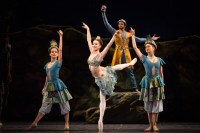
Not really a vintage Mariinsky season — an odd choice of repertoire and some hit-and-miss male casting — but the Covent Garden run ended on a glorious high. Marius Petipa’s La Bayadère is a lightly curried love triangle about a handsome warrior torn between his betrothed (a Rajah’s daughter) and a beautiful temple dancer. Old-fashioned? You bet. But the scenery is chewed with such relish and the choreo-graphy delivered with such radiant commitment that the three hours roll by in a lime-lit haze — you half expect an audience in dress uniforms and tiaras.

Wilson’s sparkle and snap

Music

Back in the period-instrument wars of the 1980s and ’90s, when the forces of historically informed performance smashed out of their baroque beachhead and started to annex romantic repertoire, the insurgents split into two factions. Roger Norrington and the London Classical Players were the shock troops: their Berlioz Symphonie Fantastique, with its filthy, rasping ophicleide, exploded like a tactical nuke. John Eliot Gardiner and his Orchestre Révolutionnaire et Romantique went in later as peacekeepers, altogether smoother and more reassuring. Norrington’s discs started arguments; Gardiner’s won awards. As an A-level music student drunk on the hot-blooded idealism of Berlioz’s Memoirs, I was certain which one the composer would have preferred.

The many sides of satire

Theatre

Brexit the Musical is a peppy satire written by Chris Bryant (not the MP, he’s a lawyer). Musically the show is excellent and the impressions of Boris and Dave are amusing enough, but the storyline doesn’t work and the script moves in for the kill with blunted weapons. Everyone is forgiven as soon as they enter. Boris swans around Bunterishly, Dave oozes charm, Theresa May frowns and pouts in her leather trousers, and nice Michael Gove tries terribly hard to be terribly friendly. Andrea Leadsom, known to the public as a furtive and calculating blonde, is played by a sensational actress who belts out soul numbers while tap-dancing in high heels and a pencil skirt. Was there ever a kinder portrait of a cabinet minister?

Grimes triumphant

Opera

‘Peter Grimes!’ Ranked high above us in the Usher Hall — a mob smelling blood, hot for the kill — the chorus let forth those three primal cries, and we were all lost. The modesty-curtain of civilisation was torn away, and our basest human urges — hate, revenge, suspicion of difference, delight at weakness — were exposed. Looking up at those faces, shielded by no proscenium, separated by no stage lighting, I don’t know when I have ever felt more horrified, more shaken by a performance. ‘A staged concert,’ writes conductor Ivan Fischer, ‘looks for complete harmony and coordination between music and theatre... for organic unity in which vocal and acting skills merge completely.’ He’s not wrong.

Acid reign | 10 August 2017

Arts feature

In 1988–9, British youth culture underwent the biggest revolution since the 1960s. The music was acid house, the drug: Ecstasy. Together they created the Second Summer of Love — a euphoric high that lasted a year and a half and engulfed Britain’s youth in a hedonistic haze of peace, love and unity. At the end of a decade marked by social division and unemployment, acid house transcended class and race, town and country, north and south. Amid the smoke and lasers, an entire generation came up together. How did it happen? The story starts in Ibiza, which by the mid-1980s had outgrown its roots as a hippie commune and was attracting beautiful people from all over the world.