Culture

Culture

The good, the bad and the ugly in books, exhibitions, cinema, TV, dance, music, podcasts and theatre.

Faulty connection

Radio

There’s no doubting her passion for the programme of which she is now chief of staff. Talking to Roger Bolton on Radio 4’s Feedback slot, Sarah Sands told us repeatedly how much she loved Today, how it was ‘a privilege’ to be in charge of such a ‘flagship’ programme, how its length, three hours, was such a luxury after years spent in the newspaper business. She was so happy to have so much time to cover big subjects and invite so many experts into the studio to talk about their subject. She relished the challenge of preserving the programme’s ‘depth and resonance’, its ‘great intelligence’ and ‘thoughtfulness’.

When in Rome… | 12 October 2017

Television

I know I keep saying that in Decline of the West terms we’re all currently living in Rome, circa 400 AD. But now, on TV, there is actual proof of this in the form of a truly appalling reality series called Bromans (ITV2, Thursdays). Bromans is like a cross between Love Island and Carry On Cleo, so shamelessly low, tacky and brain-dead that it makes Geordie Shore look like Kenneth Clark’s Civilisation. Basically, a bunch of ridiculously buff lads strip off and participate in crap gladiatorial contests in which no one dies (thus entirely defeating the object), while their hot blonde girlfriends smoulder pointlessly in scanty outfits, and say stupid things like ‘I’ve gone 2,000 years back. I’ve never lived that far back.

Gathering storm

Cinema

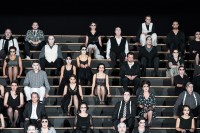
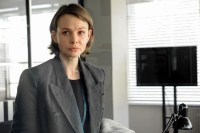
Sally Potter’s The Party, which unfolds in real time during a politician’s soirée to celebrate her promotion, is just 71 minutes long, but it certainly packs a punch. Actually, make that two. Two punches (at least). And there’s a gun, cocaine, a smashed window, throwing up, toxic revelations (of course) and a tray of incinerated vol-au-vents. It is less than half the length of, say, Blade Runner 2049, but three times as dramatic, and maybe 676 times as entertaining, plus it features a stellar cast who put the work in and don’t discover stuff by simply staring at it really, really hard.

Perishable goods

Theatre

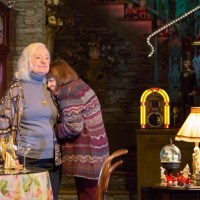
  Labour of Love is the new play by James Graham, the poet laureate of politics. We’re in a derelict colliery town in the East Midlands where the new MP is a malleable Blairite greaser, David Lyons. He arrives to find the office in crisis. The constituency agent, Jean, has handed in her notice but David is smitten by her acerbic tongue and her brisk management style so he asks her to stay. She agrees, reluctantly, and they settle into a bickering rivalry underpinned by affection. But is there more? Possibly, yes, but both are held back by their natural reticence and by fate. Secret declarations of love go astray. One letter is sent to the wrong person and another, written in code, makes sense only when read backwards. These contrivances aren’t entirely satisfying.

Soap opera

Opera

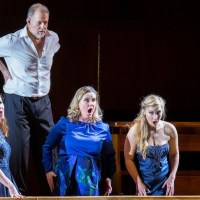
Previously on Giulio Cesare… English Touring Opera’s new season caters cannily to the box-set generation by chopping Handel’s Egyptian power-and-politics opera in two, playing each half on consecutive evenings as edge-of-your-seat instalments in a sort of baroque House of Cards. Will Cleopatra outwit her wicked brother? Will she and Cesare ever get together? Will Sesto ever stop dithering and do the deed? Tune in tomorrow night to find out. If that sounds like the kind of pacy, racy entertainment you’ve always longed for in the opera house, be warned; this is Giulio Cesare: the Director’s Cut, doggedly and absolutely complete, down to every last recitative, aria and interlude.

I’m never happier than when an arts show on TV is cancelled

I am, to paraphrase myself, ‘a freethinking middle aged rock 'n' roller, still on the toilet circuit hoping it’s a good walk-up.’ Actually, unless I live to be 99 the bit about being middle aged is rather optimistic. Tomorrow it is my half century birthday, but today I hit the road with my Scottish tour manager Jim bound for Ramsgate – Brexit central control. Kent seaside towns are where it all happens: Ted Heath, satanism, Charlie Hawtrey cottaging in maritime pubs. Time stands still in Kent. It’s a very 21st-century kind of place. I am booked on a short tour of the UK to celebrate the release of a new four-CD anthology Luke Haines Is Alive And Well And Living In Buenos Aires.

In preserving its heritage gaming is maturing as an art form

Want to feel like a kid again? Now, if you’re of a certain age, inclination and fortune, you can. Last week, Nintendo launched its SNES Classic Mini, a modernised and miniaturised version of a console that it first released over 25 years ago. It comes loaded with 20 games from back then, including Super Mario World and The Legend of Zelda: A Link to the Past, and it has gamers palpitating. The SNES Classic Mini sold out a few frantic minutes after it was first made available to order. Anyone who missed out will have to face the merciless price inflation of eBay. This sort of harkening-back is nothing new – last year, for example, Nintendo released a Classic Mini version of an even earlier console – but it is becoming far more prevalent.

Savage beauty

Arts feature

Could it, at times, be frustrating to have taken one of the world’s most famous photographs? Steve McCurry’s ‘Afghan Girl’ (1984) is, according to the Royal Geographic Society, the most recognised photo on the planet. You can summon it to mind in a trice: a beautiful young refugee of about 12, her head covered with a rough red shawl, stares out at the camera with those pale green eyes. But what Steve McCurry’s vast, World Atlas-sized new retrospective portfolio shows is just how many other, perhaps even better, photographs he’s taken of the country over the past 40 years; how many other Afghan girls there are in the shadow of that green-eyed superstar. One portrait of a child in blue-grey taken in Ghazni six years later is especially intense.

Mourning glory

Music

  On the face of it, Nick Cave & the Bad Seeds aren’t exactly a natural fit with the O2. Cave’s songs range from the thrillingly cacophonous to the quietly lovely. But with their recurring themes of death, violence and religion, and a muse that rarely leads Cave in the direction of the mainstream, very few have ever seemed particularly arena-friendly. And that was before his latest album, Skeleton Tree, which forms the basis of his current tour — and which Cave completed after his 15-year-old son Arthur died falling from a cliff in Brighton. Cave has warned against seeing the album as a direct response to the tragedy, emphasising that many tracks were written before it happened.

Pole position | 5 October 2017

Opera

Did you know that they used to make the Fiat 126 in the Eastern bloc? They did, apparently. There was a plant at Bielsko-Biala, and the car was widely driven throughout Poland in the 1970s, when you only had to wait a couple of years to buy one. It became an emblem of personal freedom, and Poles even gave it a nickname: Maluch, or ‘little one’. That’s the principal insight that I gleaned from director Karolina Sofulak’s decision to set Cavalleria rusticana in communist Poland. She explains her thinking in the programme book: essentially, 19th-century Sicily was Catholic and repressive, and 1970s Poland was Catholic and repressive, so why not? Cue the latest one-size-fits-all operatic design cliché — fastidiously rendered depictions of 1970s squalor.

Back to the future | 5 October 2017

Cinema

Ridley Scott’s original Blade Runner first came out in cinemas 35 years ago, which I was going to say probably makes it older than some readers, although this being The Spectator, perhaps not. It wasn’t successful in its day, but has since become a beloved classic (rightly), whereas this sequel, Blade Runner 2049, will likely do great box office today, but no one will give a fig tomorrow, once all the silly hype has died away. This is Blade Runner as a dull mainstream blockbuster populated by men who are the epitome of masculine cool and women who are needlessly sexualised fembots.

Vice and virtue

Music

‘Can the ultimate betrayal ever be forgiven?’ screams the publicity for The Judas Passion, transforming a Biblical drama into a spears-and-sandals soap opera in a sentence. Thankfully, this really isn’t the premise of composer Sally Beamish and poet David Harsent’s new oratorio. Instead, the two authors pose a more interesting problem: is betrayal still betrayal when it’s divinely ordained, the price of salvation? A performance of Mahler’s Fourth Symphony this week celebrated the innocent joys of heaven; The Judas Passion invited us to count their sinful cost. You see them before you hear them. The 30 pieces of silver catch the light as they hang suspended as part of the ‘Judas chime’, an instrument created especially for The Judas Passion.

Playing it safe | 5 October 2017

Television

BBC1’s latest Sunday-night drama The Last Post, about a British military base in Aden in 1965, feels like a programme on a mission: that mission being to avoid getting shouted at by either the Guardian or the Daily Mail. To this (possibly doomed) end, it goes about its business very gingerly, with an almost pathological devotion to balance, and a safety-first reliance on the trusty methods of the well-made play, where each scene makes a single discrete point and the characters are as carefully differentiated as the members of a boy band. The first episode opened with the base’s new captain landing at Aden airport with his wife. ‘It must be a hundred degrees,’ she said scene-settingly as they descended from the plane.

Pretty vacant

More from Arts

Alice is at it again. Christopher Wheeldon’s 2011 three-act ballet began another sell-out run at Covent Garden last week. It’s a joy to look at and packed with featured roles that show off the Royal Ballet’s strength in depth. If only it weren’t such a bore: thinly written characters; anodyne choreography and zero dramatic tension. To be fair, the episodic dream logic of the original doesn’t make for a coherent or involving narrative. Wheeldon and his scenarist, Nicholas Wright, have done their best to correct for this by tacking on a Wizard of Oz-style prologue in which the Caterpillar, Dormouse et al. are human guests at an Oxford tea party.

Split decision | 5 October 2017

Radio

Think back to that morning in September 1967 when the Light Programme was split in two, Tony Blackburn launching Radio 1 with a jaunty new jingle announcing it was all ‘Just for Fun’ while staid old Radio 2 went on with the Breakfast Show and told its listeners to ‘Wake Up Easy’. What is so surprising is just how radical the changes at the BBC were. On that unsuspecting morning, as the Pope urged for peace in Vietnam and a cannabis farm was discovered in Bristol, the Beeb’s radio output was completely overhauled.

No pain, no gain | 28 September 2017

Arts feature

The best episodes of Curb Your Enthusiasm are the ones that make you want to hide behind the sofa, cover your ears and drown out the horror by screaming: ‘No, Larry, no!’ I’m thinking, for example, of the one where our hero attends a victim support group for survivors of incest and, in order to fit in, decides to concoct a cock and bull story about how he was sexually abused by his uncle. This, of course, comes back horribly to haunt him when out one day with his blameless real uncle… But no, I shan’t try to elaborate, for the plots in Curb Your Enthusiasm are as convoluted as any farce. And besides, you should see it for yourself.

I spy | 28 September 2017

Exhibitions

Where was Degas standing as he sketched his ‘Laundresses’ (c.1882–4)? Did he watch the two women from behind sheets hanging to dry? Or was he hidden by steam from the basins? The laundry women are unselfconscious, unguarded. One reads aloud from a list, calling out shirts, collars, cuffs to be washed and ironed. Another leans over her workbench, staring into the placket of a folded shirt like Narcissus into his pool. Neither is the least bit bothered by the artist making a rapid chalk sketch to be worked up later in pastel. Nor the two men in ‘At the Café de Châteaudun’ (c.1869–71), reading a newspaper with monocle and magnifying glass. Degas might be peering at them over the top of his menu. A coffee, a croissant, a sneaking sketch.

Woman of a thousand voices

Radio

‘On air, I could be the most glamorous, gorgeous, tall, black-haired female… Whatever I wanted to be, I could be… That was the thrilling part to me,’ said Lurene Tuttle, talking about her career as a star of American radio in its heyday from the 1930s to the 1950s. She was known as ‘the Woman of a Thousand Voices’ because of her talent for voicing any part, from child to OAP, glamour puss to gangster moll, hard-nosed executive to soft-hearted minion. On Saturday we heard her in full flow on Radio 4 Extra in an episode of Suspense, brought out of the archive from June 1949 for the three-hour special celebrating The Golden Age of American Radio. It was terrifying.

Bloody minded

Theatre

Tristan Bernays loves Hollywood blockbusters. His new play, Boudica, is an attempt to put the blood-and-guts vibe of the action flick on the Globe’s stage. The pacy plotting works well. Boudica revolts against the Romans who have stolen her kingdom. The queen is imprisoned and flogged while her two maiden daughters are savagely violated. Vowing revenge, she allies herself with the reluctant Belgics and they attack and destroy Camulodunum (Colchester). The first half is a rip-roaring crowd-pleaser. After the interval, an anticlimax. London is sacked but the Romans cling to power and when Boudica dies, her bickering daughters fight rather tediously over the succession. What counts here are the externals: the costumes, the accents, the fights, the stunts.

Unhappy days

Cinema

Scriptwriters love to feast on the lives of children’s authors. The themes tend not to vary: they may have brought happiness to millions of children but their stories — sob — were fertilised by unhappiness. Saving Mr Banks: Mary Poppins author was a bossy shrew because her alcoholic father died young. Miss Potter: Peter Rabbit creator never found love. Finding Neverland: Peter Pan playwright cheered up grieving family. Enid (made for BBC Four): Miss Blyton was a monster traumatised by her upbringing. And so it will presumably go on.

Vital signs

More from Arts

Exhibit A. It is 1958 and you are barrelling down a dual carriageway; the 70 mph limit is still eight years away. The road signs are nearly illegible. You miss your turning, over-correct, hit a tree and die. The following year, graphic designer Margaret Calvert is driving her Porsche 356c along the newly built M1. The motorway signs are hers. It is information design of a high order, possibly even life-saving. The clarity and intelligence of Calvert’s British road signs remain unmatched nearly 60 years later. And the font she created became the NHS, and later rail and airport, standard. Exhibit B. The French are worried about nuclear waste. Given the half-life of radio-active detritus, warning signs must be legible in 100,000 years when written language may be redundant.

Beauty and the beast

Music

I was going to start with a little moan. About the shouty marketing, the digital diarrhoea, the sycophantic drivel, which, like a bad smell, hovered over Simon Rattle’s ten-day coronation. But then came the most amazing Rite of Spring I’ve ever heard and to moan suddenly seemed criminal. No masterpiece is harder to pull off than the Rite. So often it deflates midway and never regains its shape. Rattle made his name with the piece when he was at the City of Birmingham Symphony Orchestra, taming the brute, slowing it down, prising open its interior, allowing us to inspect its fangs, look straight down its snappy gob. Here, the beast was unleashed. Rabid brass, uncontrollable winds, strings scything through the rabble behind.

iAddicts

Arts feature

For many years The Spectator employed a television reviewer who did not own a colour television. Now they have decided to go one better and have asked me to write a piece to mark the tenth anniversary of the iPhone. I have never owned an iPhone. (In the metropolitan media world I inhabit, this is tantamount to putting on your CV that you ‘enjoy line dancing, child pornography and collecting Nazi memorabilia’). But, even though I’m a diehard Android fan, I still cannot help paying attention to every single thing Apple does and says. I don’t think this happens in reverse. I doubt Apple owners pay any attention to the next phone announcement from LG or Nokia — any more than Anna Wintour lies awake wondering what Primark’s autumn season has in store.

Mothers’ ruin

Exhibitions

At the heart of Basic Instincts, the new exhibition at the Foundling Museum in London, is an extraordinarily powerful painting of a mother and baby. At one time the ‘Angel of Mercy’ was sold as a greetings card by its owner, the Yale Center of British Art in Connecticut, presumably intended as something you might send your own mother or child. But take a second glance and you might well wonder who bought the card and who they might have sent it to. In Joseph Highmore’s Georgian scene, a young, fashionably dressed woman is splayed across the canvas, her feet in delicate silk shoes, a tiny baby, naked, resting precariously on her lap.