Culture

Culture

The good, the bad and the ugly in books, exhibitions, cinema, TV, dance, music, podcasts and theatre.

London calling | 10 August 2017

Festivals

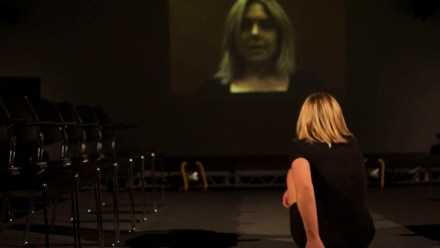
What is the Edinburgh Fringe? It’s a sabbatical, a pit stop, a pause-and-check-the-map opportunity for actors who don’t quite know where to go next. Alison Skilbeck has written a ‘serio-comic celebration’ of Shakespeare and her performance attracts a decent crowd for a show that starts at noon. She plays a fruity-voiced thesp, Artemis Turret, who delivers lectures about the Bard’s older females to groups of layabout pensioners gathered in a scout hut. It’s pure Joyce Grenfell. Good fun, too, but without much potential beyond the fringe. Dominic Holland’s show, Eclipsed, is about his life as a fallen comedy god. In the 1990s he was on telly all the time and he accepted the royal command to perform at Prince Charles’s 50th birthday party.

The joy of sex

Features

Your typical Trollope-loving, Brahms-bothering Spectator reader probably won’t be aware that the most recent winner of Big Brother was a girl called Isabelle Warburton, but her victory was a joy to behold — and a lesson to be learned. The unemployed 21-year-old had a tan so orange it made Oompa-Loompas look pale and interesting, and on her first night in the house she was already wisecracking about how she’d caught an STD in Ibiza from a fellow contestant. Everyone presumed she was an air-headed bimbo, but she went on to display the most extraordinary decency — the only word for it — with her honesty, self-sacrifice and boldness. She took on and saw off the strutting alpha male of the house and volunteered herself for eviction to save a rival.

Classy and classic

Opera

The Edinburgh International Festival began with a double helping of incest. Curiously, Greek — Mark-Anthony Turnage’s East End retelling of the Oedipus myth, which was greeted with universal acclaim at its premiere in 1988, and which has gone on to be one of British opera’s biggest export success stories — was tagged on the Festival website as being suitable for ‘risk takers’. Whereas Wagner’s Die Walküre — which ends its first act in ecstatic celebration of a sex act so transgressive that even in 2017 it can draw appalled gasps from an audience — was described as being ideal for ‘traditionalists’. Bizarre. Perhaps brothers and sisters sleep together all the time in Morningside; I couldn’t say.

Big Auntie

Radio

It’s sneaky, the way in which the BBC, so much regarded as part of the family as to be nicknamed ‘Auntie’, has introduced the need to login (or register) whenever you want to listen to something on iPlayer. Maybe I’m doing something wrong because the alert message assures me I will be kept logged in, and that I should only have to login once. But even that is once too much. After all, until now, we’ve had the chance to listen again to whatever we fancy with very little fuss and almost instantly.

Time to end authenticity

Music

They say the first step towards recovery is admitting that you have a problem. So I’m staging an intervention and asking the BBC Proms to admit what they’ve known for some time: they have a big problem when it comes to early music. How to perform it, where to perform it, even who should perform it — these are all questions that, year after year, remain unsatisfactorily, inconsistently or superficially answered, and there’s little in this year’s programming to suggest that 2017 will be any different. Up until now the festival’s conversation about early music has been dominated by the red-herring question of venue.

Cathedral of creation

More from Arts

Sometimes, it pays to rediscover what’s already under your nose. I’ve been umpteen times to the Natural History Museum but I don’t think I’ve ever seen it properly, not even at the evening parties I’ve been to under Dippy-the-Dinosaur, until now. I visited the new and refurbished Hintze Hall and it was a revelation. The thing that strikes most visitors is that there isn’t a dinosaur any more — Dippy is on tour — and he’s been replaced by Hope, who is a) a blue whale, b) female and c) genuine (the dinosaur was fake). Swings and roundabouts. We have lost a dinosaur, but we’ve gained an entirely new perspective on an astonishing building, what a Times leader in 1881 called a ‘Temple of Nature’.

Who is Kirill Petrenko?

Music

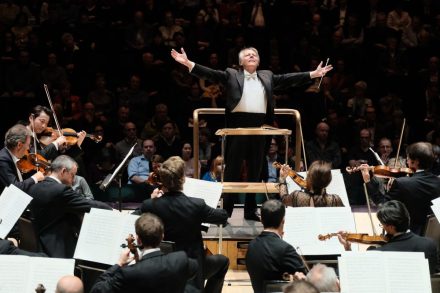
Two summers ago, the BBC were offered a Proms visit by the Bavarian State Orchestra with its music director, Kirill Petrenko. The conversation went something like this. BBC: ‘Petrenko, isn’t he the chap that conducts Liverpool?’ Munich: ‘No, that’s Vasily Petrenko. This one is Kirill.’ BBC: ‘Well, we don’t really know about him over here. He won’t sell at the Proms.’ Barely was the snub delivered than Kirill Petrenko was elected music director of the Berlin Philharmonic, the most coveted orchestra on earth, and the music biz had a good laugh at the BBC’s dumb insularity. But let’s not be too beastly to the BBC: its ignorance was universally shared.

Game of Thrones has its first winner: Bronn

For the third episode in a row, Game of Thrones has devoted its final act to the sort of blockbuster battle sequence that would’ve been unthinkable on TV a few years ago. Now it’s a weekly treat, and the dish presented to us in ‘The Spoils of War’ was the most visceral, disarming battle since Jon Snow and Ramsay Bolton went head to head in the sludge at Winterfell. Indeed, the sequence – led by a shot of Bronn in the chaos which owes a lot to the opening scene of The Revenant – overshadows all that comes before it. Raised eyebrows abound as Jon and Dany enjoy a deeply flirtatious look at cave paintings, whilst Arya, Sansa and Bran are reunited (reminding us that three way conversations between child actors are, at best, tedious).

His dark materials | 3 August 2017

Arts feature

Randy Newman is already struggling to keep up with himself. His dazzling new album, Dark Matter, was written before the changes of the last year, and no matter how pointed and current some of it is, there’s something missing. ‘There was a newspaper article that said Donald Trump is like a character in a Randy Newman song,’ he says. ‘I didn’t think there were any real people like the guy in “Political Science” or “My Life Is Good”. But he’s close.’ He’s had a bash at something for the Potus. ‘I just had an idea for a Trump song,’ he says, sounding rather like Yogi Bear’s rather smarter brother. ‘But then I didn’t do anything about it.

Object lesson | 3 August 2017

Exhibitions

Why did Henri Matisse not play chess? It’s a question, perhaps, that few have ever pondered. Yet the great artist provided an answer, which is quoted in the catalogue to Matisse in the Studio, a marvellous new exhibition at the Royal Academy. He did not care, he explained, ‘to play with signs that never change’. It’s a revealing reason in several ways. For one thing, it underlines how different Matisse was from his younger contemporary Marcel Duchamp: the most celebrated chess-player in art. Duchamp loved logic, so his work tended to turn into a series of theorems.

Low life | 3 August 2017

Low life

Five and the Red One are a German covers band. It’s probably the most uninspiring name for a rock band I’ve ever heard. Every July they come to the same French village for a one-off appearance and every year they play exactly the same set of rock classics. Young and old turn out to sing along and groove under the plane trees in the village square. The village rock concert is Catriona’s social event of the year. She starts looking forward to it around Christmas. Every year, she pushes her way to the front and dances for two hours, and every year the village postman makes a move on her. Apart from the postman’s annual overture — she doesn’t fancy him one bit — it’s the best rock gig she’s ever been to, she says.

Separation anxiety

Radio

As Europe remembers Passchendaele, India and Pakistan recall Partition, just 70 years ago, when Britain so hastily abandoned its Indian empire, exhausted by the costs of war in the world and troubled by the upsurge in violence between Muslims, Hindus and Sikhs as the campaign for Britain to Quit India took root. In Partition Voices on Radio 4 (produced by Mike Gallagher, Tim Smith and Ant Adeane), we heard from those who witnessed the bloody terror that broke out across the subcontinent as it was divided on religious, not political, ethnic or communal grounds, many of whom fled to Britain to make new lives for themselves.

An inconvenient truth | 3 August 2017

Cinema

Maudie is a biopic of the folk artist Maud Lewis (1903–70) who is, apparently, beloved in Canada, and while Sally Hawkins is superb in the title role, and she will win you over (eventually), you do have to buy it as ‘a beautiful love story’. I bought it, hook, line and sinker — such a beautiful love story! — but then I read up on Maud (damn the internet) and had to significantly unbuy it. Does it matter that it may not be ‘the truth’? Or that a woman who was, in fact, severely disabled is presented mostly as someone with a slight hobble? I don’t know, frankly. But I am certainly putting it out there.

In praise of Netflix

Television

All this week I have been trying, with considerable success, to avoid being bludgeoned by TV programmes telling me in various sensitive and imaginative ways just how brilliant, heroic and historically maligned homosexual men are. I achieved this by sticking to Netflix. One of the great things about Netflix (whose annual subscription costs just half the BBC licence fee, by the way) is that though it’s probably run by lefties it doesn’t try to ram its politics down your throat. Maybe this is one reason why its 100 million-plus subscribers are so much less resentful than BBC viewers: they’re being offered choice, variety, entertainment — not worthiness, race, gender quotas and compulsory indoctrination.

Starting block

Theatre

Conor McPherson’s new play is set in dust-bowl Minnesota in 1934. We’re in a fly-blown boarding house owned by skint, kindly Nick who has designs on a sexy widow with a big inheritance coming. Good opening. Roll the story. But there’s more. Nick’s useless son is a depressed novelist entangled with a beautiful governess betrothed to a rich man she doesn’t love. An even better opening. Roll the story. But wait. Nick has a black maid called Marianne whom he rescued as a baby and raised as one of the family. An interesting complication. Roll the story. No wait. Marianne claims to be pregnant but declines to reveal whether the father is a rapist or an honourable suitor. And local gossips whisper that her baby bump is fictional. Fascinating.

Losing our religion

Music

Sir James MacMillan’s European Requiem, performed at the Proms on Sunday, isn’t about Brexit. The composer had to make this clear in a Radio 3 interview just before the broadcast, because the BBC was just itching to cast the work — a melancholy score, despite its thunderous drumbeats — as a lament for us leaving the EU. That would have been neat, given that the second half of the concert consisted of Beethoven’s Ninth, whose ‘Ode to Joy’ has been clumsily appropriated by Brussels. Incidentally, some Remainers in the audience chattered through the symphony’s first three movements, impatient for their Big Tune.

Show up and show off

Arts feature

The Edinburgh Festival was founded as a response to war. The inaugural event, held in 1947, was the brainchild of Rudolf Bing, the manager of Glyndebourne Opera, and Henry Harvey Wood, a British Council grandee. Both were convinced that a festival of music and theatre was needed to restore the artistic heritage of Europe after six years of devastation. Edinburgh recommended itself as the host city because of its cultural prestige, its picturesque location (to rival Salzburg), and its ample store of theatres and hotels that could accommodate hundreds of performers and thousands of visitors. That the Luftwaffe hadn’t flattened the city was a significant mark in its favour. The festival set out to ‘provide a platform for the flowering of the human spirit’.

Maximum wattage

Exhibitions

On his deathbed in 1904, George Frederic Watts saw a extraordinary spectacle. He witnessed the universe coming into being: the ‘breath of the Creator acting on nebulous matter’ causing ‘agitating waves & revolving lines’ to fly out in all directions. With hindsight, it is tempting to conclude that Watts had a vision not, as he thought, of reality in ‘a glorious state’, but of abstract painting. The beautifully installed exhibition at the Watts Gallery, Compton, Surrey, celebrating the bicentenary of his birth actually contains a few pictures that — surprisingly for a great Victorian — put one in mind of Jackson Pollock.

Balkan brass

Festivals

When brass instruments with button-operated valves were introduced in the first half of the 19th century, music-making changed. Once requiring a semi-professional approach, it could now be quickly mastered by large groups of working people. A noisy result were Britain’s colliery bands: but a more spirited upshot was Serbia’s trumpet tradition. Like the colliery bands, Serbian brass music had a political imperative — re-weaving national identity after 500 years of Turkish occupation. The leader who first hit on trumpets as a vehicle for this joie-de-liberté was Prince Milos Obrenovic, who created the first Serbian brass ensembles in 1831. They took swift hold, providing an outlet for everyday south Slav exuberance.

Beethoven: Missa solemnis

More from Arts

When you first encounter it, Beethoven’s Missa solemnis can sound like the Ninth Symphony with more singing but no tunes. But the more I listen to it, the more I agree with the composer that it’s his greatest work — or, at least, up there with the last two piano sonatas and his String Quartet Op. 131, my other nominees. Despite its titanic scale, the Missa solemnis inhabits their intimate sound world: it is built from the harmonically ambiguous motifs of Beethoven’s ‘third style’. Nothing in it is as catchy as the ‘Ode to Joy’.

Heavy-handed

Theatre

Oliver Cotton is an RSC stalwart who looks like a man born to greatness. Google him. He has the fearless jawline of Napoleon, the diabolical stare of Heathcliff, the tumultuous eyebrows of Michelangelo and the streamlined quiff of Liberace. And there’s something richly corny about his appearance too, as if he were Bill Nighy done up as a 1970s porn baron. When he isn’t treading the boards, Cotton writes contemporary thrillers and his latest effort, Dessert, is directed by Trevor Nunn. We’re in a London mansion where smug billionaire Hugh Fennell and his gem-encrusted wife are showing off their latest toy, a Renaissance oil painting, to a pair of rich American idlers. A gunman bursts in and takes all four of them hostage.

What stopped Stoppard?

Radio

Two programmes this week presented two radically different world views, or rather ways of life. Aditya Chakrabortty’s series for Radio 4, Decoding the News, looked at five words or phrases which have come to characterise how politics, finance and business operate in the UK. We entered a world of policy wonks and pundits, of words used not to enlighten or explain but to calculate and confuse. A world in which those who tell stories get all the attention, while those who insist on sticking to the facts are ignored or on occasion ridiculed. It made for chilling listening as, for instance, Chakrabortty deconstructed the meaning of that slippery term, ‘shareholder value’.

Strong stuff

Opera

The strings sweep upwards, the horns surge, and Leoncavallo’s Zaza throws itself into your arms. We don’t know it yet, but we’ve just heard the drama’s focal point: what David Lynch would call its ‘eye of the duck moment’. The same music recurs near the end of Act One, as the fumbling attempts at seduction of the small-time showgirl Zaza finally come good, and she locks lips with Milio Dufresne, the Parisian dandy who she imagines will take her away from the seedy, bustling demi-monde that we see laid out around her.

Game of Thrones gets back to brutal business

A good measure of whether Game of Thrones is feeding you a placeholder episode is to imagine trying to spoil it for a close friend who has yet to watch. After the series opener, ‘Dragonstone’, I was left scrambling for ways in which I could ruin the viewing experience for virgin eyes. Daenerys arrives at Dragonstone? Not exactly news. Cersei schemes against everyone? Change the record. Jon Snow makes a brooding, portentous speech about the White Walkers? Got the t-shirt. And it took a fair time for season seven’s sophomore effort, ‘Stormborn’, to tread new ground, but, when it finally did, it was in a heady blaze of sex and violence. For its first half, ‘Stormborn’ is more House of Cards than Lord of the Rings.

Ivory towers

Arts feature

Great novels rarely make great movies, but for half a century one director has been showing all the others how it’s done. James Ivory has worked his magic on all sorts of authors, from Kazuo Ishiguro to Henry James, and this week the finest of all his adaptations returns to the big screen. ‘A film that’s almost two and a half hours long, non-stop talking, set in the Edwardian era — who would have thought that would be such a huge success?’ says Ivory, on the phone from his home in upstate New York. Yet somehow, this taciturn director turned a wordy novel by E.M. Forster into a gripping drama. How did he do it? By creating the ideal setting, meticulous in every detail, then stepping back and giving his creative colleagues room to breathe.

A game for two

Exhibitions

Some art can be made in solitude, straight out of the artist’s head. But portraiture is a game for two. That’s the lesson of The Encounter: Drawings from Leonardo to Rembrandt, a marvellous little exhibition at the National Portrait Gallery. It is essentially a medley of Old Master works on papers from various British collections — which might sound a little on the quiet side. But that would be the wrong conclusion: on the contrary it poses intriguing questions and is full of visual pleasures. [caption id="attachment_10230102" align="alignnone" width="530"] 'Head of an Elderly ManWearing a Cap, probably Mino da Fiesole' (c.