Culture

Culture

The good, the bad and the ugly in books, exhibitions, cinema, TV, dance, music, podcasts and theatre.

Thomas Cole’s allegorical landscapes chronicling the decline of civilisation are sublime – but wrong

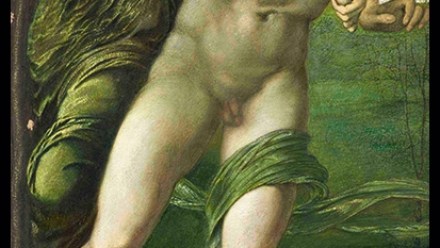
For Americans, Thomas Cole is a household name. He painted America’s wild landscapes and lamented its destruction by the country’s early industrialisation. Yet the Lancaster-born Cole is little known in Britain, living stateside for most of his adult life. The National Gallery has been working with the Met to bring home Cole and his works. And what a homecoming it is. Inspired by Turner and Constable, Cole was a self-made man, learning to paint through tenacity and a small collection of books. Like Constable, Cole obsessed over nature and ideas of decay (Constable’s crumbling 'Hadleigh Castle' was a favourite).

On the offensive

Arts feature

‘I’m an amateur,’ Barry Humphries tells me. The Australian polymath uses the word in its older sense of ‘enthusiast’ rather than ‘bungler’ and he feels no need to point out the distinction. He’s in London to perform a three-week residency at the Barbican — Barry Humphries’ Weimar Cabaret — with his fellow Australian Melissa Madden Gray, who uses the stage name Meow Meow. The show was inspired by Humphries’ fascination with Germany’s culture during the interwar years. ‘It was the last song before the nation slid into moral squalor.

Beasts from the East

Exhibitions

One area of life in which globalism certainly rules is that of contemporary art. Installation, performance, the doctrine of Marcel Duchamp, conceptualism — nowadays these flourish throughout the world and nowhere more so than in the Far East. Plenty of evidence for this is on view in an exhibition at the Hayward Gallery by the South Korean artist Lee Bul. But though the idioms are familiar, the works themselves can seem outlandish to an occidental eye. Just inside the door you are confronted by a sculpture entitled ‘Monster: Pink’ (2011). It looks like one of those oddly shaped vegetables that are sometimes displayed at village fêtes — but running riot on a monumental scale and sprouting innumerable carrot-like tubers.

Streep show

Cinema

Mamma Mia! Here We Go Again aims to do what it says on the can. That is, be Mamma Mia, going again. But while many of the elements are the same as in the original —beautiful Greek island scenery; the actors frolicking among local folk and falling off boats; the knowing cheesiness; Pierce Brosnan singing his little heart out (alas) —you will be asking: where the hell is Meryl Streep? She’s on the poster but there’s no sign and no sign and no sign until, finally, at about 100 minutes in, she makes an appearance, and is wonderful. You do get Cher in an extended cameo, which is thrilling, but that doesn’t happen until about 90 minutes in. As the film has a running time of 114 minutes, this means that it’s only the last chunk that is worth seeing.

Simon says… farewell

Music

Early in 1987, a middle-aged woman approached me on the record counter of the Slough branch of Boots. ‘What do you have by Ladysmith Black Mambazo?’ she demanded. Nothing. Boots in Slough wasn’t big on South African isicathamiya choral music. ‘Well,’ she suggested, ‘you really ought to get their records in. They’re going to be huge.’ She was wrong, but I knew why she was so sure. Ladysmith Black Mambazo had been among the standout guests on Paul Simon’s Graceland, released a few months before. Graceland made Simon, by my reckoning, the first pop star who had emerged from the rock’n’roll era to make a major cultural impact across three decades. By the 1980s, the Stones had become just a touring machine. McCartney was adrift.

Profit and loss | 19 July 2018

Radio

There’s been a lot of fuss and many column inches written about levels of pay at the BBC, as revealed in its latest Annual Report. Who gets too much? Why are women presenters still paid less than their male counterparts? What can be done to create more equality at the BBC? But all this controversy about money and gender is a red herring, diverting attention away from what we should be far more concerned about. Quietly, without fanfare, the BBC has been changing the way it makes and delivers its programmes.

Bearers of bad news

Television

When President Trump refused to take a question from a CNN reporter at the Chequers press conference last week, I imagine a lot of British viewers thought —as Theresa May clearly did — that he was being graceless, capricious and anti-freedom of speech. But I think we’re in danger of underestimating the extent to which the media landscape has changed in the past few years. Gone are the days — if they ever existed — when political interviewers were dispassionate seekers-after-truth on a mission to get the best out of their subjects. Now, it’s mostly activism-driven, the aim being to advance your preferred narrative while showing up your ideological opponents in as unflattering a light as possible.

Knights at the opera

Music

I’ve been trying to pinpoint the exact moment when it became impossible to take Mascagni’s Isabeau seriously. It wasn’t when the scenery jammed, leaving half the cast briefly trapped inside a revolving tower. These things happen, after all: you simply suppress thoughts of Spinal Tap and re-suspend disbelief. I don’t think it was the entry of a character called Ubaldo of Edinburgh either, though people were definitely starting to snigger. It wasn’t even the bit when Mascagni, called upon to depict a trotting horse orchestrally, deployed what sounded like a pair of coconut shells. A score that had started as a weak but listenable slice of art-nouveau medievalism descended — clip clop, clip clop! — into pure Monty Python and the Holy Grail.

The real reason Scarlett Johansson abandoned her ‘trans role’

There is so much euphemistic reporting about Scarlett Johansson’s decision to drop out of a film in which she would have portrayed a trans man. Ms Johansson ‘quits role’, headlines tell us. She has ‘stepped away’ from ‘trans role’, we are informed. It all makes it sound like she had a simple change of heart, or maybe found herself drawn to a different movie project. The truth is rather different. The truth is Ms Johansson was hounded out of the trans role by an intolerant online mob hurling invective at her. She didn’t merely ‘quit role’ — she ‘quit role’ under pressure from an unforgiving gang of identitarians who think they have the right to tell actresses who they may and may not portray on screen.

Grim and glorious

Exhibitions

Tick, tock. Tick, tock. Stay too long in the Lee Miller exhibition at the Hepworth Wakefield and the metronome might drive you mad. Considerate curators will only set it swinging in stints to spare the gallery guards. Man Ray, who made the metronome ‘Object of Destruction’ (1923), meant it to infuriate. His assembled sculpture came with instructions. ‘Cut the eye from a photograph of one who has been loved but is seen no more. Attach the eye to the pendulum of a metronome and regulate the weight to suit the tempo desired. Keep going to the limit of endurance. With a hammer well-aimed, try to destroy the whole at a single blow.’ Tick, tock. Tick, tock. Smash. The eye on Man Ray’s metronome was Lee Miller’s, beautiful, blue, bewitching.

1968 and all that | 12 July 2018

Arts feature

Unless you have been sleeping under a barricade or a pile of Molotov cocktails it will not have escaped your attention that we — that is, a few broadsheets and BBC4 — have been having a good old think about the events of 1968. When student rioting brought France to its knees and the revolution didn’t quite happen. The Independent helpfully reminded us that Sgt. Pepper’s was released ‘around about then’, and that Lady Chatterley’s Lover was banned (also ‘round about then’). It is highly probable that Philip Larkin was mentioned. Over on BBC4, Joan Bakewell did a slightly better job of framing the whole caper. Daniel Cohn-Bendit got his props, as did the enragés.

Losing his religion

Cinema

Paul Schrader’s First Reformed is slow, churchy, cerebral, bleak, difficult, tormented and puzzling, which is always a blow. So exhausting when a film’s meaning isn’t laid out clearly and neatly before you. But it is, at least, powerfully puzzling and grippingly puzzling. You may not understand it (completely), but you will come away with the feeling that something was being said, whatever that something may have been. Ethan Hawke stars as the Revd Ernst Toller, leader of First Reformed Church somewhere in upstate New York. The church, which dates from 1767, is built in the Dutch style, and is white and clapboard, pretty as a picture. But right from our first sight of Toller we understand that he is a darker proposition, and is suffering in some way.

Too much information | 12 July 2018

Opera

When Kasper Holten’s production of Don Giovanni was first staged at the Royal Opera in 2014, I disliked it intensely, even more than I have disliked most of his other productions, or for that matter most productions of Don Giovanni. I missed the first revival, but when I saw it this time round my reactions were more complex, though I still think there is a lot wrong with it. In the meantime, I have watched the 2014 production on Blu-ray. Holten and Es Devlin the set designer give a commentary throughout, which at least helped me to understand what was intended, even if it didn’t convince me that most of the producer’s ideas are helpful or even realisable.

Dumb and dumber | 12 July 2018

Theatre

The Lieutenant of Inishmore is a knockabout farce set during the Troubles. Like Monty Python’s dead parrot sketch it uses the expiry of a pet to examine human obsessiveness and self-delusion. But it takes two hours rather than three minutes to make its point. We meet a handsome terrorist, Padraic (Aidan Turner), whose adoration of his black cat symbolises his crazed devotion to republicanism. The cat is accidentally run over by Davey, an amiable twerp on a bike, who must find a new cat or face reprisals from the insanely brutal Padraic. Donny, Padraic’s dad, offers to help Davey and they borrow a ginger cat, which they blacken with boot polish. That’s the level of narrative ingenuity here: children’s television.

Between a rock and a hard place

Television

According to the opening captions in Picnic at Hanging Rock (BBC2, Wednesday), ‘the infamous events’ it depicts ‘began whena mysterious widow purchased a mansion out in the Australian bush’. The first few scenes, set in the late 19th century, were then dedicated to proving quite how mysterious she was: Hester Appleyard (Natalie Dormer) wasn’t merely veiled, but also filmed largely from behind and — just to be on the safe side — in the dark. What she might not be, though, is a widow. As she explored her new house, her voice-over dropped a series of dark hints that her mourning dress was a cunning disguise — and that she was in hiding from someone or other after doing somethingor other.

On the buses | 12 July 2018

Radio

When did you last take the bus? If you don’t live in London, probably not for ages. In her two-part series for Radio 4, Mind the Gap, Lynsey Hanley set out to demonstrate just how difficult it is to access public transport outside the capital. In Skelmersdale, billed in the 1960s as a place of opportunity, a new town where everything would work better to make life easy for everyone, rich, middling and poor, no rail connection was built into the plan and now there are very few buses to get around. So bad is it that the council has had to set up a subsidised taxi scheme (euphemistically known as ‘the demand responsive transport system’) so that workers without cars can get to those offices, shops and factories no longer on a bus route.

Go slow

More from Arts

You remember slow TV? Pioneered by the Norwegian Broadcasting Corporation, with its classic Bergensbanen — minutt for minutt (2009), which simply stuck a camera on the front of a train and recorded the seven-hour journey from Bergen to Oslo, slow TV is a nice idea, unless you’re in a hurry, or you have an actual life. The advantage of what you might call Slow YouTube is that it’s pretty damn quick in comparison to the original hardcore Scandi stuff. Slow YouTube — a term I’ve just invented — tends to consist of short documentary-style pans and long shots of everyday things, places and people, a bit like watching your uncle’s old cine-footage of your aunt walking down the street sometime in the 1970s.

Out of this world | 5 July 2018

Arts feature

In G.F. Watts’s former sculpture studio in the Surrey village of Compton, a monstrous presence has interposed itself between the dusty plaster models of ‘Alfred, Lord Tennyson’ and ‘Physical Energy’. Standing 14ft tall, the brightly painted soldier with fez and sabre is a replica of a colossal puppet made by James Henry Pullen (1835–1916) while an inmate of the Royal Earlswood Asylum for Idiots in Redhill. So terrifying was Pullen’s ‘Giant’ to the local children that it was confined to quarters after causing a rout at a Guy Fawkes procession. Its maker was inside, operating a system of pulleys and levers that batted the eyelids, waggled the ears, rattled the sabre and, through a mechanical larynx, emitted amplified shrieks.

Roll out the barrels

Exhibitions

It’s not a wrap. This is the first thing to note about the huge trapezoid thing that has appeared, apparently floating, on the Serpentine Lake. Many of the projects by the artists who conceived it, Christo and his late wife and collaborator Jeanne-Claude, have involved bundling something up in a temporary mantle. The items thus packaged over the years include a naked woman (in Düsseldorf, 1964), the Pont Neuf (1985) and, famously, in 1995, the Reichstag. This London work, however, is the product of an equally long-running obsession with the barrels in which oil is stored and transported. At first, and second, glance, these objects lack charm.

The real Tolkien

Exhibitions

To no one’s surprise, the Tolkien: Maker of Middle-earth exhibition at the Bodleian in Oxford, where J.R.R. spent so much of his time, has been a huge success. Were tickets on sale, it would be a sell-out, but the Bodleian has made it free. The visitors book is peppered with observations such as: ‘It made me cry with joy… sensationally splendid’.There’s also a less hyperbolic view, in a childish hand: ‘It was interesting to see how he made The Hobbit and Lord of the Rings.’ It is rather a small show, a remarkable feat of compression on the part of the curator, Catherine McIlwaine, who had to pare down 500 boxes of Tolkien holdings to produce it, and was instructed by advisers that her captions mustn’t exceed 70 words each.

Thank goodness liberals haven’t tried to spoil musicals

There was a standing ovation from the audience at The King and I at the London Palladium on Tuesday night, but then, audiences at musicals are invariably rather a sweet crowd, way less critical than opera goers. The musical’s heroine, Kelli O Hara, who plays the feisty feminist British governess, was in the papers yesterday declaring that there was no better time to be doing the show because of its themes of understanding across the religious divide; the writers, she said, were “ahead of their time and somehow it seems they are still right ahead of their time”. Come again? The King and I is entirely reflective of its time, viz, 1951, but it says everything about ours that our heroine feels obliged to present the piece as an exercise in cross cultural understanding.

Lily Allen: No Shame

More from Arts

Grade: B+ Here we go again, then, I thought — another gobbet of self-referential, breast-beating respec’ me bro sputum against a backdrop of the usual overproduced r&b pop schlock. What used to be called ‘indie’ singer-songwriters are always moaning about how utterly useless they are, taking Radiohead’s ‘Creep’ as a kind of self-flagellating worldview. Chart singer-songwriters, meanwhile, can’t stop telling everyone how absolutely bloody marvellous they are, despite being traduced, which fits right in with the extraordinary narcissism of our current youth culture, its bovine #MeToo grandstanding and exquisite sensitivities. I don’t mind Allen, despite her irritating sub-adolescent Corbynista politics.

Rules of engagement | 5 July 2018

Radio

‘Can one person really grasp the significance of what another person has been through?’ asks Dr Rita Charon in this week’s essay on Radio 3. She’s a physician in New York (isn’t it somehow telling that in Britain we’ve long since forgotten what GP actually stands for?) and as a result of her experiences as a doctor has set up a pioneering training programme at Columbia University. In Narrative Medicine (produced by Elizabeth Funning) Charon explained how she came to believe in the power of literature, of listening to stories, as a way of bringing physicians ‘near enough to the patient to recognise their suffering and help them through their ordeal without disabling clinical judgment or rendering them helpless with passive sympathy’.

Darkness and light

Opera

The femme fatale was invented in France. A giddy, greedy child in her first incarnation, as the antiheroine of Abbé Prévost’s L’Histoire du Chevalier Des Grieux et de Manon Lescaut (1731), she had no voice of her own. Reshaped as a sphinx by Alfred de Musset, made over as a gypsy by Prosper Mérimée, plumped out with fashionable sentimentality by Massenet and mordant sensuality by Puccini, her function was to beguile and elude, to want something that those who wanted her were unable to give her, then die. In Debussy’s Pelléas et Mélisande even that wanting is stripped away. ‘Ne me touchez pas!’ sings Mélisande, but Golaud, made ugly and old for want of love, cannot or will not listen.

The great escape

Television

Even though I don’t watch much football I love the World Cup because it’s my passport to total freedom. I can nip off to the pub, slob indoors on a sunny Sunday afternoon, leave supper before we’ve finished eating, let alone before the dishes are done. And where normally that kind of behaviour would at the very least get me a dirty look, during World Cup season it actually gets me brownie points. Why? Because it’s a sign that I’m being a Good Dad. It worked in the old days with the Rat. And now it works with Boy. Mothers are absolutely potty for their sons and will look fondly on any activity that makes them content.