Culture

Culture

The good, the bad and the ugly in books, exhibitions, cinema, TV, dance, music, podcasts and theatre.

Mind your language | 16 August 2018

Theatre

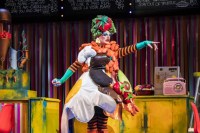
David Greig has written the international festival’s flagship drama, Midsummer. This farcical romance is performed as a party piece by four actors supported by a plinky-plonky band playing satirical ballads. We meet two boozy drifters, Bob and Helena, who enjoy a night of rampant sex aftera chance encounter in an Edinburgh pub. Will their affair live or die? Well, since the show starts with two older actors reminiscing about the characters’ past we knowin advance how it all ends. An odd way to kill suspense. The lovers have little in common apart from alcoholism and the madcap plot sends them hurtling through a set of mishaps and scrapes as their romance develops. They get tied up in a bondage club.

The problem with Siegfried

Music

There’s one big problem with Wagner’s Siegfried, and the clue’s in the name. None of Wagner’s mature works hangs so completely upon a single individual. The character himself isn’t really the issue either, however troublesome he might superficially appear (a ‘randy overgrown schoolboy’, if you believe the misguided programme note for this Usher Hall performance). As so often, confusion falls away once you assume that Wagner — who, after all, wasn’t a complete amateur — knew what he was doing, and take Siegfried as the life-force his creator intended. Someone’s still got to sing the damn role, though, and that’s an Olympian challenge.

An artist’s eye

Cinema

There are moments in The Guardians when you can imagine you’re in the wrong art form. Time stills, the frame all but freezes, and the film seems to have taken a left turn into an exhibition of fetching French landscapes and interiors from the early 20th century. The camera hovers over the harrowed earth, admires the sturdy sunlit front of a farmhouse, lingers thoughtfully on a face. The running time of 138 minutes could easily have been slashed to 100 by a heartless editor. But this is un film de Xavier Beauvois, a specialist in painterly exactitude. The writer-director’s greatest success came in 2010 with Of Gods and Men. This, too, had some of the trappings of a major box-office turn-off.

His dark materials | 16 August 2018

Television

Apparently there’s a new ‘character’ on University Challenge. I wouldn’t know. Last year, I vowed never again to raise my blood pressure by exposing myself to its new, gender-balanced questions: ‘Your starter for ten: which composer of Serenade for My Cat, rated by her father as the equal of Bach’s Goldberg Variations…’ Don’t know. Don’t care. You bastards ruined it, just like you ruined Sanpellegrino and Lucozade. Same applies, now I think about it, to all the other programmes on the BBC.

Return of the Muse

Arts feature

It’s October 1895 and the spirit of Music has been absent from Britain for exactly 200 years. Why she fled, and why she should return now — specifically, to the Leeds Festival — is not clear. Undaunted, Charles Hubert Hastings Parry, the poet Robert Bridges and the massed choral and orchestral forces of the West Riding send up a prayer to the exiled ‘Myriad voicèd Queen’: ‘Thy many-hearted grace restore/ Unto our isle, our own to be’. You read that correctly: the composer whom Edward Elgar would call ‘the head of our art in this country’ begins his Invocation to Music by swallowing whole the Germanic libel that 19th-century Britain was ‘Das Land ohne Musik’. Well, of course he does.

The play’s the thing | 9 August 2018

Exhibitions

Nothing was so interesting to Yves Klein as the void. In 1960 he leapt into it for a photograph — back arched, chin raised, spread-eagled. The same year, he took out a patent for International Klein Blue (IKB), a colour inspired by the limitlessness of the sky itself. He even went so far as to stage an exhibition of white walls and an empty cabinet. If there is a less appropriate place to exhibit his work than the lavishly adorned Blenheim Palace, I can’t think of it. Klein was born in Nice in 1928 and learned judo as well as art. In his late teens he visited the Scrovegni Chapel in Padua and marvelled at Giotto’s 14th-century frescoes, particularly the ceiling, which was bluer than the deepest seas.

Barking mad | 9 August 2018

Cinema

Every so often there’s a news story in which neighbours quarrel over rampaging leylandii. The police are summoned, the case reaches the court, and whole lives are consumed by inextinguishable hatred. These nuclear tiffs are a Middle England staple. A boundary dispute is a border dispute writ small. Other European nations have watched their negotiable frontiers move around like a boundary rope on a cricket pitch. Surrounded by sea, we don’t have that in our DNA. And maybe Icelanders don’t either. Under the Tree is a social comedy from Iceland in which the eponymous tree sits in the more southerly of two abutting gardens. The shade it casts thwarts the sun worship of Eybjorg (Selma Bjornsdottir). Hang on, sunbathing in Iceland?

Great expectations | 9 August 2018

Opera

‘Outside this house the world has changed. Life is swifter than before; there is no time for idle gestures.’ Anatol, in Samuel Barber’s opera Vanessa, doesn’t pretend to be a romantic hero. The son of Vanessa’s old flame, he’s arrived by night at the remote mansion where she’s waited for 20 years with her elderly mother and niece Erika. He seduces the niece, beguiles the aunt and alienates the grandmother, but at no point is he anything less than honest. ‘I cannot offer you eternal love, for we have learned today such words are lies’, he sings, and Barber, remarkably, takes him at face value. Anatol’s music is lyrical and open; a shaft of light in Barber and his librettist Menotti’s claustrophobic world.

Poles apart | 9 August 2018

Radio

Much ado is being made of the latest listening figures, which have suggested that the percentage of those aged between 15 and 44 who turn on the radio at least once a week has fallen still further, down now to 13.8 million, or just 21 per cent of the population. Are we losing the listening habit? How worried should BBC Radio be, asked Roger Bolton on Radio 4’s Feedback (produced by Will Yates). He pointed out that while BBC Radio 5 Live is suffering a loss of audience, as is Radio 4’s flagship Today programme, other non-BBC talk-radio stations such as LBC are booming.

Edinburgh round-up | 9 August 2018

Theatre

Trump Lear is a chaotically enjoyable one-man show with a complicated premise. David Carl, an American satirist, has arrived on stage to perform King Lear when Donald Trump’s voice interrupts him from the wings. The President threatens to kill him unless he delivers an accessible version of the Shakespeare classic ‘that isn’t boring’. With improvised puppets, Carl rattles through the play while Trump interrupts and offers directorial notes. Something weird happens. A curious mutual admiration springs up between the artist and his patron. Despite its messy presentation, the show works because Carl is a superb impressionist and his wide-ranging gags hit the mark more often than not.

Medical examination

Television

Surprising I know, but judging from The Foreign Doctors Are Coming (Channel 4, Tuesday), Britain mightn’t be such a bad place after all. The programme followed a group of medics from non-EU countries whose dream is to work for the NHS, but who first had to pass a practical exam in Manchester known, for reasons left unexplained, as PLAB 2. ‘When I landed in Britain it felt like a breath of freedom,’ said a young Pakistani woman. ‘People here are helpful,’ declared Ahmed from Egypt as he walked the Manchester streets. ‘I see you have no problem with other cultures.

BBC presenter takes a swipe at the Today programme

Oh dear. The Today programme has been in the news this week for the wrong reason after new data showed that the BBC's flagship current affairs radio show had lost nearly a million listeners in the past year. The show's editor Sarah Sands has been quick to go into damage limitation mode – arguing that this isn't a sign of any problem with the show. Instead, it reflects the difficulties all broadcasters currently experience. But does everyone agree? It would seem not. Former Today presenter Sarah Montague entered the debate on Twitter where she made the point that her new gig – the World at One – had not lost listeners: https://twitter.

Colouring in the past

Arts feature

There is something of The Wizard of Oz about Marina Amaral’s photographs. She whisks us from black-and-white Kansas to shimmering Technicolor Oz. When Howard Carter leans over Tutankhamun’s open sarcophagus (1922), he does so in the glare of pharaonic gold. A photograph of fallen American soldiers on the Gettysburg battlefield (1863) shocks the more when we see the colour of the blood soaking through shirts. The Javanese dancers who performed at the Exposition Universelle in Paris (1889) are gorgeous in madder pinks, jades and golds.

The problem with Edinburgh

Festivals

Edinburgh. Why do comics do it? We almost invariably lose money. Even if you don’t pay for your venue, the cost of accommodation is astronomical — I’ve met Edinburgh natives who pay their annual mortgage with the rent for August. You could conceptualise it as a loss-leader; but there are 1,333 comedy shows this year, and a loss-leader that can’t lead to anything is just a loss. Yet comics still go up. Partly because, for three weeks, there’s the thrill of having a real job: instead of travelling for gigs, you’re at the same place at the same time every day.

Ebbsfleet or bust

Cinema

Dominic Savage had an early start. In Barry Lyndon (1975), Stanley Kubrick’s sprawling take on Thackeray, he played a prepubescent toff called Bullingdon blessed with a blond pudding-basin crop. By the time Savage started making his own films in the early Noughties, the hair had vanished, and so had any of Kubrick’s civilising varnish. For television Savage made a loose trilogy of dramas which plummeted circle by circle into a pit of social deprivation. His subjects were teenage parenthood (Nice Girl), underage drug use and prostitution (When I Was 12), and suicide in a young offenders’ nick (Out of Control). These cheerless vignettes felt all the more raw because his untried young performers ad-libbed without a script.

Beyond the grave

Radio

If proof were needed that radio will survive the onslaught of the new (or rather now not-so-new) digital technologies, albeit somewhat battered and slimmed down, then series like Radio 4’s Unforgettable (produced by Adam Fowler) should clinch it. Each episode is self-contained, and only 15 minutes long (the perfect length for podcasting). It’s cheap to make, requiring just a single guest, and inspired by a really simple idea — to create a conversation between a guest in the studio and someone they once knew who has died. You could make it at home, except that you probably couldn’t because an advanced editing machine is required, and an incredibly skilled operator.

Living the highly expensive life

More from Arts

It was Le Corbusier who famously wrote that ‘A house is a machine for living in’ (‘Une maison est une machine à habiter’). But it was a visit to a masterpiece of his great rival among modernist architects — Ludwig Mies van der Rohe — that brought home to me how literally accurate that celebrated aphorism was. His Villa Tugendhat at Brno is one of the great monuments of early modernism. To run smoothly, however, this luxurious dwelling required almost as much machinery as a small ocean-liner. The building has been restored with rigorous scholarship to look exactly as it did when its first owners, Fritz and Grete Tugendhat, moved in 88 years ago.

Top Trump

Television

The thing I most regret having failed ever to ask brave, haunted, wise Sean O’Callaghan when I last saw him at a friend’s book launch was ‘So tell me about Shergar.’ It has long been known, of course, that the legendary racehorse — one of the five greatest in the last century, according to Lester Piggott who rode him to victory in the Irish Derby — was kidnapped in 1983 by the IRA and never seen thereafter. What I didn’t realise, till after O’Callaghan died last year, was that the ex-IRA man is the only insider ever to have gone on the record as to his fate. Turns out that poor Shergar was executed within hours.

Lord of the dance

Music

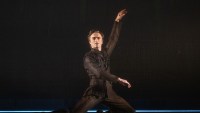
Some conductors conduct from the fingers — think of Gergiev’s convulsive gestures, flickering up and down the keyboard of an invisible piano in the air — while for others (check out footage of an elderly Richard Strauss) it all comes from the wrist: graceful, fluid and utterly detached. You could cut off Toscanini and poker-down-the-back-of-his-tail-coat Karajan (famously dismissed by fellow-conductor Fürtwangler as ‘just a time-beater’) at the waist and lose nothing from their precise gestures; but try the same trick with the irrepressible Dudamel or Kristjan Jarvi and the life-force of movements that start from the feet and shudder up through the entire body would be gone. With Teodor Currentzis it’s all about the knees.

How does your garden grow?

Arts feature

What could be more British than nosying around someone else’s private property while munching on a slice of cake? The National Garden Scheme allows you to do both, opening up people’s back gardens to the public and offering them a lovely homemade afternoon tea while they’re at it. I grew up poring over the pages of its famous Yellow Book of open gardens, envying the fat borders of geraniums and delphiniums in the rural area where we lived. But the NGS doesn’t just do big walled gardens and sweeping lawns; it has a London Yellow Book, too, and while the gardens are far smaller, the plants, the cakes and even the wine that some homeowners offer are no less lovely. ‘Lovely’ really is the best word to sum up the whole scheme.

Outsider art

Exhibitions

The complexities of Schleswig-Holstein run deep. Here’s Emil Nolde, an artist born south of the German-Danish border and steeped in the marshy mysteries and primal romanticism of that landscape. In 1920, he sees his region, and himself, become Danish following a post-Versailles plebiscite. An already well-established German nationalist bent — pronounced despite, or perhaps because of, his shifting national identity and shaky grasp of the German language — is inflamed. He moves back across the new border before eventually joining the local branch of the Nazi party and writing a volume of autobiography entitled, Jahre der Kämpfe in which he rails against the Jewish dominance of the art world.

Ariadne’s thread

Opera

‘They’ve dined well, they’ve drunk their fill, their brains are dull and slow. They’ll sit snoozing in the dark until they hear some applause, and then, out of courtesy, they’ll wake up’. Hugo von Hofmannsthal’s words, not mine. I’ve never bought the notion that Strauss and Hofmannsthal’s Der Rosenkavalier somehow predicts the first world war. But what’s screamingly obvious is that their next collaboration, Ariadne auf Naxos, precisely skewers the non-existent (in 1916) world of English country-house opera. A millionaire patron has hired an opera company and a comedy troupe for an evening of champagne-fuelled hospitality, and he wants them both finished in time for the fireworks.

Full circle

Television

After just one episode, The Bletchley Circle: San Francisco (ITV, Wednesday) seems certain to stand out from the crowd. In an age when most television dramas range from the perfectly fine to the extremely good, it already looks like a proper old-fashioned stinker. Admittedly, one of its more obvious problems is bang up-to-date: by adhering so spinelessly to the mantra of ‘women and black people good, white men bad’, the programme not only creates an overwhelmingly dreary sense of déjà vu, it also deprives itself of any possibility of genuine dramatic tension. But there are plenty of more traditional flaws too, including such classics as wooden dialogue, leaden humour and a plot of impressively po-faced preposterousness.

Sacha Baron Cohen

More from Arts

Sacha Baron Cohen’s latest series Who Is America? isn’t funny. But then, nor was his terrible 2016 movie The Brothers Grimsby. Nor was his rubbish 2012 film The Dictator. Nor, let’s be honest, were his classic original characters Borat, Brüno or even Ali G. Obviously, they had their moments: the ‘mankini’ — that bizarre, electric green, giant-thong-like swim wear worn by Borat; the classic late-Nineties catchphrase ‘Is it because I is black?’ And sure it must have taken some nerve — even in character — to explain to a clearly impatient and unimpressed Donald Trump his business plan for some anti-drip ice-cream gloves. But how often, even at his best, does Baron Cohen ever make you laugh?

Primal screams

Radio

Raw, earthy, ear-piercing. It’s hard to decide which was more terrifying and unsettling: the roar of the elephants in Living with Nature on the World Service, or the screaming women and men who we heard letting rip in Garrett Carr’s Radio 4 documentary, The Silence and the Scream. The elephants were recorded by sound engineer Chris Watson, and his producer Sarah Blunt in northern Kenya in the first of their new series in which they use sound as their tour guide and listening as their way of experiencing the landscape. We couldn’t see the golden orb of the sun rising over the miles of flat grasslands peppered with acacia groves and rocky outcrops, but the soundscape created by Watson and Blunt took us there in spirit.

Keeping the faith | 26 July 2018

Cinema

For many years I would chat genially with our local Jehovah, Stephen, who came door-to-door every few months or so, always hopeful that one day I would let Jesus into my life. (Will he babysit, I would always ask. Will he pair socks? Will he interrupt me during dinner LIKE YOU?) Then I actually read one of the Watchtower magazines he always left behind and discovered that if your husband is violent and beating you then you need to ask yourself: am I being a sufficiently loving wife? Next time Stephen appeared he was doing his rounds with a teenage girl so I looked her in the eye and said: ‘If a man beats a woman, it isn’t and can never be her fault.’ And that was the last I saw of Stephen. (Not strictly true, in fact, as he’s often hanging around the bus stop.