Culture

Culture

The good, the bad and the ugly in books, exhibitions, cinema, TV, dance, music, podcasts and theatre.

Object lesson | 6 September 2018

Arts feature

‘If liberty means anything at all it means the right to tell people what they do not want to hear,’ wrote George Orwell in his preface to Animal Farm. It is a line that has gone down as one of the great capsule defences of dissent, made all the more prescient by the fact that the preface, an attack on the self-censorship of the British media during the second world war, wasn’t published until the 1970s. But the lines that follow it are too often overlooked. ‘The common people still vaguely subscribe to that doctrine and act on it,’ Orwell goes on, ‘it is the liberals who fear liberty and the intellectuals who want to do dirt on the intellect’.

Lives less ordinary | 6 September 2018

Radio

To have been a black lawyer in the deep south of America in the early 1960s would have taken a level of courage well beyond the ordinary. Chevene Bowers King was just such a man. He could have worked in the desegregated north, but instead chose to risk his life in Georgia, defending black people imprisoned on trumped-up charges and organising non-violent demonstrations to end segregation. David Morley’s two-part play on Radio 4, The Trials of CB King, took us through the blatant racism, the everyday brutality and dangerous reality for the black citizens of Albany, Georgia, where the sheriff encouraged the police to beat up the innocent purely because of the colour of their skin. Those who dared to befriend black people or fight their cause could also end up literally under fire.

The legend of Lawrence

Music

‘I could still be a pop star,’ says Lawrence, sitting on a footstool in his council flat, high up in a tower block above London EC1. ‘I know I’m not going to be a person who has a million hits on the internet. Do they call them hits? Views, or streams, whatever they are. I’m not going to be that person, but I still think I could have a hit record. For me a song like “Relative Poverty” is a song for this generation, and I don’t know why it shouldn’t be an anthem for today.’ Lawrence is now 57, and he has been trying (and failing) to become a pop star since 1979.

Let’s talk about sex | 6 September 2018

Television

This week was bad news for fans of good television drama series — mainly because there’s now three more of the things to keep up with if you don’t want to feel left out of office conversations. The one that stirred up the most advance media excitement was Wanderlust (BBC1, Tuesday), on the traditional grounds that it promised to be unusually explicit about sex. And in that, it certainly didn’t disappoint. The first episode began with a flurry of masturbation (not a phrase I can remember using in a TV column before). First, Joy, a middle-aged therapist, slipped a hand beneath the morning bedclothes — until her teenage son came in to ask where his shoes were.

The Bruckner effect

Music

The lady behind me on Kensington Gore clearly felt that she owed her friend an apology: ‘It’s Bruckner. I don’t know how that happened.’ I felt for her. ‘It’s Nézet-Séguin and the Rotterdam Phil,’ I’d told a succession of my own musical friends. They’d seemed interested. Since the youngish Canadian conductor Yannick Nézet-Séguin took over at the New York Metropolitan Opera, he’s vaulted on to the A-list, and while the Rotterdam Philharmonic isn’t a super-orchestra, exactly, people do dimly recall that it was conducted by Valery Gergiev, back when that was still something to boast about. So, the inevitable question: what are they playing?

Less is Moor

Theatre

It’s intelligent, enjoyable, beautiful to look at and funny in unexpected places, yet Othello at the Globe didn’t quite meet my sky-high expectations. The star should be the Moor but André Holland, from Alabama, can’t rival the magnetism of Mark Rylance (Iago). Holland’s diction is a strain for British ears. We’re used to hearing consonants bashed out — rata-tat-tat — like a rifle range, but his looser southern accent made some of his lines indistinct. Stately Jessica Warbeck lacks Desdemona’s impulsive streak and she plays her as a mature and self-possessed recipient of several Businesswoman of the Year awards.

Any storm in a port: The Bookshop reviewed

Reports of the death of bookstores are fiction. In 1931, there were about 4,000 bookstores in the United States. Almost all of them were gift stores, selling a limited stock of paperbacks. Only about 500 of them were specialist bookstores, and almost all of them were in major cities. True, between 1995 and 2000, the number of independent bookstores collapsed by 40 per cent. Amazon opened for business in 1994, but two other factors were big-city gentrification, and the expansion of mediocre chains like Barnes & Noble and Borders, which went public in 1995. Now, the big chains are gone — and who, apart from a homeless person looking for a day bed, will miss them? — and independent bookstores are booming.

A tale of two cities

Arts feature

Not so long ago, the Dundee waterfront was presided over by a great triumphal arch, built to commemorate Queen Victoria’s visit in 1844. It was an imposing piece of decorative architecture, 84 feet high, and it dominates most views of the city painted over the ensuing century. It became a cherished symbol of Dundee but in 1964 they knocked it down and used the rubble as infill for a thuddingly insensitive road system that would effectively destroy the southern face of the city. Mary Shelley stayed in Dundee in her youth and later wrote of the ‘blank and dreary’ northern shores of the Tay. It’s a description still familiar to many, although the region’s nadir arrived long after Shelley. The destruction of the arch heralded decades of dismal urban planning.

Hidden treasure | 30 August 2018

Exhibitions

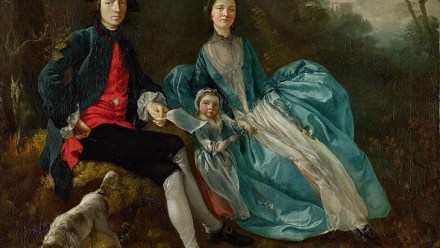
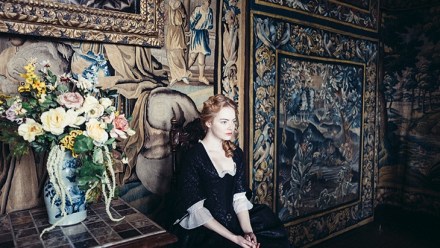
In 1675 Lady Bedingfield wrote to Robert Paston, first Earl of Yarmouth. Never, she exclaimed, had she seen anything so fine as the latter’s mansion, Oxnead Hall. It was ‘a terrestriall paradise’, the ‘gardens so sweet — so full of flowers’, the house so clean. ‘Nor,’ she concluded, ‘did I ever in my life find anything in poetry or painting half so fine.’ Almost all this splendour vanished long ago. But its essence survives, compressed into a single painting, ‘The Paston Treasure’, currently the centrepiece of an exhibition at Norwich Castle Museum.

The BBC’s anti-white rhetoric

No sacred cows

Cassian Harrison, the editor of BBC Four, told the Edinburgh International Television Festival last week that no one wants to watch white men explaining stuff on TV any more. ‘There’s a mode of programming that involves a presenter, usually white, middle-aged and male, standing on a hill and “telling you like it is”,’ he said. ‘We all recognise the era of that has passed.’ I’ve been puzzling over this. Why would one of the Beeb’s most senior executives, himself a white, middle-aged man, say something likely to antagonise such a large number of the people who pay his £170,000 salary, i.e. licence payers? After all, 87.

Posh people move house

Theatre

Non-stop chatterbox and mystifyingly revered fabricator of sub-Chekovian paddywhackery, Brian Friel has received another production at the Donmar. His play Aristocrats cadges shamelessly from Three Sisters and The Cherry Orchard. The setting is a crumbling mansion in Donegal occupied by four adult members of the O’Donnell clan (three girls, one boy), who idle around the place waiting for Dad to clock out so they can get their mitts on the bricks. Lindsey Turner’s production is curiously stripped of ornament. The characters are assembled on a lime-green patio, suggestive of mown grass, which is surmounted by a white frame with the dimensions of the goalposts at Wembley.

Opportunity lost

Cinema

Yardie is Idris Elba’s first film as a director and what I have to say isn’t what I wanted to say at all. I love Elba and wanted this to be terrific. I wanted him to be as good from behind as he is from the front, so to speak. I wanted this to absolutely smash it as a narrative about the Jamaican-British experience as there have been so few. But, alas, it is a disappointment. It is patchy. It’s not paced excitingly. The characters are insufficiently drawn. And I struggled with the thick Jamaican patois, I must confess. I was often muddled, yet whether it was due to that or the plot was muddled anyway, I cannot say for sure. This is based on Victory Headley’s cult novel, first published in 1992, and is set in Jamaica and then London in the early 1980s.

Listening habits

Radio

Here’s a thought. Matthew Bannister, former Radio 1 controller turned presenter of programmes such as Outlook on the World Service and Radio 4’s The Last Word, has just announced that he’s leaving Outlook, which goes out several times a week, to ‘join the world of podcasting’. In fact, he’s already launched his own podcast, Folk on Foot. It’s as if he now believes that podcasting is where the exciting new challenges in audio (note, not broadcasting) can be found. We wireless-lovers should pay attention. Bannister is a radio man through and through. Does he really believe that podcasting is the future? We’re still waiting for the podcast that truly challenges the best of conventional radio.

Shark treatment

Television

All the good non-fiction things that were ever on TV — from Kenneth Clark’s Civilisation to David Attenborough’s Planet Earth (the bits where he’s not proselytising about climate doom, I mean), from Andrew Graham-Dixon’s arty jaunts to Italy to Jonathan Meades’s bizarro forays into architecture, from The World at War to all those more recent war porn documentaries narrated by Sam West, from Werner Herzog’s Little Dieter Needs To Fly to Louis Theroux doing a number on Jimmy Savile — have one thing in common: they were all made by middle-aged men. Middle-aged men are the business.

Gypsy king

Music

Looney Tunes was always at its best when soundtracked by a Hungarian gypsy dance. (Watch ‘Pigs in a Polka’ if you don’t believe me.) It’s music that was made to chase small cartoon animals — and terrify conductors. The gunshot syncopations. The hand-break turns in tempi. The banana-skin portamenti and rubato ravines… Musical tripwires everywhere. Nothing to faze conductor Ivan Fischer, however. Last week at the Proms, with the Budapest Festival Orchestra, Fischer was giving a guided tour of Hungarian gypsy music and its century-long cohabitation with classical music. It was a masterclass.

For the love of operetta

Arts feature

It’s the lederhosen that grabs you first. Two gents were walking down the street ahead of us in full Alpine rig: long socks, collarless loden jackets, and hunting hats decorated with what looked like shaving brushes. Among the flowerbeds and fountains that surround the main theatre of the Bad Ischl Lehar Festival a posse of young women crossed our path, all wearing embroidered dirndls and laughing. By the time we took our seats in the auditorium, we were grappling with a deeply un-British notion: that none of this was ironic. We weren’t at Glyndebourne any more. But if you love the much-mocked art of Viennese operetta, a forgotten spa town at the far end of the Salzkammergut is exactly where you want to be.

Simpson, Skinner and socialists

Festivals

For recovering teetotallers, like me, Thinking Drinkers is the perfect Edinburgh show. On stage, two sprucely dressed actors perform sketches about booze while a team of well-trained ushers race around plying the audience with strong liquor from plastic beakers. In under an hour, I swallowed a can of ale chased by vodka, gin, rum and Irish whiskey. It’s a decent show but, for obvious reasons, forgettable. Nina’s Got News is the first fringe play written by Frank Skinner. Nina has split up with her besotted boyfriend, Chris. When he answers a summons to her flat he’s hoping for a valedictory romp. But Nina has asked her best pal Vanessa over and the three chums engage in amusing wordplay as they try to place their friendship on a new footing. Then a shock announcement.

Beggar’s belief

Music

Robert Carsen’s new updating of The Beggar’s Opera is a coke-snorting, trash-talking, breakdancing, palm-greasing, skirt-hiking, rule-breaking affair — and every bit as wearyingly tedious as that sounds. Leaving behind the work’s original 18th-century setting, Carsen sets out boldly for present-day London (where the streets are paved with Brexit-related comedy gold), but in Ian Burton’s rewrite seems to land somewhere circa 1990. In a production originally created for Paris’s Théâtre des Bouffes du Nord, Peachum, Macheath and their band of criminal lowlifes are the kind of East End cockney schemers even DCI Jane Tennison would have found it nostalgic to investigate, while corrupt cop Lockit is more Pirates of Penzance than McMafia.

Teenage Fanclub reissues

More from Arts

Still got your record player? Dig it out. The crunchier the music, the better it sounds on vinyl: a broader noise, bigger than you get from a CD and many times fuller than what you’d hear from an execrable mp3 player. Technology does not always improve stuff. Five Teenage Fanclub albums have been re-released on vinyl, each one with its retinue of freebie extras, unreleased singles and so on, at about £18 a pop. I’ve chosen the three best. The raw Bandwagonesque set the power-pop template: The Byrds, Alex Chilton and Crazy Horse compressed into very agreeable three minutes slabs. It gave them an unrepeated US hit in ‘Star Sign’ and a concert staple in ‘The Concept’.

Rubbish on TV

Television

Not the most beguiling of titles, I admit, but The Secret Life of Landfill: A Rubbish History (BBC4, Thursday) was a genuine eye-opener. The programme began with Dr George McGavin proudly announcing that ‘What we’re about to do has never been attempted on television before’: a claim that it’s usually best to treat with some scepticism, but that here seemed hard to deny. Certainly, I can’t remember another TV documentary in which the presenters spent 90 minutes digging through (non-metaphorical) rubbish. At first, the mood was one of rather determined excitement.

Trapped in McEwan world

Cinema

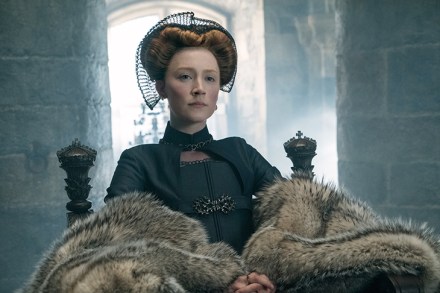
The Children Act is the third Ian McEwan film adaptation in 18 months (after The Child in Time and On Chesil Beach), and if you’re minded to think no amount of Ian McEwan is too much Ian McEwan then you are wrong. This is very Ian McEwan: tasteful, restrained, high-minded, controlled. Once, fine. Twice, fine. But by the third time you will want to take all that tasteful, high-minded, controlled restraint and put a rocket under it. Or at least I did. Directed by Richard Eyre, and adapted by McEwan, the film stars Emma Thompson, who is outstanding, and will keep you gripped to the extent that you can be gripped. She plays Fiona Maye, a judge in the family courts with a to-do list that will make your to-do list crumple up in shame.

Night vision

Arts feature

Like most of our ape ancestors, we have really had only one response to the fall of night. We have stretched and yawned, we have climbed upwards, we’ve lain down somewhere soft, closed our eyes and shut the whole thing out until morning. Humans may have exchanged tree trunks for a set of stairs, and bunches of green leaves for sprung mattresses, but the same basic reflex has been ongoing among large primates for four million years. The new exhibition at the Natural History Museum, Life in the Dark, reveals to us a little of what and who we have been missing as a result of our diurnal bias. Not surprisingly, it turns out that night-time is peopled with creatures that we find scary.

Northern lights | 16 August 2018

Festivals

The Rembrandt show at the National Galleries of Scotland (until 14 October) has a problem. A mighty haul of Rembrandt paintings and prints are arrayed against a backdrop that mines the historical impact of his work on British artists and collectors. This is interesting. The problem is that the Rembrandt works are so astounding that there’s a danger you won’t bother with the rest. You should, because here Reynolds and Raeburn and Ramsay and more, all inescapably influenced by Rembrandt, tell fascinating and sometimes complicated tales of artistic heredity and homage. There’s no disgrace in going only for the Rembrandts, though.

Street life | 16 August 2018

Radio

‘What can you tell me just now,’ asks Audrey Gillan. She’s talking to Tara, who’s been sleeping rough on Fournier Street in Spitalfields, close to Gillan’s home. Tara, aged 47, sounds like a man, so deep and growly is her voice, ruined by drink, cigarettes and the hardness of her life. Gillan wants to know how and why she ended up living on the street. But beyond explaining that she was slung out by her mum when she was 14 there’s little that Tara can or is prepared to tell Gillan.