Simon Sebag Montefiore

Simon Sebag Montefiore’s The World: a Family History is out on 27 October.

My run-in with Stalin’s trolls

From our UK edition

My libel nightmare all started in a little Oslo bookshop – but amid the whirlwind of horrible scandals and atrocious wars that is our world today, this is a very small but troubling manifestation of our crazy times. A day ago, my attention was drawn to a photograph posted on X that showed a Norwegian bookstore of the Norli Bokhandel chain, where the staff had organised a display entitled ‘Epstein Island Guest List.’ I was horrified to see that one of my books was included. I have never been to Jeffrey Epstein’s island, never flown on his planes, never visited any of his properties, and – most crucially – never even met him or communicated with him.

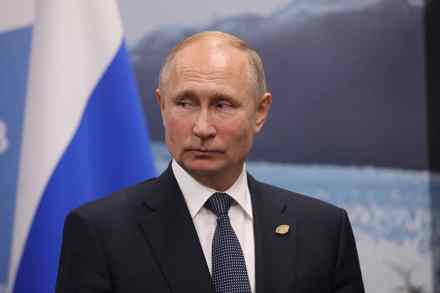
Putin should fear those closest to him

From our UK edition

I was interested to see that amid the Byzantine intrigues of embattled Conservative panjandrums, two Spice Girls have criticised the government. When the Spices manoeuvre politically, pundits sometimes cite my 1996 interview with the group in which they declared their Thatcherism and opposition to the single European currency. Such is their influence that it could be said they were precursors of Brexit itself, while their phenomenon was prophetic of this century’s Neronian-Trumpian merging of politics and showbusiness. Anyway, this takes me back to the hilarity of the original encounter. It started when the Spices heralded ‘Girl Power’ and I wrote asking if I could debate Rousseau, Marx and Nietzsche with them. To my astonishment, they agreed.

Spice girls back sceptics on Europe

From our UK edition

190 years of The Spectator   14 December 1996   The Spice Girls were at the time the biggest girl group in the world, their debut album selling 23 million copies. The interview brought the magazine its highest sales figure for a generation Interview the Spice Girls, I thought. But the Spice Girls are interviewed all the time. My interview, however, would be different. I would ask only questions that I would ask Mr Major, Mr Blair, Mr Heseltine or any other politician. Only one thing worried me about this plan. What if they weren’t interested in politics? It was a needless worry. They were completely political. Politics was really their subject. ‘We Spice Girls are true Thatcherites. Thatcher was the first Spice Girl, the pioneer of our ideology — Girl Power.

The fall of tyrants is always a family story

From our UK edition

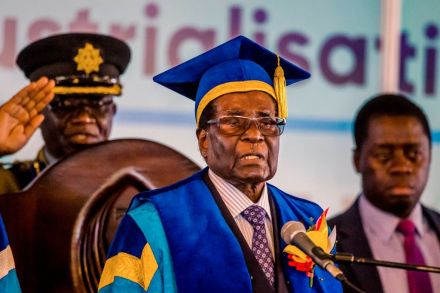
Robert Mugabe’s resignation fascinates because the fall of tyrants is always a family story, decline of the father, writ large. What a strange creature he is. Who else would give a speech of such orotundity that it contained archaic words like ‘pith’, ‘collegiality’, ‘comported’, ‘untrammelled’ and ‘vicissitudes?’ No British politician has used such language since the 1950s but Mugabe, well-educated by Jesuits, has the pomposity of a pedantic poetaster leavened with Marxist-liberationist arcana. As a teenager I had a weakness for freedom fighters. When Mugabe came to London to negotiate independence, I vanished from home to stand outside his hotel. I was very disappointed that he looked like a dorky teacher.

Israel is becoming ever more part of the Arab Middle East

From our UK edition

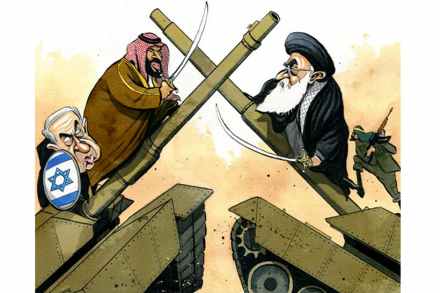
This month, I attended the spectacular centenary dinner for the Balfour Declaration at Lancaster House, with descendants of many of its creators: Lloyd Georges, the photographer Christopher Sykes, grandson of Sir Mark Sykes. The dinner was hosted and organised by Jacob Rothschild and Roderick Balfour, who entered with the prime ministers of Israel and Britain. Jeremy Corbyn refused to attend but sent deputy Tom Watson and shadow foreign secretary Emily Thornberry. In his speech, Benjamin Netanyahu claimed imminent developments in the peace process; no one was convinced but he was surely hinting at the potential of the new relationship between Israel and Saudi Arabia.

Diary – 23 November 2017

From our UK edition

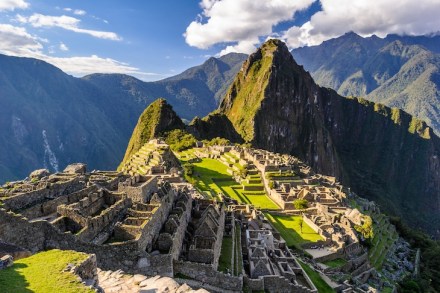
At the top of Machu Picchu last week, I saw two wide-winged condors swoop over Sacred Valley through a rainbow that curved between two holy mountains. Weary after many books and travels, I felt restored and inspired by this magic. There was hardly anyone in Machu Picchu; its cliffs vertiginous, its cloud jungle lushly impenetrable, it was discovered by outsiders only a century ago. Built as a royal estate and shrine by Inca conqueror Pachacutec around 1450, during our Wars of the Roses, no one knows when or why it was abandoned — because of Spanish conquest, or decades earlier due to civil war? Earlier I set out from Cusco, once the Inca capital, a holy city that in some ways reminded me of Jerusalem. Its Temple Mount was the Temple of the Sun, once gleaming in sheets of gold.

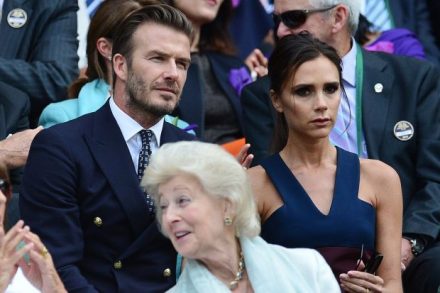
Victoria Beckham: ‘The Euro-bureaucrats are destroying every bit of national identity’

From our UK edition

Victoria Beckham has said today she wants Britain to remain a member of the European Union. But 'Posh Spice' hasn't always been so keen on the EU. In this Spectator piece from December 1996, Victoria described how she thought the 'Euro-bureaucrats are destroying every bit of national identity'. Here's what she had to say in an interview with Simon Sebag Montefiore: Interview the Spice Girls, I thought. But the Spice Girls are interviewed all the time. My interview, however, would be different. I would ask only questions that I would ask Mr Major, Mr Blair, Mr Heseltine or any other politician. Only one thing worried me about this plan. What if they weren't interested in politics? It was a needless worry. They were completely political. Politics was really their subject.

A bolt from the blue

From our UK edition

The memoirs of the Grand Duchess Olga are an entertaining record for anyone interested in the imperial family’s home life during the last years of Russian autocracy. The memoirs of the Grand Duchess Olga are an entertaining record for anyone interested in the imperial family’s home life during the last years of Russian autocracy. Olga was the youngest of Alexander III’s six children; her mother was the Danish princess, Maria Fyodorovna. She was born just after her father’s accession, in 1882, when the throne was already in crisis.

Diary – 1 December 2007

From our UK edition

It has been a monarchical week — despite the election of a republican in Australia. I don’t just mean the Queen’s wedding anniversary, Ugandan tour, and the unveiling of the BBC’s famous TV series (of which more later). No, I’m thinking of the blossoming of the world’s more traditional monarchies — by which I mean the new hereditary-Leninist absolutist thrones that have sprung up around the world. The dynasty of President Assad the Second of Syria has received the boost of sending a delegation to America’s Annapolis conference. Azerbaijan’s President Aliev the Second and Congo’s Kabila the Second remain western favourites.

Diary – 19 May 2007

Stalin and the Rothschilds is one of the more bizarre connections that I discovered while writing a book on the dictator’s early life.  Stalin worked for the Rothschilds;  he burnt down their refinery and ordered the assassination of their managing director — yet later they helped fund Lenin and Stalin. There were always rumours, but my discovery of a long-forgotten memoir in the archives of Tbilisi now reveals the true story. In December 1901 Stalin, aged 23, arrived in the Black Sea oil port Batumi, which was dominated by the Rothschild and Nobel dynasties. One day Stalin came home late boasting, ‘Guess why I got up so early this morning? Today I got a job with the Rothschilds!’ Then he almost crooned, ‘I’m working for the Rothschilds!

Democracy may die

From our UK edition

A few months ago I asked a Kremlin grandee, who worked with both Boris Yeltsin and Vladimir Putin, which president of Russia he preferred. I expected him to favour the warm but shambolic Yeltsin rather than the competent but icy Putin. I was wrong. ‘The difference,’ he explained, ‘is that Yeltsin was a capricious Tsar; Putin’s a practical politician.’ But who, I asked was the more lovable? ‘Putin,’ he replied, ‘because he’s always direct and he keeps his word.’ His words returned to me when I heard on Monday that Yeltsin had died. Yeltsin’s style of tsardom — impulsive, bombastic, secretive, drunken — meant inconsistency and insecurity for even his closest aides, never mind his own people.

How Stephen the Small came to save Montenegro and afterwards

From our UK edition

In 1766, a diminutive adventurer appeared in Cetinje, the capital of the mountainous principality of Monte- negro, and managed to supplant the rightful claimant to the position of Vladika, the ruling Prince-Bishop. The adventurer was remarkable in many respects. Firstly, he was known as ‘Scepan Mali’, ‘Stephen the Small’, in a country where physical stature and strength were highly prized. Even more bizarrely, he claimed to be Tsar Peter III of Russia, who had been deposed by his wife Catherine the Great in 1762 in St Petersburg and strangled shortly afterwards by the brothers of her lover, Grigory Orlov. In fact he was neither a warrior nor a Russian but a snake-oil salesman, quack and purveyor of medicinal herbs.