Culture

Culture

The good, the bad and the ugly in books, exhibitions, cinema, TV, dance, music, podcasts and theatre.

Sisters are doing it for themselves

Cinema

Ocean’s 8 is the all-female spin-off of the all-male Ocean’s trilogy and it’s a sop, with a third act that drags like nothing on earth. But its success — it earned an estimated $41.5 million during its opening weekend, which is better than any of the male versions — shows the market isn’t that bothered by content, which is equality of a kind. Women can now make dull formulaic franchise films too! Hurrah! We’ve arrived! And we can do this rubbish for ourselves now! The film is a straight-up-and-down remake, where the gender swap may, in fact, be the best idea, possibly because it’s the only idea. (The Ghostbusters remake did it first anyhow.) It does not subvert the heist-caper genre in any way but instead follows the formula slavishly.

Slippery slope

Opera

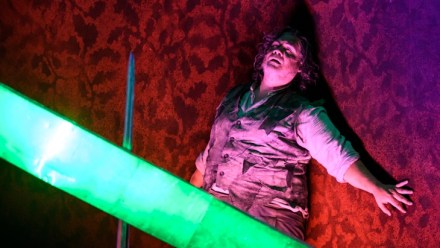
Longborough Festival Opera, refuge for British Wagnerians fleeing unidiomatic musical performances and idiotically irrelevant and insulting productions, has rounded off its Wagner canon with its first Der fliegende Holländer. Next year a new production of the Ring begins, so presumably the small stage is considered inappropriate for the three Wagner dramas with indispensably large choruses. Not that Holländer can do without a chorus in Act Three, and very impressive it is in this production by Thomas Guthrie, but we only saw the townsfolk, and I think the Dutchman’s crew was pre-recorded, though perfectly synchronised. The conducting was, as always, in the sure and inspired hands of Anthony Negus, and the orchestra, after some blips in the Overture, was superb.

Darkness visible | 14 June 2018

Theatre

Oh, what a beautiful morning! In Jo Davies’s production of Oklahoma! the audience spends the overture staring at the side of a barn. Then, as birdsong rises from the orchestra, corrugated-iron doors slide open on a dustbowl farm of the 1930s. Aunt Eller (Claire Moore) is fixing a tractor, and a wind pump spins slowly against an orange dawn sky. It’s mildly surreal: the light falls as if in one of those New Deal-era western landscape paintings, with a jagged, David Smith-like sculpture of pitchforks and shovels serving as a tree. And then, with throwaway ease, Dex Lee as Curly launches into that greatest of all Broadway opening numbers. Davies catches Rodgers and Hammerstein’s surge of hope on the upswing, and rides it in a single sweep from beginning to end.

The Friel-bad factor

Theatre

The National has made its largest stage available to one of the nation’s smallest talents. If Brian Friel had been born in Dorset rather than in Co. Tyrone he’d have enjoyed an unremarkable career writing episodes of The Archers with the odd stint on Emmer-dale. He’s a champion witterer whose plays lack suspense, pace, depth or spectacle. His characters are constantly and infuriatingly nice to each other. Occasionally they rise to mild irascibility, or a spot of vituperative teasing, but that’s about it. When he needs a crisis he turns to external sources, to destiny or to happenstance, and his plays often end with dreadful sufferings being visited on russet-faced, cheeky-chappy Irish folk by crool, crool fate. Translations at the Olivier is set in Co.

Minor key

Exhibitions

‘When I’m on good form,’ Edward Bawden told me, ‘I get to some point in the design and I laugh and talk — and if I’m laughing, it probably means the work is rather good.’ You can see his exuberance everywhere in the exhibition of his work at Dulwich Picture Gallery. It is a thoroughly jolly affair, but it also raises a delicate question: was Bawden (1903–89) really a serious artist? He was certainly a tricky one to pigeon-hole. Bawden is, deservedly, one of the most popular of 20th-century Britishartists. But when one thinks of him, it is hard to bring a major work to mind — much harder than in the case of his mentor Paul Nash or fellow-student and friend Eric Ravilious.

Go West

Arts feature

Kanye West is more than halfway in to the Rock’n’Roll Hall of Fame — if his politics don’t block the way. This extraordinary rapper-producer first won over a worldwide audience with the 2004 anthem ‘Jesus Walks’, disrupted hip-hop’s bling-bling materialism with the us-vs-them challenge of his Jay-Z collaboration Watch the Throne, and then released the confounding My Beautiful Dark Twisted Fantasy, which rightly became the most highly acclaimed hip-hop album this century. He went on to make controversial public art with his ‘New Slaves’ video, which was projected in 66 locations around the world (called Orwellian by admirers and dumbfounded detractors).

Man of war

More from Arts

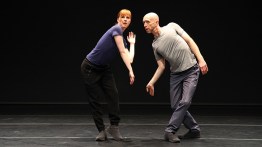
‘Sunil Lanba, Salman Quaraishi, Omar Syed…’ Names play from a crackling gramophone. We hear what they were before the war. Teacher. Engineer. Dancer. And what they endured during it. ‘I put down telephone cables in the mud,’ says one man. ‘Voices in the mud. Half of them already dead, sir.’ Already dead repeats and repeats. A juddering stuck record. Akram Khan’s forgotten soldier — one of 1.5 million Indian men who fought in the trenches in the first world war — is also stuck. In Xenos, Khan’s last performance, though he will continue his career as a choreographer, a shell-shocked Indian sepoy has returned home in body — the Indian scene is set by percussionist B.C.

The big chill | 7 June 2018

Music

The picnic hamper’s open, the bubbly is chilled, and country house opera is starting to eat itself. When you arrive at the Wormsley Estate you enter a fantastic, baffling world. Figures in black tie stroll between topiary hedges in obedience to unstated rules, while serving staff hover a few paces behind, gliding silently in to reassert neatness and order. Children dressed in red (they’re from a local Scout group) pop up to help and guide. Then the new production of Die Zauberflöte begins and with a deft, surreal spin, the director Netia Jones bowls it all straight back at you. That’s a big part of the fun here. Jones has designed the production herself, and she clearly has quite a DVD collection.

Unholy land

Television

‘The rule in our household is: if a TV series hasn’t got subtitles, it’s not worth watching,’ a friend told me the other day. Once this approach would have been both extremely limiting and insufferably pompous. In the era of Netflix and Amazon Prime, though, it makes a lot of sense. There’s something about English-speaking TV — especially if it’s made in the US — that tends towards disappointment. Obviously there have been exceptions: The Sopranos; Band of Brothers; Breaking Bad; Game of Thrones. But too often, what’s missing is that shard of ice in the creative heart that drama needs if it’s to be truly exceptional. American drama is a slobbering puppy dog.

Fallen franchise

Cinema

Back in the mists of prehistory, when I was eight, dinosaur films followed a set pattern. The dinosaurs themselves would be cheerfully unpalaeontological; women would wear improbable outfits; volcanoes would explode. Then, in 1993, courtesy of Steven Spielberg, came a sea-change. Jurassic Park was that cinematic rarity: a science fiction film that succeeded in influencing the science it was fictionalising. The story of a theme park populated by resurrected dinosaurs, it offered a portrayal of Mesozoic fauna that was as close to authentic as could then plausibly be achieved. For the first time, computer-generated imagery was used to portray dinosaurs as scientists had come to envisage them: agile, bird-like, smart. The impact was profound.

Trivial pursuits | 7 June 2018

Music

‘Is there an end [to this opera] that is not trivial?’ asks the Countess in her final bars of Richard Strauss’s last opera Capriccio. Given the previous two and a half hours, the answer would seem to be a decided no. It is a frothy confection even by the standards of his later operas, the better parts reminiscent of the Prologue to Ariadne auf Naxos and some of Arabella. One thing to be said in its defence is that Strauss’s writing it in 1941–2 is no criticism of him or of the work. People make a fuss about that, but do they think he should have produced an heroic piece — something he had already done, unfortunately — or another work in favour of peace, like the disastrous Friedenstag of 1938?

Privates on parade | 7 June 2018

Theatre

Tracy Letts begins his trailer-trash comedy Killer Joe with the corniest of platitudes. A runaway druggie named Chris Smith needs $6,000 to stop ‘some guys’ from killing him. He asks his dad who declares himself skint but together they plot to bump off Mrs Smith, Chris’s mum, and collect her life insurance. Interesting idea. Luckily there’s a hitman available who works as a cop and goes by the sobriquet, ‘Killer Joe’. (Note to police forces everywhere: an officer whose nickname suggests a second career as an assassin may be worth investigating.) Joe wants payment up front and the penniless conspirators offer him Chris’s attractive sister, Dottie, as a ‘forward loan’.

Women, women everywhere

Columns

We had a long drive back from the north-east last weekend. Six hours or so, including a stop halfway, just past Britain’s most crepuscular town, Grantham. My wife does the driving because she thinks I’ll kill us all. My job is to feed album after album into the car’s admirably old-fashioned CD player. I rarely play more than three or four songs from the same album because my wife gets tetchy and says something like ‘This is too noisy’ or ‘This is boring, change it.’ So I’m kept pretty busy. Every time I remove a CD, the car’s ‘entertainment centre’ reverts to its default position of playing Radio 4. And here’s the point. We set out at midday.

A vanished world

Arts feature

When the German novelist Sophie von La Roche visited Oxford Street in the 1780s she saw watchmakers and fan shops, silversmiths and spirit booths, and a Pantheon that rivalled the one in Rome. Edward Gibbon called the domed ballroom, which hosted glitzy concerts, ‘the wonder of the eighteenth century and of the British empire’, but Von La Roche could not agree. The Pantheon’s architect, she concluded, ‘only half knew what he was about’. The young James Wyatt, who went on to design some of the loveliest college buildings at Oxford University, had apparently given little consideration to the acoustics of his Pantheon, ‘as the sound becomes diffused’.

Out of order

Exhibitions

Patrick Heron’s paintings of the 1950s melt like ice creams. You want to run your tongue along the canvas and catch the drips. They capture a sense of summer holiday sea-and-scampi freedom. When Heron (1920–99) was five, his father, a blouse and silk-scarf manufacturer, moved from Leeds to St Ives in Cornwall. Heron played with the children of the potter Bernard Leach, and with Peter Lanyon, a friend from Sunnycroft primary school and a future painter, founded the Golden Harp Club, a society for the preservation of culture in England. After the Slade School of Fine Art in London, Heron returned to St Ives in 1944 on an ‘approved placement’ for conscientious objectors at the Leach Pottery. He met Ben Nicholson, Barbara Hepworth and Naum Gabo.

What drama

Radio

One sphere that podcasts have so far not much penetrated is drama. Audible.co.uk is itching to develop its own brand but so far has limited itself to producing audiobooks read by a galaxy of stars. Recording plays is expensive, requires an understanding of studio techniques and a cast of actors who have learnt how to play to the microphone, not an auditorium. Only the BBC has as yet the necessary experience and resources, with its own repertory company and team of spot-effects experts and sound designers.

Chvrches: Love Is Dead

More from Arts

Grade: B Another load of SJW moppets keening over 1980s synths. ‘It only takes two seconds to say: I don’t agree with white supremacy,’ they told the Guardian. Chvrches, a Scottish trio relocated to New York, are led by the elfin and relentlessly concerned Lauren Mayberry. The Eurythmics fronted by Owen Jones, then, kind of. Just what you wanted, isn’t it? Chvrches have never had a hit but they do have a presence and reputation, acquired through endless gigging. They haven’t had a hit because their songs are not very good, if we’re honest. With this new album they have tried very hard indeed to change that by bringing in shiny producers and delivering a set that sounds, at times, like the most witless Europop (especially on ‘My Enemy’).

The lost boys

Music

One by one, cathedrals have succumbed to the inevitable. In blazes of publicity, with front-page photographs of girls in cassocks in the cloisters, most deans and chapters have signalled their drive for equality of opportunity by inaugurating a girls’ choir to run alongside the boys’ one. So now, at the vast majority of our cathedrals, instead of boys singing up to eight services per week, the two top lines take turns, in varying ratios, with girls aged from eight to 18. The scheme has been working for 27 years, since Salisbury started the trend in 1991, and let me say from the outset: some of the girls’ top lines are extremely good and the boys’ top lines have adapted pretty well to the enforced job share.

Return to gender

Theatre

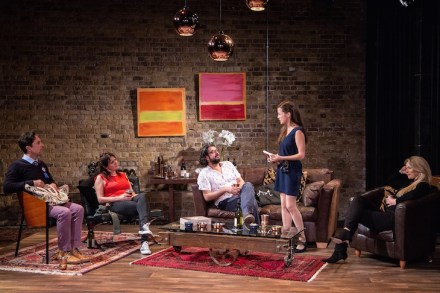
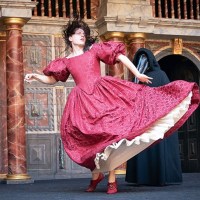
Regime change at the Globe. The new boss, Michelle Terry, wants a 50/50 ratio of males to females in each production. Rather eccentric. Why cast a drama to reflect the distribution of sexual organs across the general populace? Imagine hiring an orchestra to represent the ratio of citizens who can play an instrument. And didn’t the process of examining actor’s genitals at auditions land Harvey Weinstein in a spot of bother? Ms Terry’s gender fixation is called, curiously enough, ‘gender-blind casting’. She inaugurates her reign at the Globe by offering us a production of Hamlet in which, perhaps with a nod to gender-blind casting, she plays the lead. No one but Ms Terry would have hired Ms Terry for this role.

Fresh and wild | 31 May 2018

Television

I recently came across a theory of the American poet Delmore Schwartz’s that Hamlet only makes sense if you assume from the beginning that all the characters are drunk. Given Schwartz’s own fondness for booze, this idea perhaps smacks of drunken hyperbole itself. But it certainly sprang to mind while watching BBC2’s King Lear (Monday), where Anthony Hopkins spent quite a lot of the first half swigging enthusiastically from a hipflask.

Laughing matters

Opera

‘Comedy for music by Hugo von Hofmannsthal. Music by Richard Strauss.’ That’s what the creators of Der Rosenkavalier wrote on the score, but don’t expect to see it reprinted in any programme books. Their careful wording doesn’t fit modern assumptions about Der Rosenkavalier, and not merely because it gives the librettist first place. There’s that troublesome word ‘comedy’, too. Advertising blurbs tell us (I know, I’ve written a couple) that Rosenkavalier is a bittersweet meditation on love, transience and loss. Yet its creators meant it to be funny. ‘Don’t forget that the audience should also laugh!’ wrote Strauss to Hofmannsthal. ‘Laugh, not just smile or grin!

In praise of Hugh Grant

The first episode of A Very English Scandal (BBC1), the story of the Jeremy Thorpe affair, was brilliant. So often, dramas about the past suffer from the disbenefit of hindsight. They use the dead as mannequins to wear their contemporary thoughts and attitudes. History, in their hands, is a form of what is now called ‘cultural appropriation’, paying no respect to the reality of the lives depicted. There is a brief moment in A Very English Scandal which teeters on the edge of this, when dear Lord Arran, sitting in his own house and in the presence only of his wife and Leo Abse MP, makes a rather pious speech about how wicked it is that homosexual acts are illegal.

A man of many parts | 24 May 2018

Arts feature

A most excellent fellow, Roger Allam. On the stage he brings dignity to all he does, in the noblest traditions of the British theatre. Off it he is a fully paid-up member of the human race, admired by his comrades as a man no less than as an actor. Some mummers, eager to let off steam, occasionally let the side down. Allam is the sort of chap — star and team player — who brings the profession into repute. Three times a winner of an Olivier award, twice for best actor, he is currently to be found on the West End stage in The Moderate Soprano, David Hare’s touching portrait of John Christie, Etonian, commissioned officer, eccentric and founder of Glyndebourne Festival Opera on the family estate in Sussex. ‘I’ve grown to love the man,’ says Allam.

Same old story | 24 May 2018

Cinema

Edie tells the story of an 84-year-old woman who wants to fulfil a girlhood ambition by climbing a Scottish mountain. It stars the wonderful Sheila Hancock who has been criminally underused cinematically down the years — ‘I wasn’t considered attractive enough,’ she recently said. As there are anyway too few films featuring older women with their own narratives, I am absolutely desperate to be generous about this. That’s the aim. It won’t always be easy, frankly, but if there is one thing this film wants you to take away it is this: you’re never too old for a challenge. At the outset, Edie is seen living under the hand of her husband.

Lessons in refrigeration

Opera

There is no such thing as a moderately good performance of Madama Butterfly, or, to be more precise, it’s not possible to be slightly or rather moved by a performance. As with some of Shakespeare’s plays, and most of Wagner’s music-dramas, one is either shaken and overcome, or refrigerated and indifferent. So it’s sad to report that Glyndebourne’s first ever Butterfly, toured in 2016 but now settling on home ground, is a stolid, undistinguished affair, with some decent moments and much that seems routine and a fair amount that is worse than that. Is it a good idea to update an opera that is set in Nagasaki to the 1950s, when the city was still reeling from the effects of the second atom bomb?