Books and Arts – 1 November 2018

The good, the bad and the ugly in books, exhibitions, cinema, TV, dance, music, podcasts and theatre.
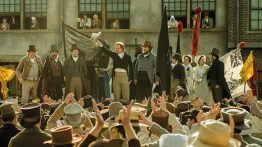
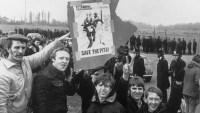
Mike Leigh’s Peterloo is one of those films where you keep waiting for it to get good, and waiting and waiting. It’s Mike Leigh; it’s bound to get good soon. But it never does. It’s essentially two hours of men shouting at each other, followed by a burst of violence. I sincerely wish it were otherwise, but there you are. This is the story of the Peterloo Massacre (16 August 1819), when government-backed cavalry charged a peaceable crowd of around 60,000 who had gathered in St Peter’s Field, Manchester, to demand universal suffrage. Fifteen were killed and hundreds more injured, including women and children. The film has been getting it in the neck from some quarters ever since the project was announced.
The Little Drummer Girl (BBC1, Sunday) is the new John le Carré adaptation from the production company that brought us The Night Manager. It’s also directed by Park Chan-wook from South Korea, a man generally referred to by film buffs as an ‘auteur’. All of which may be just as well, because with a less distinguished pedigree, the first episode might possibly have seemed a bit corny. The opening section, for example, featured the impeccably complicated delivery of a Palestinian bomb to the Bonn residence of a Jewish attaché in 1979, and would, I’m fairly sure, have proved exciting enough without being cunningly overlaid by a series of loudly ticking clocks.
How do you solve a problem like Lucia? Murder, madness, abuse, possibly even incest, all set to a soundtrack of rollicking, rum-ti-tum tunes. Add to that a Scottish setting (nothing sabotages dramatic seriousness quite like a kilt, just ask Mel Gibson) and you have Gilbert & Sullivan in an Italian accent, Ruddigore with a cigarette and a suntan. Recently at the Royal Opera House Katie Mitchell tried to naturalise Donizetti’s opera into submission, but ended up tussling with a score she clearly didn’t trust and a cast who didn’t seem to trust her, giving her audience what she wanted Lucia to be, rather than what’s actually there.

In the year since it opened, the Bridge has given us the following: a harmless Karl Marx comedy by Richard Bean; a modern-dress Julius Caesar with Ben Whishaw playing Brutus as a frowning existentialist; a dreary rustic soap opera written by newcomer Barney Norris; and an enjoyable NHS romp by Alan Bennett. Not quite the string of triumphs everyone had expected from Nicholas Hytner who used to produce two dozen shows a year at the National but now manages one every three months at his bankside garret. Time on his hands. But not enough to script-edit the efforts of fashionable wags like Martin McDonagh whose silly, mean-spirited skit about Hans Christian Andersen is a humiliating low point in the Bridge’s short history. The setting is Copenhagen.
You may have noticed that BBC iPlayer (for radio programmes) has been replaced this week with the new BBC Sounds platform. Instead of simply finding your favourite programmes on playback, BBC Sounds will offer you the chance to personalise your listening, discover programmes recommended ‘just for you’, catch up with the latest podcasts. On Monday, James Purnell, director of radio and education at the BBC, talked up the new venture with Martha Kearney on the Today programme. ‘All of BBC audio will be at your fingertips,’ he promised. ‘We will do the hard work of getting the right programmes to you at the right time.’ ‘Won’t this involve taking money away from existing budgets?
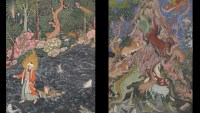
In Britain today, Islam in its original essence is not to be found in mosques or Muslim schools, but on the first floor of the British Museum. There, the Albukhary Islamic gallery, newly opened to the public, dazzles visitors and defies every certainty promoted by today’s hardline Muslim activists. This spectacular exhibition of objects from across continents and centuries shows us a history of continuity of civilisations, coexistence of communities. It offers a compelling corrective to current popular notions of Islam as an idea and a civilisation. Too often, we assume that Islam’s arrival on the world stage involved some violent break with the past that brought forth a new Muslim civilisation.

The sixth and final season of House of Cards has begun without Kevin Spacey, who played the murderous Democratic American president Frank Underwood. Netflix fired Spacey when he was accused of multiple sexual assaults last year, although he is not yet charged with any crime. The longed-for dénouement of Frank Underwood — the moment when he realises his crimes have been in vain — never came. Instead his wife Claire, so lovely in looks, is now president. (It’s TV.) When the trailer for the final season appeared, Underwood was already in his grave, with Claire, played by Robin Wright, standing over it. Wright gave an interview saying that she had never known Kevin Spacey, which made me smile, because it is exactly what Claire would have said.
When it was released as a single, Bohemian Rhapsody was slated by the critics – yet went on to be the most popular commercial record in history. Ben Elton’s Queen musical, We Will Rock You, was panned by reviewers when it was released 16 years ago: today, it’s still packing in crowds the world over. So when the Queen film, Bohemian Rhapsody, was trashed by pretty much every film reviewer in Britain this week, it should not have been a surprise. Nor, for those planning on watching it, a deterrent. The film is not an expert portrait of Freddie Mercury, but it doesn’t pretend to be, any more than We Will Rock You pretends to be Chekov. The star is the music. We see how it’s written, recorded, argued over, revised and performed.

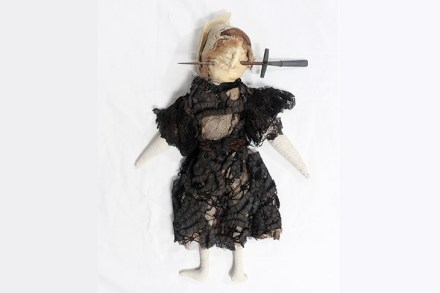
Just in front of me, visiting Spellbound at the Ashmolean last week, was a very rational boy of about seven and his proud mother. ‘I don’t believe in magic, witches or Father Christmas,’ he announced to the girl presiding over Room One. ‘Perhaps you’re spiritual but not religious,’ said the girl. The rational boy gave her the look she deserved. In that first room pride of place is given to a squat little silvered bottle with a hand-written label: ‘Obtained in 1915 from an old lady living in Hove, Sussex. She remarked: “and they do say there be a witch in it, and if you let un out there’ll be a peck o’ trouble”.
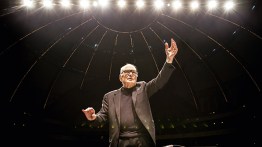
Ennio Morricone, the Oscar-winning Italian film composer, has died at the age of 91. Here, Richard Bratby spoke to the 'Maestro'. Ennio Morricone’s staff wish it to be known that he does not write soundtracks. ‘Maestro Morricone writes “Film Music” NOT “Sound Tracks”’, explain the printed interview guidelines. ‘Maestro Morricone is a composer. Composers do not use the piano to compose music with, they write their music down directly in musical notes without the interference of any musical instrument.’ Well, that’s Beethoven told. In the classical music world, you hear tales about ‘riders’, the Spinal Tap-like lists of minimum requirements that pop stars issue before consenting to walk among mortal men.
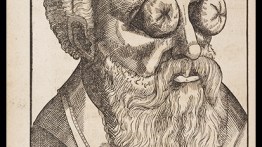
There is a moment in Bohemian Rhapsody when the screen swims with print. The reviews for Queen’s epic new single are in, and they unanimously denounce the song as a vacuous and bloated irrelevance. This feels like a brazen hostage to fortune for a biopic whose botched gestation saw writers, stars and directors roll on and off the project for a decade. But then Queen were always bomb-proof. The script we finally have before us is by Anthony McCarten, who specialises in rewriting the lives of difficult Brits. See also Darkest Hour and The Theory of Everything, whose lead actors both won Oscars. Lightning will probably not strike thrice for Rami Malek.

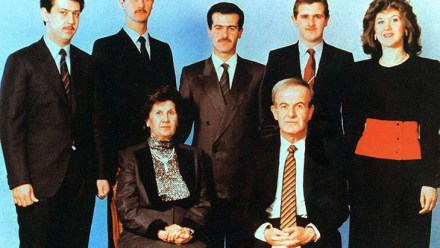
‘How did this mild-mannered eye doctor end up killing hundreds of thousands of people?’ someone wondered about Bashar al-Assad in BBC2’s extraordinary three-part documentary A Dangerous Dynasty: House of Assad (BBC2, Saturday). It’s a question we’ve all occasionally pondered as the Syrian body count rose — 500,000 thus far — and as six million refugees fled the country. The answer is so lurid and complex that it could have come from one of Shakespeare’s tragedies. Chinless, studious, polite Bashar was never meant to become president of Syria. His thuggish military officer father Hafez, who seized power in 1970, had earmarked the job for his dashing equestrian soldier son Bassel.
Like it or not, provincial ballet audiences love a story they can hum and any director planning to tour a swan-light, sugar plum-free menu has always done so at their peril. Tchaikovsky isn’t compulsory: a really well-known story, however undanceable, can usually do decent business (Northern Ballet’s extremely silly Three Musketeers is a reliable granny-magnet). But less familiar titles can be box-office poison — as English National Ballet is forever discovering. When the former Royal Ballet star Tamara Rojo took over in 2012, she immediately set about breaking down the vanilla tastes of ENB’s regional fanbase with a lavish new production of Le Corsaire.
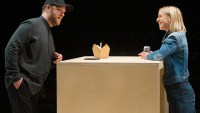
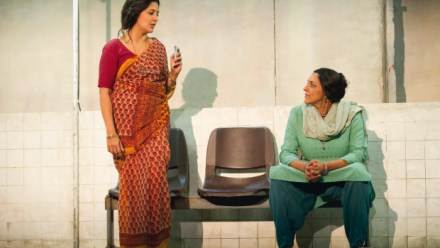
Stories by Nina Raine is a bun-in-the-oven comedy with a complex back narrative. Anna, in her mid-thirties, had a boyfriend 12 years younger than her but the relationship died just as Anna was ready to sprog. Aged 38, and desperately broody, she needs to get preggers pronto. We join her on a Sperm Quest. Though Anna could easily arrange a casual bareback fling, she insists on divulging her goal to her prospective lovers before they drop their Y-fronts and deliver the oats. The action opens as a family drama with Anna’s Dad (Stephen Boxer) pottering around the kitchen, drink in hand, making sarky comments about Anna’s sex life while she sits at a laptop scrolling through mugshots of potential dads. Her brother (Brian Vernal) tosses in comic asides of his own.

‘I’m not here to rehabilitate,’ says Pamela, who teaches creative writing to prisoners in Northern Ireland. She doesn’t think of her work as being about bars, bare walls and what happens when they leave jail. It’s all about meeting the prisoner as a person. She soon realised ‘how different prison writing is’. It’s much more direct, heartfelt. Jamie wrote a poem after just half an hour in Pamela’s class. He gave it the title ‘My journey in the care system’. More than a quarter of all prisoners were brought up in care, a figure that rises to almost half for those aged under 25. To Jamie it was a relief, ‘getting that finally out in the open’.
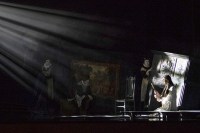
Wolverhampton; Workington; Blackburn; Sheffield; Lancaster; Hackney. Every year English Touring Opera does what our national opera company doesn’t: packs up its props and takes to the road, bringing opera to the bits of the UK other companies don’t even think about reaching. And not just Traviatas and Toscas either, but properly interesting, often unusual, repertoire. With a core staff you can pretty much count on your fingers, and ticket prices that would scarcely buy you a sandwich at the Royal Opera House, let alone a seat, the whole operation is one of those minor miracles of the arts world — a company where a little bit of funding goes an awfully long way, and not just geographically. Then there’s the talent.
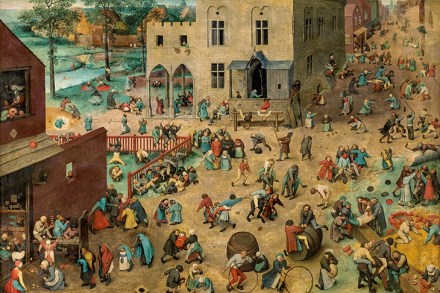
‘About suffering’, W.H. Auden memorably argued in his poem ‘Musée des Beaux Arts’, the old masters ‘were never wrong’. Great and terrible events — martyrdoms and nativities — took place amid everyday life, while other people were eating, opening a window or ‘just walking dully along’. As an example, Auden took ‘The Fall of Icarus’ by Pieter Bruegel the Elder. As it happens, Auden himself was wrong there, because the work he cited is no long thought to be by the painter after all. This picture is not, therefore, included in the exhibition Bruegel at the Kunsthistorisches Museum, Vienna.
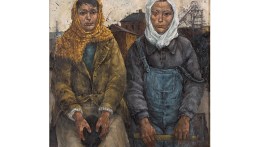
‘They did not look like women, or at least a stranger new to the district might easily have been misled by their appearance, as they stood together in a group, by the pit’s mouth.’ As opening sentences go this is a cracker, but few modern readers of Frances Hodgson Burnett’s That Lass O’Lowrie’s get far beyond it because the novel’s characters speak in a Lancashire dialect that makes Mark Twain’s Huck Finn sound like a Harvard preppy. In real life, though, it wasn’t the Lancashire pit girls’ lingo that put contemporaries off so much as their costume.
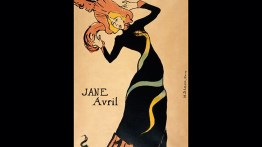
You don’t need to be much of a psychologist to understand the trajectory of Henri de Toulouse-Lautrec. Born to aristocratic first cousins, in a family never shy of consanguinity, he was blighted by congenital deformities and weaknesses. When his brittle legs broke in his teenage years, they stopped growing altogether, leaving the adult Lautrec tiny as well as weird-looking, with his heavy lips and thick-lidded eyes. Fortunately, Montmartre was waiting for him, offering a boozy and bosomy refuge from his peculiar family and woeful self-regard. In the dance halls of the capital, Lautrec found his people, and in his art they found themselves. His paintings tell the story best, all those fleshy whores lying in bed or lining up for medical examinations.
Lounging confidently on the sofa of a Soho hotel suite, Dominic West has been beaming at me, but now his handsome smile dissolves into a hurt look. I have just asked him to explain why he, in common with so many actors, feels the need to voice his political views. ‘I should just pipe down and carry on acting?’ he asks, leaning forward to pour tea. I don’t like to be rude, so I raise my eyebrows and shrug as the most polite way of saying, ‘Well, it’s an idea.’ West, who is giving interviews to promote his new film Colette, has also made a campaign video calling for a second EU referendum. In it, he warns people that Britain won’t be able to make trade deals with America, Turkey or India on its own.

We can’t know what Horace Walpole would make of the continuing popularity of serendipity, a word he coined in 1754 to describe the accidental happy discovery of a Renaissance portrait he had long been seeking. In 2001 it became the title of a romantic comedy and this year of a song by a South Korean boy band, which has had 74 million hits on YouTube. But we can imagine that he would be pleased that his lifelong effort to leave his mark on posterity has been so successful. He was born (in 1717) with the proverbial silver spoon in his mouth, the youngest son of the all-powerful Sir Robert Walpole, 1st Earl of Orford and effectively Britain’s first prime minister.
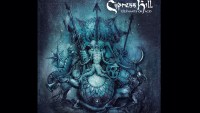
Grade: A+ Easily album title of the year, maybe album of the year. A true bravura offering from these supposedly tired old men. Cypress Hill are now in comfortable middle age, almost as old as me, ffs. But they were ever ludicrously inventive and idiosyncratic, right back to that first album in 1991, which wrote the template for many lesser and even more profane hip hop gods. This one is mired in psychedelia, as even Charles Moore might have guessed from the title. There are very knowing nods to, especially, early Jefferson Airplane — although the guitar sounds more like Barry Melton than Jorma Kaukonen — and Sly and the Dead and Moby Grape.
The morning after the first night of Ronald Harwood’s Taking Sides in May 1995, I received a call from Otto Klemperer’s daughter. ‘Tell me,’ said Lotte, ‘is it true that, in Mr Harwood’s play, the denazification attorney addressed Dr Furtwängler as “Wilhelm”, or even “Willi”?’ I said something in reply about dramatic licence and the interrogator being, erm, an American. ‘No one,’ thundered Lotte Klemperer down the phone, ‘ever called my father “Otto”.’ Appearances meant everything to the generation of great conductors that survived the Nazi era, whether as anxious refugees or, in the case of the Berlin Philharmonic chief, as a cultural poster boy for a criminal regime.
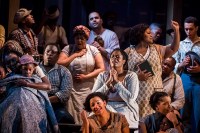
Gershwin’s Porgy and Bess springs to life fully formed, and pulls you in before a word has been sung. A whirlwind flourish; the hectic bustle of violins and xylophone, and then a quick fade into an image of a woman cradling a child and ‘Summertime’, the very first number we hear sung. The aria’s fame actually serves the drama. The thrill of musical recognition as the curtain rises on an unfamiliar world is replaced by astonishment at the dramatic instinct that allows Gershwin to expend a melody like that before his story has even started, in the certain knowledge that what follows can, and absolutely will, live up to what for any composer other than Gershwin would be a once-in-a-lifetime inspiration.

At the beginning of Barneys, Books and Bust Ups: 50 Years of the Booker Prize (BBC4), Kirsty Wark’s voiceover promised us ‘a tale of fierce rivalries, bruised egos and, most importantly of all, countless brilliant books’. In the event, though — as the title perhaps suggested — those countless brilliant books proved rather less important to the programme than Kirsty’s edifying words had led us to believe. At one point, it noted in passing that Midnight’s Children is a very good novel. At another, it lamented the melancholy fact that Booker ‘voting intrigue and judges’ fallings-out’ have sometimes overshadowed ‘the books themselves’.

Flies buzzing, strange rustling, crunching sounds, and then the most chilling screech you’ll have heard all week. Vultures were feeding off the carcass of a zebra in Kenya, recorded by Chris Watson. He had been up before dawn, on the look-out for a suitable carcass to attract the scavenging vultures. He was lucky to find one and clipped two microphones to the ribcage, running the cable to his recording vehicle 50 yards away. By break of day the vultures had appeared and were taking their breakfast. Watson believes that recording sound at such close quarters ‘really fires our imaginations in a unique way’. He was not the only contributor to The Changing Sound of Radio on Radio 4 Extra (produced by Jessica Treen) to talk about radio as if it is a visual medium.
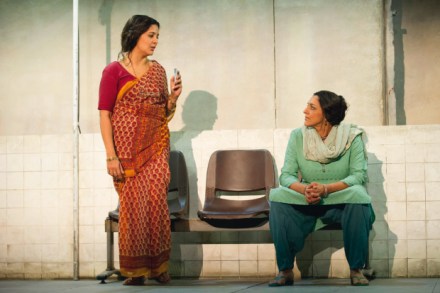
Sir David Hare’s weird new play sets out to chronicle the history of the Labour movement from 1996 to the present day. But it makes no mention of Corbyn, Momentum, the anti-Semitism row or rumours of a breakaway party. The drama is located in the dead-safe Miliband era and it opens with talk of a leadership election. The two best candidates, Pauline and Jack, are old lovers from university. Pauline is a doctor who entered politics when budget cuts threatened the hospital where her mother was being treated for cancer. Jack is a colourless Blairite greaser, a sort of Andy Burnham without the mascara, who is still besotted with Pauline despite being newly married to Jessica.