Tony blair

The Pope’s AI intervention shames our politicians

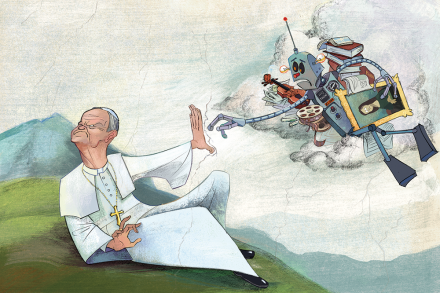
I was born into a sternly Presbyterian culture. Politically, I’m more Orange than Donald Trump’s skin tone. But today I am on my knees giving thanks to the Pope. He has produced the most powerful political document of the year, taking on the greatest challenge of our times. His first encyclical, Magnifica Humanitas, deals with the changes which will be wrought to all our lives by artificial intelligence in the months and years ahead. AI will transform our economies and societies massively and irrevocably; it will change what it means to be human; it may even mark the end of humanity itself. If it takes the Pope to alert us to this revolution then perhaps the Reformation wasn’t such a good idea after all.
AI

Portrait of the week:  Tony Blair intervenes, Peter Murrell pleads guilty and temperatures hit a May high

Home Sir Tony Blair, the former Labour prime minister, said in a 5,700-word essay: ‘The Labour party is playing with fire; or, more accurately, with its future, and that of the country.’ He said the party shouldn’t choose a new leader before deciding policy. In the first part of his government-commissioned report into economic inactivity by young people, Alan Milburn highlighted the 957,000 people aged between 16 and 24 who were not in work, training or education. Rachel Reeves, the Chancellor of the Exchequer, suspended import tariffs on chocolate and biscuits and gave away children’s tickets on buses during the month of August. She reduced VAT from 20 per cent to 5 per cent on children’s meals and zoo tickets from 25 June to 1 September.

Rupert Murdoch’s warped vision of family

When Rupert Murdoch divorced his fourth wife, Jerry Hall, in August 2022 he made her sign an agreement that she would not give any story ideas to the writers of Succession. Frankly he need not have bothered, because it’s all here in this utterly gripping book. The award-winning journalist Gabriel Sherman has been reporting on the Murdochs since 2008 and has interviewed them all at one time or another, so he really knows his stuff. He briskly covers Rupert’s entire career but concentrates on the man’s relationships with his children and the war of succession. Rupert was always an absentee father who put business before family. He divorced his first wife, Patricia Booker, when their daughter Prudence was only nine, and she rarely saw him.

I was right about Peter Mandelson

A fight between Alastair Campbell and Peter Mandelson? A difficult one to call, really. Like a war between Pakistan and Turkey: you kind of want both sides to suffer unimaginable losses. It happened fairly often, though, in that uniquely dysfunctional Blair government and before, when his cabal of liars and smarmers were preparing for power. Here’s Campbell on the subject: ‘He started to leave, then came back over, pushed at me, then threw a punch, then another. I grabbed his lapels to disable his arms and T.B. [Tony Blair] was by now moving in to separate us and P.M. just lunged at him, then looked back at me and shouted, “I hate this. I’m going back to London.”’ Stamp, stamp, stamp went those dainty little feet, probably clad in moccasins.

The second coming of Gordon Brown

At a Christmas party I witnessed a showdown between two Labour movers and shakers, one a devoted Starmerite, the other an unrepentant Blairite, over whether the Prime Minister can turn things around. They didn’t agree on much – Keir Starmer’s vision or lack of it, Europe, immigration, you name it. When I commented to another leading figure in the party that Blairites, with the exception of Jonathan Powell (now running foreign policy) and Alastair Campbell (whose podcast has moved him leftwards), seem to have lost faith in this government, this former minister said: ‘Of course they have, because this is the second term of Gordon Brown.

Step forward the undeserving: it’s honours season again

Once Christmas Day’s out of the way and we’re stuck in that no man’s land between one year and the next – known, tweely, as ‘Twixmas’ or, if you’re posh, the ‘interregnum’ – one thing guaranteed to make the front pages is the announcement of the New Year’s Honours List. News of the worthy – and not-so-worthy – recipients will be released, and we’ll get to see who’s been elevated to the Lords, knighted or handed one of the lesser gongs. Among the very deserving recipients will be those who make you think: hang on a minute – how did that happen? When news broke that former prime minister Tony Blair was to be made a Knight Companion, more than a million people signed a petition calling for the honour to be blocked.

What is Tony Blair up to?

15 min listen

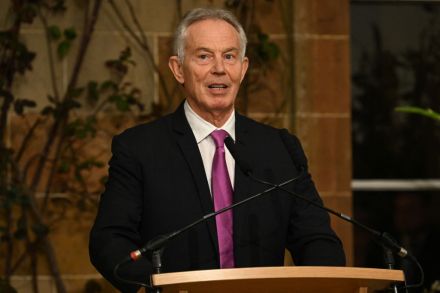
Tony Blair is making waves in Westminster today after his institute published a report on net zero that appears to undermine Ed Miliband and Labour’s green agenda. In his foreword – while not directly critical of the UK government – he encouraged governments around the world to reconsider the cost of net zero. Many have compared Blair’s comments to those made by Kemi Badenoch several weeks ago and questioned the timing – just 48 hours before the local elections. What is Blair up to? Should Labour listen to Tony? Also on the podcast, with the local elections tomorrow, we take one final look at the polling. With Labour expecting big losses, how can the party spin the results?

‘We’re going to a more radical place’: Wes Streeting on his plans for the NHS

A copy of a leading article from The Spectator is stuck to the wall of Wes Streeting’s office in the Department of Health. ‘Is Wes Streeting the Hamlet of the Health Service?’ we asked in October, warning against the perils of inaction. ‘We were so riled by it we stuck it there to hold ourselves to account,’ Streeting explains. ‘We’re going further than your prescription, though. We thought it was insufficiently radical.’ The Health Secretary has certainly been busy. Over the past few months, he has unveiled a range of reforms, including abolishing NHS England. His Blairite zeal annoys some in Labour. He languishes in 21st place in LabourList’s cabinet league table of party members’ favourites.

Saviour complex: Jonathan Powell is still trying to change the world

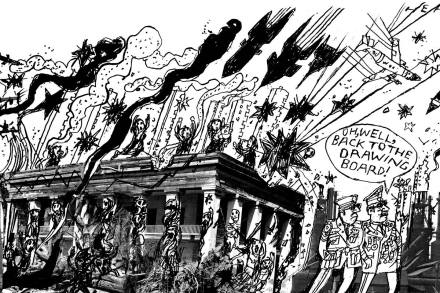
In 2011, the Hampstead theatre put on an autobiographical play about a marriage strained by lies, betrayal and, as the exasperated wife says, the presence of ‘three of us’ in the relationship. The play was Loyalty by the journalist Sarah Helm, the third person was Tony Blair and the principal male character was a barely disguised Jonathan Powell, her husband and Blair’s chief of staff. The lies are about Iraq’s weapons of mass destruction, and the betrayal occurs when the Powell character goes along with the war despite not ‘really’ believing in it, siding with Blair over his partner. Two decades on, Powell is Keir Starmer’s national security adviser and may have more influence over foreign policy than anyone in government after the Prime Minister himself.

The answers Starmer must give

It will probably only damn me further in the eyes of many, but when I was a government minister I often used to ask Labour predecessors for advice. Tony Blair especially. He may have felt it was a forlorn exercise ever offering me his wisdom, especially when I went on to back Brexit, support parliament’s prorogation under Boris and defend Dominic Cummings against all comers, but I always appreciated his insights, even when we disagreed. No position is so strong, no policy so perfect, that it cannot benefit from being tested by critics. If those critics have experience of office, know its powers and limitations, so much the better. And few know office better than Blair.

Is Gordon Brown back?

14 min listen

Last week, there was a surprise visitor to the Treasury: Gordon Brown. The former prime minister and chancellor secretly returned to his old digs for the first time since he left office 14 years ago. According to onlookers, Brown visited his old office as he caught up with the new chancellor – and his friend – Rachel Reeves. What was discussed? Many have speculated that among the topics on the agenda was the winter fuel allowance, a policy ushered in by Brown and now amended by Reeves.  Elsewhere, Tony Blair has been doing the media rounds promoting his new book and giving his thoughts on leadership. Should Keir be listening? Are interjections from former prime ministers ever helpful?  James Heale speaks to Katy Balls and Patrick Maguire.

One damned thing after another: Britain’s crisis-ridden century so far

Asked about the greatest challenges he faced as prime minister, Harold Macmillan is said to have replied: ‘Events, dear boy, events.’ The first quarter of this century has seen no shortage of events that have blown prime ministers off course. There was Tony Blair by 9/11 and the resulting war in Iraq; Gordon Brown by the financial crisis of 2007-8; David Cameron and Theresa May by Brexit; and Boris Johnson by Covid. With the exception of May, none of these people had any inkling, on taking office, of the bolts from the blue that would ultimately define their premierships.

Why do neoliberals get let off the Iraq War hook?

From our US edition

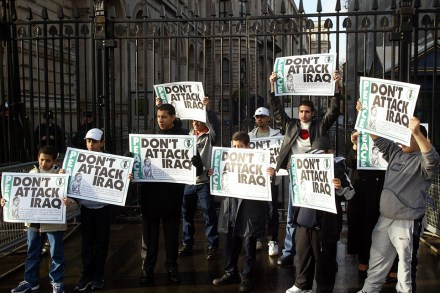
Given the worldwide climate of political intolerance, I often try to deflect hostility by prefacing my comments with the old saw that “reasonable people can disagree.” As a strong believer in intellectual freedom and Socratic dialogue, I do in fact feel duty-bound to listen to the other side, or sides, of an argument. Yet there’s one subject about which I’m as close-minded as the wokest opponent of liberal debate — a topic about which I won’t brook any disagreement because there simply isn’t any reasonable form it can take: that is, George W. Bush’s and British prime minister Tony Blair’s disastrous decision to invade Iraq in 2003 and its deadly, still hugely malignant consequences in the Middle East.

invasion

Can The Crown redeem itself in its final hours?

From our US edition

Netflix’s royal saga The Crown has been one of its biggest hits of the past few years. Sacrificing subtlety for big, dramatic arcs, with award-winning performances by a cast that has, in a stroke of genius on the part of its creator Peter Morgan, changed every two seasons, it’s been the most gripping and rich account of the post-war British royal family ever put on screen. It has been helped both by an enormous budget and the useful way in which the present-day battles between Prince Harry and Meghan Markle and the rest of the Firm have come to mirror The Crown’s increasingly eventful power struggles among the various branches of the family.

the crown

The Crown season six: a regal return to form?

From our US edition

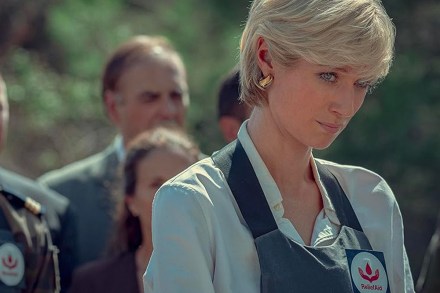
Say what you like about Netflix’s The Crown, now coming into its final series — the first four episodes launch on the service today, with the concluding half-dozen coming next month — but it is one of the few shows that has combined winning truckloads of awards with compelling its viewers to have an opinion on its often surprising manipulations of history. Its creator Peter Morgan has been both praised and vilified for the liberties with fact he has taken, all of which he has dismissed on the grounds that he is creating fact-based entertainment, rather than a documentary series. That invention can often illuminate, rather than obscure, the workings of the forever secretive British royal family.

the crown diana

The Tories didn’t lose Mid Bedfordshire – Labour won it

In 1975 I travelled as an undergraduate to Egypt, Lebanon, Syria, Jordan and finally to Israel. I visited refugee camps and met a Palestinian militant, Bassam Abu Sharif, who had been blinded in one eye by a Mossad parcel bomb. I talked to policymakers in each country and heard a range of Israeli opinion. On return I wrote in the Jewish Chronicle of the need to address the plight of the Palestinians caused by their displacement. I made the case in favour of a two-state solution five years before the 1980 Venice declaration on Palestinian statehood. One of today’s many tragedies is that Hamas’s barbarism has pushed that solution even further from grasp. In principle, it remains the only way to end the chaos.

Does the public want reheated Blairism?

To understand the political journey of Sir Keir Starmer, look to Liz Kendall. This week the Blairite and one-time leadership contender was put in charge of Labour’s welfare reform policy. Her promotion has upset the party’s left-wingers, who already think Starmer is too right-wing on welfare. ‘She’ll be more hard-line than Jonathan Ashworth,’ says one shadow minister in reference to her predecessor. But her real influence started well before she was given a place at Starmer’s shadow cabinet table. Even those who were demoted or axed put on a brave face: ‘It shows Labour senses it is about to win’  Kendall’s role in the 2015 contest was to speak hard truths following the party’s defeat under Ed Miliband.

The West’s climate dead end

From our US edition

Former British prime minister Tony Blair is the quintessential Davos man. In the sixteen years since he left office, he has criss-crossed the globe, giving speeches and advising sometimes unsavory clients. And yet this week he has delivered a dissenting comment on the issue that his fellow conference-hoppers spend a lot of time worrying about. Blair has caused a bit of ruckus in the UK this week thanks to an interview with center-left magazine the New Statesman in which the former Labour Party leader questions the wisdom of unilateral action on climate change.

tony blair climate

If Blairism were a carvery: the Impeccable Pig reviewed

Labour is 30 points ahead, and in honour of this I review the Impeccable Pig in Sedgefield (Cedd’s field), a medieval market town and pit village south of Durham. It is Tony Blair’s former constituency and Camelot, but nothing lasts for ever. Blairism had pleasingly flimsy beginnings. Sedgefield had yet to choose a Labour parliamentary candidate when a young lawyer sat in a borrowed car outside the house of John Burton, head of the Trimdon Labour Club, on 11 May 1983, thinking he should drive back to London.

Tony Blair’s Covid grift

Have we yet seen the end of Covid restrictions? It is tempting to think so. For many people, Covid and the lockdowns have receded into history, replaced by Ukraine and the energy crisis. It would be easy, but foolish, to dismiss Tony Blair’s proposals as the ramblings of a bored ex-PM But perhaps we have parked the whole business in our memories a little too soon. Some are already pushing for restrictions to be re-enacted this winter. The Tony Blair Institute for Global Change has just published a paper, Three Months to Save the NHS, demanding that the government consider re-imposing mask mandates on public transport and other enclosed settings.