Tony blair

The next big hunting battle

In his memoirs, Tony Blair did not have much good to say about his government’s seven-year long struggle to ban fox hunting. The former PM, writing in 2010, admitted he deliberately sabotaged the 2004 Hunting Act to ensure there were enough loopholes to allow hunting to continue. Confessing that he initially agreed to a ban without properly understanding the issue, Blair wrote: ‘If I’d proposed solving the pension problem by compulsory euthanasia for every fifth pensioner I’d have got less trouble. By the end of it, I felt like the damn fox.’ Yet while the Act applies to England and Wales – with similar legislation passed in Scotland in 2002 – no such ban

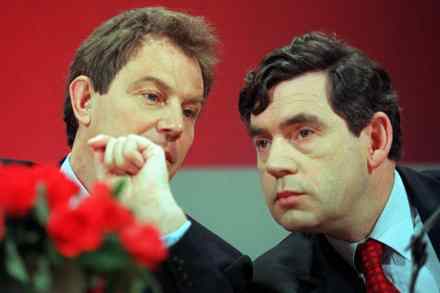
Blair & Brown: The New Labour Revolution should be called ‘The Tragedy of Gordon Brown'

Murder Island features eight real-life ‘ordinary people’ seeking to solve a fictional killing on a fictional Scottish island. What follows is so confused and confusing that you can only imagine it was pitched to Channel 4 as ‘Broadchurch meets The Apprentice’ and nodded through as a result, without anybody asking such pesky questions as ‘So how might that work, then?’ Or if they did, that they were silenced by the news that Ian Rankin was signed on as the writer — whatever that might mean, seeing as most of the programme is necessarily unscripted and the investigation itself impossible to plot in advance. Tuesday’s opening episode began with the ordinary

Boris should keep copying Blair

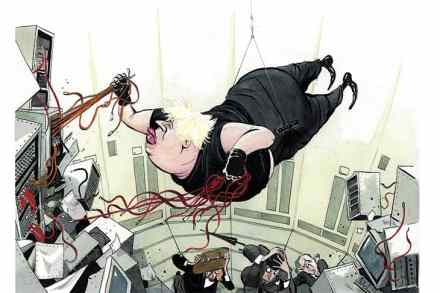
Having written here at least once before that Boris Johnson is the heir to Blair, my first thought on the Prime Minister’s tax-to-spend announcement on the NHS and social care is a petty one: I told you so. The striking thing about making the Boris-Blair comparison is how resistant some people are to it. Among Bozza fans on the Leave-voting right, there is often fury at the suggestion that their man, the hero of Brexit, is anything like the Europhile they used to call ‘Bliar’. On the left, there is an almost pathological determination to believe that a Tory PM must, by definition, be a small-state free-marketeer intent on starving and

Tony Blair takes back control

Last month Steerpike reported news that Tony Blair was plotting a return to Parliament. One of the many unwanted consequences of Covid was the former Prime Minister’s return to the spotlight, in part due to the work of his eponymous institute on issues like mass testing and vaccines. With polls suggesting that members of Starmer’s Labour now view their party’s ex-leader in a more favourable light, could a ‘de Gaulle-style comeback’ be on the cards? Alas, the onetime premier – whose years out of office have been peppered with various gigs including JP Morgan, Zurich and UI Energy – appears to have now concluded that life as a septuagenarian backbencher is not for him.

What Starmer’s Blair bomb means for Labour

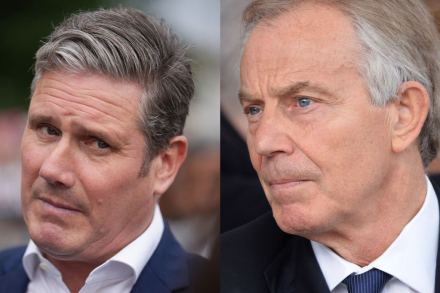
In a recent interview Keir Starmer dropped the B-bomb and Labour members are all a chatter about what it means. Speaking to the Financial Times the Labour leader said his party should be ‘very proud’ of what it achieved under Blair and Brown. As part of Labour’s campaign to regain power for the first time since 2010, Starmer believes the party should remind voters of the good it did when in government, and point out Labour’s successes in reducing poverty, improving the prospects of children and tackling climate change. This might seem a reasonable thing for the Labour leader to say. But for some on the far left of the

Tony Blair and the perils of long hair

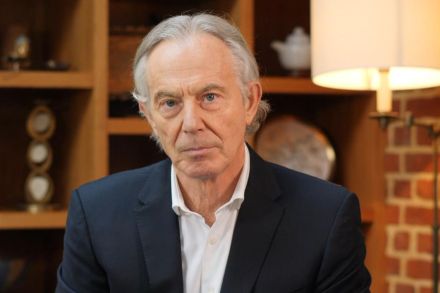
Tony Blair must be starting to empathise with Samson this week. Can you imagine being a short-haired former Prime Minister, who on every rare appearance on the Today Programme and Remembrance Sunday has the Twittersphere baying for blood, demanding the police arrest him and send him to The Hague? Then he appears on ITV looking like David Ginola and everyone is tweeting, ‘gosh, look at his hair!’ Though I confess, he doesn’t look too bad, Delilah is still the patron saint of smart men. Should you be considering letting your Covid long locks play out, and avoiding booking a full grooming session at Truefitt & Hill, Trumpers or Pankhurst of London, then

A politician's guide to non-denial denials

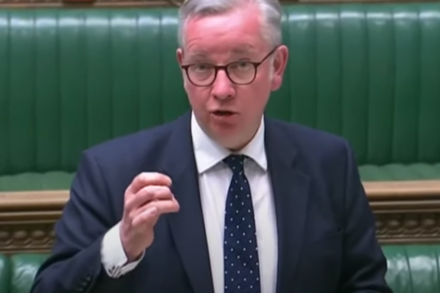
Michael Gove was deployed to the Commons on Monday afternoon to answers questions on the ministerial code, an hour-long appearance in which he was (inevitably) asked about that day’s Daily Mail splash: ‘Boris: Let the bodies pile high in their thousands’. An awkward question for any minister to handle, you might think, but the oleaginous Gove just about got away with it. Asked directly about the reports, the Cabinet Office minister gave a lengthy reply which contained this key passage to wriggle out of trouble again: Tens of thousands of people were dying. The Prime Minister made a decision in that meeting to trigger a second lockdown. He made a

Boris should heed Blair's advice on the Covid vaccine data

We’ve known from the data from phase three trials that the Pfizer and AstraZeneca vaccines have good efficacy against symptomatic cases of Covid-19. The data also hinted at near 100 per cent efficacy against serious illness, although the limited numbers of participants made it hard to be sure.  This morning, however, comes real world data showing the vaccines have all but eliminated hospitalisations. According to figures obtained by the Daily Telegraph, 74,405 people were admitted to hospitals across the UK between September 2020 and March 2021. Of these, just 32 were people who had received a vaccine at least three weeks earlier. The figures don’t reveal whether or not there

The greatest threat to Boris's legacy

The government is starting to have an opinion poll problem, but it has nothing to do with any great threat from Keir Starmer or the Labour party. While the Tory ratings have gone from high to low 40s and Boris Johnson is not as extraordinarily popular as he was in January last year before the advent of the first dry cough of coronavirus, that’s not the issue of concern at all. On the contrary, the problem is that the Prime Minister may be getting addicted to favourable ratings and increasingly unwilling to put them in jeopardy by taking difficult or unpopular decisions. The latest evidence for this view came in

Blair's back – and advising Tories on vaccine ID cards

When the Prime Minister mentioned ‘Covid status certification’ as part of his route back to normal life, one man must have enjoyed the moment. For Tony Blair it was yet one more little victory in his UK comeback tour, made all the sweeter because Boris Johnson was once a principal opponent of the idea of any ID card system. Blair has been pushing vaccine passports like nobody’s business. A recent paper published by his Institute for Global Change advocated that we carry ‘digital health passports’ on our smartphones, which we could scan on entry to bars, theatres and other places. If you don’t have a smartphone, the paper suggested, the

Boris is the true heir to Blair

Boris Johnson’s political recovery in the last couple of months has been nothing short of remarkable. Not that he was ever down and out, of course, but having got a Brexit deal that both Farage and Starmer backed, followed by the success of the vaccine rollout, the Prime Minister once again looks unassailable.  As for the Labour leader, things look much less rosy. But what hasn’t been said in the criticism of Starmer is that what has mostly caused the leader of the opposition’s dip is not his own incompetence but the Prime Minister’s recent good form. This has made me realise something about Boris: he bears a lot of comparison with one former prime

Mandelson’s story could have been so very different

Matt Forde, the stand-up comedian and presenter of his regular Political Party Podcast, has hit on an overlooked technique for getting the most out of big-name interviewees. He pretends to know nothing. Wide-eyed and star-struck (actually he is neither), Forde puts them at their ease in conversation with an apparent fanboy ingénue. ‘Do keep up, Matt,’ said Peter Mandelson, affectionately, as in his Christmas holiday interview Forde claimed to be unaware of some half-forgotten political turbulence that Lord Mandelson, his star interviewee, once encountered. It worked a treat. Lord Mandelson is normally a wary interviewee, but with Forde I have never heard him so unguarded: more confessional even than in

Tony Blair is deluding himself on a 'De Gaulle-style comeback'

Tony Blair has made a tentative return to the heart of British politics by offering Matt Hancock strategic advice on the vaccine rollout. But does the former prime minister’s ambition stretch further than this? More than a decade after leaving office, Blair is said to keen on a ‘De Gaulle style comeback’. For Blair’s critics, it’s an apt comparison. De Gaulle was the so-called ‘father of Europe’, who led Free France during the war years of the Vichy government. He later disappeared into the political wilderness after 1946 before staging a dramatic return a little over a decade later, eventually becoming president for ten years. So could Blair emulate De Gaulle? You can

In defence of British institutions

‘Terms and conditions will apply.’ That, or something near it, was Dan Rosenfield’s initial response when Boris Johnson invited him to become Chief of Staff in No.10. Naturally, Mr Rosenfield was tempted. But he wanted assurances that he would have the authority to run a serious political outfit. He was not interested in becoming a zoo-keeper. That was not a problem. The zoo has been closed down. The Dominic Cummings era is over. Boris’s willingness to hire a completely different character, following the appointment of Simon Case as Cabinet Secretary and Head of the Civil Service, suggests that the PM can recognise and value seriousness in others, even if he

(photo: Getty)

The real Rupert Murdoch, by Kelvin MacKenzie

For more than four decades I have been around Rupert Murdoch. In that time he employed me in both London and New York, invested in my business ideas and ultimately fired me. It was always rock ’n’ roll around Rupert and that’s the way I liked it. So you would have thought that when the BBC made its current three-part documentary on him, it might have come to me for my views. Oh no. I presume it didn’t want to take the risk I might say something warm and supportive. It did, however, film Trevor Kavanagh, the Sun’s political columnist, for hours on end. He was warm and supportive. But

Sunday shows round-up: Transport Secretary's Spanish self-isolation shows 'risk for everyone'

Dominic Raab – ‘Swift decisive action’ needed on new quarantine rules The government updated its rules on foreign travel yesterday so that anybody returning to the UK from Spain has to self-isolate for 14 days. The new guidance reflects the discovery of 971 new coronavirus cases in Spain in one day, prompting fears of a second wave in the country. Sophy Ridge interviewed the Foreign Secretary Dominic Raab and asked him to justify the rapid imposition of the new quarantine guidance: 'Why was the decision taken with so little notice to introduce a quarantine for Britons returning from Spain?'Foreign Sec @DominicRaab says the government "can't make apologies for doing so"

The delicate balance between God and Caesar in modern Britain

At a well-reported political meeting at London’s Queen’s Hall during the first world war the preacher and suffragette Maude Royden used a phrase that would pass into history. ‘The Church shall go forward along the path of progress,’ she argued hopefully, ‘and be no longer satisfied to represent the Conservative party at prayer.’ ‘Conservative’ would soon slip to ‘Tory’, and one of the most popular and potent political epithets of the 20th century was born. There was (and is) much evidence for Royden’s famous phrase. An Anglican-Conservative complex dominated much 19th-century politics when most English — indeed much British — politics could be effectively divided along the lines of church

Boris Johnson is the real heir to Blair

Boris Johnson is to ‘take personal charge’ of a new crackdown on crime and gangs. So reports Steve Swinford of the Times, one of the Lobby’s best reporters. While this is a good and new story, for a jaded and ageing ex-hack like me it crystallises a vague feeling that’s been nagging at me for a few weeks and prompts this realisation: Boris Johnson is turning into Tony Blair. These days Blair is often remembered as the quintessential metropolitan liberal politician, a champion of globalisation, economic openness and, above all, the EU. I became a Lobby reporter in 2001 and my memory of the Blair government that I covered is

Ben Schott: I’m Tony Blair’s brother (according to Google)

The globe (Golden and otherwise) has rightly fallen h-o-h for Olivia Colman who, before The Crown, The Favourite and Peep Show, had an early role as Bev in the ‘Bev-Kev’ ads for AA insurance. But I was there at the very beginning, when she starred opposite her husband-to-be in a 1995 Cambridge production of Alan Ayckbourn’s Table Manners, directed by the incomparable Kate Pakenham. I was in charge of the sound and lights, which weren’t very elaborate, given the 80-seat Corpus Playroom could be lit with a 100-watt bulb. But I did have one minor creative triumph. Act one, scene one opens in an empty dining-room in late afternoon, and I persuaded Kate

Democracy redux: the lessons of 2019

Britain’s parliamentary democracy is easily mocked: the medievalisms, the men in tights, the ayes to the right. But it has been preserved because it tends to work. It focuses minds and makes order out of chaos. Yet again we have a general election result that almost no one predicted — and one that offers plenty of lessons for those with an eye to see them. The communities so often patronised as ‘left behind’, typically in northern and coastal towns, have now demonstrated that they are powerful enough to decide elections. During the Blair and Cameron eras they were written off as a declining demographic: older, poorer, less educated and often