Peter Mandelson

Peter Mandelson is a former ambassador to Washington.

The allure of Reform

From our UK edition

Kemi Badenoch’s travails with Nigel Farage’s Reform UK party have taken me back to the politics of the 1980s and the Social Democratic party’s challenge to Labour at the time. Like Reform now, the SDP sought to replace one of the main incumbent parties of British politics, but the SDP’s case went beyond finishing off Labour. Like Farage now, they argued that the whole two-party system was ailing, that neither was capable of providing a political home for millions of voters who felt unrepresented by them, and that each was, in their own way, so stuck in their furrows that only a new party could give Britain the leadership it needed. The project did not end in success despite this initial message at one point commanding 50 per cent in the polls.

Trump’s lessons for Europe

Donald Trump’s dramatic intervention in Venezuela has achieved much more than to bring a brutal, corrupt dictator and drug trafficker to justice in an American court of law, something which no amount of human rights declarations, international law or indictments in the international criminal court were able to achieve. It took President Trump deciding it was in America’s interests to helicopter Nicolas Maduro to face justice, and this is the awful truth that Europe’s political leaders are coming to terms with: Trump has the means and the will and they don’t. Europe’s growing geopolitical impotence in the world is becoming the issue now, and histrionics about Greenland is confirming this brutal reality. The future of Greenland is being misunderstood.

mandelson

My bid to be chancellor of Oxford

From our UK edition

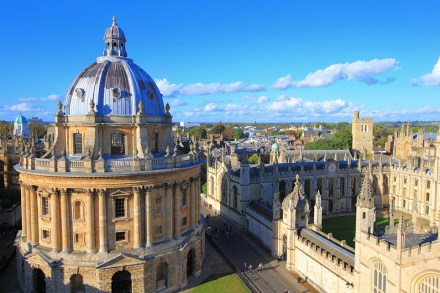
I have spent the past couple of weeks in Oxford rediscovering the art of conversation while campaigning for election as the university’s chancellor. I have sung for my supper in Christ Church Cathedral before being questioned in the SCR on my fitness for the role, and I performed again at evensong at Univ before debating postcolonial reparations over vegetable broth and venison. I have been gifted cyclamens following visits to St Hilda’s and Corpus. At St Hugh’s my understanding of the Higher Education (Freedom of Speech) Act was taken apart by the law don, while at Worcester I was challenged on the state of Britain’s naval hard power and the FCDO’s soft power.

Things can always get worse for the Tories

From our UK edition

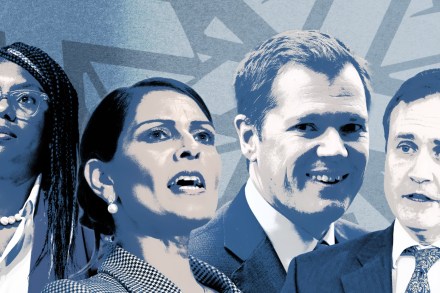
Before migrating to Wiltshire where I will be for August, I had a friendly dinner with a clutch of Conservative aficionados. Inevitably the conversation turned to the leadership contest and, having disposed of the poison pill, Suella Braverman, they asked me which candidate, as a Labour person, I would fear most. This was quite a challenging question. James Cleverly is clearly a nice chap but his fondness for blokeish chat may prove career-shortening. Robert Jenrick’s views seem to depend on who he is talking to. Ditto the vanilla Tom Tugendhat. Mel Stride is inoffensive and otherwise undefinable. I doubt Priti Patel’s appeal will reach beyond a segment of her party. Then there is Kemi.

Could Cameron take over the Tories?

From our UK edition

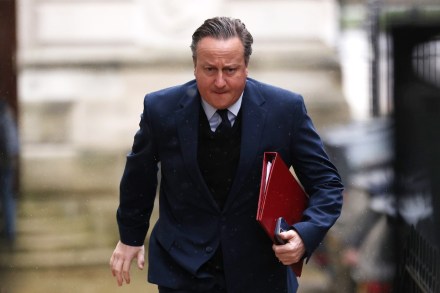
My weekly appearance on the podcast How to Win an Election, which I do with Danny Finkelstein, Polly Mackenzie and Matt Chorley, had succeeded in avoiding embarrassment until last week when, in response to a listener’s question about politicians’ appearance, I was momentarily stuck for something to say about Keir Starmer. I should have remained stuck. Instead, what came out of my mouth, after laying into Rishi Sunak’s skinny suits and narrow ties, was the suggestion that Keir could do with losing a few pounds. Heaven knows why it attracted such attention. Labour’s Wes Streeting was quick off the mark (he is so effective) with his condemnation of my ‘fat-shaming’ of his leader (his moral high ground lowered somewhat by an accompanying barb about my own paunchiness).

The Tories didn’t lose Mid Bedfordshire – Labour won it

From our UK edition

In 1975 I travelled as an undergraduate to Egypt, Lebanon, Syria, Jordan and finally to Israel. I visited refugee camps and met a Palestinian militant, Bassam Abu Sharif, who had been blinded in one eye by a Mossad parcel bomb. I talked to policymakers in each country and heard a range of Israeli opinion. On return I wrote in the Jewish Chronicle of the need to address the plight of the Palestinians caused by their displacement. I made the case in favour of a two-state solution five years before the 1980 Venice declaration on Palestinian statehood. One of today’s many tragedies is that Hamas’s barbarism has pushed that solution even further from grasp. In principle, it remains the only way to end the chaos.

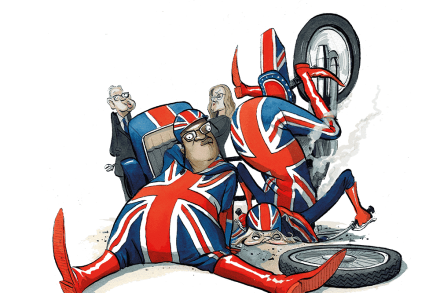
Crash course: how the Truss revolution came off the road

From our UK edition

37 min listen

On this week's podcast: As Liz Truss returns from Conservative Party Conference with her wings clipped, has she failed in her revolutionary aims for the party?James Forsyth discusses this in the cover piece for The Spectator, and is joined by former cabinet minister and New Labour architect Peter Mandelson to discuss (01:08).Also this week: Is it time that the West got tough with Putin?Mark Galeotti writes in this week's magazine about the likely scenarios should Putin make good on his thermonuclear threats. He is joined by Elisabeth Braw, fellow at the American Enterprise Institute, to consider how the West should respond (13:14).

I feel sorry for Kwasi Kwarteng

From our UK edition

In Singapore last week, I was asked: do ministers just come in, reach for the dumbest available policy and go ahead without asking anyone what the consequences will be? I explained the mindset. They do not ask because they do not want to hear the reply. In their minds, they are up against old thinking that just wants to keep Britain on the same declinist path – or ‘cycle of stagnation’ as Kwasi Kwarteng described the record of his Tory predecessors – and if you want to break new ground, don’t ask the people who will always say no. This is what Labour’s far-left Bennite wing think. Labour ministers didn’t try proper socialism because they were cowed by a combination of ‘experts’, the civil service and the City establishment.

What Starmer can learn from Scholz

From our UK edition

I made it through the airport crush to Berlin at the beginning of last week to see how Germany is faring under Olaf Scholz, Angela Merkel’s tough-minded centre-left successor. Under Merkel, Germany was important because it was the key to EU decision-making, but towards the end of her chancellorship, the country slowed down, there was too little change and, as we now know, Merkel misjudged Vladimir Putin’s revanchist ambitions and thirst for personal glory. In talking to Scholz, I did not get the impression that he has any illusions about whom he is dealing with.

Peter Mandelson’s diary: The accomplishments of George Osborne – and Vladimir Putin

From our UK edition

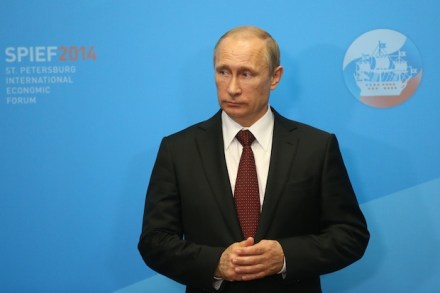
My trips to meet Russians in Russia these days are a little less controversial than my encounter with them in Corfu. The Corfu trip, though, did have the bonus of throwing me together with George Osborne, whom I had not known previously. Returning from St Petersburg I awoke on Saturday to his interview on the Today programme. If the Tories win the next election (unlikely in light of last week’s performance) it will be down to his political skill and determination. And his being joined at the hip to Cameron. If Blair and Brown had managed the same double act, Labour would still be in power today. The St Petersburg international economic forum was somewhat less international this year.

Peter Mandelson: Ed Miliband needs more policies and fewer promises

From our UK edition

In his Spectator diary this week Lord Mandelson offers Ed Miliband some advice... Nigel Farage has no trouble in heaping praise on Putin because of their shared antipathy towards Europe. Farage’s party had a good week. The challenge for them is to build a genuine movement beyond a charismatic leader, a band of fruitcake candidates and a clutch of reactionary ideas. I doubt they will succeed. In my political career we’ve seen two similar ‘breakthrough’ moments, both in the 1980s: the SDP’s rise and fall, then the Greens coming and going. Those parties’ success was only due to Labour’s weakness. When Labour got its act together, their appeal faded.

Small wobble in Labour party: no one killed

From our UK edition

Don't be taken in by the media's hyperbole; by comparison with summers past, this government is not having a particularly rough time. Of course, depending on your media outlet of choice, Mr Blair is said to be 'reeling', 'fuming' or 'fumbling', and having the toughest two weeks of his premiership or the worst crisis since he came to power. But those with long memories and a sense of perspective know that we are light years away from the storms that used to rock Mrs Thatcher's ship and the raging internal battles that tore apart John Major's administration. Compared with previous Labour governments, Mr Blair's wobbles are a sideshow.