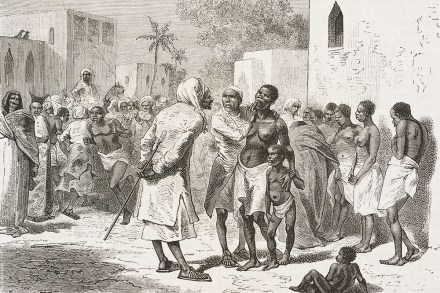
Slavery

Will Cuba be reborn as a Caribbean Las Vegas?

Cuba’s revolutionary spirit is giving out. Donald Trump has called on Cubans to ‘make a deal before it’s too late’ and has threatened military action. More than six decades on from the revolución of 1959, all talk is of the Yanqui dollar and how to acquire it. The scramble for greenbacks has fed into Cuba’s sex industry. In the dollar-happy resort of Varadero, the locals suffer police surveillance and the indignity of rationed food while prostitutes as young as 15 hover outside the motels. Yet for all the hardship and belt-tightening, Cuba commands sympathy from the international left as a last bastion of communism.

The banality of Hélène von Bismarck’s view of Britain is astounding

Hélène von Bismarck twice quotes (in an officiously corrected version) Robert Burns’s lines: ‘O wad some Pow’r the giftie gie us/To see oursels as ithers see us!’ She is congratulating herself on assuming this role in writing a book about Britain as a German. There is no doubt that out of a mixture of self-regard, curiosity about other people’s points of view and the occasional outburst of ribald mockery, the British have long enjoyed accounts of themselves by visitors. Whether these narratives possess any accuracy or unusual perception is another question, but there seems no doubt that a British audience exists even for ones of the utmost mediocrity and banality.

The short, eventful life of George Forster – explorer, naturalist and revolutionary

George Forster (1754-94), the German-Polish polymath, was in every sense a late Enlightenment prodigy. He was just ten years old when he accompanied his father, Johann Reinhold, on a scientific expedition to Russia and still in his teens when he sailed with him on Captain Cook’s epic three-year voyage to Antarctica and the Pacific islands. The ensuing book, A Voyage Round the World (1777), largely written by George, became a classic. It established him as one of the most significant naturalists and travel writers of the age, leading to him being elected a Fellow of the Royal Society aged just 22. He was also a very young polyglot, having learnt German, French, English and Russian by the age of 12. (He later added Dutch, Italian, Spanish, Portuguese and Swedish, as well as Latin.

What would Lincoln do?

From our US edition

If Americans are feeling gloomy as the nation’s 250th birthday approaches, they might look back to what Abraham Lincoln thought about the condition of the country in 1838 to get some perspective on present discontents. That was the year a young Lincoln, then just a state senator, delivered a speech at the Young Men’s Lyceum in Springfield, Illinois, on “the perpetuation of our institutions.” Lincoln perceived trouble ahead, but not exactly of the sort that would lead to the Civil War. He was already concerned about the lawlessness arising from racial strife, and there’s a hint of his future insistence upon the truth of the Declaration of Independence’s assertion that “all men are created equal.

lincoln

The curse of gold for the Asante nation

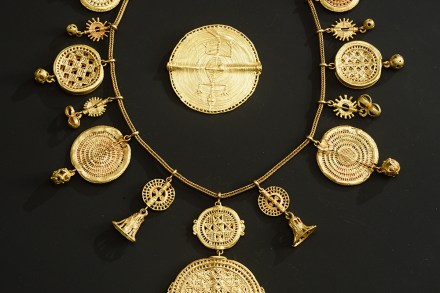
As a metal, gold never corrodes. As a possession, the reverse is too often true. It has the power to warp morality, destroy decency and tarnish humanity. This duality – entrancing beauty alongside corrupting potency – lies at the heart of this magnificent book that engagingly blends African history with a current relevance that reaches far beyond the continent. The history is laid out with clarity and conviction. The Asante nation (Barnaby Phillips wisely settles on this spelling over a variety of homophones including Ashante, Ashanti and Achantis) is a component part of the modern west African nation of Ghana. Much like the Zulus in South Africa, their foundational history dates back only a few hundred years and is underscored by military prowess bordering on barbarism.

Goddesses and courtesans: six centuries of the female body in art

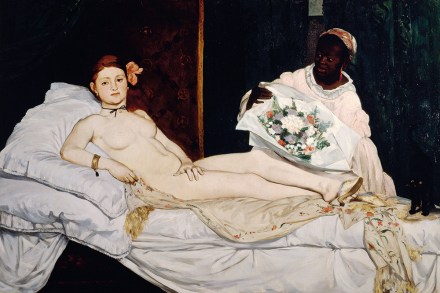
This is a book that many of us might like to have on our coffee tables – beautifully produced, not too heavy and full of pictures of pretty ladies, many of them with no clothes on. Its purpose is to show not only how artists have viewed the female body from the Renaissance to the present but also to explain how this body has been used to express both emotion and the attitudes of the day. Take Hiran Powers’s 1845 marble sculpture of a naked woman in chains, entitled ‘The Greek Slave’. This appeared after Britain had abolished slavery but before the American Civil War had put an end to it in the US. Thanks in part to the statue’s symbolism, beauty and perhaps also to its slight but titillating hint of bondage and thus of female subjection, it touched many nerves.

What monuments stand to teach Americans about themselves

From our US edition

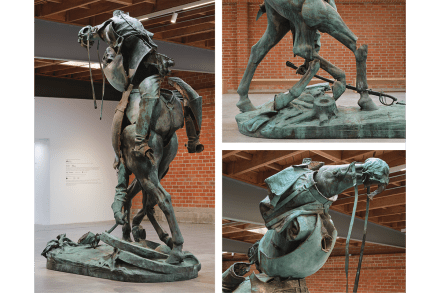
Why do we raise monuments? Why do we tear them down? These questions hover over MONUMENTS, now on view at Los Angeles’s Museum of Contemporary Art and the Brick. The premise is straightforward enough: gather the remains of America’s shattered sculptural conscience – decommissioned Confederate statues and their graffiti-marred plinths – and display them alongside contemporary works on racial topics. This comparison is supposed to reveal something about America’s nature and history, and it certainly does: it shows us just how attached we are to grievance. Both the raising and the destruction of monuments nourishes convictions on either side, ensuring that the argument can never end.

monuments

Reparations: the tyranny of imaginary guilt, with Nigel Biggar & Katie Lam

19 min listen

The past few years have seen growing calls for countries in the global west to pay reparations to former colonies for their role in the transatlantic slave trade. The debate over reparations was already part of the so-called ‘culture wars’, but became louder following the Black Lives Matter movement, as many groups sought to re-examine their histories. Calls for reparations have been embraced by the Church of England which set up a £100 million fund, with the aim of raising £1 billion, to pay reparations for the role the Church played in the slave trade. But do the arguments in favour of reparations really stand up?

The human stories of slavery

With a new history of slavery and the slave trade in the Islamic world just published, I am under strict instructions not to make any fatwa-related jokes. The Holy Trinity, if I can mix my faith metaphors for a moment, of publisher, agent and wife have advised me strongly against it. ‘No jokes about fatwas, please,’ were my wife’s exact words ahead of an appearance at Chalke History Festival. ‘No one finds them funny.’ I disagree. They can be extremely funny. But on balance it may be wisest to err on the side of caution.

A summer romance: Six Weeks by the Sea, by Paula Byrne, reviewed

After Jane Austen’s death, her sister Cassandra destroyed the majority of her letters.  This act, often interpreted as an attempt to preserve Jane’s reputation, has had the opposite effect of fuelling fervent – at times prurient – speculation about what the letters contained. While Cassandra may simply have wished to shield her relatives from the lash of Jane’s sharp tongue, later writers, drawing on the author’s fiction and family lore, have surmised that the missing correspondence concealed evidence of a love affair. Such an affair formed the basis for Gill Hornby’s fine 2020 novel Miss Austen and now inspires Paula Byrne’s pleasant if unremarkable Six Weeks by the Sea.

Progress is destroying the planet: the rants of a self-hating American

In what may be the only joke in this book – it is hard to tell, because quite often reading it I started to believe the whole thing was an elaborate parody – Samuel Miller McDonald begins his acknowledgements by expressing his ‘infinite thanks’ to his editors (he merits six of them) on the grounds that ‘no work can be good without good editors’. Apparently some works can’t be good even with good editors – unless the author is trying to tell us that his, like his oeuvre, weren’t especially good at all. Progress is a prolix, tendentious book, radiating self-regard, arrogance and flannel.

Imperialism still overshadows our intellectual history

Peter Watson begins his survey of the history of ideas in Britain with the assertion that the national mindset (which at that time was the English mindset) changed significantly after the accession of Elizabeth I. His book – a guide to the nature of British intellectual curiosity since the mid-16th century – begins there, just as England had undergone a liberation from a dominant European authority: the shaking off of the influence of the Roman Catholic church and the advent of the Reformation, and the new opportunities that offered for the people. He describes how a culture based largely on poetry and on the court of Elizabeth then redirected the prevailing intellectual forces of the time.

The Democrats’ trillion-dollar reparations racket

From our US edition

When politicians run out of solutions, they start offering symbolism – and this year, that symbolism comes in the form of a check. Representative Summer Lee’s “Reparations Now” resolution calls for trillions of dollars in payments to black Americans as compensation for slavery and its aftershocks. As a black man in America, this issue cuts close to home. My grandparents came from South Georgia, and their grandparents were born into slavery. That blood runs through me. The pain, the endurance, the quiet strength – it’s part of my inheritance. If reparations were handed out, I’d be one of the people eligible to receive them. But I couldn’t take the check in good conscience.

Reparations

The odd couple: Austen and Turner at 250

History is full of odd couples: famous but unrelated people who happen to have been born in the same year. 1809: Charles Darwin and Abraham Lincoln. 1926: Queen Elizabeth II and Marilyn Monroe. Yet few historical pairings are as unlikely as the novelist Jane Austen and the painter J.M.W. Turner, born within a few months of each other in 1775. Usually the only time these two cultural icons encounter one another is in our purses or wallets: Turner depicted as a dashing young Romantic on the £20 note, Austen looking demure and doe-eyed (a heavily airbrushed version of the portrait originally sketched by her sister Cassandra) on the £10 note. Otherwise they might appear to have little in common.

Mark Carney owes his victory to Trump

Congratulations to Donald Trump. It is almost solely thanks to his exertions that Mark Carney, the incarnation of Davos man, is now victorious in Canada’s general election. The Euro fanatic now wins on a ‘sovereignty’ ticket. If Trump had not intervened to lay claim to Canada, almost as if America were Russia and Canada were Ukraine, it would have gone Conservative. The President may be only hazily aware that the King, of whom, he says, he has the ‘honour to be a friend’, is also King of Canada. If, as seems likely, the King follows his mother’s twice-used precedent and opens the new Canadian parliament in person, Trump may come to see that his next-door neighbour is part of a long-standing, legitimate order which Canadian voters are happy to endorse. P.S.

If ‘wokeness’ is over, can someone tell the Fitzwilliam Museum?

Optimists believe that the tide of ‘wokeness’ is now ebbing. If so, the message has not yet reached Cambridge, whose wonderful university museum has its classical façade covered in sententious phrases in neon, and which has recently opened a new exhibition in agit-prop style: Rise Up: Resistance, Revolution, Abolition. Such activism is fully in step with the Museums Association, the curators’ club that instructs its members to turn their institutions into activist cells. If all this makes its founding benefactor Viscount Fitzwilliam turn in his grave, all the better: he is stigmatised as a profiteer from the slave trade, even before one reaches the cloakroom.

Should Britain pay reparations to Commonwealth countries?

16 min listen

This week, Keir Starmer has been in Samoa for a summit with delegations of the 56 nations which make up the Commonwealth. Between having to answer questions on Donald Trump and the budget, he has also been pressed on the issue of slavery reparations, with the leaders of some Caribbean countries insisting it is ‘only a matter of time’ until Britain bows to demands of handing over billions of pounds in compensation. Speaking today, Starmer addressed the issue. He said, ‘I understand the strength of feeling’ but insisted that he would be ‘looking forward, not back’. So what are the arguments for and against reparations? And why is this debate relevant now, in 2024? James Heale speaks to historian Robert Tombs. Produced by Oscar Edmondson.

Does anyone know what Keir Starmer is thinking?

Even at the best of times, Keir Starmer has remained tantalisingly out of reach for those who crave simple definitions. Before the election, he consistently defied demands to set out a big vision or draw straight dividing lines. He’s always more comfortable with ambiguity and complexity. As he liked to say during the final days of the campaign, ‘There’s always a “but” with me somewhere.’ Now, of course, he really isn’t having the best of times. All those ‘buts’ are piling up. The ill-disciplined briefing battle within his team appeared to elevate office politics above real politics. The Treasury decision to means-test pensioners’ winter fuel allowances was inept. Most damaging of all were the expensive freebies which smouldered on for almost a month.

Glamour or guilt? The perils of marketing the British country house

The most angst-ridden sub-category of the very rich – admittedly a lucky bunch to start with – must surely contain those who have inherited a British country house, along with the exhortation to keep it up. Imagine the anxiety of knowing that one is custodian of a large, crumbling pile of distinguished architecture, stuffed with meaningful antiquities and perpetually besieged by damp, dry rot and taxes. For those of us who are already reliably paralysed by small-scale admin, it would be enough to drive you to drink or worse. In contrast, the landed gentry who survive best in this modern terrain must be energetic, ruthless and ingenious; in all probability possessing similar characteristics to those which propelled their ancestors to social prominence in the first place.

Falsifying history can only increase racial tension

For many years the academic sociologist Frank Furedi has been among the strongest conservative voices in the front line of the culture wars. The target of his latest book is the systematic campaign to discredit the history of the West in the interest of a modern political agenda. The vandalising of statues, the ‘decolonisation’ of institutions and curricula, the recasting of museums and the rearrangement of libraries are all symptoms of something more fundamental. Furedi argues that historical memory is the foundation of western identity and culture. The object of the campaigners is to discredit the West’s ideals and achievements.