Cuba’s revolutionary spirit is giving out. Donald Trump has called on Cubans to ‘make a deal before it’s too late’ and has threatened military action. More than six decades on from the revolución of 1959, all talk is of the Yanqui dollar and how to acquire it. The scramble for greenbacks has fed into Cuba’s sex industry. In the dollar-happy resort of Varadero, the locals suffer police surveillance and the indignity of rationed food while prostitutes as young as 15 hover outside the motels.
Yet for all the hardship and belt-tightening, Cuba commands sympathy from the international left as a last bastion of communism. In his left-leaning Cuba: A New History (2004), the British journalist Richard Gott argued that the island was unlikely to return to the capitalist Babylon it had been under President Batista, Fidel Castro’s predecessor, as Cubans were immunised against the seductions of the market. Time will tell. Gott resigned from the Guardian in 1994 after he was exposed as a KGB agent of influence.
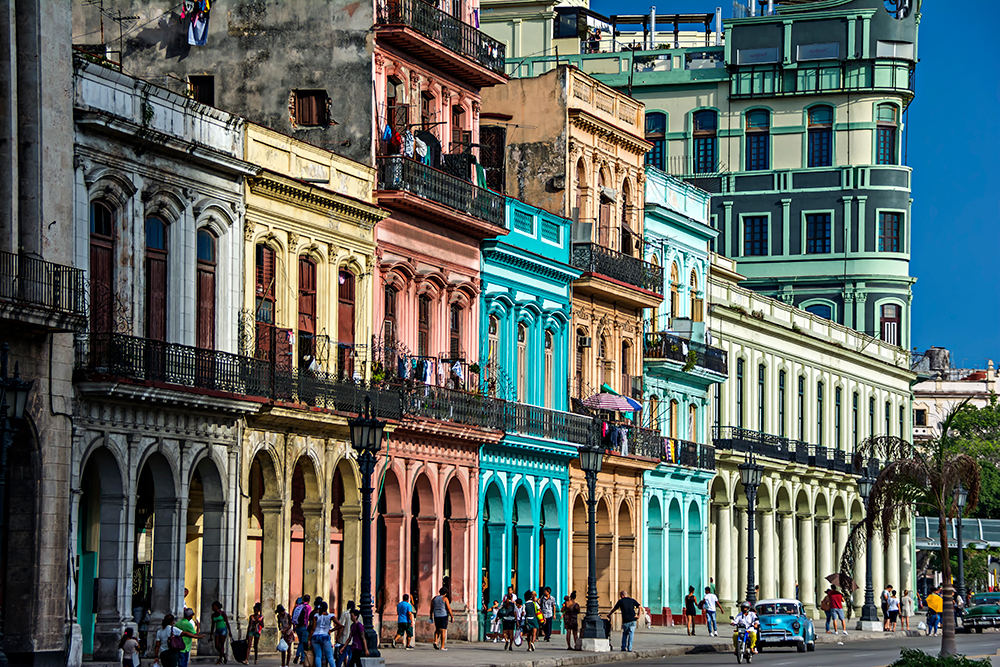
Havana has long been a favourite with fashion photographers and journalists, drawn to the picturesque decay of collapsing seafront promenades and salt-eaten arcades. The prevalence of big, finny American automobiles awed the BBC culture correspondent Stephen Smith who, 30 years ago, bumped round the island in the back of a 1950 Dodge. Smith’s homage to Cuba, Land of Miracles (1997), was a semi-humorous evocation of life on the beautiful, bedevilled island. The bicycle-riding Dervla Murphy, confessedly a staunch Castroist, published her naively adoring account of Cuba, The Island that Dared, in 2008.
One of the difficulties of writing a travel book about Cuba is that it is hardly possible to travel around the island. Public transport is a dead loss. Cuba is no longer much of a Caribbean holiday destination. However, J.S. Tennant’s terrier-like determination to explore out-of-the-way places there elevates him above the scoundrel category of travel writer. Mrs Gargantua, his first book, is scarcely conventional travel. It takes its title from the celebrity circus gorilla that a US heiress raised on her estate in Cuba in the early 1930s. In pages of finely crafted prose, Tennant describes Guantanamo city in southeastern Cuba, near where the Americans have a detention facility as well as a military base, complete with a drive-in movie theatre and a KFC. He visits the Bay of Pigs, where, in 1961, CIA-trained Cuban exiles attempted the disastrous invasion that led Castro to align himself with the Soviet Union. (The 1959 overthrow of Batista was not socialist in origin but, Tennant reminds us, nationalist-patriotic.)
Tennant has been visiting Cuba since 2010. In that time he has got to know the regime’s dreary ‘prating’ on the glories of the revolution and crude sloganeering against Uncle Sam. America’s trade embargo – in force since 1962 – has battered the island’s economy. Castro, who died in 2016, was a father figure to many Cubans, but his younger brother Raúl, who took over as president in 2008, is now an old greybeard who has been put out to pasture after ten years in post. With no communist allies anywhere in the world to save Cuba from ruination, the island’s return to the US sphere is perhaps inevitable. It could be reborn as a Caribbean colony of Las Vegas, with Havana once more the louche gambling hole and fleshpot it had been under Batista. (All this was foretold, incidentally, in Martin Cruz Smith’s superlative 1999 thriller Havana Bay, which imagines a hoodlum conspiracy to turn Cuba’s capital into a playground for American pleasure-seekers.)
Fidel’s macho vanity (Tennant refers to his ‘pharaonic gigantomania’) went hand-in-hand with his persecution of homosexuals, hippies, Catholic priests and other perceived state enemies. But, like Harold Pinter and others before him, Tennant finds it hard to quibble with the improvements he and his disciples made in health and literacy. Under Batista, almost half of Cuba’s rural population was illiterate; now only two per cent of Cuban adults are unable to read and write. Unquestionably there are things to admire in the country’s post-Batista revolutionary doctrine.
Batista was Castro’s bête noire. For a quarter of a century this pro-US president pandered to Lucky Luciano and other Italo-American mobsters who submerged rivals in wet concrete even as they held court in Havana’s plushly upholstered Hotel Nacional. Castro’s left-hand man, the Argentine-born medical doctor Ernesto Guevara, sought to obliterate all trace of the Batista regime. He set up labour camps in Havana and supervised an estimated 550 executions. Fidelistas nicknamed him ‘Che’ – ‘mate’ – after his comradely leadership. Che’s Marxist-Leninist dream of social equality is almost meaningless today.
Che Guevara’s biographer Jon Lee Anderson (who provides a blurb for Mrs Gargantua) proved conclusively that it was Castro who sent Che to Bolivia in the spring of 1966 in order to champion revolutionary causes beyond the Caribbean. The decision led to Che’s death at the age of 39, during a half-baked guerrilla insurrection. Gott was the first foreign reporter to see the revolutionary’s bullet-punctured body laid out for inspection in a remote Bolivian schoolroom in 1967. All that remained of Che after a couple of days, Tennant tells us, were his severed hands, which had been preserved in formaldehyde for fingerprint identification in Havana. Were he alive today, he would be 98.
Tennant has no thesis to prove about Cuba; plain curiosity motivates his interest. In one brilliant chapter, ‘Chroniclers, Corsairs and Clerics’, he considers the life of the Cuba-based Spanish missionary Bartolomé de las Casas, who condemned the enslavement of indigenous Indians in the Americas with such vehemence that by the year 1542 he had achieved its abolition. Cuba’s Taino-Arawak population had been almost obliterated by the slave-driving Spanish, who used Havana as a provisioning port for their conquest of the New World. In a bid to protect Cuba’s pre-Hispanic peoples, Las Casas recommended the importation of captive Africans. To this odd twist of philanthropy we owe the arrival in Cuba of a total of 780,000 Africans and the beginning of all subsequent sorrows in the sugar-rich Caribbean.
Havana might once again become the louche gambling hole and fleshpot it had been under Batista
An erudite writer, Tennant devotes several pages to the Genoese navigator Christopher Columbus, whose search for gold in Cuban waters inevitably involved him in slavery. Tennant’s interest is piqued, too, by the Cuban animist cult of Santería, which involves spirit-possession and offerings of sacrificial cockerels’ blood. Castro’s crackdown on religion has not prevented Cubans from practising this variant of Haitian Vodou (or voodoo, to use the non-PC term): Santería is inseparable from Cuba’s Afro-Hispanic identity.
From start to finish I was absorbed by this shiningly intelligent and original amalgam of history and travel. Cuba might be ‘on the skids’, as the author puts it, but the island presents a unique case of survival against the odds. Mrs Gargantua is the best book you are likely to read on Cuba for ages.
Ada Ferrer, the Pulitzer-winning Cuban-American historian, abandoned the island with her mother in 1963, a year after the Cuban Missile Crisis. She now lives in the New York area. In her affecting memoir, Keeper of My Kin, Ferrer tells how her mother Adelaida made the painful decision to leave behind her son, nine-year-old Poly. Having settled in Miami, Adelaida got a job as a factory seamstress and mingled with stridently anti-communist fellow Cuban refugees. Two decades later, in 1980, Poly made his way to the US in a Castro-sanctioned mass exodus of 125,000 Cubans, only to develop schizophrenia. In his mental disarray, Poly had many run-ins with the law in the US and was eventually charged with attempted murder. Ferrer went back to Cuba for the first time in 1990, where she immersed herself in the state archives and scrutinised her family history for signs of emotional instability.
I visited three years later, in the winter of 1993, when the Soviet market for Castro’s sugar had dried up and despair hung over the island. On the return flight I sat next to Arthur Scargill’s wife, Anne, who was reading a copy of the Cuban Communist party daily Granma (named after the cabin cruiser that ferried Fidel and Che from Mexico to begin their uprising in 1956.) She was part of a contingent of British miners’ wives who had gone to donate obsolete coalfield equipment – earmuffs, hard hats – to Cuba’s ailing copper industry.
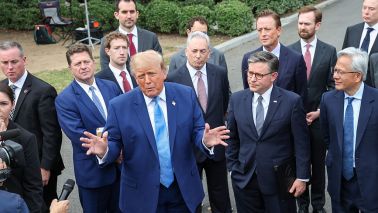
Trump himself has little interest in the country’s mining and oil reserves (which pale beside those of Venezuela), but golf tourism and the hospitality industry are another matter. ‘I do believe I’ll be having the honour of taking Cuba,’ Trump said recently, apparently meaning it. ¡Viva Cuba! El Trumpo is coming!




Comments