Tim Butcher

The curse of gold for the Asante nation

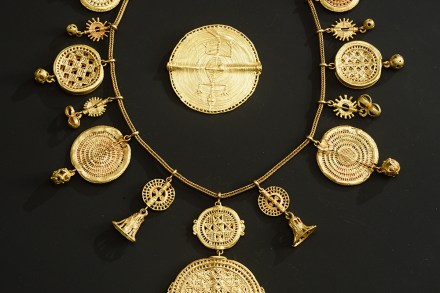
As a metal, gold never corrodes. As a possession, the reverse is too often true. It has the power to warp morality, destroy decency and tarnish humanity. This duality – entrancing beauty alongside corrupting potency – lies at the heart of this magnificent book that engagingly blends African history with a current relevance that reaches far beyond the continent. The history is laid out with clarity and conviction. The Asante nation (Barnaby Phillips wisely settles on this spelling over a variety of homophones including Ashante, Ashanti and Achantis) is a component part of the modern west African nation of Ghana. Much like the Zulus in South Africa, their foundational history dates back only a few hundred years and is underscored by military prowess bordering on barbarism.

Flight into danger: Freight Dogs, by Giles Foden, reviewed

From our UK edition

Flying has always attracted chancers and characters to Africa. Wilbur Smith’s father so loved aviation he named his son to honour the Wright Brothers. ‘I am forever grateful he didn’t go for Orville,’ the Zambian-born author once confided. Smith father and son may well have approved of Giles Foden’s romping novel, which has African bush pilots at its core, and a style not dissimilar to that of an airport thriller. School-age dreamer Emmanuel ‘Manu’ Kwizera comes from the implausibly beautiful hill country of eastern Congo. Green though the land is, its recent history is anything but pleasant: a plunge pool of horrific violence, backwash from the 1994 Rwandan genocide.

The problem of the Benin Bronzes will never go away

From our UK edition

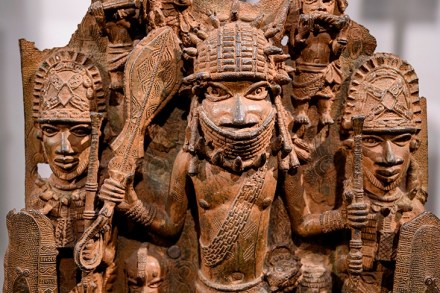
A book about the looted African art known as the Benin Bronzes begins by clarifying that most of them are not actually bronze, and none of them comes from the country of Benin. Yet as this gripping work of live history makes clear, such name ambiguity feels entirely appropriate for art so sophisticated in creation yet so controversial in acquisition. Little about the Benin Bronzes is black and white. The exact age is unknown for the cache of carved ivory, coral and metal plaques, heads, statuary, swords and other ceremonial objects, the best guess emphasising the circa in ‘circa 16th century’.

The greatest surprise about Nigeria on its centenary is that it exists at all

From our UK edition

A giant was born in 1914, an African giant. The same year European powers set about each other in the trenches a framework was laid out for a nation that over the next century would grow into Africa’s mightiest economy, one with a population so prodigious it will soon overtake every other barring China and India. The founding on 1 January that year of the colony of Nigeria was an act of extreme imperial chutzpah. Desert emirates in the north and coastal kingdoms in the south had for years been under nominal control as British protectorates, but for London to unite such diversity was to believe a mosaic has no cracks. The story of Nigeria, first under Britain, later as an African nation independent since 1960, has largely been the story of those cracks.

Both Belgium and the United States should be called to account for the death of Patrice Lumumba

From our UK edition

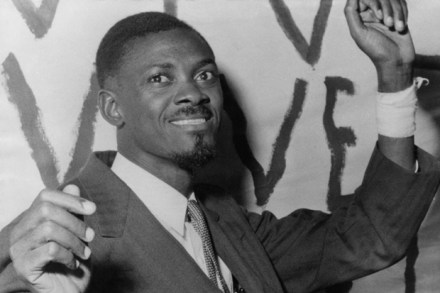
For decades, all the outside world knew was that Patrice Lumumba, the Congolese independence leader, had been done away with. Like so much connected with the Congo, details were lost in the murk of Africa’s magnificent but broken giant. He had been fed to Katangan pigs, drowned in the river — or was perhaps even still alive and being held hostage in the Ituri rain-forest. So radiotrottoir assured me variously in January 2001 when I made my first visit to Kinshasa around the 40th anniversary of Lumumba’s disappearance. The reason for my trip felt darkly familiar: one of Lumumba’s successors as national leader, Laurent Kabila, had himself just been assassinated by a ‘turned’ bodyguard.

How shellfish is that?

From our UK edition

Hermanus You can forget car-jacking, mugging and necklacing. In South Africa the worst crime problem centres on an oddly shaped bottom-dweller. Known locally as perlemoen but elsewhere as abalone, the seawater shellfish has sparked a poaching and smuggling racket that is outgrowing all other crime in a country widely held to be the world's most criminal. Poachers have been drowned by rivals, gun battles have erupted in supposedly sleepy seaside resorts, and customs officials have been bribed on an industrial scale. And the whole thing is being choreographed by Chinese triads. The situation is so critical that a joint police, coastguard and army task-force has been set up under Operation Neptune to deal with the crisis.

This is no cakewalk; this is war

From our UK edition

Umm Qasr The shriek of artillery shells has died away from Umm Qasr, the first city in Iraq to be taken by allied troops, but another whining sound can already be heard here. It is the sound of the doubters and sceptics at home, wringing their hands on short-wave radio programmes and satellite television broadcasts because this war has not already been won and Saddam's regime toppled. The last Gulf war was won after 100 hours of ground fighting; Kosovo was secured without a shot being fired by allied troops; and an entire African country, Sierra Leone, was effectively saved within two days by a battalion of British paratroopers. The public has come to expect Pot Noodle wars: instant military victories.