Slavery

Heritable guilt is in vogue

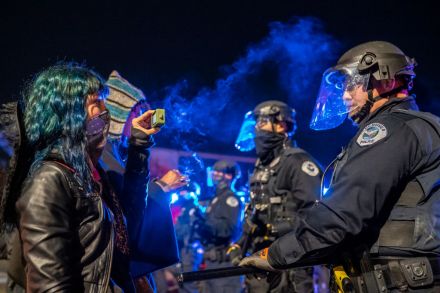
I made a poor excuse for a Presbyterian even as a kid. I resented religious indoctrination every precious school-free Sunday. Yet despite my apostatic nature, any number of biblical tenets with broad secular application have become touchstones. Of particular value during our post-Floydian festival of flagellation is Ezekiel 18: ‘The son shall not bear the iniquity of the father, neither shall the father bear the iniquity of the son: the righteousness of the righteous shall be upon him, and the wickedness of the wicked shall be upon him.’ Ergo, while we can’t take credit for our forebears’ virtues and achievements, at least whatever horrors our ancestors got up to is not our fault.

The National Audubon Society considers canceling itself

From our US edition

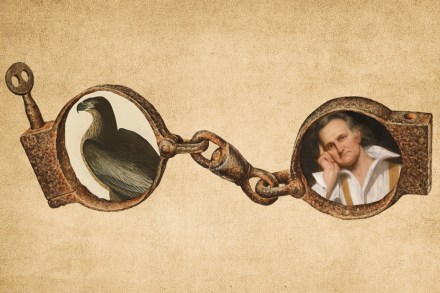
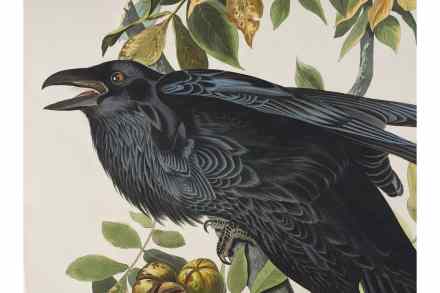
How thoroughly has diversity, equity and inclusion penetrated the sciences? “To the core!” at least if the recent travails of the National Audubon Society are any indication. For over two years, a woke storm has roiled the Society over whether it should purge its namesake, John James Audubon, from its title. After a year-long review, the Society’s Board of Directors recently announced its decision: Audubon’s name will stay. The Society’s CEO, Elizabeth Gray, defended the decision on the sensible grounds that, for whatever his faults, Audubon remains a pivotal figure in the history of science in our once young republic. His legacy includes establishing ornithology as the burgeoning field that it is today, which draws both on professional experts and passionate amateurs.

audubon

Stop tearing down controversial statues, says British-Guyanan artist Hew Locke

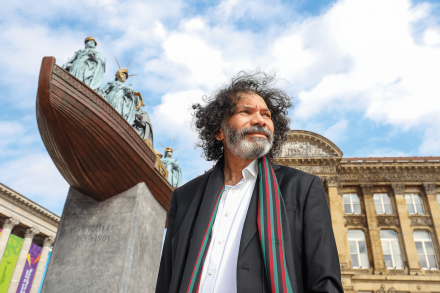
When Hew Locke was growing up in Guyana, he would pass by the statue of Queen Victoria in front of Georgetown’s law courts. Henry Richard Hope-Pinker’s 1894 statue had been commissioned to mark the monarch’s golden jubilee, but not long after Guyana became independent from British rule in 1970, the statue was beheaded and the remains thrown into bushes in the botanical gardens. ‘I remember being shocked that such a sacrilegious thing could happen,’ says the Edinburgh-born, Guyana-raised, London-based 62-year-old artist. ‘It set me thinking about what public statues are for. Who are these people? How come we pass by them without noticing every day?’ Half a century later and thousands of miles away, Locke is still thinking about these questions.

It’s a miracle this exhibition even exists: Audubon’s Birds of America reviewed

In 2014, an exhibition of watercolours by the renowned avian artist, John James Audubon, opened in New York. The reviews, from the New York Times to the Guardian, were unambiguously enthusiastic, celebrating the painter as a legendary genius who ‘exceeded the limits of his era’. Fast forward eight years, and a rather different vibe hangs over the latest outing of his bird portraits, one that reflects both the limits of that era and the limits of the man. Visitors to the National Museum of Scotland’s Audubon’s Birds of America are welcomed with an acknowledgment that the artist was ‘full of contradiction and controversy’. His charge sheet is substantial.

Edinburgh’s slavery review is strangely superficial

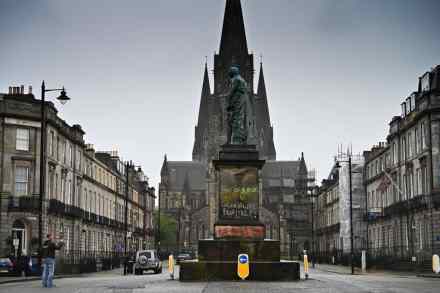
A couple of days ago a colleague alerted me to the opening of an online public consultation regarding proposals made by the Edinburgh Slavery and Colonialism Legacy Review Group, a scheme launched by Edinburgh City Council in 2020 to look at ways the city can acknowledge its historical connections with slavery and colonialism in the wake of the Black Lives Matter protests. The public consultation will close in January, and aims to find ‘constructive ways’ that the people of Edinburgh can address the city’s involvement in the slave trade. The Review Group list numerous sites in Edinburgh with various, and for the most part undeniable, associations with the reprehensible history of slavery.

Tsunami of piffle: Rockets and Blue Lights at the Dorfman Theatre reviewed

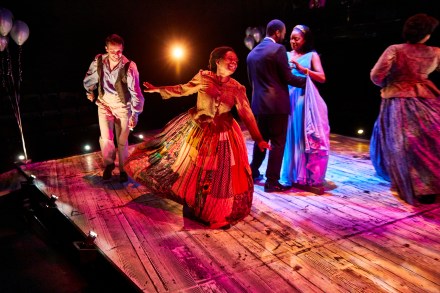
Deep breath. Here goes. Winsome Pinnock’s new play about Turner opens with one of the most confusing and illogical scenes you’re ever likely to see. A teacher on a school trip is showing her pupils a Turner painting displayed in a gallery housed inside a ship donated by the producers of a film starring a famous actress, Lou, who happens to be on board wearing a sumptuous outfit for an awards ceremony, which she plans to avoid for fear that a coveted prize will be handed to a rival. Lou invites the school teacher to an after party that is scheduled to start when the awards ceremony ends. She then gets distracted by the sight of movement on the surface of the Turner canvas. The painted figures, frets Lou, appear to be shifting and jerking.

Do I get Friday off for Juneteenth?

From our US edition

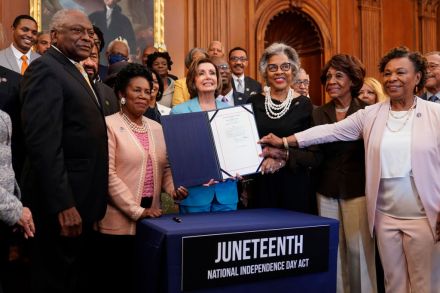
Joe Biden signed the Juneteenth National Independence Day Act this afternoon, which designates June 19 as a federal holiday. In recent years, the date has been a cause to commemorate the end of slavery in the United States. On June 19, 1865, Union Maj. Gen. George Granger assumed command of 2,000 federal troops on the island of Galveston in Texas and transmitted the news of the Emancipation Proclamation to the state's residents, freeing the slaves at the end of the Civil War. But in 2021, June 19 falls on a Saturday. According to the US Code (specifically 5 U.S. Code § 6103), 'Instead of a holiday that occurs on a Saturday, the Friday immediately before is a legal public holiday for...employees whose basic workweek is Monday through Friday.

june 19 juneteenth friday

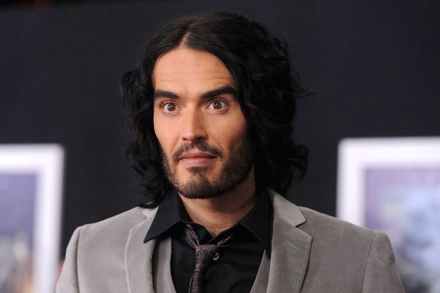
Russell Brand’s brain fog over Edward Colston

Back in the day when celebrities didn’t pontificate on the news but kept their political opinions to themselves, Russell Brand used to be a stand-up comedian. These days, he’s known more for his radical politics (and his former squeeze Katy Perry) than he is for his comedy. Naturally, Brand had plenty to say about last week’s removal of Edward Colston’s statue in Bristol. Indeed, so informed was he on the subject that he had to remind himself of Colston’s name in his video lecture. Miss S was rather alarmed to hear that Brand appears to think Hitler and Churchill were as racist as each other and that he considers himself an authority on this matter because, ‘I’m a white person and I’ve got service people in my family history.

Quietly radiates a wholly justified confidence: BBC 1’s The Pact reviewed

There was certainly no lack of variety among new TV dramas this week, with a standard British thriller up against more glamorous American competition in the shape of some extravagant Victorian sci-fi and an adaption by an Oscar-winning director of a Pulitzer-winning novel. (All three, mind you, did naturally feature a one-dimensional white bloke as the embodiment of sexist and/or racist villainy.) The surprising thing at this stage is that it’s the plucky British show that looks most promising. The Pact began, like many a thriller before it, with a frightened woman running through some dark woods. So far we still don’t know why — unless it was just force of TV habit.

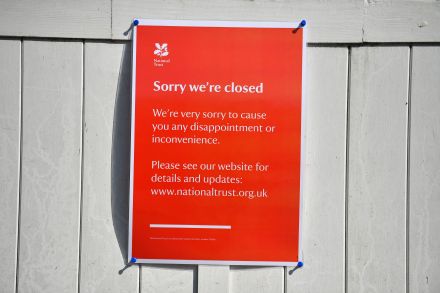
The tragic demise of the National Trust

And so the National Trust’s crazed attack on its own properties goes blazing on. Their latest self-hating wheeze is to get children to write poems attacking Britain’s history. One hundred primary school pupils have been taken around the Trust’s country houses before they compose poems about the former owners’ connections with the British Empire. It’s all part of the Trust’s 'Colonial Countryside' project, which since 2018 has been highlighting ties between the Trust’s houses and imperialism. And so, at lovely Charlecote Park, Warwickshire, one child wrote this about the jewelled dress sword and scabbard looted from Lucknow during the Indian mutiny of 1857: 'Stolen by the English; a freedom sword, a stolen freedom sword.

When will the National Trust realise its big mistake?

The National Trust still doesn’t get it. It still doesn’t understand why so many of its members hate the politicisation and catastrophic dumbing-down of an institution they once revered. Hilary McGrady, the Trust’s Director-General, has just defended the Trust’s report on colonialism and slavery. The report, released last September, looked into the colonial or slavery links of its properties, including Winston Churchill’s Chartwell home and William Wordsworth’s house. McGrady said the Trust should 'make sure we tell all of the stories about all of our properties'. That’s the problem. The Trust isn’t telling all of the stories these days.

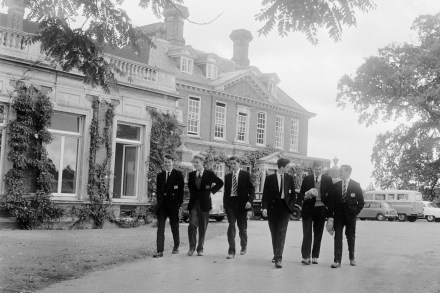
Exclusive: Haberdashers’ Aske’s could change name over slavery links

In the wake of last summer's Black Lives Matter protests, a number of leading British private schools announced plans to decolonise their syllabus. Winchester, Fettes, Ampleforth and St Paul's Girls were all reported to be 'formulating new approaches' to teaching about Britain's colonial past and whether subject curriculums were inclusive enough. Now Mr S can reveal that the Haberdashers' Aske's schools are the latest to join the list. The governing body of the Haberdashers' Company has written to parents and guardians at its famous boys and girls schools in Elstree and its sister Federation in South London about its benefactor Robert Aske, a London merchant who died in 1689.

The distortion of British history

The British Museum has announced the appointment of a curator to study the history of its own collections. On the face of it, nothing could be more anodyne. The history of collecting has been a fashionable topic in academic circles for decades. What sort of people collected, why, and how, tells us much about their cultural assumptions and their ways of seeing the world. It would be mildly surprising that the BM has been so slow to catch on – except that there seems more to it than scholarly pursuit of knowledge. While the research will indeed cover ‘wider patterns’ of collecting, the Museum announced that it is ‘likely that issues such as the role of the slave trade and empire... will be relevant to some of the research undertaken’.

The trouble with America’s ‘systemic racism’

From our US edition

Laramie, Wyoming The refuge of a scoundrel is always the profession — in spades — of whatever a particular society prizes above everything else. In the United States from 1776 until the 1960s, that was patriotism. Since then it has been racial equality, succeeded in recent decades by crude and unapologetic racism of the anti-white variety whose virulence appears to contradict Newton’s Third Law, which states that for every action there is an equal and opposite reaction. This is why the death of George Floyd in the custody of the Minneapolis Police Department last May was accepted by the left as proof that race relations in America have worsened in recent years to attain critical mass.

systemic racism

The National Trust’s shameful manifesto

The National Trust has brought out its ‘Interim Report’, with the clumsy title ‘Addressing our histories of colonialism and historic slavery’. Such use of the word ‘histories’, as opposed to ‘history’, is an alert that a woke view is coming your way. Like ‘diversity’ and ‘multiple narratives’ (also deployed in the report), it suggests plurality but imposes uniformity. The aim is to be ‘historically accurate and academically robust’. According to John Orna-Ornstein, the Trust’s director of culture and engagement, ‘We’re not here to pass judgment on the past’.

Should Kamala Harris pay reparations?

From our US edition

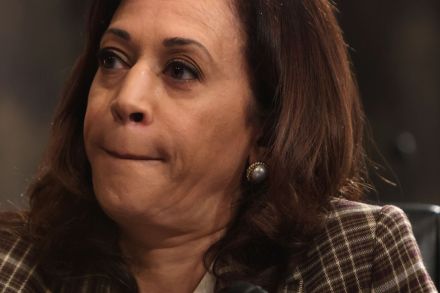
What do Stokely Carmichael, Harry Belafonte, Colin Powell, Sidney Poitier and Busta Rhymes have in common? And how are Beyoncé, Ava DuVernay, Barack Obama and Kamala Harris alike? None of the first set is descended from American slaves. All of the second are descended from slave-owners. Much of the media and the political establishment is pushing the idea of reparations for black Americans. But, as these lists show, it isn’t obvious who should get paid and who should pay. Consider the case of Kamala Harris. Should her Indian mother pay reparations to her Jamaican father for his partial ancestry from slaves? Should she foot half the bill?

kamala harris reparations

Italy owes Wales reparations for the wrongs of the Roman Empire

There’s talk of reparations in the air. Lobbyists from around the world are demanding sin-payments from former colonial powers. Let me add my voice to the clamour on behalf of this island’s indigenous Celtic people. My family are from Llanelli in Carmarthenshire and I believe that my compatriots have an excellent case to make against the Roman empire. This is not an extinct claim – the money is still in play. Britain was invaded by Julius Caesar in 55 BC and his visit was followed up a century later by the Emperor Claudius and his mob. The Roman occupation, which involved the military subjection of the Celtic peoples, lasted for about four centuries.

Horrors of the plantation

From our US edition

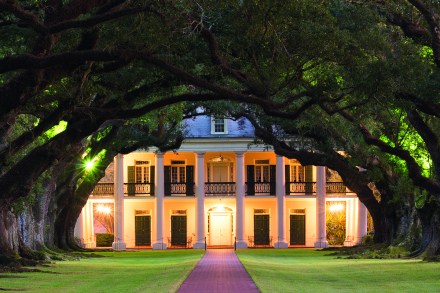
I am not American and I am not descended from British slave owners, but I was shocked when I read a letter from the 1860s that my Irish great-grandfather wrote to his brother from Peru, acknowledging receipt of a ‘shipment of Chinese coolies’ in the guano trade. John Cummings III of Louisiana is also of Irish origin, and his ancestors never owned slaves either. But in 2014, Cummings, a retired lawyer, and his wife Donna used $8.6 million of their own money to create the Whitney Plantation Museum at Wallace, just under an hour from the French Quarter of New Orleans. The Whitney museum is America’s first and so far only museum of slavery. My cousin and I drove there from New Orleans on a bitter winter’s day. There is no café.

plantation

Liverpool University shouldn’t cancel William Gladstone

After the fall of the statue of slaver Edward Colston in Bristol, it was only a matter of time before attention turned, once again, to England’s other great slave-trading city of Empire, and the figures behind it. William Gladstone is one of Liverpool’s most famous sons. One of the great Liberal politicians of the age, he was prime minister on four separate occasions in the mid to late 1800s. There are a few reminders of this dotted across the city today, but the most notable are the halls of residence that bear his name, belonging to the University of Liverpool. The university has now announced that it will rename the halls after receiving a letter from a group of students demanding it be changed.

Europe’s eye-popping first glimpse of the Americas

Coronavirus has cast a dampener over this year’s Mayflower 400 celebrations due to a hidden enemy with which the Pilgrim Fathers were all too familiar: within months of their arrival in America more than half of them had died of a disease whose principal symptom was violent coughing. There was no official artist on the Mayflower. Its ragtag party of Separatist Puritans had only been granted a charter on condition that their religious affiliation, banned in England, was not formally recognised.