Hitler

A bit player in the great drama

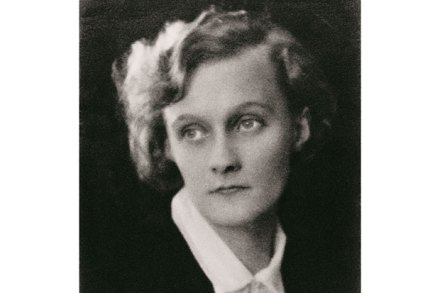
There’s a glorious scene in Astrid Lindgren’s first Pippi Longstocking book in which her fearless, freckled heroine strides to the centre of a circus ring and briskly lays out the World’s Strongest Man. Like most of the adults who expect to control her, he quickly learns that his inflated size, age and title are no match for the child’s bold pin-wielding attitude. As a little fan myself in the early 1980s I probably giggled as the strongman toppled. But reading it to my own children this summer I also felt a deep lurch of sadness. The strongman’s name was Adolf, and the book (published in 1945) was written as an equally ridiculous Adolf was sending train loads of bright little Pippis to their ‘final solution’.

Nazis and narcotics

Norman Ohler is rather hard on the Nazis, for compared to what our little group got up to in the late 1960s and 1970s, they were shrinking violets in the drugs department. We smoked cannabis, ate opium and sometimes took strong LSD; lines of uncertain content went up nostrils; and we swallowed countless uppers (speed) and downers (tranquillisers, sleepers for looning on). Speed was amphetamine sulphate. Benzedrine, Dexedrine, Methedrine were the three original brands, in rising strength. Soon there were many other names, including slang: Desoxyn, Durophet, Durophet-M (speed with Mandrax), French Blues, Purple Hearts, Black Bombers. Many were prescribed by doctors who didn’t regard them as outrageously dangerous.

Ken Livingstone tries to defend Keith Vaz – but talks about Hitler instead

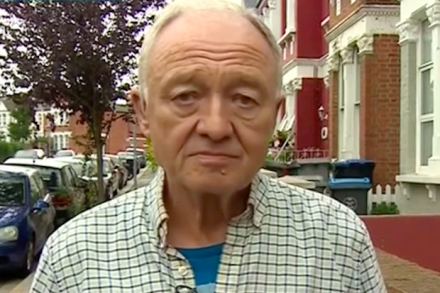
Today Keith Vaz has stepped down as chair of the Home Affairs Select Committee following a series of claims about his personal life. His decision comes after a number of his Labour comrades tried to help his cause by going onto the airwaves to wax lyrical about their colleague. Simon Danczuk -- who is currently suspended from the party for sexting a 17-year-old -- appeared on the Victoria Derbyshire show to claim that Vaz is a well-respected MP. He was joined by Ken Livingstone -- who is currently suspended from the party over his claim that Hitler was 'supporting Zionism' before he 'went mad and ended up killing six million Jews'. Livingstone did manage to wax lyrical about Vaz briefly.

A five-ring fiasco

The ambitions of the founding father of the modern Olympic Games, the Frenchman Baron Pierre de Coubertin — that they should be ‘the free trade of the future’ and provide ‘the cause of peace’ with a ‘new and mighty stay’ — were at once wildly optimistic and strangely prescient. Considering that they were first conceived of as a festival of sporting excellence in a spirit of internationalism, the Olympics have had an enduring habit of stirring up displays of humanity at its worst. To anyone who believes that the excesses of the Games over the past 50 years or so have betrayed a purer original legacy, these two books by Jules Boykoff and David Goldblatt provide bracing correctives.

The mystery of the waggle-dance

The Dancing Bees is a romantic title, evoking fantasy and fairy tale rather than scientific rigour, but actually this book is a story of fearsome determination. It is a biography of Karl von Frisch, who discovered the language of the honeybee, but Tania Munz’s account is much more besides, as it reveals the scientist’s struggle for survival under the Nazi regime. Although I kept bees for many years, I had no idea of the work which won Von Frisch a Nobel prize in 1973. I was first introduced to the waggle-dance, this marvel of the animal kingdom, in a laboratory at the University of Sussex. Francis Ratnieks, professor of apiculture, sat me in front of one of his observation hives where you could watch the colony of bees at work through a glass panel.

Is the media inciting violence against Donald Trump?

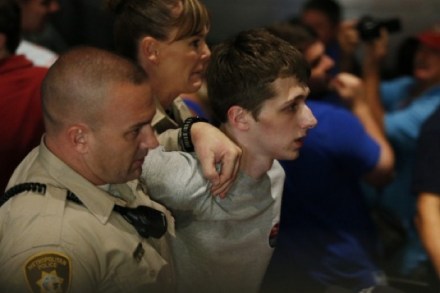
A young British man was arrested last night in Las Vegas at a Donald Trump rally. He is accused of trying to seize a police officer’s gun and assassinate the Republican candidate for President. According to the BBC report: ‘He had reportedly tried to seize the gun after saying he wanted Mr Trump's autograph at Saturday's rally. ‘He said he had been planning to try to shoot Mr Trump for about a year but had decided to act now because he finally felt confident enough to do so, court papers say.’ We will have to wait to see how the legal case against this 20-year old British man plays out. But such an event can have surprised few people.

The Redeemer

The political trigger for the Ring was the 1849 Dresden uprising, when the young freedom fighter Richard Wagner financed the hand grenades and debated ethics with his co-revolutionary Bakunin. According to Bernard Shaw, the Russian stood model for Siegfried, the Ring’s hero who would overthrow the old order and install a new realm of personal and political freedom. God was dying; nationalism killing Goethe’s enlightened neo-Hellenism. For Wagner, loss of faith in the divine and the divinely remote ancient Greeks demanded another route to meaning. He found it in pre-Christian Germanic texts, using them to shape the new cosmology of the post-Christian world.

Long life | 26 May 2016

When your mind suddenly goes wonky, you may be the one person who doesn’t realise that there is something wrong with it. That’s what happened a month ago when I was on a country holiday in Tuscany with my wife. It was lovely weather, and lunch had been laid out of doors. I had cooked a sea bass and was feeling rather pleased with myself. We were both happy, and things could hardly have been better. But everything began to go wrong when my wife decided to ask if I could pass her a knife. A knife? I didn’t know what a knife was. I had never heard of such a thing. I was damned if I was going to respond to this strange request, however much she persisted with it.

Portrait of the week | 19 May 2016

Home In the Queen’s Speech, the government made provision for bills against extremism and in favour of driverless cars, drones, commercial space travel and adoption. It proposed turning all prisons into academies or something similar and consolidating British rights while reducing the power of the House of Lords. The watchword was ‘life chances’. Boris Johnson MP said that the EU was an attempt to recover the continent’s lost ‘golden age’, under the Romans: ‘Napoleon, Hitler, various people tried this out, and it ends tragically.’ For his part, David Cameron, the Prime Minister, said that in the event of Britain leaving the EU, ‘Putin would be happy. I suspect al-Baghdadi [leader of the Islamic State] would be happy.

Wishful thinking | 19 May 2016

Deirdre McCloskey has been at work for many years on a huge project: to explain why the world has become so much richer in the past two centuries, and at an accelerating rate since 1945. This is the third and final volume in the series. In it she argues that ‘our riches were not made by piling brick on brick, bank balance on bank balance, but by piling idea on idea’. The Great Enrichment, which she dates from 1800 to the present, depends on the spread of ideas of liberty, seeded in a series of ‘egalitarian accidents’ in European politics between 1517 and 1789.

EU debate takes ludicrous twist as Ken scolds Boris for Hitler comments

You know you’ve not necessarily added a great deal to your argument when Ken Livingstone is telling you off for invoking Hitler. Boris Johnson finds himself in that rather awkward position today, with the former Mayor being scolded by another former Mayor for claiming at the weekend that Hitler was among ‘various people’ who tried to create a European superstate and that ‘the EU is an attempt to do this by different methods’. Livingstone insisted that while ‘what I said was perfectly true’ (that was that Hitler supported Zionism ‘before he went mad and ended up killing 6 million Jews’, in case you’d forgotten) that Boris had got his facts wrong, and that ‘there was never a plan for a United States of Europe under Hitler.

Another day, another former Mayor of London brings up Hitler

Is there something in the water at City Hall? Mr S only asks after Boris Johnson became the second former Mayor of London to bring up Hitler in the space of three weeks. The Brexit champion claimed in the Sunday Telegraph that both the Nazi leader and Napoleon had failed at unification and the EU was 'an attempt to do this by different methods': 'Napoleon, Hitler, various people tried this out, and it ends tragically. The EU is an attempt to do this by different methods.' While a furore has ensued -- with Hilary Benn describing the comparison as 'offensive and desperate' -- it's nothing compared to the row that followed after Ken Livingstone mentioned the 'H-word'.

Swastika

There is a nice row of swastikas at head height in Burlington Gardens, behind the Royal Academy. They are carved below a plaque ‘Founded ad MDCCCXXXVI’. (The date refers, not to the Academy, but to the University of London, which had its offices here until 1900.) The architect was James Pennethorne. His swastikas did not derive from India, I think, but from Greek temples he visited in Italy in 1826. Greek buildings often have swastika elements, if only by running together two strips of the key pattern. I was thinking about this because of the news that, in prospect of the Olympic Games in 2020, Japan was planning to change the sign for a temple on tourist maps from swastikas to little pagodas. The Japanese symbol is called manji and derives from Chinese writing.

Mr Spock and I

For a show with a self-proclaimed ‘five-year mission’, Star Trek hasn’t done badly. Gene Roddenberry’s ‘Wagon train to the stars’ is celebrating its 50th anniversary, although, as Marcus Berkmann’s entertaining and irreverent history points out, things could have been very different. Roddenberry’s initial idea was for a troupe of disparate 19th-century adventurers to explore the undiscovered corners of the New World in a grand airborne dirigible. While the prospect of Leonard Nimoy arching an eyebrow in a flimsy, flying gondola is irresistible, it’s hard to imagine such a concept proving as enduring as Roddenberry’s eventual brainchild.

A good editor and a good man

Before embarking on this book, Jeremy Lewis was told by his friend Diana Athill that his subject, the newspaper editor and philanthropist David Astor, was too ‘saintly’ for a lively biography. As a publisher, she had worked on an earlier authorised tome, and thought she knew. Lewis, and Astor, proved more resilient. There are always column inches in a well-connected plutocratic clan such as the Astors. And Astor’s mother, Virginia-born Nancy, was the gold-plated battle-axe who made Cliveden, the family house in Buckinghamshire, the centre of 1930s appeasement. The story is really how Astor (born in 1912) took on his Christian Scientist mother, threw off the trappings of privilege, and became the owner and editor of the Observer during its mid-20th-century heyday.

The Mann who knew everyone

Thomas Mann, despite strong homosexual emotions, had six children. The two eldest, Erika and Klaus, born in 1905 and 1906 respectively, were delinquent almost from the word go: shoplifting, prank phone calls, trickery on old ladies, special schools. They were also artistically precocious; the frantic pair took German Expressionist cabaret to Berlin, Paris, Amsterdam, London, New York and Moscow. By the time Klaus reached 21, he and his sister had frolicked right round the globe. Klaus never stopped travelling, and this biography is a feverish sequence of arrivals and departures. Erika was more the performer, Klaus more the writer. Both were openly gay. Klaus explored his homosexuality in his first book, published in 1925, and in many works thereafter.

The Spectator’s notes | 4 February 2016

In 2000, the then Chancellor of the Exchequer, Gordon Brown, accused Magdalen College, Oxford, of class bias in failing to admit a student called Laura Spence, a pupil at a Tyneside comprehensive. This was grossly unfair — how could the Chancellor know the details of a particular case? It was also outrageous in principle: why should a politician tell a university whom to admit? This Sunday, David Cameron did much the same thing. In the middle of his EU negotiations, the migrant crisis and the other genuinely important things the Prime Minister must deal with, he found time to offer an article to the Sunday Times, headlined ‘Watch out, universities; I’m bringing the fight for equality to you’.

Our leaders should read history books – but not just ones about the Nazis

If I was in charge of the Home Office I’d employ someone whose sole area of expertise was Hitler’s Germany and whose only job was to keep an eye out for any vague echoes of Nazism, however fatuous, in the working practices of the government or its contractors. This would have avoided Monday’s controversy over asylum seekers being made to wear red wristbands in order to receive free meals, because being asked to wear ID to qualify for things is exactly like being a Jew in Hitler’s Germany. A chilling echo, as many people commented.

Charlemagne’s legacy

Last month in the Financial Times, Tony Barber closed a gloomy summary of the European Union’s future with this comparison: Like the Holy Roman Empire which lasted for 1,000 years before Napoleon put it out of its misery in 1806, the EU may not disintegrate but slip into a glacial decline, its political and bureaucratic elites continuing faithfully to observe the rites of a confederacy bereft of power and relevance. This vivid comparison has much to commend it. Both institutions defy definition. As Voltaire sneered in 1756, ‘it’s not holy, not Roman and not an empire’.

Designing the swimming car, the Doodlebug and the Panzer tank was all in a day’s work for Ferdinand Porsche

The aggressive character of the famous German sports car, in a sort of sympathetic magic, often transfers itself to owner-drivers. The joke goes: ‘When you get into a Porsche, you feel you want to invade Poland.’ In this fascinating and meticulously researched book, Karl Ludvigsen investigates the genetic spiral that gave Porsche cars the character of weaponry. All German manufacturers were forced to supply the Third Reich. The BMW-sponsored London Olympics 2012 were held on a site devastated by Luftwaffe planes powered by its engines.