Enoch powell

It’s time to uncancel Enoch Powell

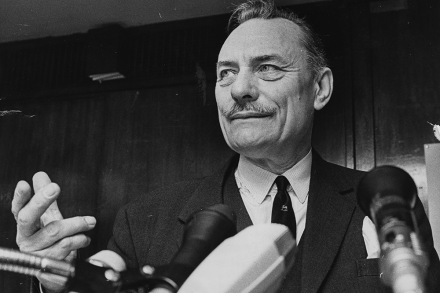
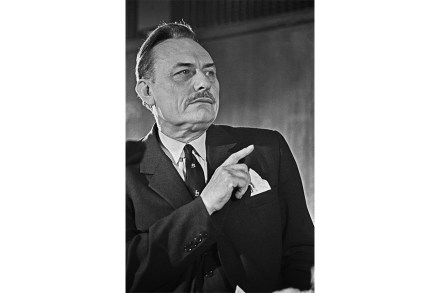
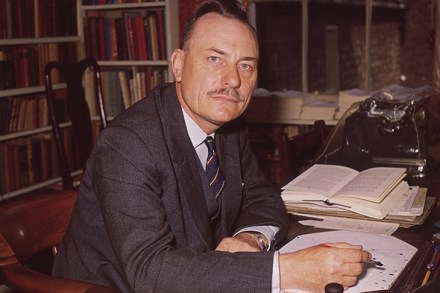
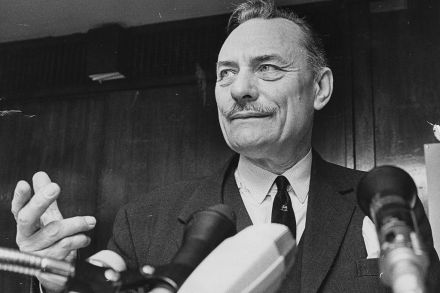
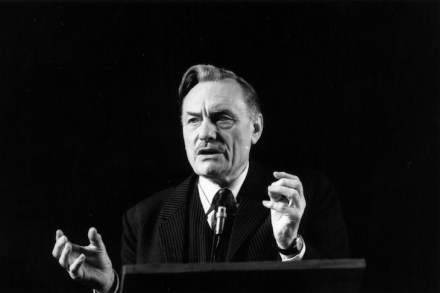
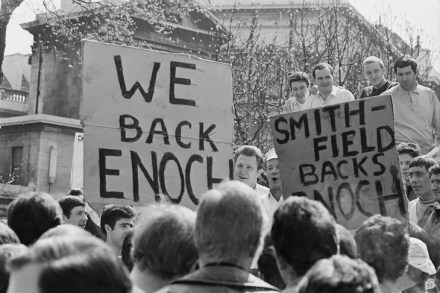
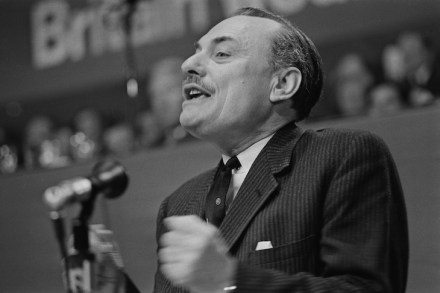
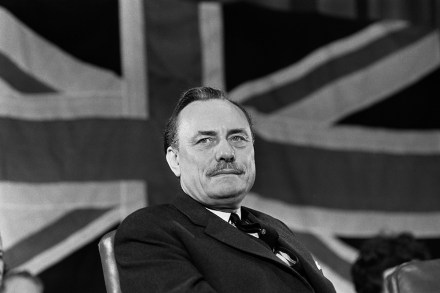
Despite a career of nearly half a century in public life, Enoch Powell is generally remembered for one utterance only: the so-called ‘Rivers of Blood’ speech he made in Birmingham on 20 April 1968, in which he voiced his opposition to the race relations legislation being taken through parliament by the then Labour government. Powell was the Conservative opposition’s defence spokesman. His speech threw the leader of his party, Edward Heath, into a profound panic, and he sacked Powell immediately, initiating decades of assertions that Powell was racially prejudiced. Powell always said – entirely honestly – that he never made a speech about race: just speeches about immigration policy and his profound disagreement with how it was usually managed.
Letters: The difficulties of reporting on Gaza

Future proof Sir: Douglas Murray asks why Enoch Powell’s ‘Rivers of Blood’ speech understated the problems (‘Imagine what Enoch Powell might have said’, 25 October). The simple answer is that it couldn’t have said everything, but many of the omissions cited are referred to in Powell’s later speeches. During the 1970 general election campaign in Birmingham, for instance, Powell noted that ‘this country is today under attack by forces which aim at the actual destruction of our nation and society as we know or can imagine them’. He gave many examples of a ‘new psychological weaponry’ rendering the majority ‘passive and helpless’ by asserting ‘manifest absurdities as if they were self-evident truths’.

Imagine what Enoch Powell might have said

The great John O’Sullivan has a story about Enoch Powell which he keeps promising to put into print. Since he still hasn’t done so, I will risk repeating it here. It occurred during a conversation some years after the Rivers of Blood speech. A group of conservatives were talking, and Powell was among them. At some point one of those present referred to the 1968 speech and asked Powell: ‘Why did you do it?’ Powell’s reply started something like this: ‘When the lark sings in the morning they do not say – “Oh lark why dost thou sing?” When the nightingale gives forth her song…’ and so on. After Powell had gone through an array of the bird kingdom metaphors, he came to his clincher: ‘And so it was with me that day in Birmingham.

What this new history of Brexit gets right

Why did the United Kingdom leave the European Union? Perhaps it might be better to ask why did it ever join. Tom McTague attempts to answer both questions in this panoramic history of British – and continental – politics from 1942 to the present day. It is to the author’s great credit that he approaches a debate which has polarised politics and shattered friendships with disciplined, but never anaemic, detachment. It is hard to think of many books which leave one admiring both Edward Heath and Enoch Powell more. McTague has set himself a formidable task in seeking to explain the two most consequential decisions of British postwar politics. That he does so not just with fair-mindedness but mastery of narrative sweep and fresh perspective makes this a significant achievement.

Tony Benn, bogeyman to some, beacon of hope and light to many

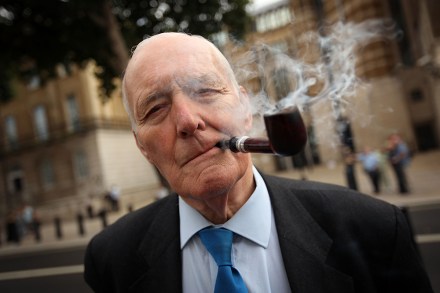
Among the most striking things about Tony Benn was his friendship with Enoch Powell. They entered the House together in 1950 and became regular presenters on The Week in Westminster before falling out over ‘rivers of blood’ and then making up. For Benn, politicians were ‘weathercocks’ or ‘signposts’, and Powell, like himself, was the latter. This new collection of speeches and articles assembled by his daughter in the centenary of his birth, combines both the ancient history of his left-wingery and the ongoing relevance of his signposts. Melissa Benn’s intention has been to ‘lay to rest a few myths’ about her father and the left and to inspire a new generation of radicals to maintain the barricades.

Six politicians who shaped modern Britain

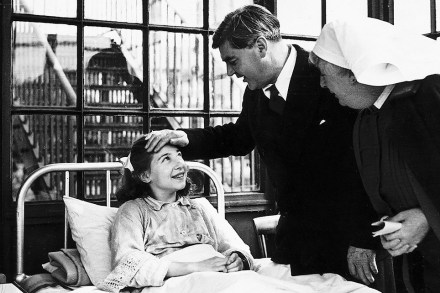
‘All political careers end in failure,’ said Enoch Powell. Maybe. But just occasionally our imperfect political system throws up someone whose impact on our way of life, for good or ill, outlives them. In a series of elegant essays, Vernon Bogdanor, professor of government at King’s College London, examines the careers of six politicians – three from left of centre, three from the right – who, in his view, changed the political weather of modern Britain. Only one, Nigel Farage, is still alive.  First up is Aneurin Bevan, the left-wing firebrand who, in the teeth of fierce opposition from the mighty, vested-interested British Medical Association, presided over the creation of the National Health Service.

How much does Britain still ‘love’ the NHS?

‘Of course I support the NHS. Everybody supports the NHS, or says they do,’ poked the comedian Frankie Boyle in one of the many campaigns promoting the health service. To admit you don’t believe in this national institution is as taboo as not caring about Britishness, about goodness, about people. The public is keen to find evidence for this collective belief. Nigel Lawson famously said that ‘the NHS is the closest thing the English have to a national religion’ – words which tend to be heard as praise. But his comment was laced with criticism. He continued, ‘with those who practise in it regarding themselves as a priesthood. This made it quite extraordinarily difficult to reform.

How Britain was misled over Europe for 60 years

Just as one is inclined to believe Carlyle’s point that the history of the world is but the biography of great men, so Christopher Tugendhat, in this level-headed account, is right to conclude that the history of the Conservative party in the past 60 or 70 years has been deeply affected by the biography of the movement for the European Union. And it would have shocked Carlyle that a great woman – Margaret Thatcher – played a central part and, according to Tugendhat, altered the course of the party’s relationship with Europe. She was certainly central to the debate, not least because rather too many Conservatives felt she had died a martyr’s political death in 1990 when she was forced from Downing Street by people they regarded as treacherous pro-Europeans.

Why do British galleries shun the humane, generous art of Ruskin Spear?

Where do you see paintings by Ruskin Spear (1911–90)? In the salerooms mostly, because his work in public collections is rarely on display. Until the National Portrait Gallery closed for redevelopment it was, however, possible to study Spear’s splendid portrait of ‘Citizen James’ (Sid James) peering from a black and white TV screen, and his oil sketch of Harold Wilson wreathed in pipe smoke, the epitome of political cunning. Both were strikingly more convincing than their companion array of anodyne commissioned images. Like his beloved Sickert, Spear painted commissioned portraits but also took to making enigmatic ‘unofficial’ portraits based on press photographs — or, in the case of Sid James, a snap off the telly.

Why great speeches are made for stage and screen

Curious thing, writer’s block. If you believe it exists. Terry Pratchett didn’t. ‘There’s no such thing,’ he said. ‘It was invented by people in California who couldn’t write.’ He had a point. Writers write, period. But there is a syndrome in my house known as Not Starting Anything New Through Fear Of It Being Not Very Good. Less catchy than ‘writer’s block’, but arguably a more accurate description of the condition. My Covid-induced version of the above involved endlessly ‘honing’ an already completed play about my mother to devastatingly little effect and musing on the oldest creative question of all: is there a formula for writing success, and if so what is it?

Voices from the recent past

Interviews, like watercolours, are very hard to get right, and yet look how steadily their art has become degraded and under-appreciated. Each and every Shumble, Whelper and Pigge in our media fancies that an interview can be tossed off: you need only switch on the microphone and let the person speak. Radio is the worst culprit. John Fowles was on a US book tour when the announcer muddled his notes and introduced him as ‘the singing nun of Milwaukee’. Inevitably hitting the wrong note, too many interviewers rely on the rickety scaffolding of the unpublished novelist, seizing on, say, their subject’s white socks, and then truffling up some unpalatable morsel from their past with which to spring an ambush — resulting in a locked jaw that no road drill could unclamp.

Enoch Powell’s problem was vanity – not racism

The anniversary of the ‘Rivers of Blood’ speech by Enoch Powell reminded me of my stint as literary editor of this mag. If you are responsible for finding book reviews each week, you come to cherish the regulars, such as Enoch, who are prepared to review anything. His besetting sin was not racism so much as vanity. He always wanted to cut a dash by saying things, however foolish, which drew attention. Hence his famous, almost invariably ridiculous, opinions — that Our Lord was not crucified, that Shakespeare did not write the plays etc. In delivering the R of B speech he got what he most wanted: attention.

They say Enoch Powell had a fine mind. Hmm

Enoch Powell has been in many minds this month. It’s the 50th anniversary of his famous ‘Rivers of Blood’ speech and I took part in a BBC radio programme discussing this — and hearing the speech itself read superbly by the actor, Ian McDiarmid. The small campaign against the very broadcasting of the speech fizzled out — not least, I think, because the ghastly text does Mr Powell no favours, and many of us who had never read it in its entirety were shocked not only by its tone but by its careless inaccuracy and faltering logic. Yet there’s been a widespread popular view that, agree or disagree with him, the man had a fine mind, a fastidious regard for facts, and courage.

Diary – 26 April 2018

Dining in splendour beneath Van Dycks as we forked in the delicious venison, it was hard not to agree with my neighbour that we were in illustrious company and in one of the most beautiful rooms in England. Our hosts had, however, as we agreed, been bold in the choice of multinational guests, many of whom had never met one another. A challenge for the shy. How much easier, we said, were children’s parties. If all dinner parties had conjurors, or games of Pass the Parcel and Musical Chairs, they would lose their terror for those of us who still feel tongue-tied by social demands. Lo and behold! As we swept down the stairs for our coffee in the Great Hall, there stood a smiling young man called Archie Manners, with 20 chairs arranged in rows.

The sinister power of Enoch Powell’s speech

The BBC’s decision to re-broadcast Enoch Powell’s so-called “Rivers of Blood” speech in its entirety this week has excited just the shouting match that was to be expected. On the one hand, there has been liberal fury at the honour supposedly paid to a speech that endorsed and encouraged racial hatred. On the other, the standard defence of Powell’s line of argument: that he was not encouraging a race war, but predicting one and seeking to head it off.  What’s striking on revisiting the speech is that, for better or for worse, Powell predicted and encompassed both those points of view in the speech.

Speech impediment | 19 April 2018

It was a provocative decision by the producers of Archive on 4, 50 Years On: Rivers of Blood (Nathan Gower and David Prest) to base their programme around a full exposition of Enoch Powell’s infamous 1968 speech on immigration, all 3,183 words of it, spoken by an actor (Ian McDiarmid) as if he were giving the speech in front of an audience. Why give further publicity to a speech that gave such offence at the time, and so dangerously expressed such inflammatory opinions? But the explosive reaction to the Radio 4 programme on social media, even before it went out on air, explains and justifies their decision.

Perishable goods

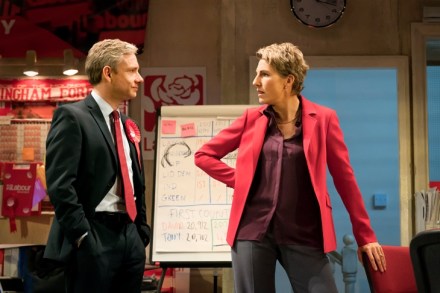
  Labour of Love is the new play by James Graham, the poet laureate of politics. We’re in a derelict colliery town in the East Midlands where the new MP is a malleable Blairite greaser, David Lyons. He arrives to find the office in crisis. The constituency agent, Jean, has handed in her notice but David is smitten by her acerbic tongue and her brisk management style so he asks her to stay. She agrees, reluctantly, and they settle into a bickering rivalry underpinned by affection. But is there more? Possibly, yes, but both are held back by their natural reticence and by fate. Secret declarations of love go astray. One letter is sent to the wrong person and another, written in code, makes sense only when read backwards. These contrivances aren’t entirely satisfying.

A gaping hole in the week

This is a gem of a book for Radio 4 lovers, particularly those of us who work out which day of the week it is by who’s speaking on the station at 9.02 a.m. Published the week that Midweek was abolished for ever, it is Libby Purves’s story of the programme she presented for 33 years. In this brief memoir she has not only immortalised the distinctive flavour of the ‘And now for some lively conversation’ Wednesday-morning 45 minutes. She has also reminded us that Radio 4 is ‘basically, a marvel’: for many people, it is ‘their university and their friend’. All presenters, Purves writes, are aware that they are obsolescent.

Low life | 9 February 2017

Dr Ivan Mindlin was the in-house casino doctor at the Stardust in Las Vegas in the early 1970s. Mention any of the main characters in Nick Pileggi’s true-crime classic Casino: the Rise and Fall of the Mob in Las Vegas and the Doc knew them well, including the central characters Lefty and Geri Rosenthal. The mob monster Tony ‘the Ant’ Spilotro he didn’t know personally. He went out of his way to avoid him in fact, he says. But he and Spilotro shared a maid who was forever complaining about the mess Spilotro and his Hole in the Wall gang made when they were relaxing at home. Doc took me as his guest to the splendid Blue Waters resort in Antigua last week while he negotiated a property lease with members of the government.

High life | 21 July 2016

From my bedroom window I can see a little girl with blonde pigtails riding her bicycle round and round for hours on end. She’s German, looks ten years old and lives nearby. Next month I am finally moving to my new home, a beauty built from scratch amid farmland. Cows, deer, the odd donkey graze nearby, a far better bunch than the one Gstaad attracts nowadays. I am, however, king of the mountain. My place is the highest chalet on the Wispille, one of the three mountains that dominate the Mecca of the nouveaux-riche and the wannabee. Life is swell, as long as the old ticker keeps ticking. An approaching birthday tells me that it’s time to take stock, do something of consequence, begin taking life seriously at last.