Education

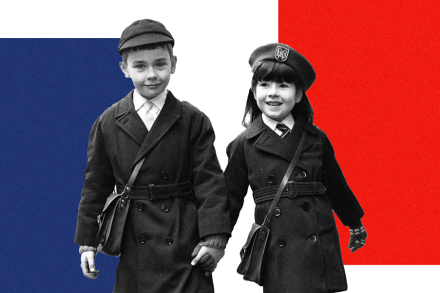
Why French students want English uniforms

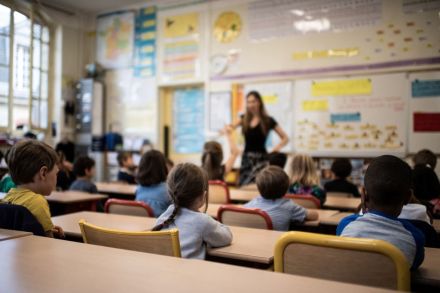
Béziers, France The École Mairan in Béziers in southern France is a happy neighbourhood elementary school housed in a superb renovated 19th-century hôtel particulier. In the middle of the medieval city, surrounded by both great houses and humbler tenements, it is attended by 120 pupils aged six to 11. There are the children of Algerian and Moroccan immigrants and the children of distinguished Biterrois families, with a sprinkling of Spaniards, Italians, Ukrainians and one American. Mairan is one of four schools in Béziers, and 100 in France, where this autumn children have started wearing school uniforms. So I went to Béziers to have a look. ‘The children love their uniforms.

The ancients knew the value of practical education

The welfare state was designed to serve everyone’s needs. But those needs were defined by the state. So schools teach fronted adverbials (but what about hindmost ones, eh?) and trigonometry, and may (absurdly) have to teach maths to all up to 18. Do these really fulfil the needs of all our children, far too many of whom are not (apparently) leading happy, useful lives? In the ancient world education was for the sons of the elite, to prepare them to run the country. But some elite Romans did without it. When Marius, who early on made his mark in battle and was picked out as a likely leader of men, became consul in 107 bc, the historian Sallust put a speech into his mouth in which he contrasted himself, the outsider, with the educated elite.

Letters: A cautionary lesson for England’s schools

Lessons to learn Sir: Your leading article ‘Requires improvement’ (7 September) rightly raised concerns that a curriculum review in England might reverse the excellent progress in schools following the Gove reforms. Fortunately, there are two very good examples of what happens when you replace rigour and the acquisition of knowledge with left-wing dogma and woolly thinking. The introduction of the Curriculum for Excellence in Scotland has led to a dramatic fall in standards in Scottish education and a resultant collapse in its Pisa [Programme for International Student Assessment] ranking. Last year Wales recorded its lowest-ever Pisa ranking.

The real threat to schools? Falling birth rates

Labour’s proposal to impose VAT on private school fees will, we are often warned, lead to state schools becoming overloaded as parents withdraw their children from the independent sector and try to find alternative arrangements. That may turn out to be true in some areas in the short term, but in the longer term there is a different problem facing the state and independent sectors alike: a falling population of school-age children. It isn’t excessive class sizes which threaten to be an issue so much as shrinking classes, leading to school closures and amalgamations with other institutions. London classrooms appear to be emptying – in 2022, 15.5 per cent of primary school places were unfilled For nursery and primary schools in England, pupil numbers peaked in 2019.

School portraits: snapshots of four notable schools

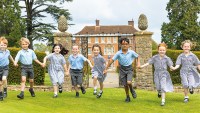
Elstree, Berkshire Elstree – which educates boys and girls from three to 13 – is nestled in 150 acres of stunning countryside near Newbury in Berkshire. The school, which celebrated its 175th anniversary last year, says that its aim is two-fold: ‘to find out how a child is intelligent rather than how intelligent a child is’ and to teach pupils that ‘effort is king’. From Year 4 onwards, children can choose to flexi or weekly board and from Year 5 pupils are taught by individual specialists in all subjects from Year 5, compared with the usual Year 7. Although Elstree is non-selective, school-leavers have received scholarships to – among others – Eton, Harrow, Radley, Marlborough and Winchester.

Tried and tested by the Common Entrance Exam

This is about something that did not happen to me at school, an exam I dreaded, but never had to take. It was the only examination that ever really worried me, and it was called Common Entrance. Do not confuse it with modern imitations bearing the same name. In those days, preparing for it involved (for me, anyway) translating English into Latin and French (a proper knowledge of irregular verbs and a wide vocabulary in both those languages was required). It also demanded thorny and tricky types of mathematics, an astounding grasp of largely Imperial geography – and a full knowledge of English history since the Conquest. I actually understood the jokes in 1066 and All That, for which modern children would need a decoder.

The real crisis in our school system

For years, each school in England has been put in one of four categories: ‘outstanding’, ‘good’, ‘requires improvement’ and ‘inadequate’. While undoubtedly crude, the system offered clarity to parents. Bridget Phillipson, the Education Secretary, has now abolished this categorisation structure but not yet said precisely what will replace it. Children are returning to school in the middle of uncertainty. Are politicians blind to the staggering inequality within a state system that educates 93 per cent of pupils? The National Education Union has long urged schools to ignore Ofsted ratings and to stop referring to them on their gates. Phillipson’s reform seems to nod towards this.

The culture wars are far from over 

It’s only been a month since the new Culture Secretary, Lisa Nandy, declared that the ‘era of culture wars is over’. Yet this morning the Daily Telegraph reports that teachers in training courses will be taught to challenge ‘whiteness’ in lessons, to ensure future educators are ‘anti-racist’. The guidance in question has emerged from universities, rather than from the government itself – specifically from the National Education Union in England (and funded by Newcastle University) and from ten universities north of the border who have endorsed an ‘anti-racism framework’ drawn up by the Scottish Council of Deans of Education.

Labour’s outrageous attack on academic free speech

In an extraordinary outburst, a government source has described the new Higher Education (Freedom of Speech) Act, introduced by the Conservatives, as a ‘hate-speech charter’. This is an outrageous distortion of the new laws that aim to guarantee free speech within universities. The best that can be said about that phrase is that, so long as we retain free speech, people are free to describe it that way. But doing so raises worrying doubts about what the new government thinks free speech means.   Universities have a special role in the promotion of free speech. They are, or should be, places where those teaching and those taught can try out ideas, some of which may on closer examination turn out to be misconceived.

Should Labour be messing with the school curriculum?

Labour’s new education secretary wishes, as usual, to change everything. She might consider the advice of the Roman educationist Quintilian (d. c. ad 100). In the ancient world education was for the elites, and its purpose was to prepare them to be statesmen and power-brokers. That required mastery of both history, since that was the only way to understand the future, and verbal persuasion, because power depended upon winning legal and political arguments. The building blocks of education were acquiring a firm grasp of grammar and right usage, and reading widely across history and the best literature, poetry and philosophy. But above all else, that education must produce good men – courageous, just, honest and self-controlled. The teacher was crucial.

Is there a solution to chronic absenteeism in schools?

From our US edition

I hated going to school so much as a kid that to this day, the sight of Back to School! signs printed in cutesy kiddy font on glowing school-bus yellow that fill stores every August strikes me with dread. I want to punch them. My elementary school years were fine; I attended a teeny-tiny Catholic school where I think most of the dedicated teachers qualified for food stamps. I knew my classmates so well that they were essentially extended siblings (and a couple of them still are). I graduated first in my class (out of ten) and was star of the pathetic basketball team. High school was a Catholic school too, but insular and snooty. I was an outsider there, from “over the mountain.” I wasn’t bullied or anything, but no matter what, I always felt like I was imprisoned.

absenteeism
homeschooler

My experience as a homeschooler

From our US edition

I love the first day of school. Summer break was the perfect amount of time to make me long for the tedium of learning again. Mom would purchase new binders; I would begin to dream about that perfect first-day-of-school outfit; friends would discuss frightening future assignments and school supplies would be gathered. I would wake up that morning and have everything ready for me — only to arrive sleepily at the kitchen table in my pajamas, with my six siblings and our not-so-beloved Saxon Math books. My high-school experience as a homeschooler included a hodge-podge of extracurricular activities... orchestra, soccer, debate, church responsibilities and a bunch of random classes in things like graphic design and Polynesian dance.

The mystery of teaching composition

Summer study courses for young composers have been popular for a few generations. After the second world war, up-and-coming experimental composers started flocking to places like Darmstadt in Germany for the Internationale Ferienkursen für Neue Musik. Olivier Messiaen taught there in the late 1940s and 1950s, when among his students were Stockhausen and Boulez. Attending the 1980 course as an undergraduate, I benefitted from a lesson with Brian Ferneyhough and conversations with Wolfgang Rihm, who died last week and was described in one obituary as ‘the last great German composer’. In the US, the summer activities at places such as Tanglewood and Aspen have become part of the learning process for many young composers over the years.

The cult of Bedales

Another of my ageing Bedales school cohort has died and so there’s an ad hoc reunion in his honour at the pub in Steep, the bucolic village near Petersfield, scene of our youth, where we used to sneak out to smoke and drink when the teachers weren’t looking. Which they often weren’t. Bedales implanted itself here in deepest Hampshire in 1900, a pioneering co-educational boarding school, quickly patronised by British and European progressivist-bourgeois-bohemian-leftist artists, writers and intellectuals. It has been chi-chi ever since. Since the place was co-educational, plenty of sex education went on behind the bike sheds From its rustic origins, the school has grown and grown and now dominates the no longer quite so sleepy village.

The intersectional feminist rewriting the national curriculum

The appointment of Becky Francis CBE to lead the Department for Education’s shake-up of the national curriculum is typical of Labour’s plan to embed their ideology across our institutions – or rather entrench it, since the long march is almost complete. On the face of it, Professor Francis is ‘unburdened by doctrine’, to use Sir Keir Starmer’s phrase about how Labour intends to govern. As former director of the Institute of Education and current CEO of the Education Endowment Foundation, she has the outward appearance of a technocrat. But scratch the surface and, like so many Labour appointees, she emerges as a long-standing adherent of left-wing identity politics.

Coercion and coddling take campus

From our US edition

On October 7, 2023, I was the chairman of the political science department at a large public university, but not for long. I did what I presumed universities are for, encouraging students to talk with professors about big questions and important issues of the day. So on October 18, I held a faculty-student discussion with a Middle East expert. I opened the event by stating some facts: that a terrorist organization committed to the death of Jews had attacked Israel, raping and murdering many young people at a peace concert and seizing hostages. I said that these events raised deep moral questions about what should be done in response, regarding the destruction of Hamas and the fate of thousands of noncombatant Palestinians. Discuss. The discussion did not go well.

campus

The craft renaissance

As long ago as the 1960s, the poet Edward James was worried that traditional crafts were dying out. Having frittered much of the family fortune he had inherited, aged five, on supporting struggling surrealists (he commissioned the Mae West lips sofa and lobster telephone from a scuffling Dali) and on backing shows starring his actress girlfriends (‘very wealth-consuming,’ he admitted, ‘because invariably they flopped’) then creating an 80-acre sculpture garden in the Sierra Gorda mountains of Mexico, the man described as ‘the last of the great eccentrics’ decided in his late fifties to invest his remaining money in something more sensible.

Labour’s plans to rewrite the National Curriculum

Michael Gove’s decision to stand down in this election was a reminder that the one really bright spot in the past 14 years was the education reforms he steered through between 2010 and 2014. These policies were vindicated in the most recent PISA (Programme for International Student Assessment) survey, which showed England climbing the OECD’s international league table and outperforming Scotland, Wales and Northern Ireland. In maths, England rose from 17th place in 2018 to 11th in 2022, whereas Scotland, significantly above England in 2010, fell below the OECD average. I was involved in the most successful of these reforms, the free schools programme.

Why can’t America produce proficient teachers?

From our US edition

“Record drops in teen math and reading scores.” “National Math, Reading Scores Hit Historic Lows.” “Test Scores Flashing Red!” The headlines roll in weekly, each more alarming than the last. In February, twenty-six schools in Baltimore failed to bring a single student up to the most basic math requirements. The same month, sixty-seven schools in Illinois couldn’t produce a single proficient reader. We’ve reached a national education crisis, and its roots run deeper than many are willing to admit. The pressing question is: why can’t America produce proficient students? But perhaps a more crucial question is: why can’t America produce proficient teachers?

teachers teaching