Education

Lily Parr and the creepiness of AI resurrection

I’m not sure it’s possible to make a horror movie more sinister than the chirpy four-minute film on YouTube purporting to be an ‘interview’ with the late Lily Parr. Parr was a professional footballer who played as winger before the war, a chain-smoking 6ft Lancashire lesbian with that gung-ho spirit I remember from my girls’ boarding school, before the governors purged the spinster games mistresses. Three UK in collaboration with Chelsea FC have cooked up an AI version of Lily, which they insist can answer questions just as she would have done. They’ve persuaded Karen Carney (real, not AI), who played for England, to talk to AI Lily and then presented footage of the conversation as if it were a scoop.

How DEI destroyed itself

From our US edition

Those who wonder why more Americans haven’t risen up in rebellion against the Trump administration’s assault on affirmative action, its gutting of university departments, its violation of the neutrality of the American legal profession, should keep in mind the epigraph from the 20th-century philosopher Will Durant that appears in the opening moments of Mel Gibson’s 2006 movie Apocalypto: “A great civilization is not conquered from without until it has destroyed itself from within.” As he promised to do, Donald Trump is dismantling large parts of the government he conquered at the ballot box last November. You don’t have to approve. Roughly half of Americans do not. But the regime he is undoing has yielded diminishing returns for most of this century.

DEI market

Trump is right to eradicate the Department of Education

From our US edition

Teachers’ unions have donated millions upon millions over the years almost exclusively to Democratic candidates and left-wing organizations. So it’s no wonder Dems, realizing their cash cow could be on the verge of drying up, are losing their minds over President Trump signing an executive order yesterday to begin eradicating the Department of Education. If Americans get a real taste of school choice (Trump still needs a Congressional vote to end the agency), the left knows there will be no going back. Senator Chuck Schumer called the order “one of the most destructive and devastating steps Donald Trump has ever taken.

Education

Can the Tories save their education legacy?

13 min listen

Bridget Phillipson's schools bill is back in the Commons today. The scope of the legislation is twofold: firstly, looking at the welfare of children in schools and secondly at fundamentally changing the landscape of secondary education by doing away with academies (and with it the legacy of the previous Conservative government on education). The plan has been read by many – including former head of Ofsted Amanda Spielman, who joins today's podcast – as Labour pandering to the unions and perhaps even prioritising the adults (union members) over the children. Amendments to the bill will be debated this afternoon, including a Tory amendment that would ban phones in schools, although it doesn't seem that Labour is in the mood to make any concessions. What is motivating Labour?

Colin Freeman, Harry Ritchie, Max Jeffery, Michael Gove and Catriona Olding

35 min listen

On this week’s Spectator Out Loud: Colin Freeman explains how Islamic State tightened its grip on the Congo (1:23); Harry Ritchie draws attention to the thousands of languages facing extinction this century, as he reviews Rare Tongues: The Secret Stories of Hidden Languages by Lorna Gibb (8:00); Max Jeffery highlights the boxing academy changing young lives (13:20); Michael Gove reflects on lessons learned during his time as education secretary (20:30); and, Catriona Olding introduces the characters from her new Provence-based memoir club (29:27).  Produced and presented by Patrick Gibbons.

School portraits: snapshots of four notable schools

Ludgrove, Berkshire Ludgrove, which was founded in 1892 by the footballer Arthur Dunn, is a boarding prep school in Berkshire and has 130 acres for its pupils to learn, run around and play in. The school is one of the last preps to provide full boarding (which is fortnightly). At weekends, boys can use 11 football pitches, four tennis courts, two squash courts and a nine-hole golf course. It’s not just Prince William’s alma mater: other old boys include Alec Douglas--Home, Simon Sebag Montefiore and Bear Grylls (who opened the new Exploration Centre in June 2021). Most of the boys go on to Eton, Harrow, Radley or Winchester.

Why I’ve never forgotten Sister Cecilia

It is never people, always buildings. Faces change, time blurs them, but – unless they undergo a complete makeover – buildings remain pretty much the same, bar a few coats of paint. Along the second-floor corridor lined with arched windows that overlook the street. Buses grind by below. Up the last short steep staircase and along the very top corridor, which is narrower and lined with books. They call it the library and I am often here, tucked into the window seat reading, but otherwise heading for the arched door – everything is arched here – at the far end. It opens on to a low-ceilinged room with roof lights through which the sun seems always to be shining.

Columbia exemplifies the failure of universities

From our US edition

Yesterday, with growing sadness, I read a wonderful book about teaching and learning, written by one of the great teachers of the past century. Why the sadness? Because the author, Gilbert Highet, was a revered professor at Columbia in the Fifties and Sixties. It is impossible to read his paean to learning, written a half-century ago, without weeping for what his university has become. When Highet wrote of learning, he meant absorbing from history’s greatest minds, from Plato, Aristotle, Thucydides, Virgil, Cicero, Machiavelli, Hobbes and Locke, and teaching their lessons to students who wished to learn from them. Reading Highet’s words a half century later, we realize he was speaking of another time and place — virtually another university.

columbia

Aristotle and the leisurely pursuit of education

Nearly six million people are on out-of-work benefits. It is claimed that, for most of those, going back to work would not be financially worth it. Aristotle would have agreed with them because for him, leisure was the most important possession a man could have. The ancients generally had no concept of the dignity of labour, apart from idealistic views about the farmer working in harmony with gods and man for the moral betterment of mankind. For most people, work was a painful necessity whose only purpose was to keep you from penury. The farmer-poet Hesiod (c.

What I learned from my meeting with the Education Secretary

Dear Secretary of State, thank you for meeting me and one of my deputies on Monday. You will have noticed in our meeting how disappointed we were with your responses to the questions teachers have about the government’s proposals. I assure you, we are not alone in that feeling. As teachers, we often hear politicians say how much they care about education. One of two things follows: either they turn out to be that rare politician who is truly interested in schools; or they are that all too common politician who simply wants to appear that way. Our meeting confirmed that you are firmly in the latter category. Politicians who truly want to raise standards for our most deprived communities would ordinarily be interested in hearing from the people who know best how to do it: teachers.

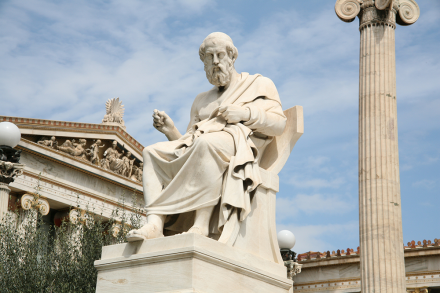
What Bridget Phillipson has in common with Plato

One does not like to disagree with one’s editor, but while the image of Rome salting the earth of its bitter rival Carthage is a striking way of describing Labour’s plan to wreck our current system of education, Rome was not in the habit of destroying the advantages that its conquests produced. The salting story is a 19th-century invention, endorsed by no less an authority than the Cambridge Ancient History (1930), but now rescinded. As Mr Gove made clear in last week’s magazine, the universal imposition of a national curriculum, among other measures, will remove the freedom and choice – the two words you will find nowhere in discussion of Labour education policy – which played such a crucial part in improving educational attainment.

The ‘shocking tactics’ of Kemi Badenoch

Whitehall is being swept by moral outrage. Ministers, in full This Is Spinal Tap mode, have turned their pious horror up to 11 and Keir Starmer has accused the opposition of a ‘shocking tactic’, preferring ‘the elevation of the desire for retweets over any real interest in the safeguarding of children’. What dark perfidy has been done? What cynical political stunt have the Conservatives pulled, staining their hands with such baseness? Kemi Badenoch has tabled a reasoned amendment to the Children’s Wellbeing and Schools Bill, which is being debated at second reading today. Let me explain briefly.

Michael Gove: why does Labour want to ruin state schools?

13 min listen

At PMQs today, the battle lines were drawn ahead of today’s vote on Labour’s Children’s Wellbeing and Schools Bill, which aims to protect children within the education system. Its contents have galvanised opposition parties, who are using the legislation to force a fresh inquiry into grooming gangs. Shadow Education Secretary Laura Trott has also been on the airwaves today, attacking some of the reforms detailed in the plan, specifically on academies and free schools. The government is set to take away many of their freedoms to set curriculum and pay, freedoms given to them by our now editor – then education secretary – Michael Gove. So, do academies have a future in the education system? What’s Labour’s motivation here?

Why homeschooling rates have doubled

Schools are a relatively new phenomena in human history. In Britain, they expanded in the 19th century and early 20th century in step with industrialisation and urbanisation, but in many places in the world, what little education the young receive occurs at home. The assumption most share, not unreasonably, is that where there are schools to attend, parents should send their children to them so they can avail themselves of the opportunities for academic learning, for socialisation and working through what they might do after they leave with the rest of their lives.

Luigi Mangione’s bad education

From our US edition

Luigi Mangione is officially the “suspect” in the murder of UnitedHealthcare CEO Brian Thompson, but he is plainly the culprit, and public discussion has moved on to his motives. Why would a young man possessed of intellectual gifts, friends, family, good looks, a winning personality and, apparently, lots of money, gun down a man he had never met? This isn’t the kind of question my organization, the National Association of Scholars, normally takes up. We concern ourselves more with academic standards and questions of state and federal policy. But I’ve been nudged several times with questions about Luigi’s academic background. This has two parts: Luigi’s high school and Luigi’s college.

The sad demise of the scathing school report

As the first term of the school year draws to a close, pupils’ reports will soon be landing, encrypted and password-protected, on parents’ smartphones. But once they’ve finally managed to open them to find how little Amelia or Noah has been performing, there will be another code for them to crack: what on earth the teachers are actually trying to say about their child. These days, reports tend to be written with the help of AI software or templates, which makes it impossible to work out how your child is really doing. In our super-sensitive age, many schools now play it safe by couching all comments as positives, and only using approved adjectives from word banks and drop-down menus.

Must try harder, Education Secretary

The headmaster of one of the best comprehensives in the country was once asked the following question by Tony Blair: ‘If you could do one thing to improve state education in this country, what would it be?’ ‘Oh, that’s easy,’ he said. ‘I’d line up every civil servant in the education department and machine gun the lot of ’em.’ No prime minister has ever asked me that question, but my answer would be more diplomatic. It would be to insist that every incoming education secretary memorise the serenity prayer. This is the prayer that members of Alcoholics Anonymous recite at the end of their meetings: ‘God, grant me the serenity to accept the things I cannot change, the courage to change the things I can, and the wisdom to know the difference.

Decline and fall: how university education became infantilised

Last month, after 21 years studying and teaching Classics at the University of Cambridge, I resigned. I loved my job. And it’s precisely because I loved the job I was paid to do, and because I believe so firmly in preserving the excellence of higher education, in Britain and beyond, that I have left. When I arrived in Cambridge two decades ago, giants were still walking the earth. Students could attend any lecture, at any level, in any department; graduate and research seminars were open to any interested party, and you could sit at the feet of the greats. Unforgettable gatherings of everyone from undergraduates to professors would discuss the big questions late into the night.

The classroom panopticon

From our US edition

Is it ironic to give a prize for encouraging “open discussion and debate in the classroom” and “creating an environment where all perspectives can be heard” in the name of William F. Buckley Jr.? Although best known today as the founder of National Review and longtime host of Firing Line, Buckley first came to prominence in 1951 with the publication of his book God and Man at Yale, subtitled: The Superstitions of “Academic Freedom.ˮ Buckley’s secular and secularized Protestant critics might well have considered the firmly Catholic young man, twenty-five years old at the time the book appeared, an apologist for something they regarded as superstition. But Buckley did not mean the term as a compliment when he applied it to academic freedom.

classroom

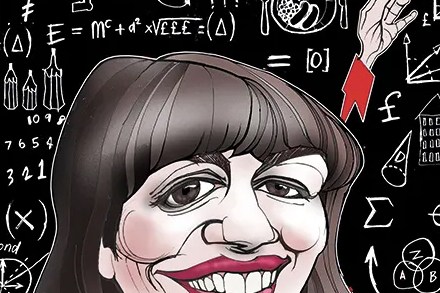
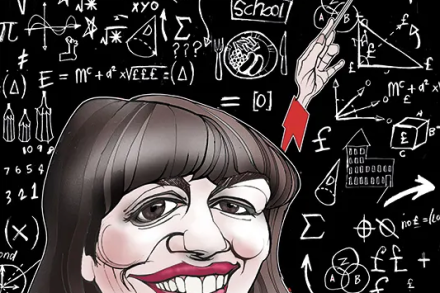
Maths is stressful. That’s why it’s necessary

In the weeks since the Labour government came to power, we’ve gone from debating compulsory teaching of maths until age 18 to entertaining the idea that the times tables may be too stressful for children to memorise. My resilience, my determination and my empathy are largely products of being bad at maths When I was at school in Poland in the 2000s and 2010s, the response to such a suggestion would have been an eye-roll, or the blowing of a loud raspberry. The comment that ‘if you can’t have what you like, then you must learn to like what you have’ was commonplace, and maths was taken by everyone until age 18. I was at the top of my class until, at age 15, I began to fall behind in maths.